Showing posts with label Bank of Japan. Show all posts

Thursday, August 8, 2013

Bank of Japan's Kuroda Disappoints Again, Nikkei Drops More than 400Pts from Day's High


Bank of Japan's Governor Haruhiko Kuroda firmly believes what he cared to utter in April this year (that he will buy 7 trillion yen worth of Japanese Government Bonds and other securities per month) should be good enough for anyone, and he and his company stuck to the line in the BOJ meeting on August 8, 2013.

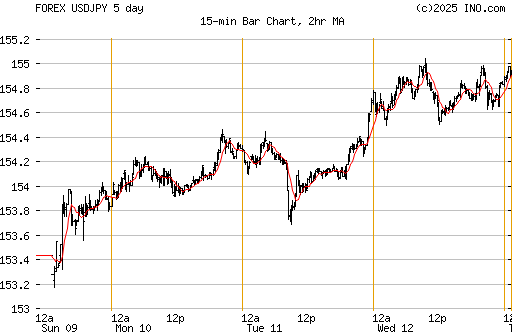
The stock market, infinitely wiser, even if in its heavily manipulated state, than Mr. Kuroda, heads south in the afternoon market. It ended the day at 13,605, down 219 from yesterday's close and reversing the 200 point gain at one point. The forex market reacted similarly, pushing yen higher against US dollar on expectation that there will be no added easing announced by Kuroda.

Economists and analysts, on the other hand, seem to have learned not to expect much from Kuroda any more. Kuroda has said what they expected him to say. Or rather, Kuroda has said what they say they expected him to say.

Here's what Kuroda and company did in today's meeting, according to Bloomberg News (8/7/2013):

Bank of Japan Refrains From Adding to Unprecedented Stimulus

The Bank of Japan refrained from adding to unprecedented monetary stimulus after consumer prices rose in June and a recovery in the world’s third-biggest economy maintained momentum.

Governor Haruhiko Kuroda’s board stuck with an April pledge to expand the monetary base by 60 trillion yen to 70 trillion yen ($723 billion) per year, a statement released in Tokyo today showed. All 26 economists in a Bloomberg News survey predicted the decision.

...The bigger focus may be Kuroda’s press briefing today and any comments he makes on the sales tax, Masamichi Adachi, a senior economist at JPMorgan Chase & Co. in Tokyo and a former BOJ official, said before the decision.

(Full article at the link)


And did Kuroda say anything about the sales tax?

If this intraday chart of Nikkei on August 8, 2013, if he did say something, he must have said the sales tax hike should be carried out as scheduled, and that there would be no effect on the growth of the Japanese economy (which he already said about a week ago).

Wednesday, May 22, 2013

Japan's Nikkei Free-Falling, -1143


(UPDATE) It is ugly in Europe, with Germany's DAX down 223 points (2.62%). US stock futures are ugly, too. Dow futures down 159. Ben's Fed has some work to do before the cash market opens.

=================================


The stock market in Japan is supposedly disliking the contracting Chinese economy and the US Fed comment about "tapering" down the QE4EVA, but I think it's about another botched day in the JGB (Japanese Government Bond) futures market which was halted (yet again) when the price dropped and yield spiked. 10-year JGB's yield hit 1%, almost triple the yield right before the Bank of Japan intervention in early April.

Nikkei is now minus 940...still 5 minutes to trade.

I wonder if Governor Inose now has second thoughts about advancing the Japan Standard Time. He wouldn't want to start the financial day for the entire world with disaster after disaster in Japanese financial markets, would he?

It is now minus 976, one minute to trade...

...and just ended the day with minus 1,143. That's an intraday swing of 1,459 from the high of 15,942, or over 9% swing.

Now their stock market is catching up with the bond market in terms of extreme volatility.

Tuesday, February 5, 2013

(Anything Goes Series - 5) When Nikkei Is Under Pressure (Finally), Remove BOJ Governor


Why? You can see why. Yen tanks, and the Nikkei Stock index soars by over 4% in one day.

Bank of Japan Governor Shirakawa's tenure was to end in April. Instead, he said today that he would resign soon.

The results:

Yen


Nikkei

Two BOJ commissioners who opposed the 2% inflation target in the last policy meeting, Takehiro Sato (from Morgan Stanley where he was a managing director and chief economist) and Takahide Kiuchi (from Nomura Securities where he was the chief economist) now say they will do their utmost best to achieve that target.

If you think "WTF?" like I did, that's quite a historical, traditional mentality in Japan. During the warring days in 15th and 16th centuries, it was quite common for the soldiers and lords who were defeated to join the victorious and fight alongside the victor, to atone for the sins of the past of having dared oppose the victor. The game of "shogi", Japanese version of chess, allows the opponent's pawns that are captured to be used again, against the opponent.

Now defeated, the two commissioners will be vigorously push for the 2% inflation target that they opposed.

Monday, January 21, 2013

Japan's Debt Bomb Delayed Somewhat, As BOJ Targets 2% Inflation But Open-Ended Asset Purchase of 13 Trillion Yen (US$145 Billion) Per Month Delayed Till 2014


Financial and fiscal insanity has been the norm since September 2008. Japan is merely a lap or two behind, now frantically trying to catch down with the US Fed and the ECB in cheapening the currency and going full-speed on further fiscal profligacy.

Bank of Japan just announced the result of its two-day deliberation on monetary policy. It will officially target 2% inflation, and unlimited quantitative easing through asset purchase of whopping 13 trillion yen (145 billion US dollars, take that Helicopter Ben!) per month, but the latter won't start until January 2014.

Japan's Nikkei ended slightly down, at 10,709, in mild disappointment that the open-ended QE is not going to start right away.

A token independence of the central bank is gone, as the inflation target will be closely examined by the executive branch of the government every three months.

From Nikkei Shinbun (1/22/2013; part):

日銀は21~22日に開いた金融政策決定会合で、2%の物価安定目標を採用することを決めた。政府との間で「デフレ脱却と持続的な経済成長の実現のための政府・日本銀行の政策連携について」とする共同声明を作成。消費者物価の前年比上昇率で2%を目指すとともに、経済財政諮問会議で進捗状況を定期的に検証することなどを決めた。

Bank of Japan adopted the price stabilization target of 2% after the two-day meeting on monetary policy. A joint communique with the national government is to be drawn up regarding "the joint policy effort between the national government and Bank of Japan to move away from deflation and achieve sustainable economic growth". The target of 2% increase of year-over-year consumer price will be set, and the target will be periodically examined by the Council on Economic and Fiscal Policy [under the Cabinet Office].

2%の物価安定目標の導入とともに、資産買入基金で「期限を定めない資産買い入れ方式」の導入も決めた。新方式では2014年初から期限を定めず毎月13兆円の資産買い入れを実施する。買い入れの内訳は長期国債が2兆円、短期国債が10兆円。その他の資産は残高を維持するように買い入れる。この結果、基金の残高は14年中に10兆円程度増え、それ以降も残高を維持する見込みだ。基金の新方式については全員一致で決めた。

In addition to the introduction of price stabilization target of 2%, BOJ decided to introduce a new open-ended asset purchase program using the asset purchase fund. Under the new program, BOJ will purchase assets at 13 trillion yen [145 billion US dollars] per month for as long as necessary starting in the beginning of 2014. The assets will include 2 trillion yen long-term government bond, 10 trillion yen short-term government bills, and the rest of the assets [REIT, ETF, commercial papers, corporate bonds, etc.] will be purchased to maintain the existing balance. As the result, the balance of the asset purchase fund will grow by 10 trillion yen in 2014, and the balance will be maintained thereafter. BOJ decided on this new program by unanimous vote.


Interestingly, Nikkei English article does not mention monthly asset purchase of 13 trillion yen. Instead, it has a piece of information that is not in the Japanese version - that there were two people who dissented at the BOJ meeting over 2% inflation target:

The bank's policy board voted 7 versus 2 at the end of its two-day meeting to introduce the target, replacing its current 1% price "goal," which Mr. Abe had criticized as being too weak of a commitment by the BOJ.


I wonder who they were.

But to call the 2% inflation target as "price stabilization target", that's pure Newspeak. Japanese people will be lulled by the word "stabilization", without realizing it is the past 2 decades that have had excellent price stability.

Sunday, October 30, 2011

Bank of Japan Intervenes, Yen Goes from 75.32 to 79 Yen per US Dollar

Bank of Japan has successfully cheapened the currency for over two hours now. According to the reports BOJ continues to intervene throughout the day. It hit the highest ever of 75.32 yen to the US dollar earlier. BOJ's intervention reversed the move, and yen dropped 3 yen in 30 minutes.

Monday, April 18, 2011

Japan's Finance Ministers Say "US Treasuries Attractive, Top-Notch"

Don't worry Timmy, Ben and Barry. Japanese politicians still say the US debt is the best investment for them.

But then, the same Japanese politicians also said Fukushima I Nuke Plant was under control and safe.

From Asahi Shinbun (in Japanese; 4/19/2011):

Minister of Finance Yoshihiko Noda: "US Treasures continue to be an attractive investment for us. No particular effect [of downgrading] on Japan's holdings. President Obama has embarked on a deficit reduction."

Minister of State for Economic and Fiscal Policy Kaoru Yosano: "Everybody in the world wants to hold the US Treasuries. The US Treasures that Japan owns are particularly good ones."

ROTFLMAO..

"Japan holds about $1 trillion foreign bonds as part of the foreign reserves, most of which are considered to be the US Treasuries," says Asahi, complaining that the details of the foreign reserves are not disclosed. Well, Asahi can simply check the US Treasury Department's TIC, and find out that Japan owns $890 billion US Treasuries as of February 2011.

(And they talk about taxing the citizens to pay for "recovery and rebuilding" cost and Fukushima I nuke plant accident compensations.)

Sunday, March 13, 2011

Bank of Japan to Add 5 Trillion Yen to Its Asset Purchase Program

That will bring their Asset Purchase Program to 40 trillion yen ($486 billion). Approaching Ben Bernank....

Part of BOJ's announcement at 2:48PM Japan Standard Time:

Monday, October 4, 2010

Bank of Japan Will Buy Anything and Everything, Almost

Bank of Japan has just said it will buy long-term government bonds, commercial paper, asset-backed commercial paper, corporate bonds, index ETFs, funds that invest in REITs. To do that, the bank will set up a special fund (35 trillion yen total - about 419 billion USD) on its balance sheet.

Nikkei spikes on those words..

They LOWERED the rate to zero, too. (0% to 0.1%, to be precise. It was 0.1%.)

As rubiofromitaly at Yahoo board says, "That is the sayonara wave for we are going down the toilet all together....kumbaya."

Tuesday, September 14, 2010

Bank of Japan Intervention Sends Yen Back to Last Friday's Level

well, ever slightly above but not by much.

Still, Nikkei celebrates by reversing almost 300 points.

According to Nikkei Shinbun newspaper, the intervention was ordered by the Finance Minister at 10:30 AM Japan Standard Time, and Bank of Japan carried out the operation of dumping yen at 10:35 AM.

Wanna bet how long will this last?

Unlike the privately-owned Federal Reserve, Bank of Japan is 55% owned by the government. Unlike the Fed, the shares of Bank of Japan is traded on a stock exchange (Jasdaq Securities Exchange).

Wednesday, August 18, 2010

Bank of Japan to Ease Further? 2-year JGB Yield Approaches Overnight Rate

The yield on Japan's 2-year JGB is approaching 0.1%, which is the interbank overnight call rate (無担保コール翌日物, equivalent of the Fed Funds rate) that the Bank of Japan uses to guide the monetary policy, according to Nikkei Shinbun citing Reuters Japan (the linked article is in Japanese). The last time the yield of 2-year JGB was at this level was September 2005.

Both the Japanese stock market and bond market are up. What's driving the markets is the expectation that the Bank of Japan will soon announce further easing - more open market operations and lowering the overnight call rate. The analysts cited in the article say that if it is going to be just the expansion of the open market operations, the markets will be disappointed. According to them, today's bond market action is pricing in the further lowering of the overnight call rate, which is already at 0.1%.

Will further easing stop yen from going higher? That's what they are hoping, driving both the stock market and the bond market up.

How low could the overnight rate go? Maybe we will be seeing the first instance of a negative rate in one of the biggest economies... (Sweden has done it, but it was on the deposit rate - charging banks to keep funds at the central bank.)

Tuesday, December 1, 2009

Japan: Quantitative Easing Part Deux

through and through Keynesian

(and the very definition of a fool as someone who keeps repeating the same thing over and over even if it doesn't produce the result he wants).

Bank of Japan held an emergency meeting on December 1 afternoon (their time) and decided to embark on the second round of quantitative easing. The first one was from 2001 to 2006, with dubious results (more later in the post). Just like the first one, BOJ wants to induce further decline of longer-term interest rates to stimulate borrowing and spending. This time, there is an added purpose of stabilizing Japanese yen (i.e. reversing the recent rapid rise of yen). Here's the BOJ statement in English.

BOJ intends to roughly double the size of "current deposits" at BOJ (Japanese equivalent of "excess reserve") by introducing a new 10 trillion yen (US$115 billion) lending program in which financial institutions can get a 3-month loan at 0.1% fixed rate (overnight call rate). Eligible collateral includes Japanese government bonds, corporate bonds, commercial papers, and loans on deeds.

Looking at BOJ's latest balance sheet, they have about 40 trillion yen (US$460 billion) of various lending programs. Unlike the U.S. Federal Reserve, its balance sheet size has remained steady at about 110-115 trillion yen (US$1.26 - 1.32 trillion) since 2007.

Federal Reserve Bank of San Francisco has a paper on the last quantitative easing by Bank of Japan. Their conclusion was that it did lower the longer rate somewhat, but it was hard to tell whether it was the direct result of quantitative easing or the future expectation. They also said that Japan's quantitative easing probably had an unintended consequence of helping weaker banks stay afloat and encouraging further risk-taking, thus delaying the real structural reform.

From the Japanese consumers' perspective, price deflation has been the only good thing that has happened since their real estate bubble burst in 1989-90. But Keynesians in the government and at Bank of Japan would have none of that. Price must increase.

(John Maynard Keynes, who didn't even have a degree in economics...)

It's safe to assume they know nothing about Austrian economics.