Showing posts with label 2020 Olympic. Show all posts

Wednesday, January 8, 2014

TEPCO to Return J-Village to #Fukushima Prefecture by 2018 for Use in Preparation for 2020 Tokyo Olympics


TEPCO's President Naomi Hirose says, "2020 Olympics seems like a good target."

J-Village, located in Naraha-machi about 20 kilometers south of Fukushima I Nuclear Power Plant, has been used as the staging area for the emergency and restoration work at the plant since March 15, 2011. It was originally built as a non-monetary "donation" by TEPCO to Naraha-machi and Fukushima Prefecture to compensate for the "inconvenience" of having TEPCO's nuclear power plants, in line with the common practice in prefectures in Japan where nuclear power plants are located or being planned.

Naraha-machi was designated as "no-entry zone" around Fukushima I Nuclear Power Plant until August 10, 2012. Since then, it has been designated as "areas in preparation for the lifting of evacuation order" - i.e. residents are allowed to return.

It was the ex-mayor of Naraha-machi who demanded that J-Village be "returned" so that the town could use it for the original purpose (soccer (football) training).

Optimism abounds in Fukushima and in Japan in general these days.

From Jiji Tsushin (1/8/2014):

福島のJヴィレッジ、18年返還=東京五輪で活用目指す-東電社長

J-Village to be returned to Fukushima Prefecture in 2018 to be utilized for prep for Tokyo Olympics [in 2020], says TEPCO president

東京電力の広瀬直己社長は8日、福島県庁で佐藤雄平知事と会談し、福島第1原発事故対応の拠点を置いている運動施設、Jヴィレッジ(福島県楢葉町)について、「2020年の東京五輪は良い目標だ。18年ごろまでに五輪に向けて活用できるようにしたい」と述べ、18年ごろ県に返還することを目指す考えを示した。

TEPCO's president Naomi Hirose met with Governor Yuhei Sato on January 8 at the Fukushima prefectural government building, and indicated TEPCO will return J-Village (in Naraha-machi, Fukushima Prefecture) to Fukushima Prefecture. Hirose said, "Tokyo Olympics in 2020 is a good target. I would like to have it [J-Village] ready by 2018 to be utilized for the Olympic." J-Village has been used as the staging area for the work dealing with the Fukushima I Nuclear Power Plant accident.

Jヴィレッジは、日本サッカー協会などが運営し、サッカー日本代表などの合宿に使われていたが、原発事故後は東電が利用。賠償や除染などを担う福島復興本社を置いている。

J-Village was operated by the Football Association of Japan and was used as a training camp for the national team. Since the nuclear accident, it has been used by TEPCO. It is where TEPCO's Fukushima Revitalization Company is located, which deals with compensations and decontamination.


J-Village, by the way, was one of the three locations where a small amount of plutonium-241 of Fukushima origin was found by the researchers at the National Institute of Radiological Sciences (NIRS). The researchers measured the soil samples as early as April of 2011, and didn't tell the world until March 8, 2012. Half life of plutonium-241 is relatively short at 14 years, and it decays into americium-241 which is readily absorbed into legumes.

TEPCO's Japanese homepage showing the sign of Fukushima Revitalization Company at J-Village:


"Revitalization of Fukushima is our starting point," TEPCO says.

Saturday, September 21, 2013

Idio(syncra)tic Japan: Maglev Linear Bullet Train to the Rescue of Nuclear Power Plants?


Abe's Liberal Democratic Party, which was the ruling party for most of the post-World War II period in Japan and promoted nuclear power plants as "national policy" and thus responsible for 54 nuclear reactors dotting the coasts of earthquake-prone Japan, is quite nonchalant about its culpability.

Au contraire, a gigantic, 9-trillion-yen (US$90 billion) project that will necessitate the operation of several nuclear power plants (or so the politicians claim) is getting a heavy, front-page coverage all of a sudden: Linear Shinkansen (Bullet Train) by JR Tokai that will operate on Maglev - super-conductive magnetic levitation.


Why would the Maglev bullet train help nuclear power plants? Because maglev Linear Shinkansen will require three to four times the electricity the current Shinkansen uses. There are already LDP politicians and local politicians along the proposed line (initial segment from Shinagawa to Nagoya, over 86% of it will be deep underground - 40 meters, or 130 feet) demanding the restart of nuclear power plants to secure the supply for the Linear Shinkansen which was originally scheduled to be operational in 2027.

Which nuclear plants? Hamaoka NPP (Chubu Electric) and Kashiwazaki-Kariwa NPP (TEPCO) are geographically close.

Unlike JR East which has its own power stations, JR Tokai doesn't have any, and will have to buy extra electricity needed for Linear Shinkansen from power companies.

The hope now is that the first segment of the Linear Sinkansen line will be built "ahead of schedule" - a recurring theme under the Abe administration - to be in time for 2020 Olympic.

Just like the original Shinkansen was built and became operational on October 1, 1964 to be just in time for 1964 Olympic that started on October 10.

Linear Shinkansen has been in the planning for over 30 years, but Ministry of Land, Infrastructure, Transport and Tourism (MLIT) under the Kan administration ordered JR Tokai to go ahead and build the line in late May 2011, two months after the start of the Fukushima I Nuclear Power Plant accident.

From my post on June 2, 2011:

Japan's addiction to a huge, infrastructure business continues, despite the disaster at Fukushima I Nuke Plant. Now, the Ministry of Land, Infrastructure, Transport and Tourism has given the approval to start building the line for the "Linear Shinkansen (bullet train)" in the middle of Japan, through the pristine mountainous region dubbed in Japan as "Japan Alps", so that people in a nation with dwindling population can go from Tokyo to Osaka in 1 hour, instead of 2.5 hours.

The project has been on the table for more than 30 years, but it was the Kan administration who has finally given a go-sign on May 27, formally "instructing" JR Tokai (the railroad operator in charge of the area that the Linear Shinkansen will run) to build the rail line.

...The line will go through the Japan Alps by building the longest underground tunnel that Japan will have ever built. Not only it will be so counter to environmental protection, but the tunnel will have to go through one of the major tectonic lines in Japan, "Itoigawa-Shizuoka Tectonic Line".


Compared to the amount of groundwater that they will have to deal with in building this tunnel under Japan Alps, the current groundwater situation in Fukushima I Nuke Plant (1,000 tonnes per day) is a child's play.

You can rest assured that the environmental impact study will be done and rubber-stamped quickly. And effect of electromagnetic fields on humans and animals? What effect? It's all for economic growth, you know, in a country with declining population that is aging fast (32% of population over 60, expected to be 41% in 2050).

Sunday, September 15, 2013

#Radioactive Olympic in 2020? Try 1964


Cesium-137 in monthly fallout in Tokyo, from 1964 (the year of the first Tokyo Olympic) to 2013, using the data and graph function from Japan Chemical Analysis Center database:


The fallout levels in 1964 look slightly higher than in 2011-2013, except for the initial huge spike in March 2011 due to the Fukushima I Nuclear Power Plant accident. With luck, in 7 years, the fallout levels may come down to 1970s' levels. Even if Cs-134 is included, the order of magnitude doesn't look to increase. (The Y-axis is log.)

As of July 2013, Cs-137 in monthly fallout in Tokyo is 4.4MBq/km2, and Cs-134 is 2.2MBq/km2.

What about strontium, you ask? The maximum amount of strontium-90 in the monthly fallout after the Fukushima I Nuclear Power Plant accident was about half of the fallout after the Chernobyl accident, and close to 1/100 of the maximum 1964 level:


Atmospheric nuclear testing by the United States, the Soviet Union stopped after 1963 Limited Test Ban Treaty, but France, not being a signatory, continued until 1974, and China until 1980.

Some images from 1964 Tokyo Olympic:

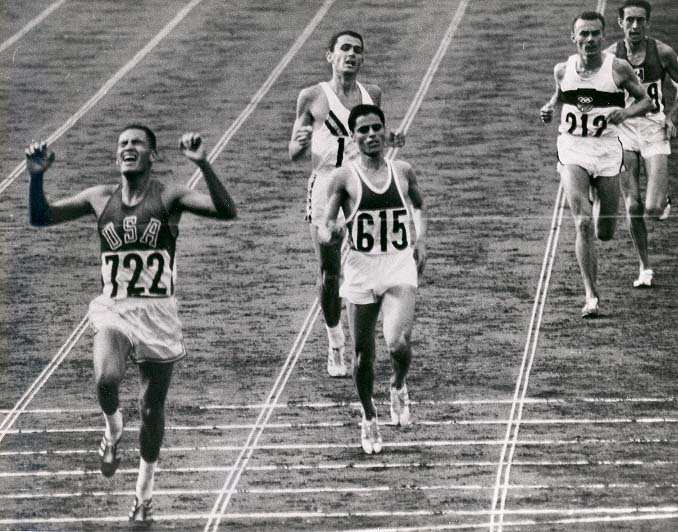
Billy Mills (USA), winner of 10,000 long distance run, who overcame prejudice and discrimination (he was a Native American) to win a surprise win in the Olympic (according to Japanese wiki; no such information in English wiki).


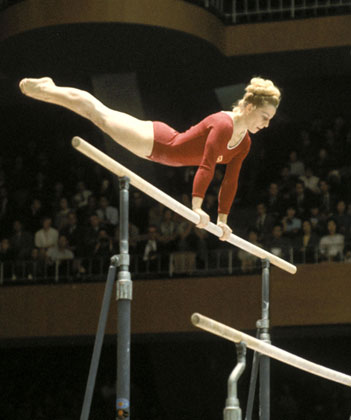
Czech gymnast Věra Čáslavská, who enthralled the Japanese and the world viewers.


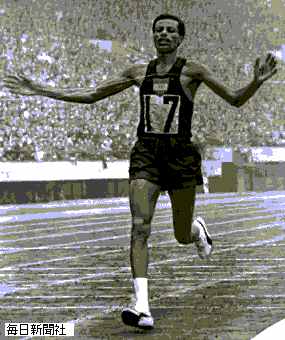
Ethiopian marathon runner Abebe Bikila, who had run bare-foot in 1960 Rome Olympic; in 1964 Tokyo Olympic, he wore Puma shoes. After the marathon, he said he could easily run another 10 kilometers.


1964 Olympic poster:

Saturday, September 7, 2013

(OT) 2020 Summer Olympic Goes to TOKYO, by 60 to 36 Final Vote (UPDATED)


Madrid was eliminated in the first round of vote (though tied with Istanbul and needed the vote for tie-breaker).

Istanbul was eliminated in the final vote. The vote tally, according to Asahi, was 60 to 36.

I'm more curious to know why Madrid and Istanbul lost, rather than why Tokyo won.

The UK's Telegraph commented the choice was about "least bad". Some may disagree and ask if that was the case why Madrid was eliminated in the initial round (the country didn't suffer a nuclear accident, and it is far away from Syria).

Move on to the next vote, this time in the US Congress on Syria, which may come as soon as Monday.

Wednesday, September 4, 2013

Japan's PM Abe: "Contaminated Water Problem Will Be Gone by 2020 Summer Olympics in Tokyo"


He says his administration is "implementing fundamental, radical measures with decisive resolve", and hopes the rhetoric will win the Olympics for Tokyo.

Stereotyped, empty words as Abe seems to use quite often.

From Jiji Tsushin (9/4/2013):

汚染水漏れ「五輪時には解決」=安倍首相

Contaminated water leak "will have been settled by the Olympics", says Prime Minister Abe

安倍晋三首相は4日午前、東京電力福島第1原発の汚染水漏れ問題に関し、2020年夏季五輪の東京開催に影響することはないと、7日にブエノスアイレスで開かれる国際オリンピック委員会(IOC)総会で訴える考えを示した。首相官邸で記者団に「政府が前面に出て完全に解決していく。抜本的な措置を断固たる決意で講じており、7年後の20年には全く問題ないとよく説明したい」と語った。

In the morning of September 4, Prime Minister Shinzo Abe referred to the problem of contaminated water leak at Fukushima I Nuclear Power Plant and said he planned to make an appeal at The International Olympic Committee (IOC) general meeting in Buenos Aires on September 7 that the problem would not affect the 2020 Summer Olympics hosted in Tokyo. He spoke to the press at the Official Residence and said "I'm planning to explain carefully that the national government will be at the forefront, and will completely solve the problem; the government is implementing the fundamental, radical measures with decisive resolve, and there will be no problem at all [hosting the Olympics in Tokyo] 7 years from now in 2020."


So far, the "fundamental, radical measures" amount to allocating several tens of billions of yen (tens of millions of dollars) - not much at all considering the money they continue to squander in "decontamination" - to give to large general contractors.

It looks to me like the same old, tired method that Japan is famous for.

Monday, April 29, 2013

Farcical Japan: More LDP Cosplay, and Governor of Tokyo Says "That's Not What I Meant" to NY Times Article


(UPDATE 4/30/2013) Now the governor wants to correct his remarks, according to Nikkei Shinbun. Nikkei quotes him saying "不適切な発言があり、おわびしないといけない。訂正したい Some of my remarks were inappropriate, and I need to apologize. I want to correct my remarks." Governor Inose his supporters spent all day yesterday criticizing New York Times.

===========================

It was not just Prime Minister Abe. Shigeru Ishiba, Secretary-General of Liberal Democratic Party, and Junko Mihara, LDP Upper House Councilor and former singer/actress, at "NicoNico Chokaigi 2" (photo uploaded by yunomi at Photozou):


Meanwhile, as the news of what he said in New York on his recent trip, Tokyo Governor Inose defends himself saying New York Times didn't report his true intention.

What was his true intention? According to Sankei Shinbun (4/29/2013),

「イスタンブールは個人的にも好きな都市。候補都市を批判する意図はなく、インタビューの文脈と異なる記事が出たことは残念。私の招致にかける熱い思いは変わらない」

"Istanbul is one of my favorite cities. I had no intention of criticizing other candidate cities, and it is regrettable that [my intention in] the interview was taken out of context. I remain enthusiastic about inviting [2020 Summer Olympics to Tokyo]."


Right. As if what he says he thinks matters. The New York Times article is totally in line with what I have read of Inose's past remarks about 2020 Olympics.

Hiroko Tabuchi, New York Times reporter who contributed to the article by (she attended the interview) by Ken Belson, tweets additional information in response to readers:

  • She joined the interview at the last moment, and the official interpreter was already there.

  • In order to avoid potential reporters' bias [they were both fully capable of translating Japanese into English] on very controversial remarks by Inose, they decided to use the official interpreter's words.

  • At no point during the interview, Governor Inose requested any part of the interview to be off-record.

  • They both heard what Governor Inose said in Japanese, and they don't think the interpreter said anything different from what Inose said.


Asahi Shinbun reports that the interview was recorded, and the interpreter was hired by Mr. Inose himself.

Saturday, April 27, 2013

Governor of Tokyo in New York Promoting 2020 Tokyo Olympic Disses Istanbul, Says "Islamic Countries Are Fighting With Each Other, and They Have Classes"


(UPDATE 4/30/2013) Now the governor wants to correct his remarks, according to Nikkei Shinbun. Nikkei quotes him saying "不適切な発言があり、おわびしないといけない。訂正したい Some of my remarks were inappropriate, and I need to apologize. I want to correct my remarks." Governor Inose and his supporters spent all day yesterday criticizing New York Times.

According to one of the NY Times reporters, the interview was requested by the Tokyo Metropolitan government, and was conducted in a hotel room arranged by the government for that purpose.

=================================

Classes?

The one and only qualification to be the governor of Tokyo must be to be foul-mouthed and classless. And incomprehensible.

From New York Times (4/26/2013; emphasis is mine), with Governor's remarks in blue:

In Promoting His City for 2020 Games, Tokyo’s Bid Chairman Tweaks Others

With less than five months to go before the International Olympic Committee chooses a city to host the 2020 Summer Games, the three remaining bidders — Istanbul, Madrid and Tokyo — are increasing their efforts to win over delegates and the public.

The Olympic committee’s rules prohibit bid committee members from directly criticizing other bids. Instead, the bidders often highlight the perceived strengths of their bids to note delicately what they believe to be their rivals’ shortcomings, something known in the communications industry as counter-positioning.

Naoki Inose, the governor of the Tokyo Metropolitan Government and chairman of the Tokyo 2020 bid, has often done that, highlighting his city’s extensive and efficient transportation system, as well as the financial and technical wherewithal to build first-class sports sites and housing for the athletes. He has also noted that, like Paris and London, Tokyo has hosted the Summer Games before, a claim that Istanbul and Madrid cannot make.

But Inose has also pushed the boundaries of rhetorical gamesmanship with occasionally blunt and candid statements about how his city compares with the competition, particularly Istanbul, which he has suggested is less developed and less equipped to host the Games.

“For the athletes, where will be the best place to be?” Inose said through an interpreter in a recent interview in New York. “Well, compare the two countries where they have yet to build infrastructure, very sophisticated facilities. So, from time to time, like Brazil, I think it’s good to have a venue for the first time. But Islamic countries, the only thing they share in common is Allah and they are fighting with each other, and they have classes.”

Asked later to elaborate on his characterization of Istanbul, a spokesman said Inose meant that simply being the first Islamic country to hold the Olympics was not a good enough reason to be chosen, just as being the first Buddhist country or the first Christian country would not be, either.

The spokesman said Inose did not mean to refer to “class.”

Istanbul is an Olympic finalist because it is an international city in one of the fastest-developing countries in the region. A member of NATO, Turkey straddles Europe and Asia and is a bridge between Christianity and Islam. With its emerging middle class, Turkey has become a political and economic powerhouse in the region.

This is Istanbul’s fifth bid to host the Olympic Games. In a statement, the city’s bid committee declined to address comments made by rival bidders.

“Istanbul 2020 completely respects the I.O.C. guidelines on bidding and therefore it is not appropriate to comment further on this matter,” the statement said.

The International Olympic Committee does not look kindly on overtly harsh attacks by bidders, and occasionally it sends letters of reprimand to those who break with protocol, former bidders said.

According to Article 14 of the Rules of Conduct for bidders: “Cities shall refrain from any act or comment likely to tarnish the image of a rival city or be prejudicial to it. Any comparison with other cities is strictly forbidden.”

Though untoward comments rarely disqualify a bid, they could raise doubts in the minds of I.O.C. delegates about the trustworthiness of a bidder.

“The reason the rule is there is that if someone deviates from it, it triggers a chain reaction,” said Mike Moran, chief spokesman for the United States Olympic Committee from 1978 to 2002 and a senior communications counselor for New York’s bid for the 2012 Summer Games. “The I.O.C. is very serious about their protocols.”

Moran added that negative comments by bidders would probably not hurt a bid, although “you never know how a comment might influence those I.O.C. members.”

At several points in the interview, Inose said that Japanese culture was unique and by implication superior, a widely held view in Japan. He noted that the political scientist Samuel P. Huntington wrote in his book “The Clash of Civilizations and the Remaking of World Order” that Japan was unlike any other culture.

Inose also pointed to polls that showed 70 percent of Tokyoites in favor of hosting the Summer Games, up from 47 percent last year. The well-received London Games, he said, have helped generate enthusiasm and confidence that Tokyo can host a similarly successful event.

Tokyo, he added, is exceptional because the Imperial Palace, which is largely off-limits to residents and visitors, forms the city’s core while bustling activity surrounds it. “The central part of Tokyo has nothingness,” he said. “This is a unique way that society achieved modernization.”

Inose brushed aside the notion that Olympic delegates may favor Istanbul’s bid because Turkey has a far younger population than Japan and thus is fertile ground for developing the next generation of Olympic enthusiasts. While population growth has stalled in Japan, the population of Tokyo has grown because of an influx of younger people, he said. He added that although Japan’s population is aging, its elderly are reasonably healthy.

“We used to say that if you are poor, you have lots of kids, but we have to build infrastructure to accommodate a growing population,” Inose said. “What’s important is that seniors need to be athletic. If you’re healthy, even if you get older, health care costs will go down. The average age is 85 for women and 80 for men, so that demonstrates how stress-free” Japan’s society is.

“I’m sure people in Turkey want to live long,”
he added. “And if they want to live long, they should create a culture like what we have in Japan. There might be a lot of young people, but if they die young, it doesn’t mean much.”

Inose has drawn distinctions between Japan and other cultures in other settings, too. When he visited London in January to promote Tokyo’s bid, he said Tokyo and London were sophisticated and implied that Istanbul was not.

“I don’t mean to flatter, but London is in a developed country whose sense of hospitality is excellent,” Inose told reporters. “Tokyo’s is also excellent. But other cities, not so much.”


Uh... Is it some kind of mortal sin not to have hosted the summer Olympics?

This governor is proud that he has an excellent command of English language (NOT, as you can see in my past post of his government's Olympic page, which reads just like Inose's remarks in the article above), but on this occasion he used an interpreter. Either he skimped on the fee for hiring the interpreter and got a very bad one, or he paid a lot and still got a very bad one, or he didn't bother to brief the interpreter on what he was about to say, or his staff didn't brief him enough, or he was too full of himself to ask for help.

It's very clear from the New York Times article that the reporters couldn't figure out what the governor or the interpreter was saying, either. So they simply transcribed what they heard from the interpreter, and that looks very bad.

This visit by Governor Inose was reported by the Japanese media as great success. Go figure.

Tuesday, January 8, 2013

#Radioactive Japan's Olympic Gibberish (UPDATED with Japanese Message Translation)


Even the Japanese are dismayed at the Olympic message in Japanese by the Tokyo Metropolitan government, fully endorsed by the Abe pork-cutlet-curry government, which reads like fluffy TV commercial copy by the nation's top ad agency.

The Japanese message says, "Japan needs the power of Olympics! Olympics gives us dream, and the dream gives us power... Let's show to the world how strong we are!"

Uh... if Japan is so "strong", why do you need Olympics to give them "power"?

That aside, the English version exists, and though it is not the translation of the Japanese (which I may do later) it is equally bad if not worse.

It's an arrogant gibberish, and it's not even grammatically correct either.


Here's from Tokyo 2020 Candidate City website, which I had to transcribe because the message is in jpeg (how much more demented can it be? Oh I forgot about Goshi Hosono's message...). I couldn't help commenting, in square brackets in blue italic:

(The original text is centered; it has deliberate line breaks for whatever poetic effect that the ad agency intended, but I couldn't care less. So the line breaks are not original.)

Tokyo 2020

Japan has a long and distinguished history as part of the global sporting community.

[So what? Are you saying that the Japan's history is only about being part of the global sporting community?]

Our athletes first competed at the Olympic Games exactly 100 years ago, in 1912.

[So what? Besides, 1912 is not "exactly" 100 years ago either.]

We proudly hosted the Games in Tokyo in 1964, demonstrating the power of sport as a domestic catalyst for change and international agent for friendship and understanding.

[So you used the Olympic to build highways and other infra. So what?]

Now, we want to renew the success. We want to use the 2020 Games as a catalyst for development and progress at home, and an instrument for bringing the world closer together.

[I don't think you "renew" success. Besides, what success? Why should the rest of the world care?]

This bid has been given extra importance because of the tragic 2011 earthquake and tsunami. We have a responsibility to inspire and unite the entire population behind a common goal - and a vision for the future.

[The bid has been given extra importance? Who has given it extra importance? You have. Who has called it tragic? You have. Unite the entire population behind a common goal? You mean "the common goal", maybe? Like on the eve of the World War II, maybe?]

Tokyo 2020 will see new sporting and other development in the world's largest and most spectacular and urban areas. And global friendships renewed by Games of excellence and real excitement. Together, with new generations.
[WTF?]


The 1st round of Olympic soccer would be hosted by the disaster-affected areas in Tohoku (Miyagi, for one), and the torch relay would travel the length of Fukushima Prefecture, according to the Tokyo 2020 Bid Committee.

=================================

(UPDATE) Here's what the message (aka gibberish) in Japanese (a png file, for a change) says:

Right now, Nippon [Japan]
needs the power of this dream.

Olympics and Paralympics give us a dream.
A dream gives us power.
Power builds our future.
We need this power right now.
To be as one.
To be strong.
Let's tell the world how strong Japan is.
Because we're sure the world will be encouraged.

Now, let's [have] 2020 Olympics/Paralympics in Nippon!


Oh boy. This is beyond gibberish. It's sad.

Thursday, January 3, 2013

Tokyo Metropolitan Government to IOC: "There is Zero Risk" in Holding 2020 Olympic in Tokyo


As the national government plans to force retailers to sell Fukushima produce, the Tokyo Metropolitan government's Tokyo 2020 Bid Committee declares to the International Olympic Committee (IOC) that "there is zero risk" in holding the 2020 Olympic in Tokyo.

No risk from an earthquake, no risk from a tsunami, no risk from a nuclear accident. Not a problem.

Kyodo News reports (1/4/2013):

五輪、地震や原発「ノーリスク」 招致委、IOCに強調

"No risk" from earthquake or nuclear plant accident, Tokyo Olympic Bid Committee emphasizes to IOC

2020年東京五輪招致委員会の水野正人専務理事は4日、国際オリンピック委員会(IOC)に7日に提出する「立候補ファイル」では、大型地震による津波や原発問題への懸念を打ち消し、安全面について「ノーリスク」と記していることを明らかにした。

Masato Mizuno, Vice President of Tokyo 2020 Bid Committee disclosed on January 4 that the Committee has declared "No safety risk" from a large earthquake, tsunami, or nuclear problem in the "Candidature File" to be submitted to International Olympic Committee (IOC) on January 7.


 競技施設の耐震設計を紹介し、津波に対しては「東京湾の地図を示して水位が上がっても十分な防波堤がある」と説明しているという。

[The Candidature File] shows anti-seismic architecture of the Olympic venues; as to tsunami, the map of Tokyo Bay shows "there is sufficient breakwater even if the sea level rises", according to Mizuno.

 原発事故で放射線量が基準値を上回る地域があるとのIOCの指摘には「東北でも低い数値で安定し、食品などは市場に出る前に厳重なチェックをしている」と盛り込んだ。

IOC has pointed out that there are areas whose radiation levels are higher than the standard because of the nuclear accident. The Candidature File counters this by saying "[The radiation levels] are low and stable even in Tohoku. A vigorous test is performed on food items before they are sold in the market."


Oh really.

The Candidature File will be delivered to IOC in Lausanne, Switzerland on January 7 by the captain of Japan's medal-winning women's soccer team.

The choices will be either Tokyo, Japan, or Madrid, Spain, or Istanbul, Turkey.

My bet is on Turkey, but with enough creative marketing (wink wink) on IOC members, IOC may want to help Japan eradicate baseless rumors.