Showing posts with label Kashiwazaki-Kariwa Nuclear Power Plant. Show all posts

Sunday, February 16, 2014

TEPCO Tells Governor of Niigata That They Can Delay Deploying Filtered Vent at Kashiwazaki-Kariwa NPP for 18 Hours in Case of a Severe Accident


A strange song and dance continues between TEPCO and Governor of Niigata Hirohiko Izumida.

Mr. Izumida is considered to be one of the champions for people who are against nuclear power plants in Japan for his combative stance against TEPCO with his remarks like "Which is more important, profit or people's lives?" to a president of a (nominally) for-profit enterprise.

He is also insisting that TEPCO NOT use the filtered vent to be installed at Kashiwazaki-Kariwa Nuclear Power Plant unless he gives the express permission to do so in case of a severe accident like the one that hit Fukushima I NPP.

Why? Because the filtered vent cannot eliminate the volatile radioactive materials like noble gas and iodine-131. Izumida doesn't want the vent to take place while the residents in the surrounding areas evacuate.

So TEPCO came up with an assurance that they would do the vent in 18 hours after the start of a severe accident.

To refresh our memory, Reactor 1 at Fukushima I Nuclear Power Plant suffered a core melt by the early morning of March 12, 2011. The earthquake that triggered the scram of the reactor core was 2:46PM on March 11, 2011.

If that's what Izumida wants - wait for 18 hours to do the vent in a severe accident, I guess he is willing to own a severe accident and its consequences at Kashiwazaki-Kariwa NPP.

From Sankei Shinbun (2/12/2014; part):

東京電力は、柏崎刈羽原子力発電所(新潟県柏崎市、刈羽村)で過酷事故が起きた場合、事故発生から最短で18時間後に原子炉格納容器内の蒸気を、事故対策用のフィルター付きベント(排気)設備を通して外部へ排出するとの試算を公表した。

TEPCO announced the result of simulation that the vent would be done in 18 hours at the earliest using the filtered vent facilities in order to release the steam inside the Containment Vessel in case of a severe accident at Kashiwazaki-Kariwa Nuclear Power Plant (in Kashiwazaki City and Kariwa-mura in Niigata Prefecture).

県が開催した原発の専門家でつくる「技術委員会」で示した。試算では、原発施設の原子炉を冷却する設備がすべて使えなくなり、消防車でも炉心注水に失敗するという最悪の事態を想定した。

TEPCO announced the result in the technology committee made up of nuclear experts and organized by the Niigata prefectural government. The simulation was based on the worst case scenario whereby all the reactor cooling mechanisms failed, including water injection into the reactor core using fire engines.

東電が具体的な時間を示したことについて泉田裕彦知事は12日の記者会見で、「想定通り18時間はベントしないで済むのかどうかも含めて、技術的に検討する必要がある」と述べた。

During the press conference on February 12, Governor Hirohiko Izumida commented on the specific timeframe TEPCO indicated. "We need to do the technical evaluation, including whether the vent could really be delayed for 18 hours as assumed by TEPCO."

東電は、ベント設備は格納容器内の蒸気に含まれる粒子状の放射性物質を千分の1に減少させるが、気体状の放射性物質は除去できない、としている。

According to TEPCO, the filtered vent facilities reduce particulate radioactive materials in the steam inside the Containment Vessel to one-thousands, but they cannot remove volatile radioactive materials.


While I do not think much of Governor Izumida's insistence on approving the vent in case of a severe accident, he is probably doing more to help Yamanashi Prefecture to dig itself out of the heavy snow than the national government or other local government.

Niigata is famous for the extremely heavy snow fall it routinely gets during winter, and it is extremely well-equipped to deal with such snow fall. According to Niigata Nippo newspaper, Izumida has already sent four officials to assess the situation in Yamanashi to plan a rescue operation including sending snow-plowing specialists in Niigata.

Monday, October 28, 2013

Reuters' Interview of Governor of Niigata: "Tepco can't yet be trusted to restart world's biggest nuclear plant (Kashiwazaki-Kariwa NPP)"


Governor of Niigata Prefecture Hirohiko Izumida continues to make media rounds after he finally "allowed" (he has no legal authority either way) TEPCO on September 25, 2013 to apply for inspection of its Kashiwazaki-Kariwa Nuclear Power Plant by Nuclear Regulation Authority, a prerequisite for the restart of the 7-reactor plant with the capacity of 7,965 MW.

In his interview with Reuters, he continues his spiel of "TEPCO is lying" and "cannot be trusted".

One thing that got my attention in the Reuters' article in English is an erroneous mention by Reuters as Governor Izumida having authority to approve or disapprove the restart:

Izumida must approve the embattled utility's plans to restart the reactors at Kashiwazaki Kariwa, the world's biggest nuclear complex on the Japan Sea coast some 300 kms (180 miles) northwest of Tokyo.


Well that's wrong; he isn't required to "approve" anything at all, as his "agreement" with TEPCO is nothing but a "gentlemen's agreement" with no legal binding. The above mention is absent in Reuters' Japanese article.

Besides, local officials in Kashiwazaki City and Kariwa-mura are in favor of the restart.

From Reuters English (10/28/2013; emphasis is mine):

Tepco can't yet be trusted to restart world's biggest nuclear plant: governor

(Reuters) - Tokyo Electric Power Co must give a fuller account of the Fukushima disaster and address its "institutionalized lying" before it can expect to restart another nuclear station, the world's largest, said a local government official who holds an effective veto over the utility's revival plan.

"If they don't do what needs to be done, if they keep skimping on costs and manipulating information, they can never be trusted," Niigata Prefecture Governor Hirohiko Izumida told Reuters in an interview on Monday.

Izumida must approve the embattled utility's plans to restart the reactors at Kashiwazaki Kariwa, the world's biggest nuclear complex on the Japan Sea coast some 300 kms (180 miles) northwest of Tokyo.

A former economy and trade ministry bureaucrat who has emerged as a leading critic of Tokyo Electric, or Tepco, Izumida said he would launch his own commission to investigate the causes and handling of the Fukushima crisis and whether strengthened regulatory safeguards were sufficient to prevent a similar disaster.

Izumida, 51, declined to provide a timetable for completing that review - a process that could force the utility to scrap or abandon one of the key assumptions behind its turnaround plan.

"If Tokyo Electric doesn't cooperate closely with the prefecture nothing will be solved," he said. "Unless we start we won't know," he added when asked how long his review could take. "If they cooperate with us, we will be able to proceed smoothly. If not, we won't."

Even if Japan's nuclear safety regulators approve Tepco's restart plans for its Niigata reactors, Izumida can effectively block it because of the utility's need to win backing from local officials. That gives Izumida, a political independent, a platform for calling for a wider reform of Asia's largest listed electricity utility, which provides power to 29 million homes and businesses in and around Tokyo.

REMOVE TEPCO FROM FUKUSHIMA CLEAN-UP

Izumida urged Japan's government to strip Tepco of responsibility for decommissioning the wrecked Fukushima reactors, and consider putting it through a taxpayer-funded bankruptcy similar to the process used to restructure Japan Airlines.

Without that kind of sweeping restructuring, Izumida said, Tepco could be left without the resources needed to ensure the safety of its remaining nuclear plants.

In its current form, the utility threatens to be distracted by how to fund the dismantling of the Fukushima reactors over the next 30 years and the more immediate problem of containing contaminated water at the Fukushima site, Izumida said.

"Unless we create a situation where 80-90 percent of their thinking is devoted to nuclear safety, I don't think we can say they have prioritized safety," he said.

Izumida also called on the government to make more than 6,000 workers involved in decommissioning at Fukushima public employees. A Reuters investigation of working conditions at the plant found widespread abuses, including skimmed wages and the involvement of illegal brokers.

"The workers at the plant are risking their health and giving it their all. They are out in the rain. They are out at night," Izumida said. "The government needs to respect their efforts and address the situation."

A Tepco spokesman said the utility would cooperate with Izumida's investigation. "Safety is our utmost priority and we are not acting on an assumption of nuclear restarts," said Yoshimi Hitotsugi. "We want to work on this issue while gaining the understanding of the local population and related parties."

BEHIND SCHEDULE

Tepco has posted more than $27 billion in losses since a massive earthquake and tsunami in March 2011 crippled the Fukushima No. 1 nuclear plant. The disaster knocked out cooling systems, triggered meltdowns in three reactors and a radiation release that forced more than 150,000 people from nearby towns to evacuate.

It is behind schedule on its initial business turnaround plan, which had called for firing up at least one reactor at Kashiwazaki Kariwa by April.

The utility says it can return to profitability in the business year to March without restarting the sprawling complex. But if all seven of the Niigata reactors were operational, Tepco says it would save $1 billion in monthly fuel costs.

The utility's admission in July - following months of denials - that the Fukushima plant was leaking radioactive substances into the Pacific Ocean was evidence that Tepco has not changed, Izumida said, adding the utility developed a culture of "institutionalized lying."

He said that unless the utility changes its corporate culture he won't be able to trust it to run the nuclear plant in the prefecture.

"There are three things required of a company that runs nuclear power plants: don't lie, keep your promises and fulfill your social responsibility," Izumida said.

(Editing by Kevin Krolicki, Edmund Klamann and Ian Geoghegan)


For a Japanese politician to accuse a large Japanese corporation of "institutionalized lying" seems to me the proverbial pot calling the kettle black. But his fans in Japan continue to make an exception out of Mr. Izumida, a career elite bureaucrat turned politician.

His fans adore him no matter what, and they have been coming up with tortuous articles and blogposts trying to rationalize Izumida's decision in September to "approve" the application so that Izumida somehow comes out as a champion for the anti-nuclear crowd. Their logic (or lack thereof) is so tortuous I have given up trying to understand.

I wouldn't be surprised if Mr. Izumida is contemplating a run for the national office, probably Upper House seat as a national candidate to capitalize on his fame as anti-TEPCO politician "who really cares for us", as per many of his fans.

Friday, September 27, 2013

Another Kabuki Theater Is Finally Over, Governor of Niigata OKs TEPCO Submitting Application for NRA Inspection for Kashiwazaki-Kariwa NPP


A day after meeting with TEPCO's President Hirose on September 25, 2013, Governor Izumida gave his approval that TEPCO can now go ahead and apply for Kashiwazaki-Kariwa Nuclear Power Plant inspection by Nuclear Regulation Authority, which is very likely to pave the way for the restart of the nuclear plant.

I never clearly understood what Niigata Governor Hirohiko Izumida said he wanted from TEPCO, as he and TEPCO executives talked past each other over the application for safety inspection and the restart of TEPCO's nuclear power plant in Kashiwazaki City and Kariwa-mura in Niigata Prefecture (see my post from July 30, 2013).

It was not "his" to approve to begin with, as he has no legal authority over the nuclear power plant. But he's now apparently satisfied that TEPCO's top management has kowtowed enough, pledging that the company will consult the municipalities before submitting the application to NRA.

(TEPCO's Hirose bowing deeply, properly showing the top of his head to Governor Izumida, on September 25, 2013, from Asahi.)


Izumida's reasons for "approving" TEPCO's submission of the application to NRA sound awfully like what TEPCO has been pleading with him ("safety must be ascertained by the neutral third party that is NRA"), but there is one new condition: that in case of a severe accident, TEPCO won't do the vent unless the municipalities (Kashiwazaki, Kariwa) agree.

Hmmm. Wouldn't that be more dangerous? Not venting the reactor in a severe accident until you get approval from local politicians?

From Asahi English (9/26/2013):

Niigata governor approves TEPCO reactor-restart plan on one condition

Niigata Governor Hirohiko Izumida, who has criticized and humiliated Tokyo Electric Power Co., has now removed a hurdle in the utility’s drive to restart two nuclear reactors.

Izumida on Sept. 26 approved TEPCO’s plan to apply for a safety screening for restarting the No. 6 and No. 7 reactors at the Kashiwazaki-Kariwa nuclear power plant in Niigata Prefecture.

But he attached one condition.

In a document handed to a TEPCO executive on Sept. 26, the prefectural government demanded that the utility promise, in an application request, not to use filtered venting equipment without prefectural approval in the event of an accident at the nuclear plant.

Filtered venting equipment is required for nuclear power plants under new safety standards that took effect in July. The equipment is designed to release steam to keep pressure from building within the containment vessel after radioactive materials are filtered. Still, the steam released would contain radioactive substances.

TEPCO plans to file an application for the safety screening with the Nuclear Regulation Authority on Sept. 27.

In a meeting with Izumida on Sept. 25, TEPCO President Naomi Hirose explained the company’s plans to install additional filtered venting equipment at the Kashiwazaki-Kariwa nuclear plant.

Hirose also said TEPCO will abide by a safety agreement with the prefectural government and promised not to apply for an NRA safety screening until it obtains prefectural approval for the construction of filtered venting equipment.

Izumida appeared impressed by TEPCO’s policies to take additional safety measures and respect its relationships with the local communities, the sources said.

...Izumida previously criticized TEPCO’s proposals to ensure safety in case of a major accident at the plant, as well as the utility’s handling of the Fukushima nuclear crisis and its response to the growing problem of radioactive water at the site.

The governor spurned Hirose’s request for approval when they last met on July 5.

Izumida has questioned TEPCO’s plans to put filtered venting equipment on foundations different than those for the reactor buildings.

He repeatedly asked Hirose what would happen if piping that connects the two facilities came off during an earthquake.

“To what extent would residents be exposed to radioactive materials if an accident occurs?” Izumida asked Hirose on Sept. 25.

Hirose said TEPCO will have heavy machinery in place to reconnect piping in case of an accident. He also said the utility will install additional filtered venting equipment underground, which is more quake-resistant than on the surface.

(Full article at the link)


Asahi Shinbun is wrong in implying as if the "prefectural government" is in charge. Prefectural governments do not have legal authority over the nuclear power plants once they are built. The safety agreement is not legally binding, is only a "gentlemen's agreement"; there is no "safety agreement with the prefectural government but only with the municipalities where the nuclear power plant is located.

Nikkei Shinbun has his full official statement, and it does not say "prefectural" approval; it simply say:

「新規制基準をクリアしただけでは住民の安全を確保できず、自治体との協議が必要」という点も共通の認識

We now have a common understanding that "the safety of the residents cannot be secured simply by clearing the new regulatory standards, and consultation with the municipalities is necessary".


Izumida's fans in Japan continue to solidly "support" his stance until September 26, 2013 - i.e. champion of ordinary people who are against nuclear power plants and against TEPCO. The dominant theme is that Izumida has been "blackmailed" by anyone from Ministry of Economy to international nuclear mafia.

The second dominant theme is that Izumida has actually accomplished something by insisting that TEPCO consult with the "prefecture" (as many wrongly assume has any authority) before using the filtered vent in a severe accident. (Or something to that effect I can't really understand.)

In the meantime, thanks to Governor Izumida finally agreeing to the submission of the application, the group of financial institutions has agreed to continuously fund TEPCO by allowing the company to refinance 80 billion yen (US$80 million), according to Asahi (9/28/2013).

Monday, August 5, 2013

"The Parties Concerned Should Talk Things Out First" Over Kashiwazaki-Kariwa NPP, Says Minister of Economy


It is as if the government is not involved at all, and Minister Motegi is simply dispensing a piece of advice. Quite fitting for this former McKinsey consultant.

TEPCO wants to restart Kashiwazaki-Kariwa, as the company is bleeding to death unless Fukushima decommissioning is somehow separated from the core business of generating electricity. The company is told by the national government, its largest shareholder, to win consensus from the parties involved, including the governor of Niigata.

Governor Hirohiko Izumida of Niigata Prefecture wants to delay the restart until safety is assured (which will never happen, as there is no 100% safety), but he has no legal or regulatory authority over the plant; he doesn't have a say in the new regulatory guidelines by Nuclear Regulatory Authority.

Kashiwazaki City and Kariwa-mura want to have the plant restarted, as their economy depends heavily on the plant. They have just agreed to TEPCO's submitting the application to Nuclear Regulatory Authority.

There are Nuclear Regulatory Authority and Nuclear Regulatory Agency under the Ministry of the Environment that do the risk assessment, and there is Agency for Natural Resources and Energy under the Ministry of Economy, Trade and Industry that promotes nuclear energy, and there is the Ministry of Education and Science that oversees some of the nuclear operators in Japan. Prime Minister Abe is busy top-selling Japanese-made (and probably Japanese-operated) nuclear reactors and plants.

No one in charge.

From Jiji Tsushin (8/2/2013):

安全確認「速やかに」=東電柏崎刈羽原発-茂木経産相

Confirmation of safety "ASAP" for TEPCO's Kashiwazaki-Kariwa NPP, says Minister of Economy Motegi

茂木敏充経済産業相は2日の閣議後記者会見で、東京電力柏崎刈羽原発6、7号機(新潟県)の安全審査申請に関連し、「原子力規制委員会による評価がしっかりと、速やかに実施されることは安全確認の観点から望ましい」と述べ、早期申請が必要との認識を示した。

During the press conference after the August 2 cabinet meeting, Toshmitsu Motegi, Minister of Economy, Trade and Industry referred to the application for safety evaluation for Reactors 6 and 7 at TEPCO's Kashiwazaki-Kariwa Nuclear Power Plant (in Niigata Prefecture) and said, "It is desirable from the viewpoint of confirming safety that the evaluation by Nuclear Regulatory Authority will be done solidly and promptly", indicating his understanding that the application needs to be submitted soon.

新潟県の泉田裕彦知事は、東電が安全審査の申請方針を決めたことに強く反発している。経産相は「まずは当事者間でしっかり議論を進めてもらうことが必要だ」と指摘。その上で「再稼働では立地自治体の理解を得るよう努力することが重要だ」と述べた。

Governor of Niigata Hirohiko Izumida is strongly offended that TEPCO has decided to apply for the evaluation. Minister Motegi said, "It is necessary for the parties concerned to talk things out first. Then, it is important to make effort in obtaining the understanding of the municipalities with the nuclear plant for the restart."


Mr. Motegi, you and your ministry as well as your boss, PM Abe, are one of the "parties concerned".

Tuesday, July 30, 2013

Governor of Niigata Meets Minister of State for Economic and Fiscal Policy, as Kashiwazaki-Kariwa Nuke Plant in Niigata Suffers a Small Fire (Fluorescent Light Burned)


Hirohiko Izumida, Governor of Niigata Prefecture, is a thorn in the side of TEPCO and the LDP government who want to restart Kashiwazaki-Kariwa Nuclear Power Plant in Niigata as soon as possible.

TEPCO's president Naomi Hirose went to meet with him on July 5 in an effort to convince the governor of the need to submit the application for inspection under the new regulatory standard (which used to be called "safety standard") set by Nuclear Regulatory Authority, and was rebuffed by the governor who wanted ...

Actually I did not understand what he wanted. Mr. Izumida kept asking Mr. Hirose, "What is more important to you, money or safety?" It is an impossible question for a president of (nominally) for-profit organization. Mr. Hirose tried to tell Mr. Izumida that submitting the application and having NRA inspect Kashiwazaki-Kariwa would be the best way to ensure safety. As far as I watched the video of the meeting and read about it (here and here) there was no dialog between the two. They simply talked past each other.

So now, it's the national government's turn to weigh in, and Mr. Akira Amari, former Minister of Economy, Trade and Industry (which is where Mr. Izumida came from) and current Minister of State for Economic and Fiscal Policy, had words with Mr. Izumida on July 30.

From Kyodo News (7/30/2013):

甘利明経済再生担当相は30日、東京電力柏崎刈羽原発6、7号機(新潟県)の安全審査をめぐり新潟県の泉田裕彦知事と東京都内で会談し、原子力規制委員会による審査への東電の申請を了承するよう理解を求めた。

Akira Amari, Minister of State for Economic and Fiscal Policy, met with Hirohiko Izumida, Governor of Niigata, in Tokyo on July 30 over the safety evaluation for Reactors 6 and 7 at TEPCO's Kashiwazaki-Kariwa Nuclear Power Plant (in Niigata Prefecture). Amari urged for Izumida to agree to TEPCO submitting the application for the inspection by Nuclear Regulatory Authority.

甘利氏は会談終了後、記者団に「審査するのは悪いことではない」と泉田知事に説明したが、知事の理解は得られず会談は「すれ違いだった」と述べた。会談は非公開だった。

After the meeting, Mr. Amari said to the press, "I explained to Governor Izumida that 'It's not a bad thing to have the plant examined', but I failed to obtain the understanding from the governor. We talked past each other." The meeting was closed to the press.

東電は6、7号機の再稼働に向け早期の審査申請を目指しているが、新潟県側との調整の遅れから申請できない状態が続いている。

TEPCO is aiming at submitting the application for inspection as soon as possible, so that they can restart Reactors 6 and 7 at Kashiwazaki-Kariwa. However, the company has been unable to do so because of delay in coordinating with officials in Niigata.


Kyodo News has a video of Governor Izumida speaking to the press after the meeting. I still don't quite understand what the governor is trying to achieve, but he seems to be saying:

  • Responsibility of Fukushima's recovery and compensation should be shared by the national government so that TEPCO doesn't feel the need to restart Kashiwazaki-Kariwa in haste (to generate revenue).

  • Talk with TEPCO's president has already started. All TEPCO needs to do is answer my questions.

  • TEPCO needs to talk to him with sincerity.

  • Problem is that there is no central government command (in nuclear policies) - Ministry of Education is involved, Ministry of Economy is involved, Ministry of the Environment is also involved.


So what does the governor want? What does he want to achieve? I still can't tell. If TEPCO's management speaks to him in a nice, sincere way, then he will be satisfied and let the plant restart?

As I wrote before, governors of prefectures where nuclear power plants are located DO NOT have legal say or power in allowing or stopping the operators' applications for NRA inspection. They do not have legal power to interfere with the decision of municipalities when it comes to allowing the operators to restart the nuclear power plants in their cities and towns.

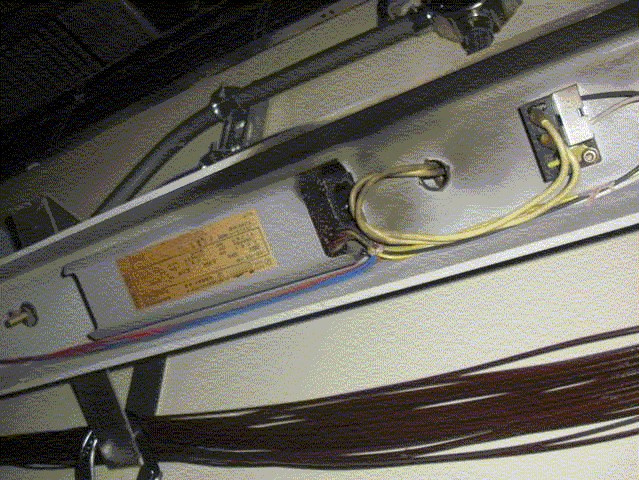
Meanwhile at Kashiwazaki-Kariwa Nuclear Power Plant, TEPCO says a fluorescent light caught on fire in Reactor 6 turbine building. The fire died on its own. Just so you know.

From TEPCO's Photos and Videos page, 7/30/2013:


There is some negative campaign going on to discredit or smear Governor Izumida. Weekly magazines have been writing up articles telling the readers how Izumida was universally disliked while he was at Ministry of Economy, Trade and Industry, and many thought he was strange.

========================

(UPDATE 7/30/2013) From the reader "Beppe", Izumida's appearance in Hodo Station program:

"Izumida just showed up at Hodo Station and I had no problem understanding what he wants.

"Basically he does not want another Fukushima to happen; the new "regulatory" standard, which replaced the safety standard, does not offer enough guarantees and is based on the premise that accidents happen.

"He also wants to be able to evacuate the people in the 5km radius from KK: they tried evacuating 400 people and obtained a traffic jam; in case of an accident they would have to evacuate 20,000 people; he does not know how to do that.

"Moreover, in case of another accident, he wants it to be decided in advance who is expected to go and operate the power plant even at the cost of his life. Apparently in the US this is the army job; in Japan this is not decided.

"He also wants the KK npp to be reinforced taking into account *at least* the lessons from the 2007 earthquake: at that time the ground sunk up to 1.5m and, as a result, some electrical connections were severed and a relatively large fire broke out. Izumida is asking what if the same happens with the pipes that will connect the reactor to the filtered vent? if pipes are severed the reactor will discharge directly in the atmosphere, possibly at a few meters height. This is not being addressed by Tepco.

"Obviously he sees a lot of issues with nuclear power and he is getting no satisfactory answer. He met Amari but Amari has no decisive power; he would like to meet NRA's Tanaka but the latter refused to meet him.

"During the interview he came across as being very passionate about the issue and I do not see what personal benefit he could get from asking nuclear power to be safe. I wish we had many more Izumida."

Thursday, July 4, 2013

Japan's Nuclear Regulatory Authority Is Displeased with Governor of Niigata for His Criticizm of NRA, Calls Him "Unique"


Calling someone "unique" is not a compliment in Japan. It is a severe criticism.

Governor of Niigata Prefecture, Hirohiko Izumida, is a former elite career bureaucrat from the Ministry of Economy. But unlike his peers (there are many among governors and mayors in Japan) he has been quite vocal in opposing the national government when it comes to nuclear power plants (Niigata has TEPCO's Kashiwazaki-Kariwa, for which TEPCO is going to submit an application for restart) and burning disaster debris in municipalities within Niigata Prefecture known for excellent sake and rice because of its pristine water.

Alas, the governor technically has no say in either, according to the existing rules and regulations, no matter how valid his criticisms are. It's solely up to the municipalities to decide whether they want nuclear power plants in their municipalities to restart, or whether they want to burn disaster debris in their municipalities.

Nuclear Regulatory Authority, unfortunately revealing itself to be just another enabler of the central government and the nuclear industry under the LDP administration, is not happy with Izumida's criticism, and the chairman of NRA openly showed his displeasure in a press conference, which is unusual.

From Kyodo News (7/3/2013):

新潟知事の規制委批判に不快感 「個性的」と委員長

Displeased with criticism of NRA by Governor of Niigata, NRA chairman calls him "unique"

 原子力規制委員会の田中俊一委員長は3日の記者会見で、原発の新規制基準や防災計画づくりをめぐって規制委批判を繰り返している新潟県の泉田裕彦知事について「大体の自治体の首長さんは納得している。かなり個性的な発言だと思っている」と不快感を示した。

During the press conference on July 3, Chairman Shunichi Tanaka of Nuclear Regulatory Authority referred to Governor of Niigata Hirohiko Izumida, who has been criticizing NRA repeatedly over the new regulatory standards for nuclear power plants and the disaster prevention plans, and said, "Most heads of the local governments understand [the position of NRA]. I think his remarks are rather unique", indicating his displeasure with the governor.

 泉田氏はこれまで「新規制基準はハードにしか目が向けられていない」「避難計画について地元の意見を事実上無視している」などと規制委を批判。4月に規制委を訪問し田中氏に面会を求めた際、事務局の原子力規制庁長官が慣例に従って対応したことにも不満をあらわにしていた。

Mr. Izumida has criticized NRA, saying "New regulatory standards only focus on hardware", "Evacuation plan effectively ignores the suggestions from the local municipalities". When he visited NRA in April this year and asked to see Mr. Tanaka, he was instead met by the director general of Nuclear Regulatory Agency, which is the secretariat of Nuclear Regulatory Authority, in accordance with the custom. Mr. Izumida was not too happy with this treatment.


When I read the news first at Yomiuri Shinbun, I thought it was some kind of compliment to call someone "unique", as Yomiuri's article had no mention of "displeasure". Clearly, it was self-evident to Yomiuri and its readers that Chairman Tanaka's remark was meant as criticism, and so the paper didn't elaborate.

Yes, I completely forgot this was Japan, still not a very good place for people to be "unique". A twitter reader reminded me that the word "individualism" is equal to "egoism" in Japan, and it is something to be looked down on and discouraged.

As to the governor unable to meet the chairman because it was out of the long-standing protocol, what can I say? That's like Tokugawa era, from about 1600 to 1868. Here I was, thinking it was 21st century even in Japan.

But then it does makes sense, as I read more articles and tweets in Japan criticizing the oust of the elected president of Egypt. Doing something out of established protocols is what most Japanese are very bad at (and therefore they criticize heavily), and that was so apparent during the early days of the Fukushima I Nuclear Power Plant accident (batteries couldn't be transported over the highway without necessary permits, for example). Seeing that happen, even in a foreign country, must be a horror to them.

So what do they do to deal with the news out of Egypt? Blame the US, of course, for supporting the demonstrators. I don't know where they get that idea, but it doesn't matter. To deal with something horrible as things happening out of order, they have to have some divine or devilish intervention totally out of their control. The US fits the bill.

Friday, October 19, 2012

Bent Water Rod in Spent Fuel at TEPCO's Kashiwazaki-Kariwa Nuke Plant, No One Knows Why or How


Engineers, care to comment?

During the regular maintenance, TEPCO found a bent water rod in one of the spent fuel assemblies in the Reactor 5 Spent Fuel Pool at Kashiwazaki-Kariwa. In another assembly, the company found a bit of cotton-like fiber caught in the spacer.

From TEPCO's press release (Japanese) on October 17, 2012:


------------------------

Fuel rod configuration, from "Nuclide Composition and Neutron Multiplication Factor
of BWR Spent Fuel Assembly
", Japan Atomic Energy Research Institute (November 1999):


Friday, June 8, 2012

Governor of Niigata Blasts Noda Over Ooi Restart, Accuses Him of Taking the "People's Living" Hostage as Researchers Warns of Active Fault Under Ooi Nuke Plant


Despite having several major municipalities within the prefecture very eager to accept disaster debris in defiance of him, Hirohiko Izumida, Governor of Niigata Prefecture, is not about to cease his attack on the nuclear policy of the national government.

After Prime Minister Yoshihiko Noda declared on June 8 that he would restart Ooi Nuclear Power Plant in Fukui Prefecture to "protect the people's living", Governor Izumida issued his statement lambasting the prime minister.

His prefecture has Kashiwazaki-Kariwa Nuclear Power Plant operated by TEPCO. The plant has 7 reactors on site.

As Asahi Shinbun reports (6/8/2012):

新潟知事「国民生活を人質」 首相の再稼働説明を批判

Governor of Niigata criticizes Prime Minister for his explanation of the need to restart [Ooi nuke plant], says PM is "taking the people's living hostage"

関西電力大飯原発の安全性に関する野田佳彦首相の説明について、東京電力柏崎刈羽原発を抱える新潟県の泉田裕彦知事は8日夜に談話を発表した。

After Prime Minister Yoshihiko Noda explained about the safety of Ooi Nuclear Power Plant operated by KEPCO, Hirohiko Izumida, Governor of Niigata Prefecture that has Kashiwazaki-Kariwa Nuclear Power Plant operated by TEPCO, issued a statement at night on June 8.

泉田知事は「『福島を襲ったような地震や津波が起きても事故を起こさない』と限定付きでの『安全宣言』で、福島を襲ったものとは異なる直下型地震の場合は再び『想定外』との言い訳が通る説明になっている」と指摘。

Governor Izumida pointed out, "It was a limited 'declaration of safety' that 'the plant won't have an accident even if the earthquake and tsunami that struck Fukushima strikes Ooi'. But if it is a different kind of earthquake, such as an epicentral earthquake, they will be able to make an excuse of 'beyond expectation'."

新たな原子力規制機関ができていないことにも触れ、「万が一の事態が生じた場合の対策も固まっていない中で、新たな『安全神話』を創造することになり、極めて無責任。国民生活を人質にして安全を軽視した宣言となっている」と痛烈に批判した。

He also mentioned that a new nuclear regulatory organization was not in place yet, and made a scathing criticism by saying, "There are no countermeasures firmly in place for an emergency situation. If the plant is restarted, they are creating a new "safety myth". It is extremely irresponsible. [Prime Minister's] declaration takes the people's living as hostage, and disregards safety."


His concern for an epicentral earthquake seems well justified. Two university researchers just released their studies on June 8 that raised the possibility that Ooi Nuclear Power Plant is (also) sitting on top of an active fault. The Nuclear and Industrial Safety Agency chief immediately issued a statement denying the possibility. I couldn't find any information on the education background of the current NISA chief Moriyama (whether he is a liberal arts major or science major).

Governor Izumida is another former career bureaucrat turned politician. He is from the Ministry of International Trade and Industry (today's Ministry of Economy, Trade and Industry), still considered the most powerful ministry in the Japanese government.

FYI, this is Ooi Nuclear Power Plant's aerial photo, from Yomiuri. Reactor buildings are lined up against the mountains that face the ocean, and the turbine buildings are behind the reactor buildings. One smart site planning...(not). Unlike TEPCO's Fukushima I Nuclear Power Plant, KEPCO's Ooi plant does not have the building that would reasonably withstand a strong earthquake and could serve as disaster headquarters on site.