Showing posts with label Bin Mori. Show all posts

Thursday, June 14, 2012

#Radioactive Japan: Professor Mori Suspects Deformity of Cedar in Ibaraki Prefecture May Be Due to Radiation Exposure


Dr. Satoshi Mori, professor emeritus at Tokyo University (Faculty of Agriculture), has the photographs of male and female flowers of a cedar tree that he collected this year in Hitachinaka City in Ibaraki Prefecture. The city is located at about 120 kilometers from Fukushima I Nuclear Power Plant.

Cedar is simultaneously monoecious - i.e. bearing separate flowers of both sexes at the same time. Professor Mori explains that some branches bear only male flowers while others bear only female flowers.

But what he found in the cedar tree in Hitachinaka City was asymmetrical, malformed branches with both male and female flowers.

From Professor Mori's blog (6/15/2012):

First, these are what the normal cedar flowers should look like. Note the beautiful symmetry in both:

Male flowers:


Female flowers:


Now, cedar branches he found in Hitachinaka City, Ibaraki Prefecture:

Male flowers growing on top and at the bottom of a female flower:


Female flowers were the odd ones out, Professor Mori says, because this branch was supposed to bear male flowers:


Symmetry is totally lost in this different male branch:


Callus in the center, with necrosis of male flowers (upper part):


Professor Mori suspects that the growing point of the cedar tree was irradiated, and that resulted in the developmental anomalies you see in these photos. He says more samples are needed to definitely conclude the anomalies are the result of irradiation.

Professor Mori has been studying the effect of radiation from the Fukushima accident on wild life by actually going to the affected, high-radiation areas including Iitate-mura in Fukushima and collecting samples - spiders, earthworms, dragon flies, cedars, etc. For more of his observations that I have covered, see these posts.

Sunday, May 27, 2012

Radioautograph of Japanese Cypress Leaves from Iitate-mura, Fukushima

Dr. Satoshi Mori of Tokyo University has a radioautograph of Japanese cypress leaves that he took from Iitate-mura in Fukushima Prefecture last year in his blog. He says he cannot help feeling pity for the tree:


From Dr. Mori's blog (5/24/2012):

このヒノキの写真は昨年飯舘村小宮地区で育林されているものを昨年の秋に撮影したものである。そこから手に届く高さの葉と雌果をとってきた。

This picture of Japanese cypress cultivated in Komiya District of Iitate-murawas was taken in the fall of last year. I also took the leaves and female cones at the height I was able to reach.

これに関しては、一部をすでにWINEPブログで報告しておいた。(2011/12/18 : スギとヒノキの今年の雌果種子へのCs-137の転流を確認した:これからは、あらゆる植生の奇形化が予想される)

I've already reported part of the study [of this cypress] in this blog. (http://moribin.blog114.fc2.com/blog-entry-1339.html)

今回はその後の追加情報としてヒノキの各組織が含有する放射線の数値ばかりでなく葉のラジオオートグラフ像を示したい。

Today, I want to show you the radiation measurements of parts of the cypress tree and the radioautograph of the leaves.

female cones

放射能を簡易測定すると種子は以下の表1のように、Cs-137で約一万ベクレル/kgという高い線量を検出した。Cs-134はこの7割あるはずであるから、総線量でセシウムは1万7千ベクレル/kgはあるはずである。表1の葉の放射能の約7分の一の濃度である。雌果が葉の軸についているときは種子は雌果の中に入っており、外部からの放射性ホコリなどの被爆はほとんどないはずである。だから、ここで示す種子の放射能のほぼ全部が、セシウム被爆した葉か、樹皮から転流してきたものと思われる。

seeds

In the simplified measurement [using NaI scintillation survey meter], the seeds were found with about 10,000 Bq/kg of cesium-137, as you see in the Table below. Cesium-134 must be about 70% of this amount, so the total cesium would be at least 17,000 Bq/kg. It is about one-seventh of the radioactivity of the leaves. When the female fruits are attached to the leaf-stems (rachis) the seeds remain inside the fruits, and there should be no external radiation exposure from radioactive dusts. So, I assume almost all the radioactivity in the seeds was translocated from the leaves and tree barks that were contaminated with radioactive cesium.


表1 ヒノキの成分の放射能
  
ヒノキ Japanese Cypress
Cs-137 (Bq/kg)
種子 seeds
10709
雌果の殻 female cone shells
37639
葉 leaves
74610
葉の軸 rachis
166093

それにしても写真4のように葉を押し葉にしてラジオオートグラフを撮ってみて、我ながら、葉や葉の軸にまんべんなく放射能でまぶされているヒノキに、同情を禁じ得なかった。 この被爆イメージは数値情報だけでは決してわからない。

Still, as I pressed the leaves and took the radioautograph, I couldn't help feeling pity for the Japanese cypress that was doused everywhere on the leaves and rachis with radioactivity. This image of irradiation may speak more volumes than the mere numerical information.

この種子は、本来ならば、雌果からはじけ飛んで、地上で、種子自らが抱え込んだ放射能による内部被爆と、このあたりの環境放射能(数マイクロシーベルト/hr)による外部被爆で、自らの胚芽の染色体を傷つけながら、発芽期を迎えて、細胞分裂を行うはずであったわけである。

These seeds would have popped out of the female fruits, landed on the ground, and damaging the chromosomes of their embryo buds from internal radiation exposure and the external radiation exposure from the environment (several microsieverts/hour) they would have entered the germinating period and started cell division.


生物学研究者ならば、染色体障害による発芽阻害、たとえ発芽してもその後の形態の奇形化などを想像するのが当たり前だろう。動物で云えば、流産、死産、奇形、免疫低下の虚弱体質等々である。チェリノブイリでは多くの奇形化した枝葉が見いだされていることはすでに上記のブログで報告しておいた。

Any biology researcher would think about inhibition of germination due to chromosome disorders, or malformation even if they germinate. If it were animals, they would be the equivalent of miscarriage, stillbirth, malformation, weak constitution due to immune depression. I've already reported on the numerous cases of malformed branches and leaves in Chernobyl.

写真5 BASで撮影したラジオオートグラフ。全身が放射性降下物(フォールアウト)でまんべんなくまぶされて被爆していることがわかる。 

The radioautograph shows the leaves uniformly sprinkled with radioactive fallout and irradiated.


I asked Dr. Mori about specific example of chromosome disorders. He said there are many types of chromosome disorders, including the following:

  • Normal structures (roots, stems, leaves) may not form because cell division is interrupted and cells become callused.

  • Chloroplast may not form in the leaves, and the plant cannot do photosynthesis (no carbon dioxide assimilation); or mitochondria is not formed, and the plant cannot breathe (no oxygen absorption). In either case, the plant will die.

  • Even if the plant survives, it cannot leave offspring if there is a formation disorder of pollens or ova.


Tuesday, February 7, 2012

1.37 Million Bq/kg Radioactive Cesium in Earthworm Castings in Fukushima

There was a piece of news about 20,000 becquerels/kg of radioactive cesium found in earthworms collected in Kawauchi-mura, Fukushima Prefecture (20 kilometers from Fukushima I Nuclear Power Plant) in Mainichi Shinbun (2/6/2012).

The article says the researchers at the Forestry and Forest Products Research Institute, a government institution, found radioactive cesium in earthworms collected at 3 locations in Fukushima. The amounts varied significantly (from 20,000 becquerels/kg to 290 becquerels/kg), and the researchers (or Mainichi Shinbun reporter) attributed to the varying air radiation levels in these 3 locations.

Ummm, earthworms live in the soil, not in the air, I thought. Still, 20,000 becquerels/kg was high, until I read Professor Bin Mori's blog about his own experiment using earthworms.

Professor Mori found over 1.37 million becquerels/kg of radioactive cesium in excrement of earthworms he picked up in Watari District of Fukushima City, where radioactive cesium exceeding the national provisional safety standard (500 becquerels/kg) has been found in rice.

From Professor Mori's blog (2/6/2012):

生きとし生けるものはすべて放射能染してしまったのである(ミミズの銀とセシウムについて)

All God's creatures, great and small, have been contaminated with radiation (About radioactive silver and cesium in earthworms)

福島県を中心に、我々が採取してきた生物を厳密に測定すると、これまで放射性セシウム汚染していない生物はいない。だから、このブログの最後に示す本日の毎日新聞の報道のようにミミズも当然放射性セシウム汚染している。

Our study on the living organisms collected in and around Fukushima Prefecture shows that there is no organism that is not contaminated with radioactive cesium. As the Mainichi Shinbun reported today, earthworms are also contaminated.

小生は、東電福島第一原発から約60キロ離れた福島市渡利地区で、ミミズはもっとも土壌と接触している(土を丸ごと食べる!)から、強度にセシウム汚染しているに違いないと思って、長さ5センチぐらいのミミズを多数採取した。

I collected a lot of earthworms that are about 5 centimeters in length in Watari District of Fukushima City, about 60 kilometers away from the Fukushima I Nuclear Power Plant. Earthworms were in direct contact with soil, and so I assumed they would be highly contaminated with radioactive cesium.
    
  それを予備的にNaI検出器で一匹一匹調べた。多いものではCs-137が数万ベクレル/Kgあった。すべてのミミズが強く汚染していたが個体毎に非常にばらつきがあったのが不思議であった。

As a preliminary test, I used the NaI scintillation detector over each worm. On the high end, there were several tens of thousands of becquerels/kg of cesium-137. All worms were highly contaminated, but I wondered at why there were wide variations between the worms.
  
  よく観察すると、その理由として、ミミズに呑み込まれた土が体内にまだ残留しているミミズは放射性セシウム値が明らかに高いと思われた。

On closer observation, it seemed that the worm that still had the soil it had eaten remaining in the body tested high in radioactive cesium.

そこで、現場で偶然長さ30センチにわたる大きなミミズを捕まえていたので、これを、水で十分に洗って室温で放置して2週間にわたって糞を全部吐き出させて、乾燥させた。それをゲルマニウム半導体検出器で測定した。乾燥させた理由は、通常放射性セシウムの測定値を乾物重あたりで表示するためでもある。(写真1)

One of my catch was a large earthworm, 30 centimeters in length. So I washed it carefully with water, and left at room temperature for 2 weeks until it excreted all the castings and was dry. I measured [the worm and the castings] using the germanium semiconductor detector.
  
そうすると、このミミズの放射性セシウム値は顕著に少なかった(表1)。これは意外であった。

To my surprise, radioactive cesium in this worm was significantly less (Table 1). I didn't expect it to be this low.

Table 1: Radioactivity of earthworm in Watari District in Fukushima City
  

Radionuclides

Radioactivity (Bq/kg)

Ratio

Cs134

360

42

Cs137

480

Ag110m

20

1


さらに意外であったのは、ミミズの糞の放射能が驚くほど高かったことである(表2)。

Even bigger surprise was that the radioactivity in the castings was extremely high (Table 2).

Table 2: Radioactivity of the worm castings

Radionuclides

Radioactivity (Bq/kg)

Cs-134

569,032

Cs-137

804,340

Ag-110m

0


念のために、この場所の土壌の放射能も測定した(表3)。

I measured the radioactivity of the soil where I got the worm (Table 3).

Table 3: Radioactivity of the soil

Radionuclides

Radioactivity (Bq/kg

Ratio

Cs-134

37,629

345

Cs-137

44,031

Ag-110m

237

1


  ちなみにこのミミズがいたどぶのヘドロから1センチ離れた表面の放射線線量値は13.31マイクロシーベルト/時間という非常に高い値を示した。

The worm was found in the sludge of a ditch. The radiation level at 1 centimeters off the surface of the sludge was extremely high, at 13.31 microsieverts/hour.

計算の結果ミミズは土壌の放射性セシウムを0.01倍(840Bq/81660Bq)しか濃縮していないが、一方では放射性銀を0.085倍(20Bq/237Bq)に濃縮していた。

According to my calculation, the worm concentrated radioactive cesium in soil at a ratio of 0.01 (840 Bq/81660 Bq). On the other hand, it concentrated radioactive silver at a ratio of 0.085 (20 Bq/237 Bq).

ミミズの放射性セシウムに対する放射性銀の比は、土壌の放射性セシウムに対する放射性銀の比に対して、8.2倍(345/42)の濃縮率を示していた。つまり、セシウムよりは銀がはるかにミミズでも生物濃縮されやすいことがわかる。

The ratio of radioactive cesium to radioactive silver in the worm was 8.2 times the ratio in soil (345/42). In other words, in earthworms [as well as other living organisms we tested], radioactive silver tends to get concentrated more than radioactive cesium.      

また、ミミズの糞は土壌の放射性セシウムを16.8倍(1373372Bq/81660Bq)に濃縮していることがわかった。糞の放射性銀は検出限界以下であった。

Also, I found that radioactive cesium in the worm castings was 16.8 times as much as that in soil (1,373,372 Bq/81660 Bq). Radioactive silver in the worm castings was below detection level.      

ここで詳しくは述べないが、すべての生物において、放射性銀のほうが放射性セシウムよりも生物濃縮されやすい傾向にある。

I won't elaborate here, but there is a tendency in all living organisms [that I tested] that radioactive silver gets more concentrated in the organisms than radioactive cesium.
                
  私見では、下記の記事の森林総研の報道発表は、ミミズを体内に含まれている糞ごと測定している可能性が高い。     

In my personal opinion, the Forestry and Forest Products Research Institute, as reported by Mainichi Shinbun, is likely to have measured the radioactivity of earthworms with the castings that are still inside the worms.

Earthworms are near the bottom of the food chain in the forest. They eat dirt , or rather, eat organic materials already digested by bacteria and other organisms in the dirt. I am very curious to see if anyone has studied the effect of radiation in organisms such as bacteria in the soil.

What we need here is the ecologists who can evaluate the whole forest ecosystem, from the lowest in the food chain such as bacteria that break down the raw materials (such as fallen leaves) up the chain - worms, insects, frogs, lizards, fish, birds, and mammals. There is also another chain of concentration that may go like - bacteria that break down the raw materials, bacteria that feed nutrients from the breakdown of the raw materials to the plant root, worms, insects/lizards/birds that eats part of the plant.

Why study these, instead of human beings? Alternation of generations is much faster in them, so the effect of radiation may be easier to observe, if any.

But alas, only a handful of researchers in Japan seem even interested in studying. Most of those who did study seem to be waiting for their peer-review magazine debut.

Dr. Bin Mori is professor emeritus at the University of Tokyo Graduate School of Agricultural and Life Sciences. His specialty is plant nutrition.

Monday, November 7, 2011

#Radiation in Japan: Spiders in Iitate-mura Concentrating Radioactive Silver 1,000 Times

Dr. Bin Mori is a professor emeritus at University of Tokyo, Faculty of Agriculture. Since the beginning of the Fukushima nuclear crisis on March 11, the professor has been writing his blog focusing on the effect of radiation in plants and remediation of agricultural land.

I have featured his autoradiographs of dandelion and horsetail on my blog before.

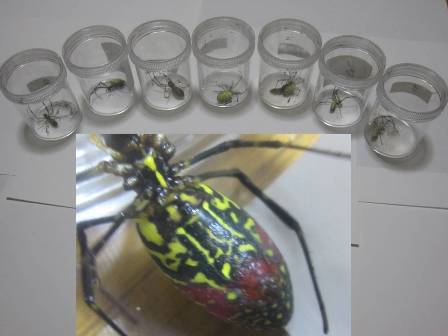
In his post on October 30, Professor Mori wrote about his discovery, probably the world first, he made in spiders (Nephila clavata) he caught in Iitate-mura, Fukushima Prefecture, where the villagers were forced to evacuate after being designated as "planned evacuation zone". The spiders, he found, had radioactive silver (Ag-110m) at 1,000 times the concentration in the environment.

The following is my translation of Dr. Mori's October 30 blog post, with his express permission:

飯舘村で雨の降る中での植物の採取は困難であったので、竹藪や杉林の中で、網を張っているジョロウグモ(Nephila clavata)を捕獲してきました。

Since it was difficult to collect plants in the rain in Iitate-mura, I caught instead "nephila clavatas" in the bamboo groves and cedar forest.

クモは直接土を食べるかどうかわからないが、網にかかった蝶やアブやカナブンなどを食べて林の中の食物連鎖の上位に位し、放射性セシウムを濃縮しているだろうと考えたからです。

I don't know whether the spiders eat dirt itself, but I thought they may have concentrated radioactive cesium in their bodies as they were at the top of the food chain in the forest, eating butterflies, horseflies, and drone beetles that they caught in their webs.


(Picture 1: Nephila Clavata)

ジョロウグモを4匹一緒にしてGe半導体で、放射性セシウム (Cs-137とCs-134) を分析しました(図1)。すると、Cs-137のエネルギーピークである661.7keVの隣の657.8keVの位置にほぼ等量の未知のエネルギーピークを見いだしました(図2)。

I put 4 nephila cravatas together in the germanium semiconductor detector, and analyzed radioactive cesium (Cs-137 and Cs-134) (Picture 1). Then I noticed an unknown energy peak at 657.8keV, right next to the energy peak of Cs-137 at 661.7keV (Chart 2).


(Chart 2: Ag-110m peak detected next to Cs-137)

これを同定するとAg-110m(銀の核異性体:半減期249.5日)の放出する4つのガンマ線の1つのピークであることがわかりました。他の3つのピークも検出されました(図3)。

When I identified this peak, it turned out to be one of the 4 gamma-ray peaks from Ag-110m (nuclear isomer of silver, half life 249.5 days). The other 3 peaks were also detected (Chart 3).

(Chart 3: 4 peaks of Ag-110m identified)

したがって、ジョロウグモが東電福島原発由来の放射性降下物である超微量の放射性銀(Ag-110m)を濃縮していることがわかりました。

So, the conclusion is that nephila clavatas have concentrated a minute amount of radioactive silver (Ag-110m), which is one of the radioactive fallout materials from Fukushima I Nuclear Power Plant.

クモの放射能の濃度は 

Cs-134(2.9Bq/4匹 )+Cs-137(3.9Bq/4匹) = 3656Bq /kg生体重
に対して
Ag-110m (2.6Bq/4匹)=1397Bq /kg生体重
でした。

The densities of the radioactive materials in the spiders were:

Radioactive cesium:
Cs-134 (2.9 Bq/4 spiders) + Cs-137 (3.9 Bq/4 spiders) = 3,656 Bq/kg live weight 

versus

Radioactive silver:
Ag-110m (2.6 Bq/4 spiders) = 1,397 Bq/kg live weight

この林の汚染土壌のCs(137+134)とAg-110mの存在比は、約2500:1 でしたので、上記の数値を用いて計算すると、ジョロウグモは約1000倍にまで土壌の放射性銀を生体濃縮していたことになります。

In the forest where the spiders were caught, the ratio of radioactive cesium (134+137) to Ag-110m was about 2,500 to 1. Using the above numbers, I calculated that nephila clavatas bio-concentrated the radioactive silver in the soil to about 1,000 times.   

昆虫が銀を高濃度濃縮するという知見はこれが世界で最初の発見です。また、すでに林内で放射能の生物濃縮が始まっているということが明らかです。

This is the first discovery in the world that an insect highly concentrates silver. Also, it is evident that bio-concentration of radioactivity in the forest has already started.

 この研究の詳細は11月26日(土)日本土壌肥料学会関東支部会(松戸の千葉大園芸学部)で発表します。乞御来聴。

I will present the details of my research on Saturday November 26 at the Japanese Society of Science and Plant Nutrition's Kanto Branch meeting (Faculty of Horticulture at Chiba University in Matsudo City, Chiba). Please come.  

付記:計測に際しては、東京大学大学院農学生命科学研究科・田野井慶太朗助教のお世話になりました。

Appendix: I'd like to thank Keitaro Tanoi of University of Tokyo Graduate School of Agricultural and Life Sciences for the measurement.

追記1:ここで用いた生体濃縮の定義は、セシウムに対する比率で計算したものです。詳しくは論じませんが、放射性セシウムの生体濃縮の定義によっては、ジョロウグモの銀の濃縮度は、これよりもけた違いに高くなる可能性があります。

PS: The definition of bio-concentration used here is calculated from the ratio to radioactive cesium. I won't discuss it in details here, but depending on how bio-concentration of radioactive cesium is defined, the concentration ratio of radioactive silver by nephila clavata may be even higher.

In the very last sentence, Professor Mori is literally saying "higher by a digit". But I am not exactly sure whether he means literally or figuratively, or whether he means higher by single digit or more. (I'm asking the professor for clarification.)

Professor Mori says he is planning to write up the paper on the subject in English and submit it, but he says that's secondary. The most important thing, he says, is to disseminate information as wide as possible when it comes to radiation contamination, and he uses his blog to post his own unique discovery like this even before he writes it up as a scientific paper.

(What a difference between him and certain researchers who withhold critical information about radiation contamination in Japan so that their papers get accepted by prestigious foreign papers.)

Saturday, August 6, 2011

#Radiation in Japan: Chernobyl-Affected Trees from Europe Sold in Japan?

Ignorance can be deadly. Literally.

From the blog of Dr. Satoshi Mori, Professor Emeritus at Tokyo University Graduate School of Agricultural and Life Sciences; Professor Mori cites a message from one of his readers who is a charcoal producer (8/2/2011):

「25年前のチェルノブイリ放射能事故で、汚染された森林の木材をヨーロッパ諸国が、どの様に処分しているのか報告します。ドイツ・フィンランド・スウェ-デンから、20年前からドイツトウヒ、フィンランドパイン等総称ホワイトウッド材を、日本の木材商社が大量に買い付け輸入が始まり現在も続いています。

"I want to tell you how some European countries have been disposing the trees that were contaminated by the fallout from the Chernobyl nuclear accident 25 years ago. Japanese timber trading companies started to buy Norway Spruce [Picea abies, also commonly called European Spruce]- "whitewood" - from Germany, Finland, and Sweden in great quantities, and the import continues to this day.

日本のスギ材より節が少なく、白系の色調で何よりスギ材より値段が安いホワイトウッドざいは、日本のハウスメーカー・ホームビルダー・ホームセンター等で大量に消費されました。ドイツ産の木材はもう伐採処理が済んだせいか、最近めっきり見なくなりました。ロシア産のアカ松は現在もタルキ用材として、マンション現場で消費されています。

"Compared to Japanese Cedar, Norway Spruce has less knots, whiter color-tone, and best of all it is cheaper than Japanese Ceder. It has been very popular with the Japanese homebuilders and sold in large quantities at home centers. We don't see the timber from Germany any more these days, maybe they finished cutting down all the affected trees. Red Pine from Russia is still used as rafters for the apartment buildings.

即ち自国より遥か遠方で、汚染材の処理に我々が気付かない内に、成功しました。われわれの無知が問題です。」

"In other words, [these countries] have successfully disposed the trees contaminated with radiation by sending them to a far away country [Japan]. And we didn't know it in Japan. Our ignorance is the problem."

という報告を先ほど炭生産業者からメールでいただいた。驚くべきことですね!

This is the email I just received from a charcoal producer. Isn't it amazing?

Amazing is an understatement. I don't know whether Japan has been their exclusive export market for the affected trees or not. Probably not. I also don't know whether the level of radioactive materials in the wood is anything significant. But from the charcoal producer's email, the heavy import of the timber from these countries started at a particular point in time, 1991.

The Japanese government was quite anxious to suppress any negative attitude toward nuclear energy among the populace after the Chernobyl accident, and embarked on the PR campaign selling the safety of nuclear energy. It was very successful in doing so. Many people in Japan may have heard about Chernobyl when the accident happened, but were totally unaware of the radiation contamination that spread far and wide. The accident was in some remote area in the Soviet Union and didn't affect Japan in any significant way, they thought.

For example, in 1991 (what a coincidence), the government, through the Science and Technology Agency (now part of Ministry of Education and Science), created an instruction manual on how to counter the Chernobyl accident and further promote nuclear power among Japanese (the link is in Japanese), who may have become skeptical of nuclear energy after the accident. The manual details the specific approaches for specific target groups - housewives, fathers, school children, media, etc.

If this timber import to Japan from the affected areas in Europe is true, it could well be under the "guidance" from the Japanese government. "Let's help out these countries, and we get the cheap lumber. Radiation? It's so minute it won't affect health. Just don't tell people." Something like that, maybe. Just substitute "countries" with "prefectures", "lumber" with "vegetables, meat, fish", then you may see that's more or less what the Japanese government has been doing since March 11.

Dr. Mori was one of the very first researchers to raise the danger of radioactive strontium in the soil, early on in the Fukushima nuke accident.