Showing posts with label Rikuzen Takata. Show all posts

Saturday, March 2, 2013

Idiosyncratic Japan: "Miracle Pine" Back in Rikuzentakata, Onlooker Feels Power and Strength


The bottom part of the trunk had already been installed on February 12, 2013, and now the entire trunk is up, with the steel rod in the core and secured by glue.

According to NHK (the link has the news clip), a woman in her 60s who came to see the work said she felt power and strength from the dead tree.

The mummified pine tree was installed in the same location where it had stood for 175 years before damaged irreparably by the March 11, 2011 tsunami and died. On February 6, fake leaves and branches made out of special resin will be attached to the trunk.

From NHK, the tree trunk being installed by a crane:


From Yomiuri Shinbun local Kanagawa version (2/28/2013), fake leaves and branches ready to be attached; they were made by a company in Sagamihara City in Kanagawa:


It is really none of my business if the city residents would rather resurrect a dead and mummified tree as their symbol, than actually resurrecting their city from rubble and desolation It's their choice, but my cheer and support would go to the latter.

Thursday, February 14, 2013

"Miracle Lone Pine" in Iwate Prefecture Getting "Resurrected" After Embalming


Embalming the dead is so unlike Japanese, and maybe that's why I find this endeavor by Rikuzen Takata City officials strange.

The tree, before it was cut down, looked like this.

I wrote about this pine tree in Iwate Prefecture that survived the tsunami of March 11, 2011 but died later as the result, and the 150 million yen restoration project by hollowing out the tree and embalming it with resins so that they could put the tree back where it had been standing, as the beacon of hope for the city residents. (They don't have the money, by the way. They are still waiting for your donation.)

NHK reports (2/12/2/13) the first segment of the embalmed, dead tree has been installed on a concrete base:

陸前高田市の奇跡の一本松は、7万本の松が立ち並んでいた「高田松原」で津波に耐えて唯一残りましたが、その後、枯れていることが分かり、モニュメントとして保存するため去年9月に切り倒されました。

The miracle lone pine of Rikuzen Takata City was the only pine tree that survived the tsunami in Takata Matsubara that had had 70,000 pine trees, but it was later found to have been dead. In order to preserve it as a monument, it was cut down in September last year.

復元に向け、県外の工場で芯をくりぬきカーボン製の棒を通すなどの保存処理が行われていましたが、12日から、処理が終わった幹を元の場所に戻す作業が本格的に始まりました。

To restore the tree, the core was removed from the tree and replaced by carbon rod in a factory outside the prefecture. On February 12, the work to place the treated trunk back to where the tree had been standing started in earnest.


12日は、午前9時半から高さ4.5メートルほどある幹の根元部分の設置作業が始まり、幹をクレーン車でつり上げたあと、コンクリートの土台に慎重にはめ込んでいきました。

Installation of the bottom part of the trunk, about 4.5 meters in length, started at about 9:30AM on February 13. It was lifted by a crane, and the workers carefully placed it in the concrete foundation.

作業の様子を見守った、地元の保存会「高田松原を守る会」の鈴木善久会長は「一本松が人工のモニュメントになって帰ってきたのを見ると、少し複雑な気持ちがします。被災者に勇気や希望を与える存在になってほしい」と話していました。

Yoshihisa Suzuki, chairman of the local "Takata Matsubara preservation association", said, "To see the lone pine return as an artificial monument, I have a mixed feeling. But I want it to give courage and hope to the disaster victims."

奇跡の一本松は来月、幹の残りの部分と特殊な樹脂で再現した枝葉をつなぐ作業が行われ、震災発生から2年になる来月11日までには元どおりの姿に復元される予定です。

Next month, the work will be done to connect the remaining trunk and branches and leaves that are recreated using special resins. By the second anniversary of the disaster on March 11, the tree will be restored to its original form.


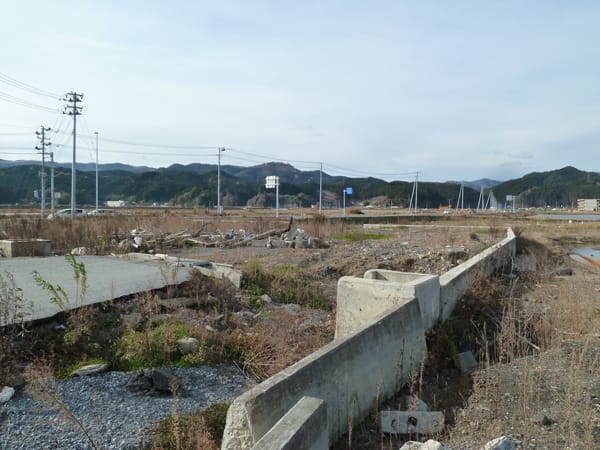
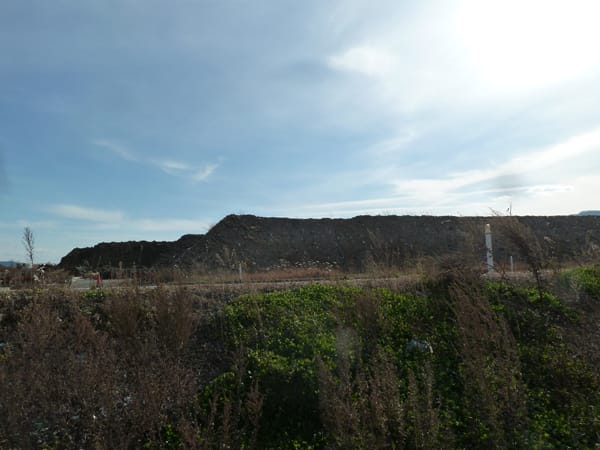
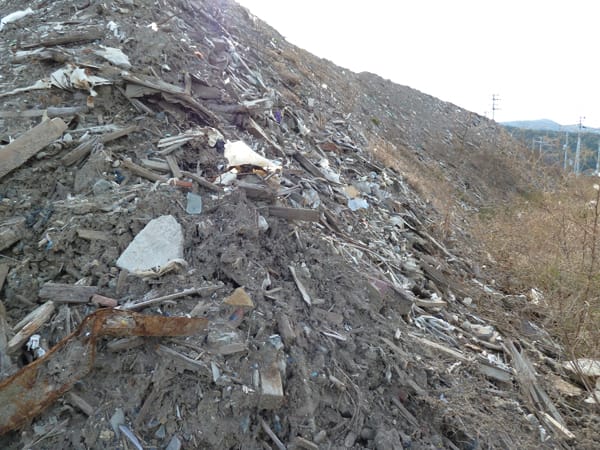
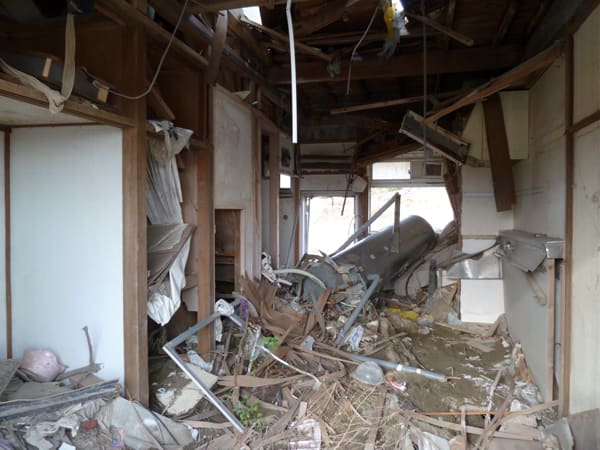
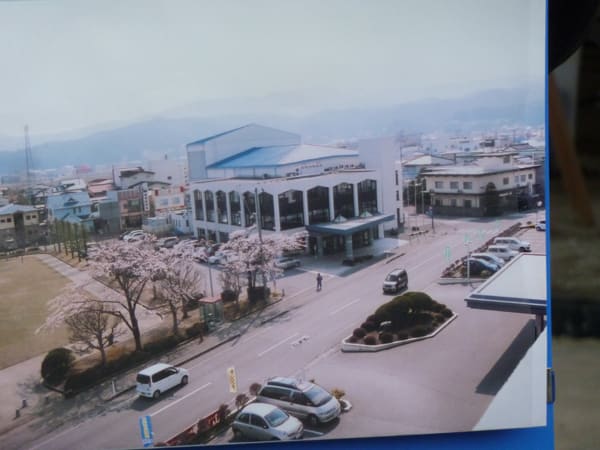
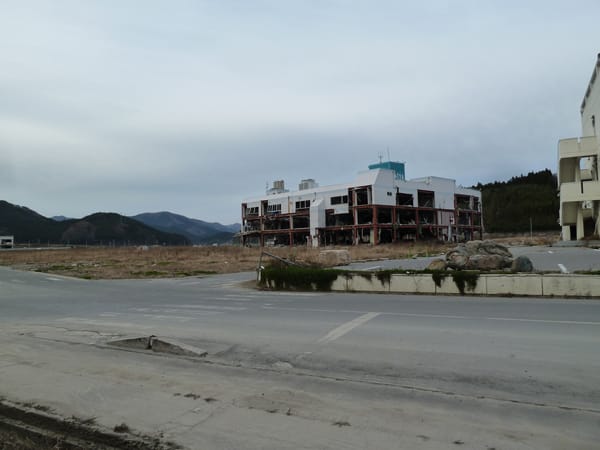
After nearly two years, Rikuzen Takata still look like this, and the residents want to embalm a pine tree to give them hope. Photos are from this blog, as of December 2, 2012, as the author of the blog visited Rikuzen Takata.


Disaster debris mountain:


Civic Hall, before the March 11, 2011 tsunami:


Civic Hall, today:


The blog author asks, "What has the government been doing? What have we been doing since March 11, 2011, to leave the city like this?"

The answer is that no one wants to see the reality. (So let's embalm the pine tree.)

Saturday, July 21, 2012

Disaster Recovery by "Embalming" the "Miracle Lone Pine" in Rikuzen Takata City, Iwate


The mayor of the city believes the tree is the symbol of hope for the residents for the future, and it has to be standing, dead or alive. 150 million yen or not.

Some residents wholeheartedly agree with the mayor, while others have doubts, particularly about the money supposedly needed to preserve the tree in the standing position. I am rather surprised that the tree gets "embalmed", instead of burned in a religious ceremony and sent to the "heaven" (wherever the pine tree heaven may be) - a traditional Japanese way.

NHK Morioka (Iwate) had the article for about several hours yesterday, now gone. This is part of the article that I copied while it was still at the local NHK website (7/21/2012):

津波に耐えて残った陸前高田市の「奇跡の一本松」の保存方法が決まりました。

The method of preservation has been decided for the "Miracle Lone Pine" in Rikuzen Takata City that survived the tsunami of March 11, 2011.

根元から切り倒して幹を5つに分割し、防腐処理をした上で中に金属の棒を通してもとの場所に立てて保存するというものです。
これは20日、陸前高田市の戸羽太市長が記者会見して明らかにしました。

The tree will be cut down at the base, and the trunk will be cut into 5 parts. After they are treated with preservatives they will be pierced through with a metal rod. The tree thus preserved will stand in the original location. Rikuzen Takata Mayor Futoshi Toba disclosed the plan in the press conference on July 20.

それによりますと、一本松はまず根元から切り倒して幹を5つに分割し、芯をくりぬいて防腐処理を施します。そして、金属製の棒を幹の中に通し、根元をボルトで固定することで生えていたときと同じように立てて保存するということです。

According to the plan, the tree will be cut down at the base, and the trunk will be cut into 5 parts. After they are treated with preservatives they will be pierced through with a metal rod, and the base will be secured with bolts so that the tree can stand just like when the tree was alive.

切り倒す時期は8月下旬を予定していて、加工する施設のある名古屋市や京都市にいったん運び、芯のくり抜きや防腐処理をした上で、来年2月末までにもとあった場所に立てたいとしています。

The tree is scheduled to be cut down in the second half of August. [After being cut] the tree will be brought to Nagoya City and Kyoto City where the facilities to treat the wood are located. The core will be removed and the tree will be treated with preservatives. It is hoped that the tree will be standing by the end of February next year.

また、陸前高田市は、保存にかかる1億5000万円程度をまかなうための募金を呼びかけていますが、おとといまでに集まったのは350万円にとどまっているということで引き続き、協力を呼びかけていくことにしています。

Rikuzen Takata City is asking for donations to cover the cost of preservation, about 150 million yen [US$1.9 million], but as of two days ago the amount collected was 3.5 million yen. The city will keep calling for support.

戸羽市長は、「津波に耐えて立っている姿が市民に希望を与えているので立ったまま姿で保存したいと考えこの方法を選んだ。一本松は我々にとっても心の支えでありこれからのまちづくりの希望なので、全国の皆様にご協力を頂きたい」と話しています。

Mayor Toba says, "Because the tree, having survived the tsunami and standing, is giving hope to the residents, we have chosen this preservation method. The Lone Pine is our emotional support and our hope for future rebuilding of the city. We would like people all over the country to help us preserve the tree."


Mayor Toba, I was told by one of my twitter followers, lost his wife to the tsunami.

I would still say "Let it go, let the tree die a peaceful death" and find hope elsewhere.

On the other hand, it may be a clear sign that the "recovery", much publicized by the national government, doesn't exist, if the residents of one of the areas hardest-hit by the March 11 tsunami have to rely on a dead tree for hope and support.

Saturday, April 21, 2012

Soccer Ball and Volley Ball Reached Alaska, Probably from Disaster-Affected Areas of Japan

The soccer ball has the writing on it that indicates it may belong to someone in Rikuzen Takata City in Iwate Prefecture. The city was severely damaged by the March 11, 2011 tsunami.

From Ancourage Daily News (4/21/2012):

Balls on Alaska beach may be first of tsunami debris

Two balls found on an Alaska beach; writing on one traced back to Japan.

By MIKE DUNHAM
Anchorage Daily News

Two sports balls from Japan may be the first positively identified items from the Japan tsunami of last March to reach Alaska shores. According to an April 19 online notice from the National Oceanic and Atmospheric Administration's Office of Response and Restoration, a soccer ball and volleyball were found on the beach of Middleton Island by David Baxter, a technician at the radar site on the remote island in the Gulf of Alaska.

Baxter noticed Japanese writing stenciled on the balls. His wife translated the writing on the soccer ball and traced it to the name of a school. NOAA confirmed that the school was in the tsunami zone, though located uphill and not seriously damaged by the disaster.

"We're partly getting things secondhand," said Doug Helton with NOAA offices in Seattle. "We're working with the State Department and the government of Japan."

NOAA thinks this could be one of the first times anything washed away during the tsunami has been sufficiently identified as to make it possible to return it to its owner. It's definitely the first such to be retrieved in Alaska, Helton said.

"There have been other items that were suspected, but this is the first one that we're aware of that has the credentials that may make it possible to positively identify it."

...

It's no surprise that the front edge of tsunami debris should arrive here first. Helton noted that in a new model of predicted debris distribution released earlier this month, "You can see that the Gulf of Alaska is going to get high windage items, floats, Styrofoam, soccer balls. Those things could be moving pretty quickly. Wood and construction materials will be a lot slower.

...

The volleyball doesn't have enough information on it for the Japanese consulate to establish a possible owner, NOAA said, but queries are continuing.

Persons who find an item they think may be related to the Japan tsunami are asked to take a picture, note the location and report it to disasterdebris@noaa.gov.

(Full article at the link)


Monday, August 22, 2011

NPO in Fukui Selling Buddhist Rosaries and Bracelets Made of Rikuzen Takata Pine

whose bark was found with 1,130 becquerels/kg of radioactive cesium.

From Yomiuri Shinbun (12:59AM JST 8/23/2011):

「京都五山送り火」用の薪(まき)から放射性セシウムが検出され、岩手県陸前高田市の被災松を使った薪の販売を中止した福井県坂井市のNPO法人「ふくい災害ボランティアネット」が、セシウム不検出だった幹の中心部分を加工した念珠とブレスレットの販売を続けている。

A Sakai City, Fukui Prefecture-based NPO "Fukui Disaster Volunteer Net" has been selling the Buddhist rosaries and bracelets made out of the core of the trunk of the pine trees that was felled in the March 11 disaster in Rikuzen Takat City in Iwate Prefecture. The firewood made out of those pine trees was to be used at "Gozan no Okuribi" in Kyoto, but radioactive materials were detected [from the bark of the wood]. There was no radioactive cesium detected from the core.

 東角操代表は「安全な部分を使ってしっかり復興支援をしたい」と話す。

Misao Higashikado of "Fukui Disaster Volunteer Net" says his organization wants to support the recovery by [commemorating the disaster] using the safe part of the wood.

 「震災の記憶を風化させないように」との願いを込め、玉の一つに「3・11」と刻んだ。7月下旬にインターネットで通信販売を始め、今月16日の送り火の後、茨城大に検査を依頼したところ、幹の部分からはセシウムは検出されなかった。

One bead of the rosary/bracelet is engraved with "3.11", so that the memory of the disaster does not fade away. The NPO started to sell the rosaries/bracelets on the internet in late July. After the "Okuribi" on August 16, the NPO asked Ibaraki University to test for radiation, but there was no radioactive cesium detected from the trunk of the tree.

 念珠は3000円、ブレスレットが1800円。

A Buddhist rosary sells for 3,000 yen (US$39), and a bracelet sells for 1,800 yen (US$23).

 同ネットのホームページ(http://www.fukkou.org/contact-us/tyumon)で購入できる。

You can buy them at the website of the NPO "Fukui Disaster Volunteer Net", at http://www.fukkou.org/contact-us/tyumon

Disaster capitalism alive and well.

Oh wait, it is not really a capitalism. It's done by an NPO, non-profit organization. I should say "social entrepreneurism", then I'm totally politically correct.

(An NPO in Fukui Prefecture asking the university in Ibaraki Prefecture for testing? That's rather far, far away.)