Showing posts with label TEPCO. Show all posts

Tuesday, March 10, 2015

Four Years Later in Japan


A reporter and a cameraman from Jiji Tsushin went to Fukushima I Nuclear Power Plant on February 26, 2015 and made the video available on Jiji's site and on Youtube on March 2.

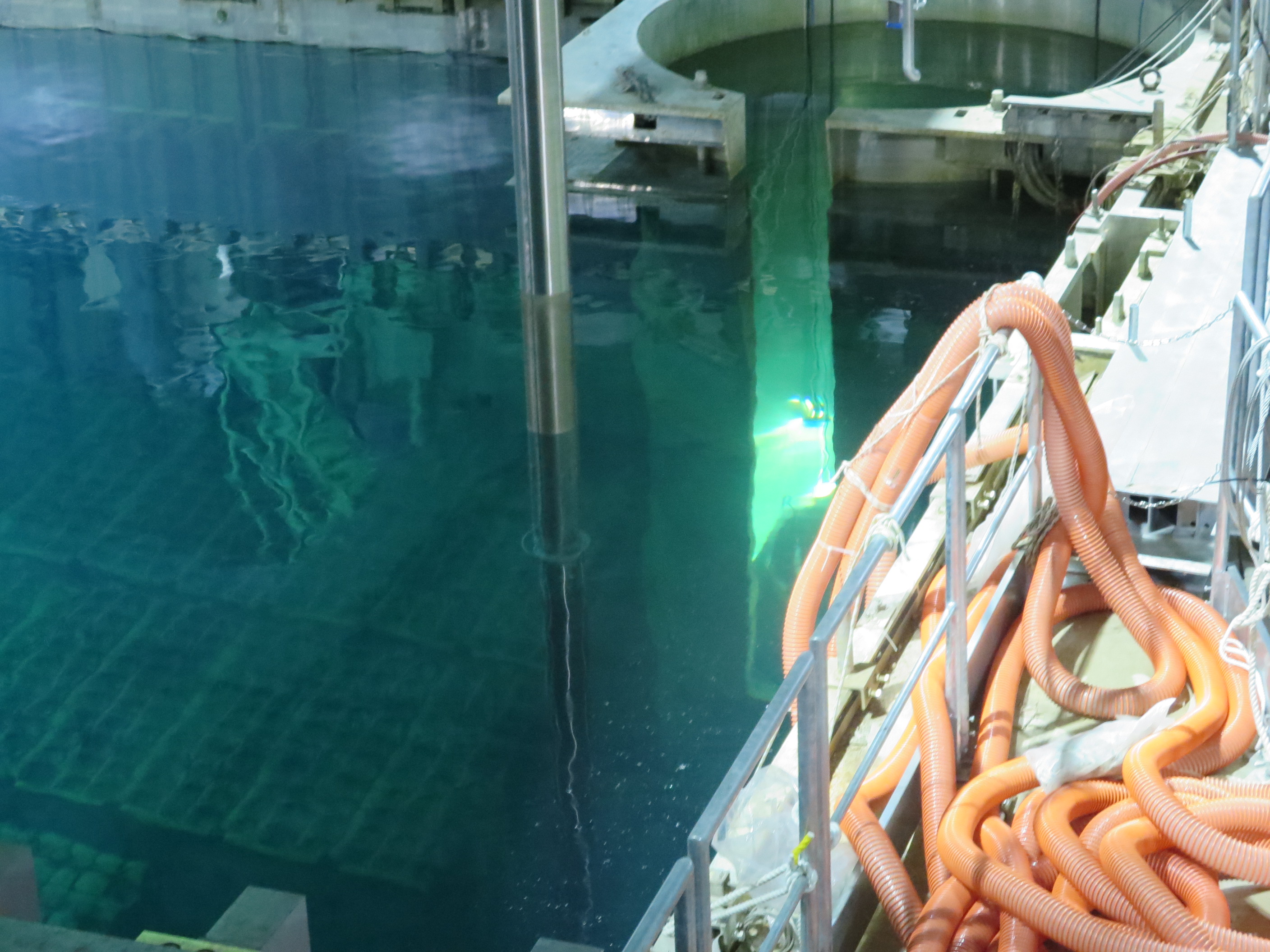
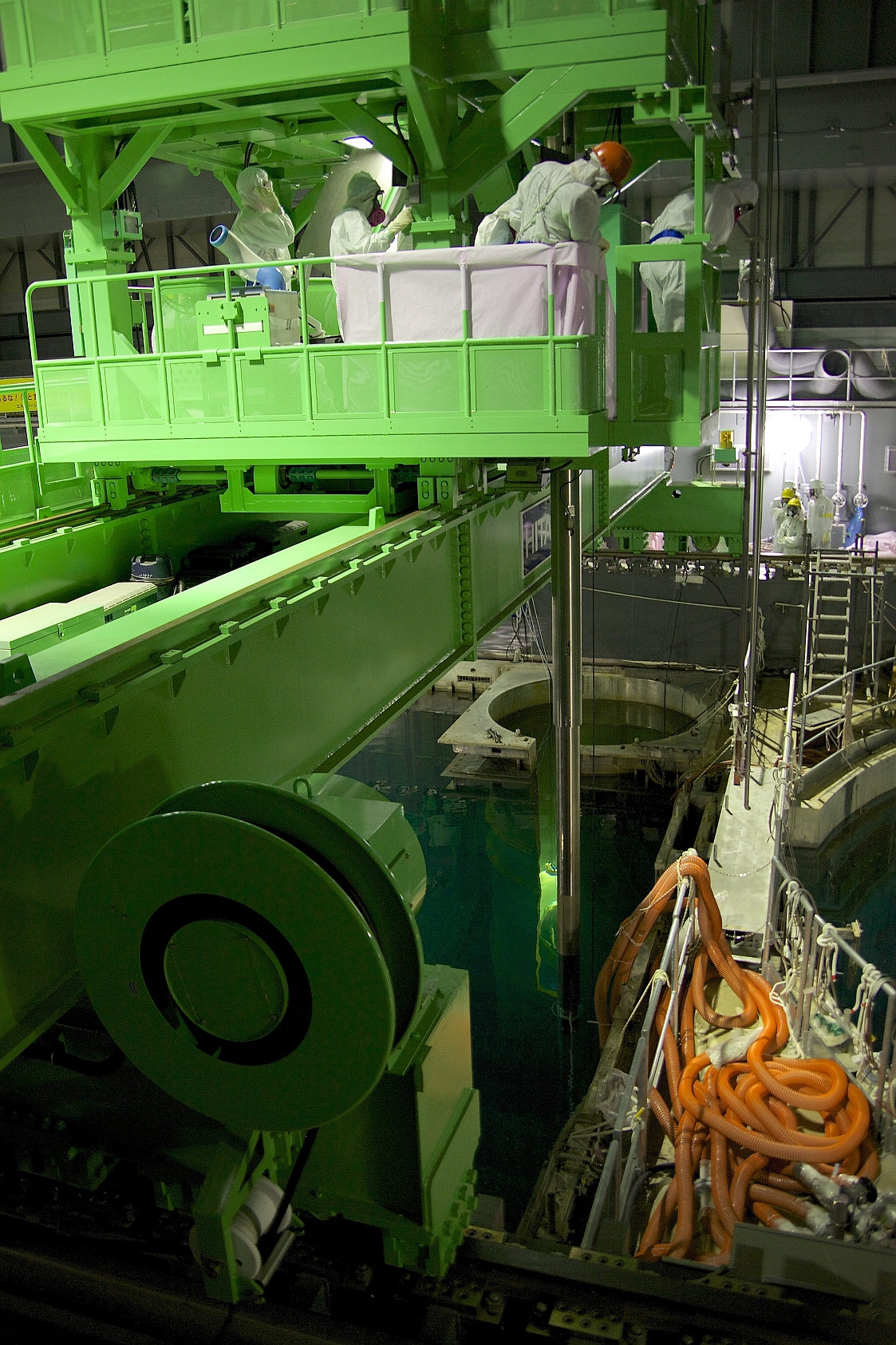
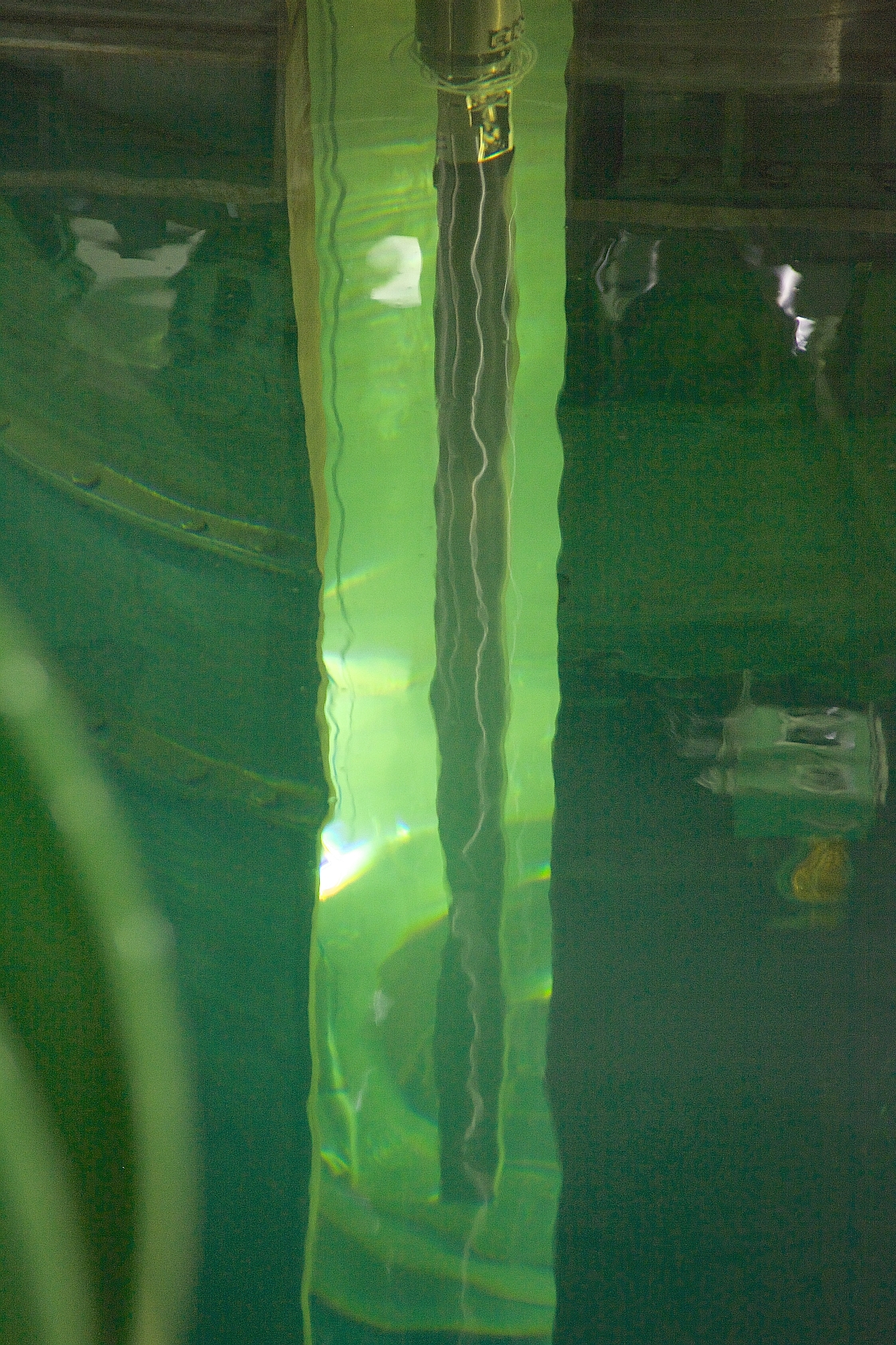
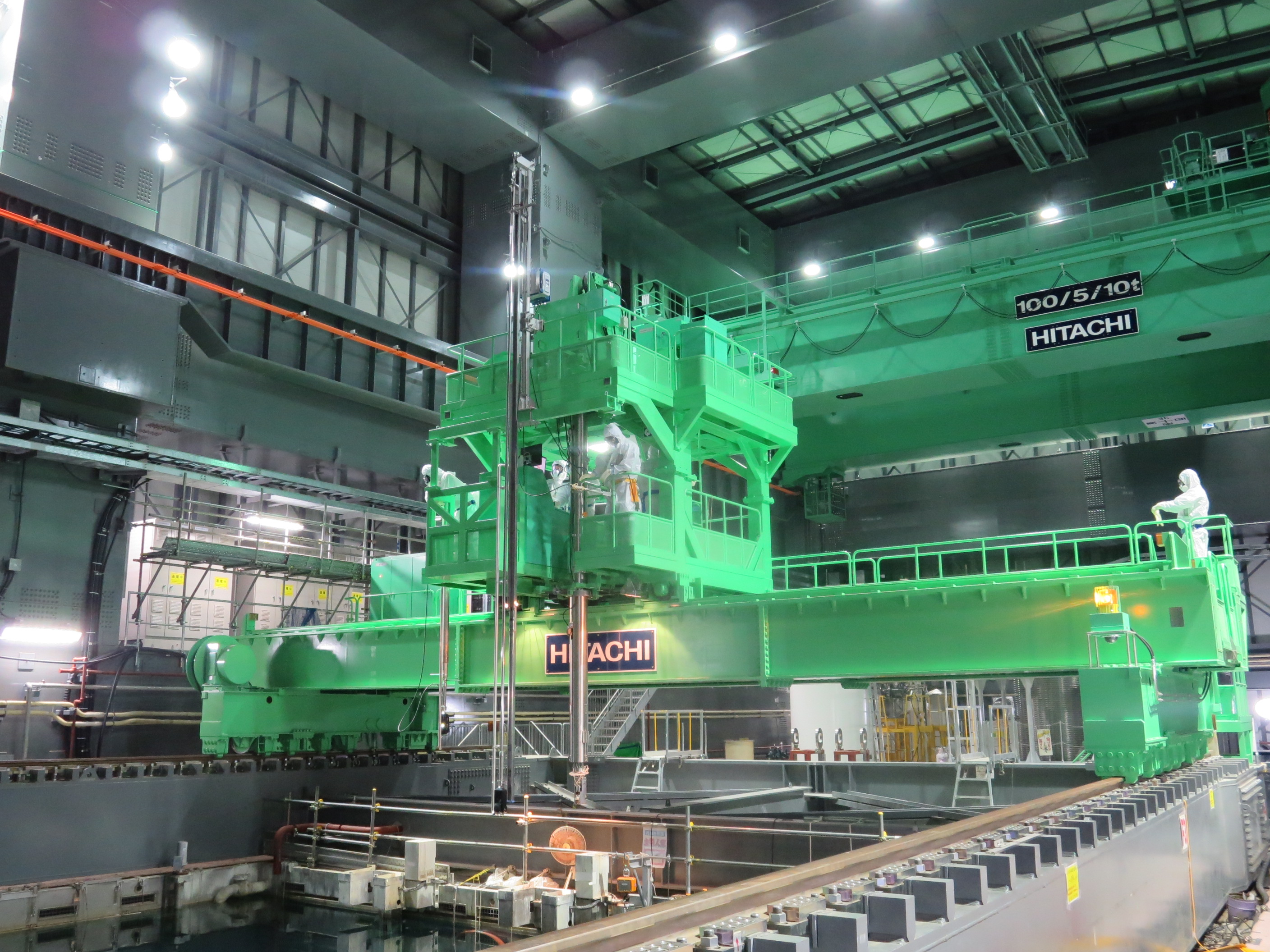
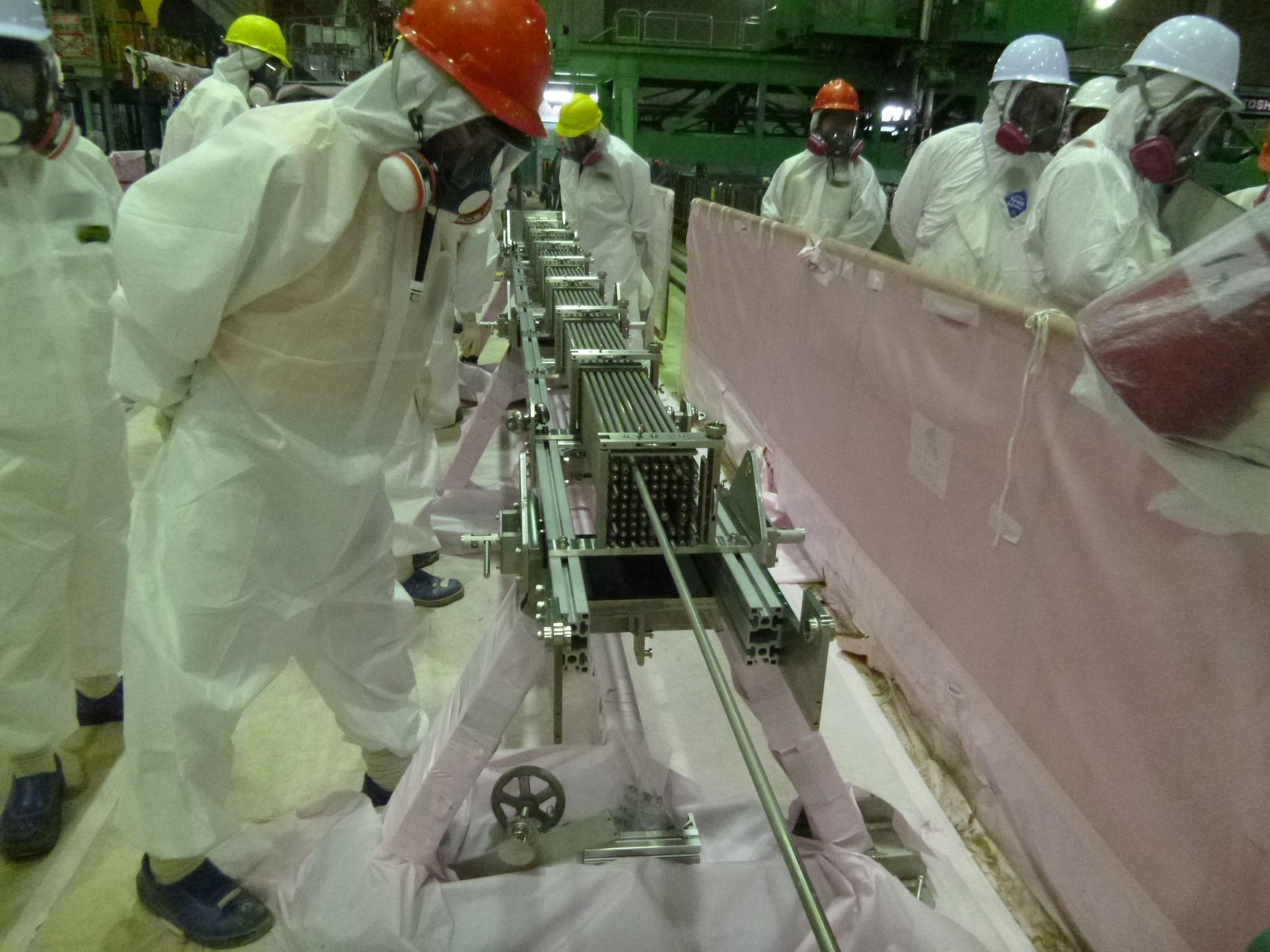
So what has changed? Reactor 3's top floor has been cleaned of debris, although the lower floors are still full of debris (1:50). Slightly murky Reactor 4's Spent Fuel Pool on the operating (top) floor is now empty except for a few control rods (3:10); workers had finished removing all 1,535 fuel assemblies from the pool in December last year. The cask used to transport the fuel assemblies from the pool to the common spent fuel pool on the ground is still at the pool side.
The cooling system for the frozen soil wall is housed in a new building (3:40). (Yes, they still do plan to build the frozen soil wall in the ground around the reactor buildings and turbine buildings.)

At about 50 seconds into the video, the reporter and the cameraman go to the location where they can see across the reactors (with Reactor 1 being the closest). The guide, a TEPCO worker, tells them to be brief because the radiation is high and there is nothing to shield the radiation (coming from the reactors?). The guide says, "It's 300 microsieverts/hour."


TEPCO's president Hirose just said in his address to TEPCO employees on the anniversary of the earthquake/tsunami/nuclear accident that there are over 7,000 workers working at Fukushima I Nuclear Power Plant.

Reuters Japan has a collection of 70 photographs titled "Four Years Ago in Japan". While the nuclear accident that was triggered by the massive earthquake and tsunami on March 11, 2011 has been the focus (often the only focus) for many, the devastation caused by the earthquake and tsunami looks just like a nuclear bomb detonated over Hiroshima and Nagasaki in August 1945, or incendiary bombs dropped on Tokyo on March 10, 1945.

Photo 1, Sendai City, Miyagi Prefecture

"Smoke rises from houses damaged by an earthquake and tsunami in Sendai, March 12, 2011.
REUTERS/Jo Yong-Hak"


Photo 8, Nihonmatsu City, Fukushima Prefecture

"A mother tries to talk to her daughter who has been isolated for signs of radiation after evacuating from the vicinity of Fukushima"s nuclear plants, at a makeshift facility to screen, cleanse and isolate people with high radiation levels in Nihonmatsu, March 14, 2011.
REUTERS/Yuriko Nakao"


Photo 9, surreal Otsuchi City, Iwate Prefecture on March 14, 2011


Photo 21, a piano, almost like an objet d'art, in Rikuzentakata City, Iwate Prefecture:

"A piano is submerged in water in the area devastated by tsunami in Rikuzentakat, March 21, 2011.
REUTERS/Damir Sagolj"


And this, I believe, is near Fukushima I Nuclear Power Plant, right by the ocean. Rows and columns of "fre-con" bags(flexible container bags) stuffed with contaminated soil and debris removed as the result of the government effort to "decontaminate" the villages, towns and cities in Fukushima, temporarily stored outside, right by the ocean.


When the earthquake/tsunami hit on March 11, 2011 in northern Japan, they feared the death toll would be in hundreds. Then over 1,000. Then thousands.

As of March 10, 2015, 15,891 people are dead, 2,584 missing, 6,152 injured (from wiki, data compiled by National Police Agency). The number for death does not include 3,194 deaths (as of September 30, 2014) after the earthquake and tsunami. Many, particularly the elderly, died of cold and unsanitary conditions at the shelters.

Thursday, December 25, 2014

District Court Dismisses Lawsuit from Family of Worker Who Died At #Fukushima NPP, "No Evidence TEPCO Was Supervising the Work"


and therefore is not responsible for the worker's death.

Then who was supposed to be supervising the work?

The deceased worker himself?

Is the judge saying the worker was working at Fukushima I Nuclear Power Plant in May of 2011 just because he felt like it?

The judge also exonerates four layers of subcontractors likewise, and adds that the plant operator (TEPCO) and main contractors do not have obligation to ensure worker safety.

Who was supposed to ensure safety, then?

The deceased worker himself?


Japan's judiciary is notorious for overwhelmingly siding with the authority and large corporations, but this seems to be going overboard.

The worker, Mr. Nobukatsu Osumi, died of a heart attack on May 14, 2011, the very first contract worker to die while working at Fukushima I Nuclear Power Plant. He was hired by the fourth-tier subcontractor.

From Jiji Tsushin on Christmas Day (12/25/2014):

東電への賠償請求棄却=福島第1労災死訴訟-静岡地裁

Liability claim against TEPCO rejected by Shizuoka District Court in the Fukushima I NPP worker's accident lawsuit

東京電力福島第1原発事故の収束作業中、下請け会社から派遣された元作業員大角信勝さん=当時(60)=が心筋梗塞で死亡したのは、東電などが安全配慮義務を怠ったからだとして、妻が東電や東芝など4社に計3080万円の賠償を求めた訴訟の判決で、静岡地裁(村野裕二裁判長)は25日、請求を棄却した。

Shizuoka District Court (presiding judge Yuji Murano) rejected the liability claim against four companies including TEPCO and Toshiba totaling 30.8 million yen [US$257,000] in the death of Mr. Nobukatsu Osumi (age 60 at the time of death) who had been sent to Fukushima I Nuclear Power Plant by a subcontractor and died of a heart attack on the job. The suit alleged that TEPCO and the subcontractors were negligent in ensuring safety.

村野裁判長は、東電など4社は「元作業員に対し事実上の指揮監督をしていた証拠はない」と認定。「工事の発注者や元請け会社としての安全配慮義務はない」と判断した。

Judge Murano acknowledged that "There is no evidence that the four companies including TEPCO were actually directing and supervising the worker." He concluded that "For the orderer of the contract [TEPCO] and prime contractors [Toshiba and others], there is no obligation to ensure safety."

判決によると、大角さんは2011年5月13日から、東電が東芝やIHIなどに協力を求めた原発復旧のための配管工事に、4次下請け企業の作業員として従事。翌14日早朝に体調が急変し死亡した。

According to the judgment, Mr. Osumi worked as a worker for the 4th-tier subcontractor from May 13, 2011, laying pipes for the plant restoration work for which TEPCO had contracted Toshiba and IHI among others. He became ill all of a sudden in the early morning of May 14, 2011 and died.

判決後、記者会見した妻でタイ国籍のカニカさん(56)は「東電は線香1本くれない。あまりに冷たい判決」と語り、26日にも控訴するという。(2014/12/25-16:51)

In the press conference after the judgment, Mr. Osumi's wife who is a Thai national said "TEPCO doesn't even offer one incense stick [i.e. offer a single prayer for the deceased]. Such a dry judgement." She plans to appeal on December 26.


If I remember right, Mr. Osumi's work was for AREVA's decontamination/co-precipitation system. TEPCO has long stopped using the system, due to extreme contamination of the system as well as sub-par performance.

All for nothing.

-------------------

As to be so expected and anticipated by this blog's readers, no doubt, TEPCO's Plan D for plugging the trenches leading from Reactor 2's turbine building is not succeeding, if not an outright failure. TEPCO says water flow is still detected, but the flow is very minute (as in "400 liter/hour" minute). I'll post later.

Thursday, August 7, 2014

(UPDATED) #Fukushima I NPP: Source of Neutron Detected on March 13-15, 2011 May Be Plutonium and Uranium Released by Core Melt


(UPDATED with clarification on the neutron dose rates in the translation, and information on the monitoring car at the bottom.)

-------------------------

that then somehow escaped from the Reactor Pressure Vessel, Containment Vessel, and finally Reactor Building, according to TEPCO.

TEPCO just released the latest reports of its on-going data analysis and simulation of the nuclear accident at Fukushima I Nuclear Power Plant that they've been doing since 2011. I'm reading the report, but for now I quickly share a short snippet that piqued my interest.

In sum, TEPCO now thinks the source of neutrons detected right after the start of the accident in March 2011 was the actinide species including plutonium and uranium that somehow escaped the reactors as the reactor core melted (which more or less coincided with the rise in pressure inside the reactors), and neutrons were emitted by spontaneous fission of plutonium and curium.

Neutron detection on March 13 is attributed to the core melt of Reactor 3, and detection on March 14/15 to the core melt of Reactor 2.

Just how did those actinide species escape the pressure vessels and containment vessels? TEPCO only says continued investigation is needed to understand the mechanism and to secure the safety of workers at the plant.

From one of TEPCO's reports titled "Relationship between the neutrons detected at the time of the accident and the core melt" (original in Japanese, quick translation is by me, subject to change later; part):

(Background)

モニタリングカーは、3 月 13 日早朝、及び、3 月 14 日夜から 3 月 15 日未明にかけての二つの期間に中性子を検出した。検出された中性子の線量率は、中性子検出器の検出限度の 0.01μSv/h、および、その 2 倍の 0.02μSv/h と非常に小さい値である。測定場所は正門近辺であり原子炉建屋からかなり距離が離れた場所であることから、原子炉から直接飛来した中性子を検出したものではないと考えられるが、放射性物質が放出され発電所内のガンマ線の線量率が上昇したタイミングで中性子が検知されたという状況でもないため、これまで中性子の検出の原因については不明としてきた。また、発電所内の土壌から、ウランやプルトニウム等が検出されているが、その漏えいタイミング、経路についても不明としてきている。 ここでは、これまでに明らかになった福島第一原子力発電所 1~3 号機の事故進展挙動から、中性子検出についての説明を試みる。

Our monitoring car detected neutrons in two periods - in the early morning of March 13, and from the evening of March 14 to the early hours of March 15. The dose rates measured were extremely low: 0.01μSv/h (detection limit of the neutron detector) and 0.02μSv/h. The location where neutrons were detected was near the main gate of the plant, far away from the reactor building; thus it is considered that the neutrons detected did not come directly from the reactors. At the same time, the neutron detection didn't coincide with the rise in gamma ray dose rates as radioactive materials were released. So far, the reason why neutrons were detected has been deemed unknown. Uranium and plutonium have been detected in the soil inside the plant, but the timing of the leak and the leak process have also been undetermined. In this paper, we will attempt to explain the detection of neutrons based on the accident development behavior of Reactors 1 through 3 at Fukushima I Nuclear Power Plant which has been revealed so far.

(Detection of neutrons on March 13, 2011)

表1に 3 月 13 日に中性子が検出された時刻を示す。図 5 は正門付近での線量率(ガンマ線)の時間変化を示したものに、中性子の線量率が 0.01μSv/h となった時刻のプロットを青、中性子の線量率が 0.02μSv/h となった時刻のプロットを赤としたものである。中性子が検出された 3 月 13 日の午前は、9 時頃の原子炉減圧とそれに伴う S/C からのベントの影響で線量が上昇しているが、中性子検出とガンマ線線量率の変化に相関関係は見られない。すなわち、中性子検出は、ガンマ線線量率の上昇の原因となった放射性物質放出とは、関係しない現象によって引き起こされたものと考えられる。

Table 1 shows the time when neutrons were detected on March 13. Chart 5 shows the change of the dose rate (gamma ray) at different times near the main gate, with times when the neutron dose rate was 0.01μSv/h marked in blue and with times when the neutron dose rate was 0.02μSv/h marked in red. In the morning of March 13, the dose rate rose due to reduction of pressure in the reactor and vent from the suppression chamber. However, no correlation can be observed between the detection of neutrons and the change in gamma-ray dose rate. In other words, the phenomenon that caused the neutron detection was not related to the release of radioactive materials that caused the rise in the gamma-ray dose rate.

(Table 1)


(Chart 5)


一方で、厳密には一致しないが、原子炉水位の変化から予想される、3 号機で燃料溶融が発生したと推定される時間帯を考慮すると、中性子検出と燃料溶融の関連が示唆される。すなわち、燃料溶融により一部気中に放出されたウランやプルトニウムなどのアクチニド核種が、ガンマ線線量率の上昇を引き起こした放射性物質放出とは異なる経路で原子炉建屋外に漏えいし、これらに含まれるプルトニウムやキュリウム等の自発核分裂により放出された中性子が検出された可能性がある。実際、過去の核実験時のフォールアウトによって蓄積したプルトニウムと同程度ではあるものの、プルトニウムの同位体組成から、明らかに福島第一原子力発電所での事故起因と考えられるプルトニウムが、発電所構内の土壌中から 検出されている。

On the other hand, although it is not an exact match, when we consider the time period when the core melt started in Reactor 3, as estimated from the change in water levels in the reactor, there may be a relationship between the detection of neutrons and the core melt. In other words, some actinide species such as uranium and plutonium were generated because of the core melt, and leaked outside the reactor building through a different route than the one in which the release of radioactive materials that resulted in the rise in the gamma-ray dose rate took place. In fact, plutonium has been detected in the soil inside the plant; even though it is about the same level as plutonium accumulated in the soil from the past atmospheric nuclear testing, it is clearly originated in the Fukushima I Nuclear Power Plant accident as determined by the isotopic composition.

なお、中性子が検出された正門付近は、図 6 に示すとおり約 1km 距離が離れていることから、原子炉からの中性子を検出したものである可能性は小さい。

The main gate where neutrons were detected is about 1 kilometer away from the reactors as shown in the Chart 6, and the possibility is small that neutrons from the reactor were detected.

(Chart 6)


(Detection of neutrons on March 14/15, 2011)

一方で、図 7 に中性子の検出時間と 2 号機の原子炉・格納容器圧力の関係を示すが、中性子は原子炉圧力の上昇が始まった後に検出されている。前述の通り、この原子炉圧力上昇は、消防車による注水が炉心部に到達し蒸気が発生したことによると考えられ、また、この際には水-ジルコニウム反応が発生して大量にエネルギーが放出され燃料が溶融したと考えられる。すなわち、原子炉圧力の上昇のあった時間帯に発生した燃料溶融によりウランやプルトニウムなどのアクチニド原子が一部気中に放出され、ガンマ線線量率の上昇を引き起こした放射性物質放出とは異なる経路で原子炉建屋外に漏えいし、これらに含まれるプルトニウムやキュリウム等の自発核分裂により放出された中性子が検出された可能性がある。

Chart 7 shows the time when neutrons were detected and the pressure inside Reactor 2's reactor/containment vessel. Neutrons were detected after the pressure inside the reactor started to rise. As we said before, this rise in pressure in the reactor is considered to have occurred when the water injected from the fire engine reached the reactor core and generated steam. This also caused the water-zirconium reaction which released a large amount of energy, causing the fuel to melt. In other words, our hypothesis is that core melt took place during the time period when the reactor pressure rose, releasing part of the actinide atoms such as uranium and plutonium. These actinide atoms then leaked outside the reactor building through a different route than the one in which the release of radioactive materials that resulted in the rise in the gamma-ray dose rate took place. Then the spontaneous fission of plutonium and curium released neutrons, which were detected.

(Chart 7)


I'll try a separate post on the mechanism of Reactor 2's core melt, which was accelerated, or so TEPCO thinks, by water injection by the fire engines.

-----------------------------

As far as I remember, there was one monitoring car at the time of the accident at Fukushima I NPP. I'll try to verify, but I do recall wondering aloud why there wasn't any more monitoring car at the plant. There was no electricity at the plant during the time period this TEPCO's paper covers, and the plant's regular monitoring stations were not working (as they operate on electricity). Power to the plant wasn't restored until early April, 2011.

Sunday, May 4, 2014

International Nuclear Cooperation: Japan's Monju Reactor to Help France's Astrid, UK's Sellafield to Help Japan's TEPCO


As Japan's Prime Minister Abe tours Europe, he is securing the cooperation from Europe's largest nuclear nations that he hopes (I think) will enhance the status of Japan as a major nuclear nation and secure the nuclear future for Japan.

With France, Mr. Abe is offering Japan's Monju fast breeder reactor to conduct tests for the Astrid.

What's the Astrid? From the wiki entry for Generation IV reactors:

The European Sustainable Nuclear Industrial Initiative is funding three Generation IV reactor systems, one of which is a sodium-cooled fast reactor, called ASTRID, Advanced Sodium Technical Reactor for Industrial Demonstration, Areva, CEA and EDF are leading the design with British collaboration.[13][14] Astrid will be rated about 600 MWe and is expected to be built in France, with construction slated to begin in 2017 near to the Phénix reactor.[9]


Mr. Abe is eager to justify Japan's fuel cycle policy, and he wants to make nuclear technology and military weaponry as two of the major exports from Japan for which his government wants to become the top salesman.

From Nikkei Asia (4/30/2014; emphasis is mine):

Japan, France to work together on next-generation reactors

TOKYO -- The Japanese and French governments are working toward an agreement to cooperate in the development of fast reactors, a technology designed to reduce nuclear waste.

Prime Minister Shinzo Abe and President Francois Hollande will likely affirm the partnership in Paris on May 5. The agreement would build on an earlier comprehensive partnership formed last June in the field of nuclear energy.

Fast neutron reactors convert spent fuel, which remains radioactive for tens of thousands of years, into materials that emit radiation for just a few hundred years, thus helping to reduce overall nuclear waste.

When put into practical operation, such a reactor would generate electricity and cut down on nuclear waste at the same time.

France is developing the Astrid (Advanced Sodium Technological Reactor for Industrial Demonstration), which it plans to start operating around 2025, but it lacks sufficient reactors to conduct tests. Japan will offer up its Monju prototype fast breeder reactor, which has been idle due to safety concerns, for the tests.


Good luck France. Workers, engineers, and scientists at Monju say they are not comfortable working there, unsure about safety.

Then, TEPCO has announced that they will closely collaborate with the UK's Sellafield Ltd. whose expertise in decommissioning a troubled reactor could benefit TEPCO in decommissioning Fukushima I Nuclear Power Plant.

The Windscale accident was an INES Level 5 accident.

From TEPCO's presentation in English (5/2/2014):

Overview

Tokyo Electric Power Company (TEPCO) considers it would be beneficial to share expertise with overseas operators which have similar decommissioning experience, to decommission Fukushima Daiichi Nuclear Power Station.

TEPCO has agreed with Sellafield Ltd. on exchanging information relating to the management and technology of decommissioning, towards a safer and stable decontamination and decommissioning at Fukushima Daiichi Nuclear Power Station. Sellafield Ltd. is a company in UK which has engaged in the decommissioning of a reactor and radioactive waste facilities. On ahead of the formal information exchanging agreement, the two companies signed a cooperation statement, which clarifies the objectives and significance of the agreement.

Content of the Statement (Objectives and significance of the information exchanging agreement)

Overview of the objectives

  • Sharing expertise, experience and technology in radioactive waste management, clean up and decommissioning:

  • Visits in both directions (Fukushima Daiichi NPS, Sellafield) by representatives from both organisations, sharing of information / reports and similar exercises

  • Contributing to achieving the goals for both sites by learning from the similar challenges

  • Continuously assessing the effectiveness of cooperation


Overview of the significance

  • Proper visibility of the suppliers’ contribution

  • Strengthening of the links between our businesses and wider, civil society

  • Positive support of the UK Nuclear Decommissioning Authority (NDA) etc.


About technologies/knowledge of Sellafield Ltd.

  • Sellafield is working with the decommissioning of the Windscale nuclear reactor, which suffered radiation leak (INES-5).

  • It deals with the decommissioning and risk-reducing measurements fo the other facilities with high risk of radiation leakage

  • It has an experience of dealing contaminated water leak to the ground


It is clear from the comment by Mr. Naohiro Masuda, Chief Decommissioning Officer of a new TEPCO company called Fukushima Daiichi D&D Engineering Company, that this deal was brokered by the Japanese government and the UK government, regardless of whether TEPCO wanted it or not.

Mr. Masuda was the plant manager of Fukushima II (Daini) Nuclear Power Plant, which came very close to core melt after the loss of power after the earthquake on March 11, 2011. What the workers did under his leadership and why the core melt did not happen at Fukushima II would be worth recalling.

Saturday, April 19, 2014

(OT) TEPCO's Old Billboard Message: "Please Do Not Litter, Keep Environment Clean"


It looks like an old sign, way before the Fukushima nuclear accident in 2011. Smaller letters are fading.

Someone snapped the photo, and added the message back to TEPCO in yellow and posted on Facebook, which was then tweeted. (Ah, the age of social media.)

TEPCO: Please do not litter (or literally, please do not throw out garbage). Pristine environment starts with your kind consideration.

Anonymous message in yellow letters: For you to say!

From the tweet by "galeria de muerte":

Sunday, February 16, 2014

TEPCO Tells Governor of Niigata That They Can Delay Deploying Filtered Vent at Kashiwazaki-Kariwa NPP for 18 Hours in Case of a Severe Accident


A strange song and dance continues between TEPCO and Governor of Niigata Hirohiko Izumida.

Mr. Izumida is considered to be one of the champions for people who are against nuclear power plants in Japan for his combative stance against TEPCO with his remarks like "Which is more important, profit or people's lives?" to a president of a (nominally) for-profit enterprise.

He is also insisting that TEPCO NOT use the filtered vent to be installed at Kashiwazaki-Kariwa Nuclear Power Plant unless he gives the express permission to do so in case of a severe accident like the one that hit Fukushima I NPP.

Why? Because the filtered vent cannot eliminate the volatile radioactive materials like noble gas and iodine-131. Izumida doesn't want the vent to take place while the residents in the surrounding areas evacuate.

So TEPCO came up with an assurance that they would do the vent in 18 hours after the start of a severe accident.

To refresh our memory, Reactor 1 at Fukushima I Nuclear Power Plant suffered a core melt by the early morning of March 12, 2011. The earthquake that triggered the scram of the reactor core was 2:46PM on March 11, 2011.

If that's what Izumida wants - wait for 18 hours to do the vent in a severe accident, I guess he is willing to own a severe accident and its consequences at Kashiwazaki-Kariwa NPP.

From Sankei Shinbun (2/12/2014; part):

東京電力は、柏崎刈羽原子力発電所(新潟県柏崎市、刈羽村)で過酷事故が起きた場合、事故発生から最短で18時間後に原子炉格納容器内の蒸気を、事故対策用のフィルター付きベント(排気)設備を通して外部へ排出するとの試算を公表した。

TEPCO announced the result of simulation that the vent would be done in 18 hours at the earliest using the filtered vent facilities in order to release the steam inside the Containment Vessel in case of a severe accident at Kashiwazaki-Kariwa Nuclear Power Plant (in Kashiwazaki City and Kariwa-mura in Niigata Prefecture).

県が開催した原発の専門家でつくる「技術委員会」で示した。試算では、原発施設の原子炉を冷却する設備がすべて使えなくなり、消防車でも炉心注水に失敗するという最悪の事態を想定した。

TEPCO announced the result in the technology committee made up of nuclear experts and organized by the Niigata prefectural government. The simulation was based on the worst case scenario whereby all the reactor cooling mechanisms failed, including water injection into the reactor core using fire engines.

東電が具体的な時間を示したことについて泉田裕彦知事は12日の記者会見で、「想定通り18時間はベントしないで済むのかどうかも含めて、技術的に検討する必要がある」と述べた。

During the press conference on February 12, Governor Hirohiko Izumida commented on the specific timeframe TEPCO indicated. "We need to do the technical evaluation, including whether the vent could really be delayed for 18 hours as assumed by TEPCO."

東電は、ベント設備は格納容器内の蒸気に含まれる粒子状の放射性物質を千分の1に減少させるが、気体状の放射性物質は除去できない、としている。

According to TEPCO, the filtered vent facilities reduce particulate radioactive materials in the steam inside the Containment Vessel to one-thousands, but they cannot remove volatile radioactive materials.


While I do not think much of Governor Izumida's insistence on approving the vent in case of a severe accident, he is probably doing more to help Yamanashi Prefecture to dig itself out of the heavy snow than the national government or other local government.

Niigata is famous for the extremely heavy snow fall it routinely gets during winter, and it is extremely well-equipped to deal with such snow fall. According to Niigata Nippo newspaper, Izumida has already sent four officials to assess the situation in Yamanashi to plan a rescue operation including sending snow-plowing specialists in Niigata.

Saturday, February 15, 2014

#Fukushima I NPP: TEPCO Now Admits Underestimation of Beta Nuclides in 167 Samples Since March 2011


The total number of samples for beta nuclide analyses from March 2011 to January 2014 is 20,866. It turns out that if the sample contains more than 200,000 Bq/Liter of beta nuclides, the instrument cannot accurately measure the radioactivity.

From Fukushima Minyu (2/15/2014):

167体で誤測定の可能性 ベータ線を出す放射性物質

Possibility of mistakes in measuring beta nuclides in 167 samples

東京電力が福島第1原発の汚染水測定でストロンチウム90などベータ線を出す放射性物質の濃度を過小に推計していた問題で、東電は14日、事故直後の2011(平成23)年3月から今年1月末までに測定した試料167体について、正確な測定できず、測定値を過小に推計した可能性があるとする調査結果を発表した。いずれも実際の値はさらに上昇する見通し。

TEPCO underestimated the densities of beta nuclides including strontium-90 in the analyses of contaminated water at Fukushima I Nuclear Power Plant. On February 14, TEPCO announced the result of the investigation that says TEPCO underestimated [the densities of beta nuclides] in 167 samples taken and analyzed between March 2011 and the end of January 2014. The actual densities are expected to be much higher.

東電によると、167体は、海水や観測用井戸から採取した地下水や、敷地内の土壌など。

According to TEPCO, these 167 samples were taken from the seawater, groundwater from the observation wells, and soil inside the plant compound.

東電が原発事故直後から今年1月末までに測定したベータ線を出す放射性物質の件数は計2万866体。これまでの調査で、測定機器では1リットル当たり20万ベクレルを超える試料は正確な値が測定されないことが判明しており、検体数を確認したところ167体に上った。東電は今後、これらの検体を測定し直し、正確な測定値を公表するとしている。

The total number of samples for beta nuclide analyses from immediately after the start of the nuclear accident and the end of January this year is 20,866. The investigation so far has revealed that the instrument [used by TEPCO] cannot accurately measure the samples with beta nuclides exceeding 200,000 Bq/Liter, and there are 167 such samples. TEPCO says the company will analyze these samples again, and publish the accurate results.


Only now TEPCO is allowed to admit to the mistake. Now that the 2020 Olympics will be held in Tokyo, and now that the Tokyo gubernatorial election is safely over, with the win by a pro-nuclear candidate with whom TEPCO is very comfortable working.

TEPCO correctly measured the sample with 5 million Bq/L of strontium-90, but they did not disclose the number because their measurement of all-beta including strontium-90 in the same sample was 0.9 million Bq/L, which was an impossibility. They sat on it, and sat on it until February 7, 2014.

According to tweets by nuclear experts, TEPCO has the analysis lab at Fukushima I Nuclear Power Plant with 30 staff members. According to these experts, it is barely adequate for the amount of work they have to do.

And where is the promise of "the national government at the forefront" by the Abe administration?

Now that the 2020 Olympics is in the bag and the governor of Tokyo is the highly blackmailable Masuzoe, Abe has moved on to his pet project - Constitutional amendment, which will be determined solely by him as the "CEO" of the nation.

Monday, February 10, 2014

#Nuclear Japan: Nuclear Plant Operators Breathe a Sigh of Relief on Masuzoe's Win, "He Is Someone We Can Work With"


It's not just TEPCO, which provides electricity in Tokyo, but also other nuclear power plant operators, as Sankei Shinbun hints.

Again, so much for the Tokyo governor race being just a provincial, local race where jobs and social welfare should be the top issues.

The election to choose the head of a prefecture with over 10,000,000 electoral votes may be on par with a national election to choose the head of the state in mid- to small-size European countries.

It is really funny and sad at the same time (or schadenfreude) that all of Japan's mainstream media, including Sankei, started covering the nuclear issues as presented during the Tokyo gubernatorial election campaign, as soon as the election was over at 8PM on February 9, and continues to do so now.

During the election, they made sure they didn't cover the issue, and were very busy downgrading the issue, ridiculing the one candidate who put an enormous emphasis on the issue, and ridiculing his extremely vocal supporter. They didn't even show their faces in the video clips.

During the election, they completely buried the coverage of Hosokawa/Koizumi in their reporting. Now, almost all of them now say it was Hosokawa, with the strong support from Koizumi, that the Abe administration feared.

From the unabashedly pro-nuclear and pro-Abe Sankei Shinbun (2/10/2014; part) on the reaction to the election result from electric power companies:

「建設的な議論ができる人という印象だ」。東京電力幹部は舛添氏をこう評す。舛添氏の勝利に電力業界にも安堵の空気が広がる。「原発ゼロ」を唱える細川元首相が当選すれば、各社が待ち望む原発再稼働が遠のく恐れがあったからだ。

"Our impression is that he is someone whom we can hold a constructive talk," executives at TEPCO commented on Mr. Masuzoe. The electric utility industry breathes a collective sigh of relief on Mr. Masuzoe's victory. It is because there was a chance that the restart of nuclear power plants that all [nuclear power plant] operators have been waiting for might have been further delayed if former Prime Minister Hosokawa, who was calling for "Zero Nuke Plant", had won.


Still, the supporters of the "socialist attorney" who came in the victorious (to him) second in the election are still busy dissing the Hosokawa supporters, or in rare cases telling them, "Let's work together again, let bygones be bygones."

Work, like carrying a banner in one of those festive demonstrations with chants and songs and dances, probably.

Thursday, January 9, 2014

#Fukushima I NPP: Data on Strontium in Water Hasn't Been Published for 6 Months, and Will Not Be Published Until TEPCO Figures Out What's Wrong


What's worse is (as usual) TEPCO didn't say anything until now.

What's even worse is that TEPCO is not going to release the data until it fully investigates why the new results differ from the old results.

Nuclear Regulation Authority was openly expressing doubt about the data that came from TEPCO on radioactive materials measurement, and that was about 6 months ago.

From Yomiuri Shinbun (1/9/2014):

東電、ストロンチウム濃度公表せず…測定誤り?

TEPCO will not publish data on strontium density, measurement error?

東京電力は8日、福島第一原子力発電所の港湾や井戸で海水や地下水を採取して調べている放射性ストロンチウムの濃度について、「測定結果に誤りがある可能性があり、公表できない」と発表した。

TEPCO announced on January 8 that regarding the density of radioactive strontium in the sea water and groundwater whose samples are taken from the plant harbor and wells at Fukushima I Nuclear Power Plant, there is a possibility of errors in the measurement results and the results cannot be published.

海水などは定期的に採取して汚染状況を監視することになっており、放射性セシウムなどは毎週、濃度を分析して公表している。しかし、汚染水に含まれる主要な放射性物質の一つであるストロンチウムは、毎月分析することになっているが、昨年6月に採取した海水などの分析結果を最後に、半年近くも公表していなかった。

Water samples are regularly collected to monitor contamination, and the density of radioactive cesium are measured and published every week. Strontium is supposed to be measured every month, but the result of measurement hasn't been published for nearly a half year since the last one for the seawater samples taken in June last year.

東電によると、昨年夏まで使っていた装置の分析結果にばらつきがあり、信頼性に乏しかった。同9月に新たな装置を導入し、信頼性が向上したが、「旧装置と異なる分析結果になった原因を詳しく解明してから、新たな装置による結果を公表したい」と説明している。

According to TEPCO, the measurement results from an equipment used until the summer of 2013 were not consistent and not reliable. TEPCO switched to a new equipment in September and the reliability was enhanced. But TEPCO says, "We would like to investigate first why the new results differ from the old results, before we announce the new results from the new equipment."


Curious to know what kind of "inconsistencies"?

According to TEPCO's own words during the regular press conference on January 8 (well captured by this tweet from @jaikoman), the density of strontium - a beta nuclide - exceeded the density of all-beta, which is impossible.

No other entity is allowed to take measurements of radioactive materials inside the plant. It has been TEPCO's monopoly. It was less than two months ago that IAEA visited the plant and endorsed TEPCO's method of measurement.

Wednesday, January 8, 2014

TEPCO to Return J-Village to #Fukushima Prefecture by 2018 for Use in Preparation for 2020 Tokyo Olympics


TEPCO's President Naomi Hirose says, "2020 Olympics seems like a good target."

J-Village, located in Naraha-machi about 20 kilometers south of Fukushima I Nuclear Power Plant, has been used as the staging area for the emergency and restoration work at the plant since March 15, 2011. It was originally built as a non-monetary "donation" by TEPCO to Naraha-machi and Fukushima Prefecture to compensate for the "inconvenience" of having TEPCO's nuclear power plants, in line with the common practice in prefectures in Japan where nuclear power plants are located or being planned.

Naraha-machi was designated as "no-entry zone" around Fukushima I Nuclear Power Plant until August 10, 2012. Since then, it has been designated as "areas in preparation for the lifting of evacuation order" - i.e. residents are allowed to return.

It was the ex-mayor of Naraha-machi who demanded that J-Village be "returned" so that the town could use it for the original purpose (soccer (football) training).

Optimism abounds in Fukushima and in Japan in general these days.

From Jiji Tsushin (1/8/2014):

福島のJヴィレッジ、18年返還=東京五輪で活用目指す-東電社長

J-Village to be returned to Fukushima Prefecture in 2018 to be utilized for prep for Tokyo Olympics [in 2020], says TEPCO president

東京電力の広瀬直己社長は8日、福島県庁で佐藤雄平知事と会談し、福島第1原発事故対応の拠点を置いている運動施設、Jヴィレッジ(福島県楢葉町)について、「2020年の東京五輪は良い目標だ。18年ごろまでに五輪に向けて活用できるようにしたい」と述べ、18年ごろ県に返還することを目指す考えを示した。

TEPCO's president Naomi Hirose met with Governor Yuhei Sato on January 8 at the Fukushima prefectural government building, and indicated TEPCO will return J-Village (in Naraha-machi, Fukushima Prefecture) to Fukushima Prefecture. Hirose said, "Tokyo Olympics in 2020 is a good target. I would like to have it [J-Village] ready by 2018 to be utilized for the Olympic." J-Village has been used as the staging area for the work dealing with the Fukushima I Nuclear Power Plant accident.

Jヴィレッジは、日本サッカー協会などが運営し、サッカー日本代表などの合宿に使われていたが、原発事故後は東電が利用。賠償や除染などを担う福島復興本社を置いている。

J-Village was operated by the Football Association of Japan and was used as a training camp for the national team. Since the nuclear accident, it has been used by TEPCO. It is where TEPCO's Fukushima Revitalization Company is located, which deals with compensations and decontamination.


J-Village, by the way, was one of the three locations where a small amount of plutonium-241 of Fukushima origin was found by the researchers at the National Institute of Radiological Sciences (NIRS). The researchers measured the soil samples as early as April of 2011, and didn't tell the world until March 8, 2012. Half life of plutonium-241 is relatively short at 14 years, and it decays into americium-241 which is readily absorbed into legumes.

TEPCO's Japanese homepage showing the sign of Fukushima Revitalization Company at J-Village:


"Revitalization of Fukushima is our starting point," TEPCO says.

Saturday, January 4, 2014

TEPCO Demands Its Own Employees to Return the Nuclear Accident Compensation Money, Mainichi Shinbun Says


This has got to be a new low for TEPCO, though TEPCO continues to surprise.

From Mainichi Shinbun (1/4/2014; part):

福島原発事故避難:東電 社員に賠償金返還を要求

TEPCO demands employees who were displaced by Fukushima I NPP accident to return [part of] the compensation money

東京電力福島第1原発事故による避難に伴う賠償金を巡り、東電が昨春以降、社員に対し既に支払った1人当たり数百万円から千数百万円の賠償金を、事実上返還するよう求めていることが関係者の証言で分かった。確認されただけで、総額は1億円を超えるとみられる。...返還請求により、20歳代の若手社員らが次々と退社しており、原発の復旧作業に影響が出かねない対応に批判の声が上がっている。

It has been revealed by people concerned that since last spring TEPCO has been demanding its employees who have been displaced by the Fukushima I Nuclear Power Plant accident to practically return the compensation money of several million yen [tens of thousands of US dollars] to over 10 million yen [over US$100,000] that they each received. ... Because of this demand to return money, young TEPCO employees in their 20s are quitting the job in droves, which could jeopardize the work to restore the plant.

... しかし、ある男性社員は、2012年秋に賠償を打ち切られた。「立ち入り制限のない区域の賃貸住宅に転居した11年夏の時点で避難は終了したとみなす」というのが理由だ。転居前も賃貸住宅に住んでいたのだから、別の賃貸住宅に引っ越した段階で避難は終了した、という。しかし、社員以外なら引っ越しを伴う以上、賠償は打ち切られない。

One male employee had his compensation cut off in fall of 2012. The reason was that "he moved to a rental house in the area with no entry restriction in summer of 2011, at which time the evacuation due to the accident is considered by TEPCO to have been over." [In TEPCO's logic,] since he had lived in a rental house before the move, the evacuation was over when he moved to another rental house. However, compensations for people who are not TEPCO employees are not cut off when they relocate.

男性社員を驚かせたのは昨春、賠償実務を担う東電の「福島原子力補償相談室」(東京都千代田区)から届いた文書。「控除させていただく調整額について」との表題に続き「(既に)お支払いした金額と、正しく算出した金額が異なっていることが確認された」として、差額が数百万円に達すると記載されていた。東電側は、引っ越し(11年夏)以降に受領した数百万円の差額を「もらい過ぎ」と判断したとみられる。

What surprised him was a document he received last spring from TEPCO's "Fukushima Nuclear Compensation Counseling Office" which is in charge of compensation. The title of the document said "Adjustment that we would humbly deduct [from future payment]", and the body text said "It has been confirmed that the amount that we have already paid you and the amount that has been correctly computed differ," and the difference amounts to several million yen. It looks TEPCO has decided that several million yen that he received after he moved (summer of 2011) was "in excess".

男性社員が相談室に電話し「控除」の意味を聞くと「今後の支払いから相殺する」と答えた。賠償を打ち切られ、今後の支払いのない社員にとっては事実上の返還請求だ。男性が「今すぐ返せというのか」と重ねて聞くと「返還方法は決まっていない」と答えた。

The employee called the Counseling Office and asked what it meant by "deduct". The answer was that the amount he received in excess would be offset by the future payment. Since he has no future payment coming, as the compensation was cut off, this is practically a demand for the return of money. He further asked, "Are you telling me to return right now?" The answer was "We haven't decided how to have the money returned."

男性社員は13年に原発ADRに申し立て。原発ADRは東電の主張を退け「避難は現在も続いている」とし、賠償金の返還義務を否定したうえで、逆に数百万円の支払いを東電に命じる和解案を示したが、東電は拒否した。

The man asked the Nuclear Damage Compensation Dispute Resolution Center for mediation of settlement in 2013. The Center rejected TEPCO's claim and considered the evacuation was still ongoing for the man and threw out the obligation to return the compensation money. The Center's settlement offer would have TEPCO to pay additional several million yen to the man, but TEPCO refused the offer.

複数の証言を総合すると、返還請求を受けている社員は少なくとも15人おり、総額は1億円を超す。ある社員は取材に対し「賠償を打ち切られた社員は約100人。その多くが返還請求を受けている」と話した。

From testimony from multiple sources, there are at least 15 employees who are asked to return the money, and the total exceeds 100 million yen [US$1 million]. One employee told Mainichi that "there are about 100 employees whose compensations have been cut off. Most of them have been asked to return the money."

東電は10月、福島県内で執行役ら幹部と社員との意見交換会を開いた。毎日新聞が入手した、その際のやり取りを記録した音声データによると、社員らは「振り込まれた金まで返せということで、皆の怒りが爆発している」と憤った。幹部は「よく調べてみます」と述べたが、その後も対応は変わらないという

In Fukushima Prefecture in October [last year], TEPCO held an informational meeting between the top management and the employees. Mainichi Shinbun obtained the audio data of the meeting. The employees angrily told the management, "Everyone is pissed that they are required to pay back the money that was transferred [to their bank accounts]." The management said they would investigate, but there has been no change.


100 million yen. A pittance for TEPCO. Just claw back the retirement money from the then-chairman Katsumata and then-president Shimizu. But instead, they want to collect from its own employees who have been working in the irradiated, wrecked nuclear power plant.

Also from Mainichi (1/4/2014; part):

福島原発事故:賠償金返還請求「高線量下、作業したのに」

Demand to return the Fukushima I Nuclear Power Plant accident compensation money: "We worked in the high radiation[, and we get this]"

東京電力から賠償金の返還請求を受けた男性社員のうち一人は、福島第1原発の事故直後、吉田昌郎・元所長(死去)の指揮の下、最前線で収束作業に当たった。高い放射線量の中、震えながら作業したが、会社の対応は冷たい。希望を失い若い社員が次々と退社していく。士気の低下は著しく、廃炉作業に暗雲がたれこめている。

One of the male employees who have been asked by TEPCO to return the compensation money worked under the then-plant manager Masao Yoshida right after the start of the Fukushima I Nuclear Plant accident to restore the plant. He worked in the high radiation environment, shaking [with fear of high radiation]. But the company's treatment is cold. Losing hope, young employees quit, one after another. Morale has degraded significantly, and dark clouds are hanging over the decommission work.

男性社員は県外の出身。入社後は、福島第1、第2原発の勤務が長く、誇りを持って仕事を続けてきた。地域活動にも積極的に参加し「ここが故郷だと思っている」という。

The employee is from outside Fukushima Prefecture. After he joined TEPCO, he has spent long years in Fukushima I and II, and continued his work with pride. He has been active in the local community, and says "This is my home."

「故郷をこれ以上汚すことはできない」。1号機が爆発した2011年3月12日、仲間とともに震える足を前に進めた。作業を終え、1号機から約300メートル離れた免震重要棟に戻ると、吉田所長(当時)が本社とのテレビ会議で怒鳴り声を上げていた。しかし、吉田所長は現地社員には優しかった。「おまえらよくやっているよ」と何度も励まされたという。

"I can't ruin my home any further." On March 12, 2011 when the Reactor 1 building exploded, he and his colleagues forced their shaking legs to move and worked. After work, they returned to the anti-seismic building located about 300 meters from Reactor 1, and found the plant manager Yoshida shouting with anger in the teleconference with the TEPCO headquarter [in Tokyo]. But Yoshida was kind to the local employees. He says he was cheered by Yoshida a number of times. "You are all doing great," Yoshida would say.

やりがいを感じながら過酷な作業を続けてきた。ところが、昨春、1通の封書が届く。文書には賠償金の一部返還を求めるとともに、同封の同意書に署名して返送するよう書かれていた。「そんなはずはない」。何度も読み返したが、やはり会社が自分にあてて書いた「請求書」だった。悔しくて涙があふれ、眠れない日々が続いた。同じ書類は同僚にも届いていた。暗く沈んだ雰囲気が現場に漂い、士気は著しく低下している。

He was doing the hard work which he felt worthwhile. Then a letter arrived last spring. It said [TEPCO] wanted the return of part of the compensation money, and instructed that he sign the enclosed agreement and send back. "I can't believe it." No matter how many times he read the letter, it was an "invoice" the company sent to him. He was so mortified he cried. He couldn't sleep for days. His colleagues also received the same letter. They feel dark and gloomy at the site, and morale has taken the nosedive.

そもそも社員の給与は事故直後から2割カットされている。そこに賠償金の打ち切り(12年)、返還請求(13年春)と続き、20歳代の若手を中心に既に十数人が職場を去った。収束作業を一緒にやってきた仲間も含まれている。「みんな『自分たちが動かしてきた原発で迷惑をかけた』と責任を感じ、歯を食いしばってやってきた」。しかし、会社の対応にやる気を失っていった。退社を伝えてきた仲間に男性社員は「まだ頑張ろう」とは言えなかった。

The monthly salary of the employees was cut by 20% after the start of the accident to begin with. On top of it, the cut off of compensation money (2012) and request for the return of the compensation money (2013 spring) followed. Already, a dozen people, mostly young people in their 20s, left the company. They include people who worked with him to restore the plant. "We all felt responsible, that 'We have caused trouble because of the nuclear power plant we've been operating'. We've worked, clenching our teeth." But they were discouraged by TEPCO's treatment. The worker couldn't say "Don't give up yet" to his colleague who told him he was leaving.

「高い線量の中を一生懸命やってくれたんだ。ちゃんと面倒を見るから」。吉田所長にかけてもらった言葉が忘れられない。「所長が生きていたら、こんなことにはならなかったのではないか」。そう考えることもある。「心が折れそうだが故郷のために頑張る」。何とか踏みとどまり、今日も東電の作業着に袖を通す。

"You did all you could in the high radiation. We will take good care of you." That's what Yoshida told him. "If Mr. Yoshida were still alive, it may not have been this way," he sometimes wonders. "I don't feel like I can go on, but I'll do my best for my home." He hangs on, and goes to work in his TEPCO uniform.

男性社員の作業着。「原発事故後、近所の目があるので洗濯しても外に干せなくなった」と語った
The work uniform of this employee. He said to Mainichi, "After the accident, I can't dry it outside after the wash, for the fear of how the neighbors may think."


Here we go again, sadly. Instead of directing anger to the powerful (whether it is the national government or a large corporation like TEPCO), we pick a far easier target - like a TEPCO employee who has been working at the wrecked plant with the sense of responsibility to his adopted "home".

From my 2/29/2012 post, Dr. Jun Shigemura, psychiatrist at National Defence Medical College who treated the workers at Fukushima I Nuclear Power Plant in an interview with Germany's Der Spiegel:

Many come from the area around the plant, the tsunami washed away their homes, their families had to evacuate. The workers have lost their homes, their loved ones are far away and the public blames them, because they work for TEPCO. Many think that TEPCO is responsible for the catastrophe. The workers weren't seen as heroes as they were in Europe. One time, somebody donated fresh vegetables for the workers, because TEPCO at that point wasn't able to provide fresh food inside the evacuation zone. But the donation was made anonymously, because those who gave it didn't want to be caught helping TEPCO workers.

I am currently treating a man in his early forties. He had a house on the coast close to Daiichi that was destroyed by the tsunami. That's when he lost his 7-year-old son. The man had to flee and he tried to rent an apartment somewhere else. But the landlord rejected him because he works for TEPCO. When he finally found a flat the neighbors posted a paper on his door: TEPCO workers get out.

Thursday, December 19, 2013

TEPCO to Set Up "Decommission Company" as a Separate Division Within TEPCO, National Government to Support TEPCO with 10 Trillion Yen


Details are to be announced By TEPCO's president Naomi Hirose at a press conference starting at 5PM, December 20, 2013, according to TEPCO's tweet.

"Decommission Company" is not going to be a separate company with separate capital but a company within TEPCO, more like a division. The idea was first floated in October this year at an LDP work group on recovery and reconstruction.

Now, why would they do that, instead of setting up a separate company? I have some ideas but they are not firm yet. I'll wait till I hear Mr. Hirose.

This "Decommission Company" will be in charge of decommissioning Fukushima I Nuclear Power Plant and dealing with contaminated water at the plant. Two disparate objectives it seems to me, but clearly not to LDP or TEPCO.

Reuters Japan reports (12/20/2013) that the national government will increase the amount of loan to TEPCO for decontamination and compensation from 5 trillion yen to 9 trillion yen. In addition, the government will pay 1.1 trillion yen to cover the cost to build the intermediate storage facilities for the contaminated soil removed as the result of decontamination. The cost of building the intermediate storage facilities was to be paid by TEPCO.

Total support of over 10 trillion yen, with the national government paying, not just TEPCO. Now it's getting halfway to the amount that some people say will cost to decommission and decontaminate.

If Japan had been to print money in great quantity and spend it, it would have been after March 2011. It didn't. The government of Democratic Party of Japan, whether under Naoto Kan or Yoshihiko Noda, was too busy putting the blame of the accident on TEPCO and looking for cheap solutions. They sure found the cheapest solution: talk.

Tuesday, December 10, 2013

#Fukushima I Nuke Plant: Saving Money Comes First Before the Need to Monitor Groundwater Leak Inside the Harbor in a Hilarious NRA Meeting


What's more pressing at Fukushima I Nuclear Power Plant is not measuring radiation levels around the SGTS pipe where 25 sieverts/hour radiation source may be inside (to be sure, again, this 25 sieverts/hour was NOT measured but derived by calculation), nor removing the fuel assemblies from the Spent Fuel Pool on the top floor of Reactor 4 (again, not individual "fuel rods" that are inside a fuel assembly), which has the lowest radiation levels of all reactors (except for Reactors 5 and 6, which are in cold shutdown in the true sense of the word).

It is, as late-Masao Yoshida, Fukushima I NPP Plant Manager at the time of the accident, said, what to do with the contaminated water that keeps increasing. Of particular concern (supposedly) of the national government and TEPCO is whether the contaminated groundwater (albeit low contamination of gamma nuclides) is leaking into the plant harbor.

In the embankment between the plant harbor and the turbine buildings for Reactors 1 through 4, workers have been injecting waterglass into the artificial soil there to create impermeable walls in the soil to stop the flow of groundwater into the harbor. Never mind that their very work causes the groundwater to rise and go over the top of the underground impermeable wall, or go somewhere else and find its way to the ocean anyway.

From TEPCO, 12/8/2013 (red lines: silt fences, green lines: soil amendment by waterglass, yellow dots: groundwater monitoring locations):


TEPCO has been frequently monitoring radioactive materials (gamma nuclides such as cesium, all-beta including strontium, and tritium) in the water samples taken from these numerous observation holes in the embankment. However, samples from the seawater in the harbor are taken far less frequently. Nuclear Regulation Authority has been calling for continuous monitoring of seawater for some time, and the topic came up in the third meeting of NRA's ocean monitoring group on December 9, 2013.

But the word that came out of NRA Commissioner Kayoko Nakamura was, "Continuous monitoring system is an expensive purchase..."

From independent journalist Ryuichi Kino, and a togetter on the December 9 NRA meeting on ocean monitoring:

(Kino summarizes the relevant part of the meeting in a dignified way...)

汚染水の漏洩を検知する連続モニタリング装置の設置について、東電は南側放出口と北の放出口に3か所を検討していて、海が荒れているので設置方法に時間かかっているなどと説明。委員から、なぜ開渠内(防潮堤内側の護岸付近)につけないのか理解できないと疑問の声

TEPCO is considering three locations near the south discharge and the north discharge to install continuous monitoring system to detect the leak of contaminated water, and explains it is taking time to install because of the rough ocean. People questioning, why not install inside the open channel (inside the harbor near the embankment)?

この疑問は今に始まったことではない。今年1月に東電が護岸に観測用井戸を掘って地下水を分析したという時に会見で聞くと、港湾内で何点か測っている、海でも測っているので変化はわかる、問題ないという主旨の回答があった。同じ回答を今でもしてる

The question is nothing new. When I asked TEPCO in January this year when they started digging the observation holes along the embankment and analyzed the groundwater samples, TEPCO answered that they were measuring in several locations inside the harbor, and they were measuring in the ocean, too. They could detect the change that way, no problem. That was the answer then, and that is the answer now.

今問題になっているのは護岸からトレンチ由来、あるいは建屋由来の高濃度のものが出ているかどうか。連続監視は高濃度のものが出たらすぐにわかるようにするのが目的なので、近いほうが変化はわかる。けれども東電は港湾の外で測ることに固執。理由がわからない。

What's at issue now is whether the highly radioactive water from the trench [where extremely radioactive water from March/April 2011 from the reactors sits] or from the reactor buildings is leaking from the embankment or not. The purpose of continuous monitoring is to know immediately if highly radioactive water is leaking. To monitor the change, it's better to monitor closer [to the embankment where the leak may be occurring]. But TEPCO insists on monitoring outside the harbor. I don't understand the reason.

規制委の中村佳代子座長「連続モニタリングは高い買い物」。だから選定に時間かかると。はて、どういう意味なのか。高い安いの問題ではなく、委員から出ていた意見は「早く」やること。のんびり半年、1年かけてやるようなものではない

NRA's Kayoko Nakamura says, "Continuous monitoring is an expensive purchase." So it takes time to select [the equipment], she says. Well, what does that mean? It's not the matter of how expensive or how cheap; the opinion of the members is to do it "soon". It is not the thing to be done leisurely over six months or a year.

中村座長は精度が重要ともいう。すでにこれまでの精度にも疑義が出ているのでこれは重要だけど、東電がいったいどこのメーカーや専門家となにを検討しているのか、中身の公表がないので、やっぱり設置が遅れている理由はわからない

Ms. Nakamura also says accuracy [of measurement] is important. It is important, as the accuracy has been questioned before. But no information has been disclosed as to which manufacturer and/or experts TEPCO is consulting with and on what. We still don't know the reason why the installation hasn't been done.

(The same discussion, from the togetter; it reads almost like a farce, a comedy routine, where research experts are at a loss what to do with TEPCO...)

TEPCO says it wants to install continuous monitoring instruments OUTSIDE the plant harbor. From NRA's reference document for the meeting (English labels and comment are mine):


森田:前回も同じこと言ったが。港湾の外につける意味が分からない。5・6放水口は、港湾の中の水を吸い上げているので、外につける意味が(ないんじゃ?)
Morita [from the Fisheries Agency]: As I said before, I don't understand why you want to install [the continuous monitoring system] outside the harbor. The discharge for Reactors 5/6 pumps out the water from inside the harbor, so there is no point in installing it outside.

森田:漏れているのが海渠だと言われているので、そちらにつけるほうが。港湾の外、日々のデータが取れるのか?
Morita: The water is leaking into the open channel, or so it is said. Doesn't it make more sense to install the instrument there? Can you collect daily data outside the harbor?

[To this, TEPCO answers in non-answer by talking about detection limit...]

東電:検出限界値、0.1Bq/L。全βを排除するかというのが問題だが、20Bq/Lを目安に。
TEPCO: Detection limit is 0.1Bq/L. The problem is whether to exclude all-beta, but we are aiming at 20Bq/L.

青山委員:全βの連続モニタリングなんて、技術的・機械的に可能なの?(頭を抱える青山委員)
Aoyama [chief researcher from Meteorological Research Institute]: Is it even technically and mechanically possible to continuously monitor all beta? (and Mr. Aoyama buries his head in his hands.)

青山:γ線は、セシウム137?
Aoyama: gamma rays, you mean cesium-137?

東電:監視は、セシウム134・137
TEPCO: Cesium-134 and -137 will be monitored.

青山:いまの東電さんの説明は理解できません、誰が理解できたひとがいたら説明してください
Aoyama: I don't understand TEPCO's explanation. If anyone understands, please explain.

堀口委員:森田委員からもありましたが、私も港湾内に設置しないというのは理解できません。港湾内にないのは奇異に感じる。おそれがあるところをモニターしないと。本末転倒。一番重要なところが抜けている
Horiguchi [National Science Laboratories Environmental Risk Research Center]: Like Mr. Morita, I don't understand either why the monitoring instruments are not going to be installed inside the harbor. Monitoring should be done at the locations where the leak is suspected. We're getting our priorities wrong. The most important thing is not being done.


中村座長:装置を導入購入するには、必ず放射線の専門家の意見を参考にして、高い買い物ですし、と
Commissioner Nakamura: When you purchase the instrument, make sure you consult radiation specialists. It's an expensive purchase, you know...

Well the priority seems to be the cost.

After the Fukushima I Nuke Plant accident, they still think of cost as outlay of money to purchase goods and services. They don't consider the social cost of not starting monitoring the water inside the harbor as soon as possible, particularly inside the open channel right outside the embankment.

As it stands, TEPCO plans to start continuous monitoring OUTSIDE the harbor hopefully next spring, maybe fall.

For TEPCO and the national government, time is indeed money - i.e. money saving.

Reference documents (in Japanese) for the meeting: http://www.nsr.go.jp/committee/yuushikisya/kaiyou_monitoring/20131209.html

Cheerful Commissioner Kayoko Makamura:

Monday, November 25, 2013

(UPDATED) TEPCO Is Removing "SPENT FUEL ASSEMBLIES" from #Fukushima I Nuke Plant Reactor 4 Spent Fuel Pool Today (11/26/2013)


(UPDATE-2) The second day of fuel assembly removal (11/27/2013). The work started at 9:30AM JST, according to TEPCO. On November 26, 2013, the workers removed six spent fuel assemblies into the cask in the cask pit inside the Reactor 4 Spent Fuel Pool. The work took about three hours - 30 minutes per one fuel assembly.

===========================

(UPDATE) From TEPCO, the first spent fuel assembly from the pool was placed in the cask, at 3:21PM.

===========================

Hardly anyone on the net in Japan is paying attention, as the bigger and more distressing (unless you are a staunch supporter of Liberal Democratic Party) news of the day is the passage of Secrecy Act in the special committee in the Lower House with overwhelming majority votes by LDP, Komei (the ruling coalition), and Your Party. Passage in the Lower House (where LDP alone holds majority) is expected in the afternoon.

Six groups of workers (6 workers each in a group) in two-hour rotations will remove 22 irradiated SPENT FUEL assemblies, according to Mainichi, unlike the first time when unused, new fuel assemblies were removed.

Just like the first time, the entire operation will be done under water. So far, no news of a sizeable earthquake, and hardly any news coverage of the event.

From TEPCO's alert for the press (11/26/2013):

The second removal of fuel assemblies from the Reactor 4 Spent Fuel Pool at Fukushima I Nuclear Power Plant is scheduled today.

Preparation started at 9AM.

At 10:56AM, the work started to move the container for the transfer of the fuel assemblies from the temporary storage location on the operating floor of Reactor 4 to the Spent Fuel Pool.

At 11:29AM, the container was placed at the bottom of the Spent Fuel Pool.


本日(11月26日)より福島第一原子力発電所4号機使用済燃料プールから2回目の燃料取り出し作業を行う予定としておりましたが、同日午前9時00分より準備作業に取りかかっております。

その後、午前10時56分、4号機オペレーティングフロア(原子炉建屋5階部分)の容器仕立ピットに仮置きしていた構内用輸送容器を、使用済燃料プールへ移動する作業を開始しました。

使用済燃料プールへ移動した構内用輸送容器については、午前11時29分に4号機使用済燃料プールの底へ着床しました。


Removal of the spent fuel assemblies may be starting just about now (3PM, JST).

Wednesday, November 20, 2013

The First Cask from Reactor 4 Spent Fuel Pool Was Safely Lowered, Transported to the Common Pool


NHK, who apparently had a live footage of the scene at Fukushima I Nuclear Power Plant according to people who were watching TV, says it took the truck carrying the cask 10 minutes to go from the Reactor 4 building to the Common Pool which is 100 meters away.

From NHK (11/21/2013; part):

東京電力福島第一原子力発電所4号機の使用済み燃料プールから取り出された22体の核燃料を入れた最初の輸送用の容器が、21日午後1時すぎ、4号機の建屋から出され、100メートルほど離れた敷地内の保管用の施設に運ばれました。

At 1PM on November 21, 2013, the first container to transport 22 nuclear fuels taken from the Spent Fuel Pool of Reactor 4 at Fukushima I Nuclear Power Plant was removed from the reactor building, and transported to the storage facility 100 meters away inside the plant compound.

...21日は未使用の新しい燃料22体を入れたキャスクと呼ばれる輸送用の容器が午後1時すぎにトレーラーで4号機の建屋から出され、10分余りかけて共用プールという別の施設に運ばれました。

On November 21, the container, called "cask", that has 22 unused, new fuel assemblies was taken out of the Reactor 4 building on a trailer [trailer truck, or rig], and transferred to the facility called the Common Pool in 10 minutes.

トレーラーは白い乗用車に先導され、複数の作業員が見守るなか、人が歩くくらいのゆっくりとしたスピードで進み、共用プールには、バックしながらキャスクを乗せた荷台のほうから入りました。

The trailer was led by a white car, and proceeded at a slow, walking speed while workers looked on. It backed into the Common Pool.

今月18日から始まった燃料の取り出し作業で、4号機の建屋から燃料を入れた容器が運び出されるのは初めてです。東京電力は、共用プールはおととしの東日本大震災のあとも震災と同程度の地震に耐えられると評価され、事故による損傷を受けた建屋の使用済み燃料プールよりもより安全に燃料を保管することができるとしています。

This was the first time the container with fuel assemblies was transported out of the Reactor 4 building since the start of the fuel removal work on November 18. According to TEPCO, the Common Pool was evaluated to be able to withstand the earthquake of the same level as the March 11, 2011 earthquake, and fuel assemblies would be more securely stored there than in the Spent Fuel Pool located in the building damaged by the accident.


No video or photos yet at TEPCO's Photos and Videos Library.

Monday, November 18, 2013

Video Summary of Fuel Transfer in Reactor 4 Spent Fuel Pool at #Fukushima I NPP on 11/18/2013


In this, I don't blame TEPCO for not having posted a video of the entire work (9 to 10 hours) on November 18, 2013.

The preparation for submerging the cask started in the morning, with the cask submerged completely at 12:30PM. The removal of unused (new) fuel assemblies into the cask started at 3:18PM, and by 6:45PM 4 unused fuel assemblies were transferred into the cask.

The names of the companies and the names of the workers are blurred in the video. They could be TEPCO workers, but most likely from one of the primary contractors.

From TEPCO's photos and videos library (11/19/2013):


Compared to the still photos (see below), the water in the pool looks slightly murky. After the day's work ended at 7PM on November 18, another set of workers were scheduled to be there all night, clearing small debris and particles using a vacuum cleaner in the water.

(From TEPCO, 11/18/2013; click to enlarge. For higher resolution photos, go to the link.)


Today (November 19, 2013), the workers have removed 8 unused fuel assemblies into the cask as of 1:30PM, according to Nuclear Regulation Agency (secretariat of Nuclear Regulation Authority). The Agency thinks the workers will be able to remove additional 10 fuel assemblies to fill the cask.

There are six group of workers who take turns in removing the fuel assemblies so that each group of workers spends less than 2 hours on the operating floor.

Friday, November 15, 2013

Fuel Assembly Removal to Start on November 18, 2013 From #Fukushima I Nuke Plant Reactor 4 SFP


According to NHK (11/15/2013), TEPCO will start removing the fuel assemblies from the Spent Fuel Pool of Reactor 4 at Fukushima I Nuclear Power Plant on Monday, November 18.

TEPCO will start with unused (therefore not irradiated) new fuel assemblies (there are 202 of them in the pool). 22 new fuel assemblies will be the first to be moved UNDER WATER into the container (called "cask") in the cask pit, using the fuel handling machine. Then the sealed cask will be lifted out of the pool by the gantry crane onto the truck waiting on the ground, which will transport the cask to the Common Pool about 100 meters away. TEPCO has two casks to be used for transport.

After removing 22 new fuel assemblies, then TEPCO will start removing the spent fuel assemblies. The removal is scheduled to continue until the end of next year, "ahead of schedule" as has been loudly demanded by the LDP politicians.

The fuel handling machine in the foreground, over the Spent Fuel Pool, and the gantry crane in the back, as workers conduct a dry-run on November 14 using mock fuel assemblies on the Reactor 4 operation floor (from TEPCO, 11/15/2013; click to enlarge; follow the link for more photos):


Workers who tweet from Fukushima I Nuke Plant say the people who will be operating the fuel handling machine and the gantry crane are the workers with long experience and expertise in fuel handling, from TEPCO's primary contractors. Not "yakuza and rank amateurs".

==========================

To disabuse some people, including scholars and experts (albeit in different fields, not related to nuclear energy or nuclear power plant technologies, or who simply have not followed the Fukushima nuclear accident much other than catching some soundbites), the following is NOT, I mean NOT, how the fuel assemblies will be removed. (I couldn't believe it at first, but there were many in Japan for example who thought the removal would be done exactly like this. Maybe they still do...)

First, we use a crane like this one (whose jib mast collapses after 1:35 into the video)...


And we will take out individual fuel "rods" (and not fuel assemblies) one by one, like this one being taken out of the fuel assembly (casing has been already removed)(from TEPCO, 8/28/2012):


And using the crane in the first photo, and pull the fuel "rods" out of the pool into open air, irradiating the workers regardless of whether the "rods" are new or used, like this (except in this case it was an unused new fuel ASSEMBLY with the casing, not an individual rod)...


Then the "rods" will then be placed in a container, and the container will be lowered to the ground...

In the process, a mishap may occur, and the fuel rods may be scattered on the ground, then they go critical.

And on and on till the end of either the northern hemisphere or the entire planet.

This dire scenario is best summarized by a Yale University sociology professor (emeritus), who says the Reactor 4 SFP is in danger of collapsing (from Huffington Post 9/20/2013; emphasis is mine):

Much more serious is the danger that the spent fuel rod pool at the top of the nuclear plant number four will collapse in a storm or an earthquake, or in a failed attempt to carefully remove each of the 1,535 rods and safely transport them to the common storage pool 50 meters away. Conditions in the unit 4 pool, 100 feet from the ground, are perilous, and if any two of the rods touch it could cause a nuclear reaction that would be uncontrollable. The radiation emitted from all these rods, if they are not continually cool and kept separate, would require the evacuation of surrounding areas including Tokyo. Because of the radiation at the site the 6,375 rods in the common storage pool could not be continuously cooled; they would fission and all of humanity will be threatened, for thousands of years.


Just like many North American experts, the professor simply declares conditions in the Reactor 4 SFP are "perilous". The common Pool is 100 meters away, not 50 meters. It's not "rods" but "assemblies". No idea what he's talking about when he says "two of the rods touch", but I have seen this phrase in other places from other experts. It must be part of the standard things to say if you are to comment on the fuel "rods" from the SFP at Fukushima I Nuke Plant. That Tokyo is part of "surrounding areas" of the plant would be news to most Japanese.

Compared to other reactors that suffered the core melt, the air radiation levels in Reactor 4 have been low enough (measured in microsievert/hour instead of millisievert/hour in other reactors) to allow human workers to work inside the reactor building and on the top floor for the past two and a half years.

For a fond memory, this was the operating floor of Reactor 4:

March 16, 2011:


April 10, 2011:


June 30, 2011:


Monday, November 4, 2013

#Fukushima I NPP: TEPCO to Delay Start of Fuel Assembly Removal from Reactor 4 Spent Fuel Pool by 1 to 2 Weeks


The company says it now needs time to conduct a test run.

(So......, test runs were not originally scheduled ......)

From Kyodo News (11/5/2013):

福島原発4号機、実証試験を追加 燃料取り出し延期へ

Removal of fuel to be delayed at Fukushima I Nuke Plant Reactor 4, to add a test run

東京電力が福島第1原発4号機の使用済み核燃料プールからの燃料取り出しを前に、実際の燃料輸送容器を使って作業の安全性を確認する実証試験を追加し、4号機内で近く実施することが4日、関係者への取材で分かった。実証試験には準備を含めて数日かかる見込みで、早ければ8日にも始まる予定だった燃料取り出しは1~2週間延期となる見通し。

Kyodo News found out on November 3 by talking to people involved that TEPCO will conduct a test to verify the safety of the work using the actual container to transport the fuel [assemblies] before they start removing the fuel [assemblies] from the Spent Fuel Pool of Reactor 4 at Fukushima I Nuclear Power Plant. The test will take several days including preparation, and the removal of fuel which was slated to start as early as November 8 will be delayed by one to two weeks.

燃料取り出しに向け、クレーンを備えた4号機の建屋カバーは既に完成しているが、実証試験は行われていなかった。

The building cover for Reactor 4 with the crane for removing the fuel has been completed, but no test run has been done.


I can't really blame TEPCO other than to say they should grow some backbone to say no to the meddling by the national government and LDP.

LDP politicians including Prime Minister Shinzo Abe and Minister of Economy Toshimitsu Motegi have made a lot of noise demanding TEPCO do everything "ahead of schedule" and "accelerate".

Removal of fuel assemblies, first unused (new) fuel assemblies then used fuel assemblies, was not scheduled to start until 2014. The LDP government, installed after the Lower House election in December 2012, has been eager to give the impression to the gullible portion of the populace and to the world outside Japan that it is totally in charge, that things are going so well under their leadership. One of the ways they used to give that impression was to unilaterally declare, out of the blue, that the Fukushima I Nuclear Power Plant accident would be now dealt with at an accelerated pace, with everything being done ahead of schedule, including removing the corium from the broken reactors.

Despite huge misgivings of the workers at the plant and people who have followed the accident, TEPCO headquarters dutifully obliged. Plant safety and worker safety be damned.

But it is not just test runs that were missing. Independent journalist Ryuichi Kino tweeted a horror two days ago:

がれき撤去は夕方から翌日午前中まで深夜完徹の作業。たいへんさは想像に余りある。

Removal of debris will be done through the night, from the evening till the morning of the next day. What an enormous task it will be.


That means TEPCO hasn't removed debris that fell inside the Reactor 4 Spent Fuel Pool, even though they have created a detailed SFP debris map. Compared to Reactor 3's SFP, Reactor 4's SFP looks relatively clean, and not a whole lot of huge, awkward pieces of debris are in the pool. But if what Kino says is true, TEPCO will have the workers clear the debris from the pool all night, enough to carry out the removal of fuel assemblies next morning. And repeat this day in and day out.

In other words, TEPCO continues the accident cleanup haphazardly, as it has been doing since the day 1 of the accident.

But TEPCO cannot say no to the authorities stronger than them. They could have said to the government, "No we are not going to accelerate the removal of fuel assemblies. We will first remove the debris completely from the pool, then we will carry out dry runs to make sure things will go smoothly. Only then we will start removing the fuel assemblies."

But back in March 2011, TEPCO couldn't even take much-needed car batteries from the stores, and they couldn't bring the batteries made for the plant because they didn't have a government permit to travel on the highway (see my post from October 2012). So it is too much to ask, I know.

Sunday, November 3, 2013

U.S. Energy Secretary Ernest Moniz to Japanese Government: "Ratify the Convention on Supplementary Compensation for Nuclear Damage, and We Will Send Kurion to Help TEPCO"


Kurion?

So what's the trick?

Reading the Bloomberg article linked below, the trick seems to be that Kurion wouldn't be liable under the ratified treaty even if Kurion's patented system to remove TRITIUM (really?) doesn't work or fails to deliver or causes damage. Only the plant operator, in this case TEPCO, would be held liable.

Kurion's cesium absorption system was sold by then-US Energy Secretary and Nobel Prize winner Steven Chu in 2011, right after the start of the Fukushima nuclear accident. As with any system installed at the plant after the accident, Kurion's cesium absorption system was plagued with problems from the beginning (too many to list here, but browse through these posts) and sub-par performance. TEPCO stopped using it when Toshiba's SARRY came online in October 2011.

A quick check on Kurion's website shows the current CEO of the company from France's AREVA with close ties with the US Department of Energy, and two people whose career was with the Department of Energy, and one former researcher at Oak Ridge National Laboratory. The company was founded by a venture capital in 2008.

Now the new Secretary of Energy is trying to peddle a new system from the same company - tritium removal system. Just like the cesium absorption system, Kurion and the US Department of Energy probably want to use Fukushima I Nuclear Power Plant as a test site for unproven or prototype technology, with liability safely on TEPCO, a clueless, technologically-blind plant operator.

From Bloomberg News (11/3/2013; emphasis is mine):

U.S. Says Japan Signing Liability Pact Would Aid Nuclear Cleanup

Japan will receive international help with the cleanup at the Fukushima atomic station once it joins an existing treaty that defines liability for accidents at nuclear plants, U.S. Energy Secretary Ernest Moniz said.

The treaty, known as the Convention on Supplementary Compensation for Nuclear Damage, assigns accident liability to plant operators rather than equipment and technology vendors, Moniz said in a Nov. 2 interview in Tokyo. The treaty includes setting up a fund for victims of nuclear accidents and a standard for compensation claims.

Japanese Prime Minister Shinzo Abe, Trade Minister Toshimitsu Motegi and other officials showed an “eagerness” during meetings last week for expertise from abroad to decommission the Fukushima plant, Moniz said. Such help will be easier to secure once Japan ratifies the treaty, he said.

“As one gets into the real work, then these liability conventions become quite important,” Moniz said. “Certainly Prime Minster Abe and Minster Motegi both emphasize that the importance of moving on this in 2014 is to a large extent driven by their openness and their desire to get as much international help as they can.”

...

The Compensation for Nuclear Damage treaty was adopted in 1997 under the International Atomic Energy Agency and had 16 signatories as of June 24 this year, including the U.S., India and Italy.

At least five signatories must ratify the treaty to enact it. So far, the U.S., Romania, Morocco and Argentina have ratified. So Japan joining would bring it into force, Moniz said.

Legislation ratifying the convention could be introduced to parliament early next year, Foreign Minister Fumio Kishida told reporters on Nov. 1, Kyodo news reported.

Under the pact, a company such a Irvine, California-based Kurion Inc., which possesses technology for removing the radioactive isotope tritium from contaminated water, could deploy its technology at the Fukushima plant, Moniz said.

Liability would rest with Tepco, as the plant’s operator is known, he said.

(Full article at the link)


If the Abe administration is indeed "eager" for the international (read United States here) expertise that will come by ratifying the treaty, it will probably be not particularly for the expertise, as far as I see it.

It will be for the fund to be set up for the victims and a set standard for compensation, I think, which must be more advantageous to the government than what (sort of) exists currently (i.e. saving tons of money for the government).

It would be amazing, to me, if the countries who have already ratified the treaty actually allows Japan to join them, after the fact (=nuclear accident).

Kurion's press release on their tritium-removing technology is copied below. (Please let me know if there is more to it than meets the eye, as I cannot picture a system from the press release that will treat over 100,000 tonnes of water that are in the storage tanks and turbine building basements at Fukushima I Nuke Plant...)

Press Releases
Kurion Introduces Tritium Removal Technology to Limit Release of Radionuclides into Environment

Originally Published on 09/30/2013

Patent-pending Modular Detritiation System™ Strengthens Clean, Safe Value of Nuclear Power

Kurion, Inc., an innovator in nuclear and hazardous waste management, announced a breakthrough in the treatment of the historically difficult to capture isotope with the introduction of its patent-pending Modular Detritiation System™ (MDS™) to decontaminate tritiated water. The ability to perform light water detritiation (i.e., the removal of tritium from water) enables the safe release of purified water into the environment or recycling of reactor cooling water. The technology has applications for light water reactors, which are the dominant nuclear plant designs worldwide.

The decontamination of tritium (T) is particularly problematic: it is a special form of hydrogen that forms tritiated water (HTO vs. H2O), which does not lend itself to removal by conventional technologies. This is because instead of the contaminant being carried along in water in suspended or dissolved form, the water molecule itself is modified. As a result, tritiated water is particularly difficult to treat and can spread easily if it escapes into the environment.

“Preventing the release of tritium into the environment represents one of the last remaining environmental challenges for nuclear energy,” said Bill Gallo, chief executive officer of Kurion. “The key value of Kurion’s patent-pending detritiation technology is that it offers an economical alternative to releasing tritium into the environment and bolsters the appeal of nuclear power as a clean, safe energy source.”

John Raymont, Kurion founder and president of international operations, added, “Historically, nuclear power plants were forced to release tritium into the environment because there was no method to remove it economically. Kurion’s new detritiation system now offers a technology-based alternative with the benefit of addressing the public's concern over environmental release.”

The industrial process of removing tritium from water has historically focused on cleaning highly contaminated “heavy water” for recycling back into nuclear reactors, such as for the CANDU design. However, this technology is prohibitively expensive for use with light water reactors. The Kurion MDS™ builds upon proven heavy water solutions and makes advances in throughput and efficiency where the tritium removal occurs. Kurion has developed an economical solution that – for the first time – would allow for recycling or clean release of reactor cooling water for light pressurized water reactors.