Showing posts with label MSIV. Show all posts

Saturday, May 31, 2014

#Fukushima I NPP Reactor 3 MSIV: Leak Is From Expansion Joint That Connects to Main Steam Pipe


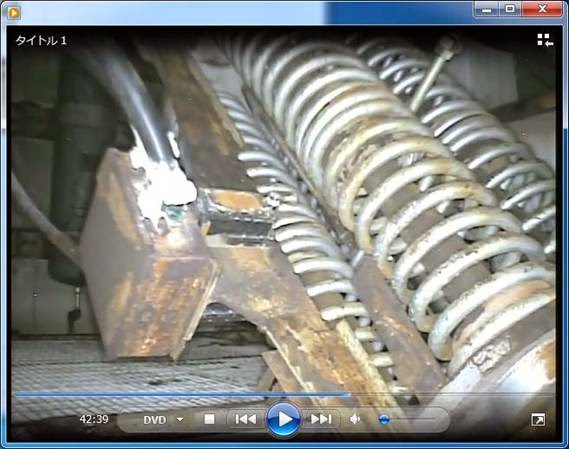
Just like the survey above the grating on April 23, 2014, TEPCO's workers inserted the pan-tilt camera from the floor above to identify the location of the leak in the MSIV room in Reactor 3 on May 15, 2014. They used a hook to lift a portion of the grating so that the camera could go below the grating.

They found a leak, and it was from the expansion joint that connects to the Main Steam Pipe D, one of the four Main Steam Pipes.

From TEPCO's photos and videos library, 5/15/2014:

Leak was found from the expansion joint to the Main Steam Pipe D, which is in fact hidden from view. What you see in the foreground is the Main Steam Pipe C and the Expansion Joint C. Leak is marked by red circles in the photo (English labels are by me):


So, the MSIV (Main Steam Isolation Valve) itself may have worked exactly as it is designed for, which is to shut off the steam from the reactor in case of a severe accident that would necessitate the scram (we don't know for sure, unless someone enters the MSIV room and investigate), but the leak is from the joint right before the MSIV.

Here's the video, showing the leak (look very closely after 33 seconds):


Bad news, I think, for reactors around the world, but no one in the media has picked up on the significance of the news so far.

This is the typical reporting that I've seen in the Japanese media:

"A leak was found on the Containment Vessel of Reactor 3 for the first time."


Clearly, reporters don't bother to know what MSIV - Main Steam Isolation Valve - is. They don't seem curious either to ask questions like:

How did the expansion joint get damaged?
Was it by the earthquake?
Was it by pressure that exceeded the spec?
Was it by high heat that exceeded the spec?
If it was high pressure, what caused the high pressure?
If it was high heat, what caused the high heat? What are the implications for other nuclear power plants in Japan (and the world) that use this type of joints for many critical safety components in the plants?

Instead, they'd rather write about "nosebleed" in Fukushima Prefecture and how TEPCO's employees "disobeyed" the order and fled from Fukushima I NPP on March 15, 2011 (that's according to fanciful Asahi Shinbun). (More later, maybe.)

Below are the tweets from "Happy", who was hoping that the leak would be from one of the auxiliary pipes that comes through the Containment Vessel, such as the drain pipe:

https://twitter.com/Happy11311/status/466915608441790464 3号機のMSIV室の漏洩は、やっぱりドレンじゃなくてベロー部からだったでし。PCV漏洩止水にスポットがあたってるけどオイラは、これが地震による配管破断だとしたらとても大きな事で、全国の原発再稼働に待ったをかけるべきなんだけど…。

The leak in the Reactor 3 MSIV Room was from the bellows [expansion joint], not from the drain pipe. A focus is on how to stop the leak from PCV (Primary Containment Vessel), but I think it's a serious stuff if this is a rupture of the pipe because of the earthquake, and the restart of nuclear power plants in Japan should be halted...

https://twitter.com/Happy11311/status/466925690588123137 3号機MSIVのベロー部漏洩が地震による配管破断だとしたら、何故大きな問題になるかと言うと、この伸縮継手は重要な配管やPCVやRPVベッセル等々、至る所で使われているタイプで国内全ての原発が同じタイプを使ってると言っても過言じゃないんだ。

The reason why it is a big problem if the leak from the bellows in the Reactor 3 MSIV Room was from the rupture of the pipe caused by the earthquake is because this type of expansion joints are used everywhere on important pipes, PVCs, and RPVs (Reactor Pressure Vessels), etc. It's no exaggeration to say that every single nuclear power plant in Japan uses the same type of expansion joints.

https://twitter.com/Happy11311/status/466925830493335552 ベロー部(伸縮継手)の基本設計は、どちらかと言うと耐震性より熱による配管の伸縮吸収を考慮した設計だから今回、もし地震の影響だとしたら基本設計を見直さないとダメなはずなんだよね。原発ムラが一番怖れてるのが、この地震による配管破断なんだ。

The basic design of a bellows (expansion joint) takes into account the expansion and contraction of the pipe by the heat, rather than the seismic resistant capacity. If [the damage] is from the effect of the earthquake, the design would need to be revised. What the "nuclear village" is most afraid of is the rupture of pipes due to an earthquake.

https://twitter.com/Happy11311/status/466926728271515650 だから未だに現場検証も線量が高い理由で実施しないんだと思うんだけどね。これはオイラの予想だけど、たぶん国や東電が考えて出すMSIVの漏洩原因は、「地震じゃなくて設計圧力以上の圧力がかかった」とか、「異常に高い温度熱が原因だった」とかの発表を数値を出して説明すると思うでし。

That's why I think the on-site investigation hasn't been done, ostensibly due to high radiation. I expect the reason for the MSIV leak that the national government and TEPCO will come up with will be "due to the pressure that exceeded the design pressure, not the earthquake" or "due to extremely high temperature," citing some numbers.


Well, even if they say the damage was due to high pressure or high temperature, I would assume the critical component like this that connects to the super-critical component (MSIV) should not fail in a severe accident that would probably generate high pressure and high temperature that would exceed the design specs.

Sunday, April 27, 2014

#Fukushima Reactor 3 MSIV Room Investigation: No Leak from Feed Pipes, Says TEPCO


Now to the real, very serious problem at Fukushima I Nuclear Power Plant and potentially far beyond.

Remember the highly contaminated water found leaking from the MSIV (Main Steam Isolation Valve) room in Reactor 3 in January this year?

The water contained high levels of radioactive cesium (1.7 million Bq/L of cesium-137) and all-beta (24 million Bq/L) that even TEPCO admitted it was not the water being injected into the reactor (treated water) and implicitly admitted that it was the water coming out of the reactor.

Without much fanfare or publicity, TEPCO did the preliminary investigation of the Reactor 3 MSIV room to identify the location of the leak on April 23 and inserted the report on the result in the Roadmap updated and announced on April 24, 2014. There has been hardly any press coverage since.

After reading and re-reading TEPCO's investigation report, I think I have adequately figured out what they are trying to say (and not say).

TEPCO's explicit conclusion: The leak is not from the two Feed Pipes, not from the two spare (reserve) penetrations.

TEPCO's implicit conclusion: The leak is from somewhere else, below the grating.

What's there, below the grating? TEPCO lists two potential leak locations that they will look into in May:

  • Main Steam Pipe; or

  • Main Steam Drain Pipe


And what TEPCO doesn't explicitly list?
  • Main Steam Isolation Valve (MSIV) itself.


To recap, MSIV is, according to Fukushima I NPP worker "Sunny":

MSIV (Main Steam Isolation Valve) is a huge valve attached to the main steam pipe that connects the reactor building and the turbine building. When this valve closes, it means there is some extraordinary incident happening in the reactor core. Conversely, one might say that it would be a problem if this valve did not close in such an incident.

When the reactor scrammed on March 11, 2011, the MSIV should have promptly, securely closed, without breakage, without leak. It is not supposed to fail. Implications for nuclear reactors around the world would be grave, if it did.

From TEPCO's Reactor 3 MSIV room investigation and the preliminary result of the April 23, 2014 investigation from TEPCO's Roadmap latest version (4/24/2014; PDF pages 268 to 281, English labels are by me):

Page 274:


TEPCO inserted a pan-tilt camera, an endoscope, and a dosimeter from Main Steam (MS) Process Monitors that go through the floor of the Air Conditioning Machine Room located right above the MSIV room in Reactor 3.

The diagram on the left shows the types of penetrations between the MSIV room and Primary Containment Vessel (PCV):

Above the grating (investigated on April 23),

  • Two spare (reserve) penetrations, marked "X-46, 47"

  • Two feed pipes, marked "A" and "B"


Below the grating (to be investigated in May),

  • Four Main Steam Pipes, marked "A", "B", "C", "D"

  • One Main Steam Drain Pipe, marked "X-8"


Page 275: Summary of findings

Preparation (April 21, 22): Drilled three holes for MS Process Monitors
Result of investigation (April 23):

Sound of running water: heard from the Air Conditioning Machine Room through MS Process Monitors

Survey by the pan-tilt camera:

  • There was no leak from the feed pipes.
  • There was no leak above the grating.
  • There was water on the floor below the grating.

Page 276: Feed Pipe A - no leak found


Page 278: No leak from spare penetration holes X-46 and X-47


Page 279: View through the grating - water seen flowing on the floor


Although there is no apparent leak above the grating, the pipes seen in the photos show stains and discoloration. Something did seem to have happened:

From TEPCO's photos and videos library, 4/14/2014:


Compared to the Reactor 3 MSIV Room, the Reactor 2 MSIV Room looks to be in pristine condition, both below and above the grating.

From TEPCO's photos and videos library, 4/16/2013:


I also remember anonymous workers at the plant saying they saw the first floor of the reactor building filled with steam, and that it could only be from the Main Steam Pipes. I think it was in the first or second week of the accident, but I don't remember which reactor building. It could have been Reactor 1.

Sunday, January 19, 2014

#Fukushima I NPP Reactor 3 Water Leak from MSIV Room: It's Most Likely the Water from Inside the Pressure Vessel


This is today's update on the water leak from the MSIV (Main Steam Isolation Valve) Room of Reactor 3 at Fukushima I Nuclear Power Plant. (Previous posts on the subject are here and here.)

TEPCO says they did the nuclide analysis of the water sample that the robot collected. The temperature and the levels of contamination indicate it is the water that comes out of the Pressure Vessel/Containment Vessel.

TEPCO's way of saying it is that "the water is not the one that goes into the reactor."

However, the levels of contamination of this water is one to two orders of magnitude smaller than the highly contaminated water in the reactor building basements, which seems to me to indicate that this leaking water is diverted out of the Pressure Vessel it comes in full contact with the corium (wherever it is - part at the bottom of the PV, part buried into the concrete floor of the Containment Vessel).

From TEPCO's alert for the press, 1/19/2014:

【漏えい水の放射能分析結果:採取日1月19日】
・セシウム134 :7.0×10^2 Bq/cm3
・セシウム137 :1.7×10^3 Bq/cm3
・コバルト60  :2.5×10^1 Bq/cm3
・全ベータ :2.4×10^4 Bq/cm3

Nuclide analysis of the leaked water: sample taken on 1/19/2014

  • Cesium-134: 7.0×10^2 Bq/cm3 (700 Bq/cm3)

  • Cesium-137: 1.7×10^3 Bq/cm3 (1,700 Bq/cm3)

  • Cobalt-60: 2.5×10^1 Bq/cm3 (25 Bq/cm3)

  • All-beta: 2.4×10^4 Bq/cm3 (24,000 Bq/cm3)


【漏えい水の温度測定結果:1月19日午後5時頃測定
約20℃

※漏えい確認箇所における雰囲気温度は約7℃(1月19日午前10時頃測定)
原子炉に注水している水の温度は約7℃(1月19日午後5時頃測定

Temperature of the leaked water: measured at 5PM on 1/19/2014

  • About 20 degrees Celsius

*Atmospheric temperature at the location of the leak: 7 degrees Celsius (measured at 10AM, 1/19/2014)
Temperature of the water being injected: 7 degrees Celsius (measured at 5PM, 1/19/2014)

【原子炉に注水している水の至近の放射能分析結果:採取日平成25年12月10日】
・セシウム134 :検出限界値未満
・セシウム137 :検出限界値未満
・コバルト60  :検出限界値未満
・全ベータ :2.8 Bq/cm3

Latest nuclide analysis of water being injected into reactors: sample taken on 12/10/2013

  • Cesium-134: below detection level

  • Cesium-137: below detection level

  • Cobalt-60: below detection level

  • All-beta: 2.8 Bq/cm3


当該漏えい水は、原子炉に注水している水に比べて放射能濃度が高く、水温も高いことから、原子炉に注水している水の直接漏えいによるものではないと考えています。引き続き、漏えい原因等について調査を実施してまいります。

The leaked water is higher in density of radioactive materials than the water being injected into the reactors. The temperature of the water is also higher. Therefore we believe this is not the leak of water that is being injected into the reactor. We will continue to investigate the cause of the leak.


TEPCO's alert has a link to the latest nuclide analysis of water samples taken at different stages of contaminated water treatment (published on 1/17/2014).

According to that analysis, the highly contaminated water that sits in the reactor building basement (supposedly after having come to full contact with the corium) has:

  • Cesium-134: 1.0×10^4 Bq/cm3 (10,000 Bq/cm3)

  • Cesium-137: 2.5×10^4 Bq/cm3 (25,000 Bq/cm3)

  • Cobalt-60: 1.4 Bq/cm3 (after treatment with SARRY)

  • All-beta: 2.3×10^4 Bq/cm3 (23,000 Bq/cm3, before RO treatment)


While the Japanese media continues to not see much significance of this leak, the workers who have been tweeting from Fukushima I NPP from the beginning of the accident seem to worry. The issue here is NOT whether this water is currently leaking into the surrounding environment. The issue is whether the MSIV and/or its ancillary systems failed in the March 2011 accident.

"Sunny" (from tweets here and here) fears the worst, that the MSIV itself is broken:

MSIV・主蒸気隔離弁 原子力発電所の原子炉建屋とタービン建屋を繋ぐ主蒸気配管にある非常に大きなバルブ。これが閉じると言う事は炉心でとんでもないことが起きていることである。逆に言えば、そんなときに閉じないと困る。それが、そこからも水が漏れている。つまり、閉じていないか壊れたか。

MSIV (Main Steam Isolation Valve) is a huge valve attached to the main steam pipe that connects the reactor building and the turbine building. When this valve closes, it means there is some extraordinary incident happening in the reactor core. Conversely, one might say that it would be a problem if this valve did not close in such an incident. Now, the water is leaking from there [from the MSIV]. In other words, the valve was not shut, or it broke.

炉心がスクラムするような状態でMSIVが閉まらないか壊れたか漏洩するか、これがどんなに恐ろしいこ事か。再稼働どころか、スリーマイルアイランド後のPWRのように対策の為世界中の炉心を止める必要性がある。いや、もっと恐ろしいのは事態の重大さをどれだけの人が受け止めているか。

The reactor core is scrummed, but the MSIV doesn't close or it breaks and [the coolant=water] leaks. Do you know how terrifying this is? Instead of talking about restarting [the nuclear power plants in Japan], we would need to stop all reactors in the world to deal with the problem, just like [when we stopped] PWRs after the Three Mile Island accident. Wait, what is more terrifying is, how many people are aware that this could be a serious problem?


Someone expressed his surprise to "Sunny" that TEPCO announced the incident at all, if this was such a serious incident. (People in Japan also love to say "TEPCO lies.") "Sunny"'s answer was:

この事象がそうなら世界中の全事業者とメーカーに情報共有するレベル

If this incident is what it is [the MSIV didn't close or broke in a severe emergency that necessitated the scrum], it should be shared with all nuclear plant operators and nuclear manufacturers in the entire world.

"Happy" hopes it is not the MSIV itself but ancillary pipe(s) that broke:

MSIV室は、主蒸気隔離弁だけじゃなく他系統や細い配管も沢山あって炉内に直結している配管も多いんだ。室内を詳しく調べ原因を掴まないとダメなんだけど、かなり困難な作業になると思う。線量が高くて人が作業するのも難しいし、室内は機器や配管が多く狭いし複雑で、ロボット作業も困難なんだ。

In the MSIV Room, other than the Main Steam Isolation Valve there are other systems and many small pipes, many of which connects directly to the reactor. We need to closely investigate inside the room to find out the cause [of the leak], but I'm afraid it will be a rather difficult task. The radiation level is high for workers to work inside, and it would be difficult for robots to navigate because of numerous pieces of equipment and pipes in a narrow space.


"Sunny" says he sure hopes it is a minor pipe that broke.

So was it a LOCA (Loss of Coolant Accident) because of either the failure of the MSIV or the ancillary system that is not supposed to fail, in addition to the water boiling off by the decay heat?

But as Happy says, the radiation levels are particularly high near the area of the leak (amounting to Sieverts/hour), and how TEPCO is going to "further investigate", as reported by happy-go-lucky media like NHK, is unknown.

Saturday, January 18, 2014

#Fukushima I NPP Reactor 3: Water Leak from MSIV Room Could Be a Huge Problem for Nuclear Reactor Safety


(UPDATE 1/19/2014) New post with nuclide analysis result.

===================

This is a follow-up on yesterday's post.

TEPCO released the video which was being taken by the robot on the first floor of Reactor 3 and which was being monitored by a TEPCO employee who noticed the water.

The flow looks significant and fast.

From TEPCO's photos and video library, 1/18/2014:


Location of the MSIV Room:


Radiation levels on the 1st floor of Reactor 3, from yesterday's post:


The main steam isolation valve (MSIV) is one of the two most important safety systems in a nuclear reactor (the other one being the control rod drive mechanism). It seals off the water/steam from the Pressure Vessel in case of an emergency (like a big earthquake). This MSIV system is not supposed to fail.

If the MSIV of Reactor 3 was damaged during the March 11, 2011 earthquake/tsunami (either one) and the water has been leaking ever since, the safety standard for nuclear reactors around the world may be impacted, says one nuclear researcher that I follow on Twitter.

(Oh wait... Does it mean then that part of the reason why the water (coolant) inside the Reactor 3 Pressure Vessel dried up was because it was leaking through the damaged MSIV?)

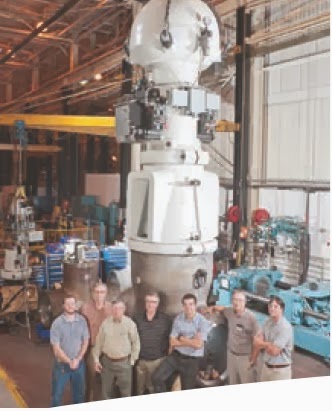
To get a feel for the size of the MSIV, here's a photo and a video from one of the top manufacturers, Flowserve:


The 1st floor of Reactor 3 is where the human workers ventured in in June 2011 for the first time since the start of the accident on March 11, 2011 and took the smear samples from the floor. The result of the analysis of the smear samples, if it was ever done, hasn't been released.

The location of the floor drain funnel is near the equipment hatch shield plug that was found slightly open, through which highly radioactive steam/water had been leaking. (TEPCO finally admitted the shield plug had been open on April 19, 2012, more than one full year after the start of the accident.)

Packbot was sent on November 18/19, 2011 to clean the hatch rail with what looked like a white towel. The result of the analysis of what the towel caught, if it was ever done, hasn't been released.

(Now I think about it, the towel Packbot was using was soaking-wet, and even on the next day after the cleaning the guide rails were very wet. I have assumed the water on the guide rails was from inside the Containment Vessel, but is it possible that it has been coming from the MSIV Room?)

From @BB45_Colorado, one of the nuclear researchers that I follow:

主蒸気隔離弁;近傍からの漏洩が発災直後からのものなら、主蒸気隔離弁は、地震や内部異常加圧に耐えられなかった事になります。BWRの安全設計の心臓部でこれは極めてまずいです。場合によっては、世界中のBWRの安全審査がひっくり返ります

If the leak from (or from near) the Main Steam Isolation Valve is from the start of the accident, that means the MSIV couldn't withstand the earthquake and/or internal abnormal pressurization. This is bad in the heart of the BWR safety design. It could affect the safety reviews worldwide.


Browsing the articles by the mainstream media in Japan (eg. Yomiuri, Mainichi/Kyodo) on this incident, it seems to me that they don't know what MSIV is or its importance.

Friday, January 17, 2014

(Just In from TEPCO Nuclear) Water Leak Near MSIV Room on 1st Floor of Reactor 3 Found by Worker Monitoring Live Images Taken by Robot


(UPDATE 1/18/2014) Video, additional information in the new post. The water is flowing fast.

========================

No images, videos, details yet.

From TEPCO's email alert for the press in Japanese (1/18/2014):

福島第一原子力発電所3号機原子炉建屋1階主蒸気隔離弁室近傍における水漏れについて

Water leak found near the Main Steam Isolation Valve Room on the 1st floor of Reactor 3 at Fukushima I Nuclear Power Plant

本日(1月18日)午後2時40分頃、3号機原子炉建屋瓦礫撤去用ロボットのカメラ画像を確認していた当社社員が、3号機原子炉建屋1階北東エリアの主蒸気隔離弁室の扉付近から、水が、当該扉近傍に設置されている床ドレンファンネル(排水口)に幅約30cmで流れ込んでいることを発見しました。

Today (January 18) at around 2:40PM, our employee who was monitoring the images taken by the camera mounted on the robot for removing the debris from the Reactor 3 building found the water running, at 30cm wide, from near the door to the Main Steam Isolation Valve Room located in the northeast area of the 1st floor of Reactor 3 into the floor drain funnel near the door.

当該漏えい水は、原子炉建屋最地下階の床ドレンサンプへつながる床ドレンファンネルへ流入しており、原子炉建屋外への流出はありません。

This water is flowing into the floor drain funnel that connects to the floor drain sump in the basement of the reactor building, and there is no leak from the reactor building to outside.

なお、モニタリングポスト指示値の有意な変動、およびプラントパラメータ(原子炉注水流量、原子炉圧力容器底部温度、格納容器内温度等)の異常は確認されておりません。

There is no statistically significant change observed at the monitoring posts and in the plant parameters (amount of water injected into the reactors, temperatures at the bottom of reactor pressure vessels, temperatures inside the containment vessels, etc.).

現在、漏えい状況および原因等を調査しております。

We are currently investigating the situation of the leak and the cause of the leak.

当該漏えい箇所の雰囲気線量は約30mSv/hです。

The ambient air dose rate near the leak is about 30 millisieverts/hour.


Reactor 3 first floor radiation levels (from my 7/23/2013 post):


Compared to other reactors that had explosive events (Reactor 2 did not have hydrogen explosions like Reactors 1 and 3, but some kind of event did seem to happen in the Suppression Chamber), Reactor 3's radiation levels are markedly higher.