Saturday, May 4, 2013

#Fukushima I Nuke Plant: Reactor 3 Operating Floor Debris with 540 Millisieverts/Hr Radiation


I followed the link in the TEPCO (Nuclear) tweet from about an hour ago, and the landing page was the email notice to the media on May 4, 2013.

The notice says TEPCO happened on a piece of debris cleared from the Reactor 3 operating floor as it was being loaded on the special remote-controlled truck that carries highly radioactive debris. The piece was emitting 540 millisieverts/hour radiation.

Also in the notice (my translation),

At 1:45PM today [May 4], access was restricted around the truck that was carrying the debris.
There is no effect on the workers or the debris removal work.
There is no significant change in the monitoring post measurements.


In the most recent notice on the debris, about 30 minutes ago,

高線量ガレキ運搬用トラック(無線式)に積載していた高線量率ガレキは、3号機原子炉建屋南側にある高線量ガレキ仮置場へ移動しました。

The high radiation debris that was in the remote-controlled truck has been moved to the temporary storage areas for highly radioactive debris, which is located on the south side of the Reactor 3 building.

 今後、5日程度の間に、従来から行っている高線量率ガレキ運搬作業と同様に、高線量ガレキコンテナ運搬用トラック(無線式)にて、発電所免震重要棟北側にある固体廃棄物貯蔵庫に運搬する予定です。運搬作業の際は、放射線被ばくに注意して実施いたします。

Within 5 days or so, using the remote-controlled truck for the high radiation debris, we will move it to the Solid Waste Storage on the north side of the Anti-Seismic Building. We will pay attention to radiation exposure when we move the debris.


Moving the highly radioactive debris from one temporary storage to another. Then what? No end-state envisioned.

Has TEPCO been mapping the debris as they remove from the Reactor 3 operating floor, and recording the radioactivity of each pieces? Probably not. I wish they did. It might have given some clues on the explosion - how it happened, or what kind of explosion it was.

Thursday, May 2, 2013

Bloomberg News: "Japan’s Abenomics Haunted by Ghost of General MacArthur"


The prime minister of Japan who likes to play tank commander wants to change the Article 96 of the Japanese Constitution as the first step to rewrite the entire Constitution which he and his cohort firmly believe was pressed on to unwilling Japan by the US occupation army (known as GHQ in Japan) under General Douglas MacArthur (whose nicknames included "Gaijin Shogun").

What's the Article 96? It's about Constitutional amendment requiring two-thirds of each House of the National Diet. Abe's LDP and two other so-called opposition parties including the boy-wonder's Japan Restoration Party want to make it a simple majority.

From the English version of the Japanese Constitution, from Prime Minister's Office website:

Article 96. Amendments to this Constitution shall be initiated by the Diet, through a concurring vote of two-thirds or more of all the members of each House and shall thereupon be submitted to the people for ratification, which shall require the affirmative vote of a majority of all votes cast thereon, at a special referendum or at such election as the Diet shall specify.

Amendments when so ratified shall immediately be promulgated by the Emperor in the name of the people, as an integral part of this Constitution.


Of course, in order to amend the Article 96, Abe needs two-thirds of both Houses, which he think is totally feasible. There is even a talk of simultaneous elections of the Upper and Lower Houses in July.

Abe's first target after they successfully ditch the two-third requirement in the Article 96 will be the complete rewrite of the Article 9 "Renunciation of War".

As it exists:

RENUNCIATION OF WAR

Article 9. Aspiring sincerely to an international peace based on justice and order, the Japanese people forever renounce war as a sovereign right of the nation and the threat or use of force as means of settling international disputes.

In order to accomplish the aim of the preceding paragraph, land, sea, and air forces, as well as other war potential, will never be maintained. The right of belligerency of the state will not be recognized.


According to the LDP's draft, Abe wants to change this into (my translation from the LDP draft and existing Article 9):

Aspiring sincerely to an international peace based on justice and order, the Japanese people forever renounce war as a sovereign right of the nation, and the threat or use of force won't be used as means of settling international disputes.


and ditch the second half entirely, insert "the right of collective self-defense" instead so that Abe can send Japanese soldiers to fight alongside the "allies" even if Japan is not being attacked, and create a new clause that defines "National Defense Forces"

The bellicose noise, with the photo of Abe saluting (sort of) from the tank, is getting loud enough that even the foreign media has started to write about the worries over Abe's push for changing the Constitution.

From Bloomberg News (5/1/2013; emphasis is mine):

Japan’s Abenomics Haunted by Ghost of General MacArthur

By Isabel Reynolds & Takashi Hirokawa

Prime Minister Shinzo Abe’s drive to revise Japan’s pacifist constitution for the first time risks alienating voters who support his economic agenda and dividing his coalition government before July elections.

Abe aims to make it easier to amend the constitution, a first step in plans to beef up the military at a time when Japan is mired in territorial disputes with China and South Korea. His Liberal Democratic Party is forecast to win the upper house race, potentially giving him the two-thirds majority in both chambers needed to alter the charter.

Overhauling a document imposed by U.S. General Douglas MacArthur’s occupation force after World War II has been a goal of LDP politicians, including Abe’s grandfather, since the party was founded in 1955. While polls show the public backs Abenomics, his strategy to resuscitate the world’s third-largest economy after more than a decade of deflation, a majority of voters don’t rate constitutional revision as a priority.

“The growth strategy can only be accomplished with sustained attention,” said Koichi Nakano, a political science professor at Sophia University in Tokyo. “It’s a monumental task in its own right. If he takes up more nationalistic causes and Abenomics is not looking good, this could lead to a loss of authority after the election.”

...

Abe backs an LDP proposal to alter the constitution so it asserts the right to possess armed forces for self-defense. To implement that, he is first seeking to change Article 96 of the charter to allow amendments to be made with a simple majority in each house, rather than the current two-thirds. Any revision must also face a public referendum.

“Constitutional change is coming closer to reality,” Abe told reporters on April 19. “I want to change Article 96 to put the constitution back in the hands of the people.”

While 50 percent of the public approves of Abe’s policies to boost growth, only 6 percent favor his bid to change the constitution, according to an April 16 Asahi newspaper poll. A survey in the Mainichi newspaper six days later found 7 percent of respondents picked the constitution as the most important issue in the upper house election, compared with 35 percent for the economy. None of the newspaper surveys provided a margin of error.

“The constitution is different from any other law,” said Setsu Kobayashi, a law professor at Keio University in Tokyo who favors constitutional change while opposing Abe’s plan. “Every country makes it hard to amend, because a nation’s foundations should not flip over with every passing hysteria.”

...

The LDP draft would also make it a “duty” not to damage the “public interest” or interfere with “public order.” The clause has sparked concern with junior coalition partner New Komeito, which is backed by a pacifist Buddhist sect. While a Yomiuri survey published today shows almost all LDP lawmakers favor changing Article 96, Komeito wants to keep the existing constitution and add new rights for citizens, according to the party’s policy chief Keiichi Ishii.

Our understanding is that a constitution is intended to allow citizens to limit the powers of the state,” Ishii said. “It seems odd to include duties.”

Komeito has a loyal vote-gathering system that has benefited the LDP, said Steven Reed, a professor of political science at Chuo University in Tokyo. The party, which has supported the LDP for more than a decade, has 31 members in the 480-seat lower house and 19 in the 242-seat upper chamber.

“If Komeito left the coalition, the LDP would be in deep trouble,” Reed said. “That takes a lot of votes away from their pockets.”

(Full article at the link)


I think Abe knows his so-called three-prong economic strategy will end in disaster. What better backup plan than war to deflect the public anger over the economic failure?

If Abe and LDP get their way, there will be no "eternal and inviolable" fundamental human rights in Japan (Article 11). You will have to behave, in order to be allowed such rights by the government.

Wednesday, May 1, 2013

#Fukushima I Nuke Plant: Was TEPCO Using Used Bottle to Collect Water Samples from the Pond Leak?


As I posted on Monday, TEPCO announced a 10-fold spike in radioactive materials (all-beta) in the water sample collected from soil just outside the thin (6.4 millimeter-thick) bentonite layer of the in-the-ground water storage pond No.1.

In the successive email alert for the press (which they know post on their homepage press release section), TEPCO sort of tell us what they think was the cause for the spike:

A used bottle that previously collected samples.


TEPCO doesn't say it outright, but instead, from their email alert for the press regarding the pond leak (No. 110) on April 28, 2013:

本日午前および午後に地下貯水槽No.1ドレン孔(南西側)の水を採取する際、採取した水が汚染しないように新品のサンプリングボトルを使用して採取したところ、一昨日(4月26日)と同レベルの低い値が得られました。そのため、昨日(4月27日)、地下貯水槽No.1ドレン孔(南西側)の水を採取した際、採取した水が何らか汚染した可能性があるものと推定しております。

When we collected the water samples from the drain hole (southwest) of the in-the-ground water storage pond No.1 in the morning and in the afternoon today [April 28, 2013], we used brand-new sampling bottles to avoid contamination of the water collected. Then the amount of [radioactive materials in the water] dropped to the same low level as the one on April 26. Therefore, we now assume the possibility that the water collected on April 27 from the southwest drain hole of the pond No.1 got somehow contaminated.


which I take it to mean they were using used bottles to collect highly radioactive water samples until April 28.

It is little wonder why there is no "end-state" vision for the plant.

US Stock Market: "Sell in May and Go Away" Again, Despite the Accommodative Fed?


Dow drops 138 points after Ben and his gangs (aka Federal Reserve) say they could increase or decrease stimulus as they see fit.

From Reuters UK (5/1/2013); the best part of the article is the title:

US STOCKS-Wall St drops as steady Fed can't offset data, earnings

* Fed maintains stimulus measures despite job market improvements

* Merck, MasterCard shares slide after earnings

* U.S. companies hire less, factory growth slows in April

* Dow off 0.7 pct, S&P 500 off 0.6 pct, Nasdaq off 0.7 pct

By Ryan Vlastelica

NEW YORK, May 1 (Reuters) - U.S. stocks fell on Wednesday as the Federal Reserve's decision to stand pat on its current monetary stimulus was not able to offset weak economic figures and several lackluster earnings reports.

The U.S. Federal Reserve stood by its plan to stimulate the economy through bond purchases, and while the central bank noted some improvements in the labor market, it said recent budget tightening in Washington could be a risk to growth.

The statement came in largely as expected. While equities have performed well of late, with the S&P 500 hitting both intraday and closing highs on Tuesday, a trend of discouraging data indicated that the Fed wouldn't ease up on its accommodative monetary policy of quantitative easing.

"That the Fed won't end QE any time soon is positive for stocks in the near term, but the data we've seen is creating a lot of angst for investors," said Mike Gibbs, co-head of the equity advisory group at Raymond James in Memphis, Tennessee.

U.S. private employers added 119,000 jobs in April, well below economists' expectations. A separate report showed the U.S. manufacturing sector expanded only modestly in April.

...

"We're a bit overextended, which is leading to some profit taking," said Gibbs, who helps oversee about $400 billion. "But relative to historical measure, we're not in an expensive market, and we would view declines as buying opportunities."

(Full article at the link)


A "bit overextended"? The two of the major stock indices (Dow, S&P500) are at all-time high, and as far as the "93%" of the US household are concerned who have seen their net worth decrease since 2009 March market bottom, it's been overextended for over 4 years.

And what "data" is creating a "lot of angst" for the investor class? Just about everything on the real economy which is no longer reflected in the stock market thanks largely to the Fed's large-scale money printing for the past four years.

Much more interesting is the talk given by Kevin Warsh, former Fed Governor who resigned the position in March 2011, at Milken Institute on April 29, 2013. He says "There is no plan B", and that the Fed has enabled the federal government to do nothing (other than spending money on companies like Solyndra and Fisker, I may add, among many others). The US growth has been mediocre and will remain so because of the Fed policy, he says.

From Zero Hedge (5/1/2013):

...The entire discussion is worthy of attention but Warsh's comments begin around 18:00:


...but "the ability of a central bank, exclusively, without the rest of Washington doing any bit of the task, to turn an economy from a modest recovery to a robust one is an experiment that is untested - and will not prove to be successful."

...The Fed is taking on the problem of the shortfall in aggregate demand alone. Warsh does not believe that the Fed means to do this alone but their "good intentions" are simply not enough to get the economy to a 3-4% growth rate needed to create sustainable improvements in the labor markets.

... Warsh adds, "over the last several years, [the Fed] has over-promised and under-delivered," and the bank's most important asset - credibility - is under attack.

...The Fed has "enabled" Washington to do nothing, since the politicians expect the same "rabbit out of the hat" rescue that occurred in the darkest days of the financial crisis. This means no growth strategies ("the mix of policies has to be right") will occur - until the Fed draws the line.

...Since the financial crisis, Washington has done its level best to focus on GDP in the next quarter, or perhaps the election, and precious little beyond that short-term horizon. Warsh concludes, "There Is No Plan B." The Fed has fewer degrees of freedom and the rest of Washington is not coming to the rescue.

...In light of our status as reserve currency, the rest of the world's central banks feel empowered to match the Fed's efforts since "we do not act in a vaccuum" which due to economic and competive reasons, means "the US economy will not break out to the upside."

...It is not bad luck that is creating this medicrity, it is bad policy


Zero Hedge seems to leave out the best part of the speech, which you can view in their post.

(From what I watched, first pass)

  • The Fed's monetary policy is nothing but buying time.

  • The Fed shouldn't care about the stock market, instead of continuing to manipulate the financial market to stoke risk appetites of people.

  • Real effect is not trickling down.


I wonder if Mr. Kuroda, governor of Bank of Japan, knows about this video. Probably not. Japanese financial media? Probably not.

Economist and former NHK director Nobuo Ikeda dubbed Kuroda BOJ as "a whale in a small pond", whose slight move will splash all water in the pond. It's the same Mr. Ikeda who said radioactive cesium would disappear once you burned the contaminated wood, but on Bank of Japan, I share his assessment.

Monday, April 29, 2013

April 28 Is Restoration of Sovereignty Day in Japan, and PM Abe Has a Special Message to Okinawans


During the ceremony in Tokyo with the Emperor and Empress on April 28, 2013, Prime Minister Abe said, according to TBS News,

「沖縄が経てきた辛苦にただ深く思いを寄せる努力をなすべきだと訴えようと思う」

沖縄が経てきた辛苦 Hardships endured by Okinawa

ただ深く思いを寄せる simply deeply sympathize

努力をなすべき should try to, make effort to

訴えようと思う I think I will appeal

I think I will appeal to people that an effort should be made to simply and deeply sympathize with hardships endured by Okinawa.


Got that?

TBS News also captured the awkward moment when "three banzai" for the Emperor occurred, supposedly spontaneously, as the Emperor and Empress were leaving the stage. Totally out of proper protocol, to say the least. The Emperor and Empress look very awkward and almost embarrassed. (At about 1 minute into the news):


Emperor did not utter a word during the ceremony.

Under the current draft constitution by Liberal Democratic Party, the Emperor would be expected to attend events at municipalities, not just on the national level.

#Fukushima I Nuke Plant: Amount of Radioactive Materials in Water Sample from Outside the In-The-Ground Water Storage Pond No.1 Rose by 10


Cause unknown, according to TEPCO.

No surprise there.

From Jiji Tsushin (4/28/2013):

土壌の放射能濃度10倍に=1号貯水槽、2日前と比べ-福島第1

Fukushima I Nuke Plant: amount of radioactive materials in the soil [outside] the in-the-ground water storage pond No.1 10 times larger, compared to two days ago

東京電力福島第1原発の地下貯水槽から放射能汚染水が漏えいした問題で、東電は28日、1号貯水槽の外側土壌で27日に採取した水の放射能濃度が、2日前と比べ10倍超に上昇したと発表した。貯水槽外側土壌での水採取場所は2カ所あり、今回上昇が判明した場所はこれまで濃度が低い状態が続いていた。東電は「原因は分かっていない。監視を続ける」としている。

Regarding the leak of radioactive waste water from the in-the-ground water storage ponds at Fukushima I Nuclear Power Plant, TEPCO announced on April 28 that the amount of radioactive materials in the water sample taken from the soil outside the Pond No.1 on April 27 was more than 10 times the amount from two days prior. There are two sampling locations outside the pond, and the location that saw the increase this time had had low amount of radioactive materials. TEPCO says "We don't know the cause. We will continue to watch carefully."

東電によると、放射能濃度が上昇したのは1号貯水槽の南西側土壌。27日に採取した水でストロンチウムなどベータ線を出す放射性物質が1ミリリットル当たり1.1ベクレル検出された。26日は検出限界値未満で、25日は同0.099ベクレルだった。

According to TEPCO, it was [the water from] the soil on the southwest side of the Pond No.1 that saw the increase in radioactive materials. 1.1 Bq/milliliter (cubic centimeter) of beta nuclides including radioactive strontium was detected from the water taken from there on April 27. From the same location, it was below detection level on April 26, and 0.099 Bq/milliliter on April 25.


TEPCO's handout for the press on 4/27/2013, showing 1.1 Bq/cm3 of beta nuclides (red rectangle):


Measurement on 4/28/2013 of the same location shows the amount dropped down to 0.074 Bq/cm3 and 0.048 Bq/cm3 (they measured twice, the second time only beta nuclides):


In the meantime, Fukushima Prefecture sent in a group of officials and experts to the plant on April 24 to observe the in-the-ground storage ponds firsthand. They said they were appalled at what they saw. One of the experts, Professor Susumu Nakamura of Nippon University (seismic engineering) said, according to Mainichi Shinbun, "Amateurs. If it were at least 50 to 100 centimeter-thick, the leak of highly radioactive waste water may have been prevented."

Oh but that would cost too much, in a nation whose central bank prints 7 trillion yen (about US$70 billion, at least the conversion calculation is getting easier by the day) each month out of thin air to buy up JGBs from financial institutions to create inflation.

And this thin blue hose is what is transporting extremely contaminated waste water from the Pond No.1 to the metal storage tank(s) (TEPCO will use two, one tank meant for filtered water, and another in the H2 area):

(Photo from Mainichi)


Farcical Japan: More LDP Cosplay, and Governor of Tokyo Says "That's Not What I Meant" to NY Times Article


(UPDATE 4/30/2013) Now the governor wants to correct his remarks, according to Nikkei Shinbun. Nikkei quotes him saying "不適切な発言があり、おわびしないといけない。訂正したい Some of my remarks were inappropriate, and I need to apologize. I want to correct my remarks." Governor Inose his supporters spent all day yesterday criticizing New York Times.

===========================

It was not just Prime Minister Abe. Shigeru Ishiba, Secretary-General of Liberal Democratic Party, and Junko Mihara, LDP Upper House Councilor and former singer/actress, at "NicoNico Chokaigi 2" (photo uploaded by yunomi at Photozou):


Meanwhile, as the news of what he said in New York on his recent trip, Tokyo Governor Inose defends himself saying New York Times didn't report his true intention.

What was his true intention? According to Sankei Shinbun (4/29/2013),

「イスタンブールは個人的にも好きな都市。候補都市を批判する意図はなく、インタビューの文脈と異なる記事が出たことは残念。私の招致にかける熱い思いは変わらない」

"Istanbul is one of my favorite cities. I had no intention of criticizing other candidate cities, and it is regrettable that [my intention in] the interview was taken out of context. I remain enthusiastic about inviting [2020 Summer Olympics to Tokyo]."


Right. As if what he says he thinks matters. The New York Times article is totally in line with what I have read of Inose's past remarks about 2020 Olympics.

Hiroko Tabuchi, New York Times reporter who contributed to the article by (she attended the interview) by Ken Belson, tweets additional information in response to readers:

  • She joined the interview at the last moment, and the official interpreter was already there.

  • In order to avoid potential reporters' bias [they were both fully capable of translating Japanese into English] on very controversial remarks by Inose, they decided to use the official interpreter's words.

  • At no point during the interview, Governor Inose requested any part of the interview to be off-record.

  • They both heard what Governor Inose said in Japanese, and they don't think the interpreter said anything different from what Inose said.


Asahi Shinbun reports that the interview was recorded, and the interpreter was hired by Mr. Inose himself.

Sunday, April 28, 2013

40 Chinese Fighter Jets Buzzed Senkaku Islands


And the prime minister of Japan is doing cosplay on a tank.

Sankei Shinbun who reported the news doesn't say whether the Japanese airspace was breached.

From Sankei Shinbun (4/27/2013):

尖閣諸島(沖縄県石垣市)周辺の日本領海に中国の海洋監視船「海監」8隻が侵入した23日、中国軍の戦闘機など軍用機が40機以上、尖閣周辺に飛来していたことが分かった。複数の政府高官が26日、明らかにした。軍用機は戦闘機が大半で、新型のSu27とSu30を投入。航空自衛隊の戦闘機パイロットの疲弊を狙って絶え間なく押し寄せた。政府高官は「前代未聞の威嚇だ」と指摘している。

On April 23 when eight Chinese patrol ships entered the Japan's territorial water around Senkaku Islands (Ishigaki City, Okinawa Prefecture), there were more than 40 Chinese military planes including fighter jets flying near Senkaku, it has been revealed. Multiple government officials told [Sankei Shinbun] on April 26. The planes were mostly fighter jets including the latest Su27 and Su30. They came in incessant waves to wear out the Air Self Defense Force pilots. The government officials say "It was an unprecedented intimidation."

政府は、中国軍機の威嚇飛行について、海監の領海侵入と連動していたと分析している。海上保安庁の警備態勢や海上自衛隊の護衛艦、P3C哨戒機の配置を軍用機が上空から情報収集し、海監に伝える狙いもあったとみられる。

The national government thinks the Chinese military planes were in coordination with the patrol ships that violated the territorial water. The military planes may have been collecting information on the security measures by the Maritime Safety Agency and arrangement of the Maritime Self Defense Force's escort vessels and P3C patrol planes, and passing that information to the patrol ship, according to the government sources.

海監8隻は23日午前7時23分ごろから8時25分ごろにかけ、尖閣周辺の海域で相次ぎ領海に入った。うち1隻は尖閣諸島の魚釣島の北西約1キロまで近づいた。8隻は同日午後7時半ごろまでに領海を出た。

Eight patrol ships entered the territorial water near Senkaku Island from 7:23AM to 8:25AM on April 23. One of the ships came as close as 1 kilometer northwest off the Uotsuri Island. The eight ships departed from the territorial water by 7:30PM.

領海侵入を始めた頃、戦闘機など軍用機も尖閣周辺に飛来し始めた。入れ代わり立ち代わり尖閣周辺上空に接近し、その都度、航空自衛隊那覇基地のF15戦闘機などが緊急発進(スクランブル)で対処。飛来してきた中国軍機は延べ40機以上に上った。

As the ships started to enter the territorial water, military planes including fighter jets started to arrive in the area near Senkaku. The planes approached the area around Senkaku one after another, and F15 fighter jets from the Air Self Defense Force at Naha Base (in Okinawa) responded each time with scramble. The total number of the Chinese military planes was more than 40.


Sukhoi-30, from Wikipedia:


F-15J Eagle (by Mitsubishi):


Well, what are you going to do now, Mr. Abe? Anything? There is absolutely no point in ramping up the rhetoric when there's no action.

(Oh I forgot. He's not reality-based. He just loves to play a tank commander in Makuhari Messe.)

Cyprus Poll After Deposit Grab: 84% Think "Crisis Is Fault of Country’s Political, Economic and Social Systems"


In other words, congrats, Germany, EU, ECB, IMF. You did it.

From Zero Hedge (4/28/2013; emphasis is mine):

One Month Later: What Cyprus Thinks In The Aftermath Of Its Bank Sector Collapse?

Curious what the Cypriot people think just over a month after the most dramatic European banking sector collapse in years, and subsequent first bank sector bail-in and depositor impairment ever? Courtesy of Bloomberg, which summarizes a poll conducted via Symmetron and posted in Kathimerini Cyprus we now have an idea of what the still stunned Cypriot population thinks.

The Cyprus financial crisis is fault of country’s political, economic and social systems, not foreign institutions such as troika, according to 84% of Cypriots in poll by Symmetron published today in Kathimerini Cyprus. Poll also showed:

  • Of 800 people questioned, 68% said bankers were most responsible for crisis, 63% said politicians next most to blame, 48% said central bank

  • 79% said previous President Demetris Christofias and his govt is more to blame vs 13% for current administration led by President Nicos Anastasiades

  • 54% said it was mistake for parliament to vote against 1st loan deal

  • 68% said they don’t have enough money to meet direct needs, pay financial obligations

  • 70% said personal economic situation to worsen over next 12 months

  • 92% no longer trust central bank

  • 66% said current govt actions to confront crisis not enough

  • 64% against exit from euro area

  • 73% said faithful implementation of loan agreement won’t lead country out of crisis

  • Symmetron conducted poll April 22-26; margin of error +/-3.5 percentage points


So, Cyprus citizens now say everyone's deposit should have been taken away, not just deposits above 100,000 euro. And no exit from euro. And "government is not doing enough!"

The Cyprus Deposit Grab will be a successful template if people elsewhere are like Cyprus citizens. As far as Germany goes (also posted by Zero Hedge), that's what any government should do to the citizens - grab citizens' assets to reduce the government deficit.

Saturday, April 27, 2013

Governor of Tokyo in New York Promoting 2020 Tokyo Olympic Disses Istanbul, Says "Islamic Countries Are Fighting With Each Other, and They Have Classes"


(UPDATE 4/30/2013) Now the governor wants to correct his remarks, according to Nikkei Shinbun. Nikkei quotes him saying "不適切な発言があり、おわびしないといけない。訂正したい Some of my remarks were inappropriate, and I need to apologize. I want to correct my remarks." Governor Inose and his supporters spent all day yesterday criticizing New York Times.

According to one of the NY Times reporters, the interview was requested by the Tokyo Metropolitan government, and was conducted in a hotel room arranged by the government for that purpose.

=================================

Classes?

The one and only qualification to be the governor of Tokyo must be to be foul-mouthed and classless. And incomprehensible.

From New York Times (4/26/2013; emphasis is mine), with Governor's remarks in blue:

In Promoting His City for 2020 Games, Tokyo’s Bid Chairman Tweaks Others

With less than five months to go before the International Olympic Committee chooses a city to host the 2020 Summer Games, the three remaining bidders — Istanbul, Madrid and Tokyo — are increasing their efforts to win over delegates and the public.

The Olympic committee’s rules prohibit bid committee members from directly criticizing other bids. Instead, the bidders often highlight the perceived strengths of their bids to note delicately what they believe to be their rivals’ shortcomings, something known in the communications industry as counter-positioning.

Naoki Inose, the governor of the Tokyo Metropolitan Government and chairman of the Tokyo 2020 bid, has often done that, highlighting his city’s extensive and efficient transportation system, as well as the financial and technical wherewithal to build first-class sports sites and housing for the athletes. He has also noted that, like Paris and London, Tokyo has hosted the Summer Games before, a claim that Istanbul and Madrid cannot make.

But Inose has also pushed the boundaries of rhetorical gamesmanship with occasionally blunt and candid statements about how his city compares with the competition, particularly Istanbul, which he has suggested is less developed and less equipped to host the Games.

“For the athletes, where will be the best place to be?” Inose said through an interpreter in a recent interview in New York. “Well, compare the two countries where they have yet to build infrastructure, very sophisticated facilities. So, from time to time, like Brazil, I think it’s good to have a venue for the first time. But Islamic countries, the only thing they share in common is Allah and they are fighting with each other, and they have classes.”

Asked later to elaborate on his characterization of Istanbul, a spokesman said Inose meant that simply being the first Islamic country to hold the Olympics was not a good enough reason to be chosen, just as being the first Buddhist country or the first Christian country would not be, either.

The spokesman said Inose did not mean to refer to “class.”

Istanbul is an Olympic finalist because it is an international city in one of the fastest-developing countries in the region. A member of NATO, Turkey straddles Europe and Asia and is a bridge between Christianity and Islam. With its emerging middle class, Turkey has become a political and economic powerhouse in the region.

This is Istanbul’s fifth bid to host the Olympic Games. In a statement, the city’s bid committee declined to address comments made by rival bidders.

“Istanbul 2020 completely respects the I.O.C. guidelines on bidding and therefore it is not appropriate to comment further on this matter,” the statement said.

The International Olympic Committee does not look kindly on overtly harsh attacks by bidders, and occasionally it sends letters of reprimand to those who break with protocol, former bidders said.

According to Article 14 of the Rules of Conduct for bidders: “Cities shall refrain from any act or comment likely to tarnish the image of a rival city or be prejudicial to it. Any comparison with other cities is strictly forbidden.”

Though untoward comments rarely disqualify a bid, they could raise doubts in the minds of I.O.C. delegates about the trustworthiness of a bidder.

“The reason the rule is there is that if someone deviates from it, it triggers a chain reaction,” said Mike Moran, chief spokesman for the United States Olympic Committee from 1978 to 2002 and a senior communications counselor for New York’s bid for the 2012 Summer Games. “The I.O.C. is very serious about their protocols.”

Moran added that negative comments by bidders would probably not hurt a bid, although “you never know how a comment might influence those I.O.C. members.”

At several points in the interview, Inose said that Japanese culture was unique and by implication superior, a widely held view in Japan. He noted that the political scientist Samuel P. Huntington wrote in his book “The Clash of Civilizations and the Remaking of World Order” that Japan was unlike any other culture.

Inose also pointed to polls that showed 70 percent of Tokyoites in favor of hosting the Summer Games, up from 47 percent last year. The well-received London Games, he said, have helped generate enthusiasm and confidence that Tokyo can host a similarly successful event.

Tokyo, he added, is exceptional because the Imperial Palace, which is largely off-limits to residents and visitors, forms the city’s core while bustling activity surrounds it. “The central part of Tokyo has nothingness,” he said. “This is a unique way that society achieved modernization.”

Inose brushed aside the notion that Olympic delegates may favor Istanbul’s bid because Turkey has a far younger population than Japan and thus is fertile ground for developing the next generation of Olympic enthusiasts. While population growth has stalled in Japan, the population of Tokyo has grown because of an influx of younger people, he said. He added that although Japan’s population is aging, its elderly are reasonably healthy.

“We used to say that if you are poor, you have lots of kids, but we have to build infrastructure to accommodate a growing population,” Inose said. “What’s important is that seniors need to be athletic. If you’re healthy, even if you get older, health care costs will go down. The average age is 85 for women and 80 for men, so that demonstrates how stress-free” Japan’s society is.

“I’m sure people in Turkey want to live long,”
he added. “And if they want to live long, they should create a culture like what we have in Japan. There might be a lot of young people, but if they die young, it doesn’t mean much.”

Inose has drawn distinctions between Japan and other cultures in other settings, too. When he visited London in January to promote Tokyo’s bid, he said Tokyo and London were sophisticated and implied that Istanbul was not.

“I don’t mean to flatter, but London is in a developed country whose sense of hospitality is excellent,” Inose told reporters. “Tokyo’s is also excellent. But other cities, not so much.”


Uh... Is it some kind of mortal sin not to have hosted the summer Olympics?

This governor is proud that he has an excellent command of English language (NOT, as you can see in my past post of his government's Olympic page, which reads just like Inose's remarks in the article above), but on this occasion he used an interpreter. Either he skimped on the fee for hiring the interpreter and got a very bad one, or he paid a lot and still got a very bad one, or he didn't bother to brief the interpreter on what he was about to say, or his staff didn't brief him enough, or he was too full of himself to ask for help.

It's very clear from the New York Times article that the reporters couldn't figure out what the governor or the interpreter was saying, either. So they simply transcribed what they heard from the interpreter, and that looks very bad.

This visit by Governor Inose was reported by the Japanese media as great success. Go figure.

#Idiosyncratic Japan Is Where Prime Minister Does Cosplay, Pretending He's a Tank Commander


The occasion was some kind of expo at Makuhari Messe in Chiba, attended by people (mostly men from what I've seen) who are very much into costume play and like the world of make-belief.

The expo, "NicoNico Chokaigi 2", is backed by the Ministry of Internal Affairs and Communications, and the Ministry of Economy, Trade and Industry. There are booths by Liberal Democratic Party, Japan Restoration Party, Japan Communist Party, and Democratic Party of Japan as well as Self Defense Force and the US Military stationed in Japan.

So, it's got to be that wonderful government-sponsored idea of "Cool Japan" where they live the make-belief  "reality" of manga, anime, and video games. Quite fitting for a country where boys are like baby-faced girls and girls wear extra-large color contact lenses to look like manga heroines.

From Mainichi Shinbun (4/27/2013):


He looks pudgy and tired. Radon inhalation may not be working.

Why should I care any more about a country like this, writing about the nuclear accident and radiation contamination that actually exist, non-stop for over two years?

===================

Why should I care? Because there are people like this who immediately created a fake poster like this. It's a poster of an old movie, and the title is "An Idiot Comes Riding a Tank" (H/T N_mittaka):

Friday, April 26, 2013

#Radioactive Japan: Boy-Wonder Mayor of Osaka City Wants Spent Fuel Storage in Osaka City, "It's Only Fair"


For the increasingly tired- and petulant-looking boy-wonder mayor aka Toru Hashimoto, inflicting pain and anguish on Osaka City residents by burning disaster debris with heavy metals, asbestos, and radioactive materials in the city he governs is not enough. Now he wants spent fuel from reactors in Fukui Prefecture's "Nuclear Ginza" to be stored inside the city, and all he needs is the assurance from the national government that it is safe to do so.

From Osaka's MBS News (4/27/2013):

使用済み核燃料 「保管を検討」と橋下市長

Mayor Hashimoto will "consider storing" spent nuclear fuel [in Osaka City]

福井県の西川知事が、使用済み核燃料を、電力を消費している地域で貯蔵するのはどうかと発言したのに対し、大阪市の橋下市長が、安全性が確保されるなら保管を検討すると述べました。

In response to Fukui Governor Nishikawa's remark that the areas that consume electricity should store spent nuclear fuel, Mayor Hashimoto of Osaka City said he would consider storing it if the safety is ensured.

 全国で唯一稼働している大飯原発を抱える福井県の西川知事が、使用済み核燃料について「電力を消費してきた大都市で、一時的に貯蔵することを考えてみてはどうか」と発言し、保管場所に火力発電所などを挙げていました。

Fukui Prefecture is where Ooi Nuclear Power Plant is located, which is the only one in operation in Japan at this time. Governor Nishikawa has said about spent nuclear fuel, "Big cities have been consuming electricity [produced by the nuclear power plants in Fukui Prefecture]. How about storing the spent fuel temporarily in these cities?" He has suggested thermal power plants as candidate locations for spent fuel storage.

 これに対し大阪市の橋下市長は、安全性が確認できれば受け入れる考えを示しました。

Mayor Hashimoto of Osaka City says he would accept spent fuel if the safety is assured.

「消費地で使用済みの核燃料を保管するというのは、当然だと思いますね。国の安全の基準がどうなのか、枠組みを作ってもらえれば。そういう方向性でいくということであれば、僕が市民に説明していきますけどね」(大阪市・橋下徹市長)

"I think it is only fair that the areas that consume electricity should store spent nuclear fuel. I wonder what the national safety standard is, but as long as the framework is there, and if that's the direction, I will explain to the city residents."

 橋下市長の発言は、電力消費地としての責任を述べたものとみられますが、突然の発言に波紋を呼びそうです。

Mayor Hashimoto's remark is considered to be about the responsibility of municipalities that consume electricity, but his abrupt remark is likely to cause a stir.


Just as burning the disaster debris in the middle of large cities (often in the middle of residential areas, as is the case in Tokyo) doesn't make any sense, storing spent fuel "temporarily" in large cities just because these cities consume more electricity doesn't make any sense. But this is post-Fukushima Japan where sense has totally lost its place.

Japan does not have the final disposal site for the spent nuclear fuel. You know what happens to all these "temporary" storages - they will become effectively permanent.

As for the boy-wonder's so-called explanation, if it is the same as he "explained" about the disaster debris burning to worried and incensed residents, it will be nothing but declaration that he will accept spent fuel in Osaka City.

Long Shadow of Chernobyl (2): German and Belarusian Researchers Say 64% of 229 Belarusian Children with High-Risk Thyroid Cancer in Complete Remission, 30% in Near-Complete Remission


For what it's worth, on the anniversary day of the accident.

From Science Daily (4/24/2013; emphasis is mine):

Chernobyl Follow-Up Study Finds High Survival Rate Among Young Thyroid Cancer Patients

Apr. 24, 2013 — More than a quarter of a century after the Chernobyl nuclear disaster, many children and teenagers who developed thyroid cancer due to radiation are in complete or near remission, according to a recent study accepted for publication in The Endocrine Society's Journal of Clinical Endocrinology & Metabolism (JCEM).

Following the April 26, 1986 explosion and fire at the Chernobyl nuclear plant in the former Soviet Union, the number of children and teenagers diagnosed with differentiated thyroid cancer spiked in Ukraine, Belarus and western areas of Russia. Most of the patients developed the papillary subtype of differentiated thyroid cancer. Although this cancer tends to be more aggressive in children than adults, nearly all of the patients tracked in the study responded favorably to treatment.

"Even though some patients did not receive optimal treatment initially, the vast majority went into remission after receiving state-of-the-art radiodine treatment and follow-up care," said study lead author Christoph Reiners, MD, of the University of Würzburg, Germany. "Many patients recovered from advanced cancers. Of this group, 97 percent had cancer spread to the lymph nodes, and 43 percent had cancer metastasize in the lungs."

The observational study followed the treatment and outcomes of 229 Belarusian children and adolescents who underwent surgery in Belarus and radioiodine therapy in Germany. The study participants were among the highest-risk young patients exposed to radiation from the accident.

Despite the risk, 64 percent of the patients are in complete remission and 30 percent nearly complete remission of their cancer. One patient died of lung fibrosis, a side effect of cancer treatment. Only two had cancer recurrences.

The findings suggest victims of more recent nuclear accidents like the 2011 Fukushima accident in Japan face lower risk of developing advanced-stage thyroid cancer, Reiners said.

(Full article at the link)


From Journal of Clinical Endocrinology and Metabolism (JCEM) (4/24/2013; emphasis is mine):

Twenty-Five Years after Chernobyl: Outcome of Radioiodine Treatment in Children and Adolescents with Very-High-Risk Radiation-Induced Differentiated Thyroid Carcinoma

Christoph Reiners, MD1,
Johannes Biko, MD1,
Heribert Haenscheid, PhD1,
Helge Hebestreit, MD2,
Stalina Kirinjuk, MD3,
Oleg Baranowski, MD3,
Robert J. Marlowe, BA4,
Ewgeni Demidchik, MD5,†,
Valentina Drozd, MD6 and
Yuri Demidchik, MD7

- Author Affiliations

1Department of Nuclear Medicine, University of Würzburg, Germany;
2Department of Pediatrics, University of Würzburg, Germany;
3Hospital for Oncology, Thyroid Cancer Center, Minsk, Belarus;
4Spencer-Fountayne Corporation, Jersey City, NJ, USA;
5National Academy of Sciences, Minsk, Belarus;
6International Fund Help for Patients with Radiation Induced Thyroid Cancer “Arnica”, Minsk, Belarus;
7Belarusian Medical Academy of Post-Graduate Education, Minsk, Belarus

Address all correspondence and requests for reprints to: Prof.Dr.Dr.med.h.c. Christoph Reiners, Department of Nuclear Medicine, University of Würzburg, Oberdürrbacherstr. 6, D-97080 Würzburg, Germany, Tel. +49 931 201 55001, Fax. +49 931 201 655001, E-mail: reinersc@klinik.uni-wuerzburg.de.


Abstract

Context: After severe reactor emergencies with release of radioactive iodine, elevated thyroid cancer risk in children and adolescents is considered the main health consequence for the population exposed.

Design: We studied thyroid cancer outcome after 11.3 years' median follow-up in a selected, very high-risk cohort, 234 Chernobyl-exposed Belarusian children and adolescents undergoing post-surgical radioiodine therapy (RIT) in Germany.

Interventions: Cumulatively 100 (134) children with (without) distant metastasis received a median 4 (2) RITs and 16.9 (6.6) GBq, corresponding to 368 (141) MBq/kg iodine-131.

Main Outcome Measures: Outcomes were response to therapy and disease status, mortality, and treatment toxicity.

Results: Of 229 patients evaluable for outcome, 147 (64.2%) attained complete remission (negative iodine-131 whole-body scan and TSH-stimulated serum Tg <1 μ g /L), 69 (30.1%) showed nearly complete remission (complete response, except stimulated Tg 1–10 μ g/L), and 11 (4.8%) had partial remission (Tg >10 μ g/L, decrease from baseline in radioiodine uptake intensity in ≥ 1 focus, in tumour volume, or in Tg). Except two recurrences (0.9%) after partial remission, no recurrences, progression, or disease-specific mortality were noted. One patient died of lung fibrosis 16 years post-therapy, two of apparently thyroid cancer-unrelated causes. The only RIT side effect observed was pulmonary fibrosis in 5/69 patients (7.2%) with disseminated lung metastases undergoing intensive pulmonary surveillance.

Conclusions: Experience of a large, very-high-risk paediatric cohort with radiation-induced differentiated thyroid carcinoma suggests that even when such disease is advanced and initially suboptimally treated, response to subsequent RIT and final outcomes are mostly favourable.

Long Shadow of Chernobyl: 224 Bq/kg of Cesium-137 in the Ashes from Burning Wood Pellets Made from Trees in Shikoku


And of atmospheric testing of nuclear weapons by world nuclear powers, which did not stop until 1980 (China).

One of my twitter followers lives in southwestern Japan. A while ago he sent me the result of the test he had it done with the ashes from burning wood pellets in his stove this winter. The lab test, using the germanium semiconductor detector, found 223.8 Bq/kg of cesium-137.

He was upset, thinking it is from Fukushima I Nuclear Power Plant, until I pointed out to him that there was no cesium-134 found. The cesium in the ashes is most likely from the fallout from atmospheric testing, and the Chernobyl accident in 1986.


He burned 600kg of wood pellets made from cedar trees in Ehime Prefecture in Shikoku Island in southwestern Japan. According to the pellet manufacturer, the concentration factor was about 375, and radioactive cesium (Cs-137) in the pellets was estimated to be about 0.59 Bq/kg.

He said he will "entomb" the ashes with concrete and bury.

The chart plotting the historical monthly fallout in entire Shikoku (4 prefectures, as they didn't start measuring the fallout in Ehime until 1977) shows the spike from the Chernobyl accident was less than that of the atmospheric testing, and larger than that from the Fukushima accident. (The chart was created from data at Japan Chemical Analysis Center. Y-axis in log scale.)


In 2012 he tested the ashes from burning the wood pellets from a different company, and to his great dismay the test found 1,000 Bq/kg of radioactive cesium (Cs-137) in the ashes. He had already spread some of those ashes on his home garden. Those pellets, it turned out, were made from trees from Europe (Sweden, Finland, Germany, Austria) that the manufacturer had started to purchase in 1994 . That manufacturer told him that it had never ever occurred to them that the trees were contaminated from the Chernobyl accident, and there was no regulation on importing. The manufacturer told him that they chose European trees because they were cheap, and supply was steady.

April 26 marks the 27th anniversary of the Chernobyl Nuclear Plant accident.

Thursday, April 25, 2013

US Internet Sales Tax Push: WalMart+Amazon vs eBay+Yahoo+Overstock


It's rather apparent which side wins. In the US Senate, only those senators whose state does not have sales tax are opposing; everyone else is in for more grab from the consumers who buy online.

Why Amazon, one of the largest internet retailers? Because, in addition to the one given in the Wall Street Journal article below, the company wants to sell its own tax compliance service to other merchants.

In the WSJ article below (4/23/2013), there is not a single mention of "consumer":

Backers and Opponents of Online Sales Tax Ramp Up Lobbying

Both sides in the online sales tax debate were ramping up lobbying efforts and forming new alliances Tuesday in hopes of swaying a coming Senate vote on a bill that would effectively end tax-free Internet shopping in most states.

The bill, known as the Marketplace Fairness Act, would allow states to require online sellers around the country to collect sales tax for them on purchases made by their residents.

The legislation would effectively replace a 1992 Supreme Court decision that said a state can't force a retailer to collect sales tax unless the retailer has a physical presence in the state, such as a store or warehouse. That ruling has led to rapid expansion of online sales that often go untaxed.

The bill is supported by states and local governments, which say they are losing tax revenue under the current system, and by many traditional big-box and Main Street retailers who say online retailers have an unfair price advantage.

In an unusual alliance, Amazon.com Inc., AMZN +2.20% the big online retailer that has benefited from the current rules, has joined in support. Experts say Amazon plans to expand its physical presence in many states in order to speed up deliveries, thereby exposing itself to the tax-collecting obligation. It would prefer that its competitors operate under the same set of rules.

Even more unusual, the legislation draws bipartisan support.

"It's rare to have an issue like this that cuts across party lines, but I do think there is a growing consensus that the time has come to address this once and for all," said Jason Brewer of the Retail Industry Leaders Association, a group of major retailers that support the legislation, including Wal-Mart Stores, WMT +0.78% Target and Best Buy BBY +1.56% .

But with a final Senate vote coming perhaps as soon as Thursday, opponents led by eBay Inc. EBAY -1.15% and other Internet retailers are fighting back, seeking to build on a massive grass-roots push over the last few days.

EBay said on Tuesday that hundreds of thousands of its sellers and users had contacted lawmakers in Washington this week to push for changes to the legislation, in response to a plea for help over the weekend by the company's chief executive, John Donahoe.

A separate coalition of small online retailers expected several thousand of its members to email lawmakers in opposition to the bill.

Grass-roots lobbying over the issue "has ramped up significantly," said Phil Bond, executive director of the coalition, We R Here. "People have heard this before, that the legislation was coming, and it famously never happened. This time people realize we're really voting.…People woke up and got into action."

As part of their "last-ditch effort," opponents were pushing amendments to increase the legislation's requirements that states simplify their tax systems, said Steve DelBianco, executive director of NetChoice, a group of e-commerce businesses such as Yahoo Inc. YHOO +1.82% and Overstock.com, as well as News Corp NWSA +0.26% ., owner of The Wall Street Journal. Among the possibilities: exempting more small online businesses, reducing the number of state audits that businesses could face, and offering an opt-out provision for states that wanted to shield their businesses from the tax-collection requirement.

Online sellers were being joined by numerous conservative and antitax groups that have concerns about the bill, from Americans for Tax Reform and Heritage Action to the Home School Legal Defense Association. Big Wall Street banks and insurance companies also were raising concerns about the possible state taxation of financial services, although supporters of the bill said that objection was baseless.

After the Senate voted 74-20 Monday to move ahead with the legislation, even opponents said the chamber is likely to pass some version of the bill. The legislation faces an uncertain future in the GOP-run House.

(Full article at the link)


Uncertain? Who is the paper kidding? The House is run by the GOP House Speaker whose willingness to accommodate and compromise over the so-called "Fiscal Cliff" has led to effective tax increase of 2% for the dwindling middle class.

Wednesday, April 24, 2013

Obama Administration Notifies the Congress on Including Japan in the Trans-Pacific Partnership (TPP) Negotiation


I wonder if anyone in the Congress has been even aware that the Obama administration has been negotiating for the US to join this free-trade trade block with the Pacific Rim countries.

As far as Japan goes, the media and the Abe administration have been breathlessly touting the numerous benefits of joining the trade block, while the prime minister himself has admitted he doesn't clearly know what's involved. But not to worry, TPP will help pull Japan from 2 decades in the economic and societal doldrums! No one clearly explains how.

From the so-called economics experts in Japan comes this "argument" that unless Japan joins TPP now, the nation will be left out in the world.

In the case of the US, TPP is to be sold by the Obama Administration as "job creator". Sounds all too familiar.

The Office of the US Trade Representative's press release (4/24/2013; emphasis is original):

Obama Administration Notifies Congress of Intent to Include Japan in Trans-Pacific Partnership Negotiations

04/24/2013
Washington, D.C. – The Obama Administration today notified Congress of its intent to include Japan in the Trans-Pacific Partnership (TPP) Agreement negotiations. This notification follows an announcement on April 12, 2013 that the United States and Japan had completed bilateral TPP consultations, as well as an announcement by TPP countries on April 21, 2013 that they welcome Japan as a new participant in the TPP negotiations, pending the successful completion of domestic procedures by each TPP country. Today’s notification triggers a 90-day consultation period with Congress and the public on U.S. negotiating objectives with respect to Japan. Acting United States Trade Representative Demetrios Marantis noted in a letter to lawmakers that Japan’s entry into this important negotiation will help to deliver significant economic benefits for the United States, Japan and the Asia-Pacific region.

“The participation of Japan, a major U.S. trading partner as well as close ally, further increases the economic significance of a TPP Agreement. With Japan’s entry, TPP countries would account for nearly 40 percent of global GDP and about one-third of all world trade," wrote Ambassador Marantis. “As we have done thus far, we will work with Congress as we use the TPP Agreement to promote new technologies and emerging economic sectors, create new opportunities for U.S. exporters, including small- and medium-sized businesses, in the region, and help U.S. firms participate in production and supply chains in order to encourage investment and production in the United States. We value the partnership we have established with Congress on the TPP negotiations and look forward to maintaining it as we discuss U.S. objectives and carry out negotiations to conclude this important new agreement.”

Furthermore, the United States will conduct bilateral, parallel negotiations with Japan to address concerns in the automotive sector and non-tariff measures in other sectors. The Obama Administration will consult closely with Congress and stakeholders on the elements of these negotiations during the 90-day consultation period.

The TPP is a key element of the Obama Administration’s efforts to support the creation and retention of high-quality jobs for Americans by increasing exports to the vibrant economies of the Asia-Pacific region. The United States and its TPP partners are determined to expeditiously complete a comprehensive, next-generation agreement. In addition to the United States, the current TPP countries include Australia, Brunei Darussalam, Canada, Chile, Malaysia, Mexico, New Zealand, Peru, Singapore, and Vietnam.
To view a copy of the notification letter to Congress, click here. For more information on the Trans-Pacific Partnership and the upcoming negotiating round in Lima, Peru, please visit www.ustr.gov/tpp.


"The TPP is a key element of the Obama Administration’s efforts to support the creation and retention of high-quality jobs for Americans by increasing exports to the vibrant economies of the Asia-Pacific region" ???

What vibrant economies?

TPP current members (original members of the 2005 Trans-Pacific Strategic Economic Partnership Agreement):
Brunei
Chile
New Zealand
Singapore

TPP prospective members:
Australia
Canada
Malaysia
Mexico
Peru
the United States
Vietnam

and now Japan.

My personal take of this trade block is to give Brunei, Chile, New Zealand, Singapore, Australia, Canada, Malaysia, Mexico, Peru the two of the three largest economies in the world, the US and Japan, as their markets to sell to.

For some reason, Mr. Abe is very eager to join TPP so that he can protect the beautiful, lush and fertile farmland in Japan. The Cabinet Office has released the official paper that says agricultural production in Japan will decrease by 3.4 trillion yen per year if Japan joins TPP. Japan's agricultural production is about 8.2 trillion yen in fiscal 2011, according to the Ministry of Agriculture.

I guess Mr. Abe just wants to look back on what it used to be in Japan in dreamy-eyed nostalgia (as he inhales radon gas to calm his stomach, as the baseless rumor goes...).

IAEA Team's Initial Review of Japan’s Plans to Decommission #Fukushima I Nuke Plant: "Define an end-state of the Fukushima Daiichi Nuclear Power Station site"


That was what struck me when I read the IAEA press release. The observations and other recommendations they made after visiting Fukushima I Nuclear Power Plant on April 17, 2013 and meeting with government and TEPCO officials are what you would expect - i.e. nothing new.

But this suggestion by the IAEA team led by Juan Carlos Lentijo, IAEA Director of Nuclear Fuel Cycle and Waste Technology, must have confounded the Japanese, who continue to operate on a crisis mode on a low budget after more than 2 years (TEPCO) and who somehow believe decommissioning will be done in less than 30 years (METI and the government):

"Launching efforts to define an end-state of the Fukushima Daiichi Nuclear Power Station site would help focus decommissioning efforts. This effort should be pursued with effective stakeholder involvement."


What end result do you want? What do you want to have happened to the plant and the site by the end of decommissioning? Then, can you figure out the steps to get there?

For those of you who think the so-called "roadmap" is what spells out such things, you're asking too much. There is no hard-thinking in the roadmap, and there is no end-game envisioned; it doesn't even include budgeting or solid human resource management for the project that will last for at least several decades. TEPCO and the government are probably hoping that by doing the work day after day transferring water and picking up rats diligently will somehow result in decommissioning in several decades from now. (You can review the roadmap yourself at TEPCO's sites, in Japanese here, only digest version in English here.)

Browsing the news in Japan on the IAEA visit and the initial review, I didn't even find a mention of this particular point. It probably totally lost on the reporters, too.

From IAEA press release (4/22/2013):

IAEA Team Completes Initial Review of Japan’s Plans to Decommission Fukushima Daiichi

22 April 2013 | Tokyo, Japan -- An IAEA expert team today completed an initial review of Japan's efforts to plan and implement the decommissioning of TEPCO's Fukushima Daiichi Nuclear Power Station. The International Peer Review of Japan's Mid-and-Long-Term Roadmap towards the Decommissioning of TEPCO's Fukushima Daiichi Nuclear Power Station Units 1-4 conducted its visit from 15 to 22 April 2013.

As requested by the Government of Japan, the IAEA team held extensive discussions with officials from the Ministry of Economy, Trade and Industry (METI) and Tokyo Electric Power Company (TEPCO). The team also met with officials of the Nuclear Regulation Authority. The team visited the nuclear accident site to gain first-hand information about conditions at the power plant and progress toward decommissioning the facility.

"Extraordinarily committed workers have made significant accomplishments at Fukushima Daiichi since the March 2011 accident, but Japan continues to face difficult challenges as it works to decommission the site," said team leader Juan Carlos Lentijo, IAEA Director of Nuclear Fuel Cycle and Waste Technology. "We saw that TEPCO has achieved the stable cooling of the reactors and spent fuel pools at the site."

The 13-member IAEA team examined a wide variety of issues related to decommissioning the Fukushima Daiichi Nuclear Power Station, such as the Roadmap's overall strategic approach, the current condition of the reactors and spent fuel pools, the management of the huge amount of accumulated water at the site, as well as the radioactive releases.

In a draft report delivered to Japanese authorities today, the team acknowledged a number of accomplishments that have been made to prepare Fukushima Daiichi Nuclear Power Station for decommissioning. For example:

  • Japan has addressed the plant's decommissioning in a timely manner, as demonstrated by its early preparation of the Roadmap and its acceleration of plans to remove fuel from the spent fuel pools at Units 1-4. In addition, Japan has logical and rational plans for the most complex task: removing damaged fuel from the reactors;

  • TEPCO has successfully deployed advanced and large-scale treatment technologies for decontaminating and desalinating highly radioactive water that has accumulated at the site; and

  • The Government of Japan and TEPCO have recognized the importance of effective stakeholder involvement and public communication in dealing with decommissioning programmes.

In addition, the IAEA team provided advice in areas where current practices could be improved. For example:

  • Launching efforts to define an end-state of the Fukushima Daiichi Nuclear Power Station site would help focus decommissioning efforts. This effort should be pursued with effective stakeholder involvement;

  • An assessment of TEPCO's incident reporting and communication practices - with the government, the regulator, and the public - could help to enhance stakeholder trust and respect;

  • TEPCO should continue its efforts to improve the reliability of essential systems, to assess the structural integrity of site facilities, and to enhance protection against external hazards; and

  • Measures should continue to improve management issues regarding radioactive releases and radiation exposures from the site, particularly issues created by the storage of accumulated water. The team encourages Japan to assess the overall benefit of the site-boundary dose limit, particularly in relation to the radiation levels at the site boundary due to solids and liquids stored at the site.

"Our team received good cooperation from all our Japanese counterparts, who are remarkably dedicated to moving forward quickly, yet safely," Lentijo said. "I hope our mission can help their progress, and I know the international community is learning many lessons from the Japanese experience."

The IAEA team's final report will be delivered to Japan within one month.

Japan's request for the mission came in the context of the IAEA Action Plan on Nuclear Safety, endorsed by all IAEA Member States in September 2011. The Action Plan defines a programme of work to strengthen the global nuclear safety framework, and it encourages the use of peer review missions to take full advantage of worldwide experience.


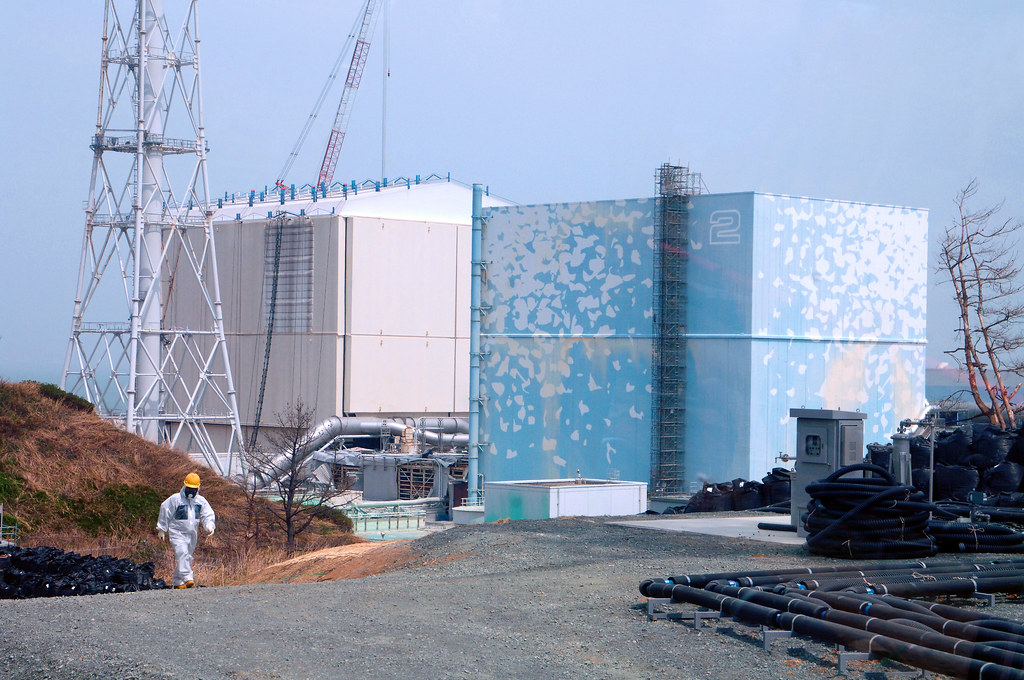
The IAEA team also took photos on their own and shared them on Flickr. In this photo, Reactor 2 almost looks pristine, as if nothing has happened in March 2011. (Click to enlarge.)

Tuesday, April 23, 2013

Sign at a Restaurant in Wuhan, China "No Entry for Japanese", No Tee Time for Japanese at a Golf Course


Toyota, Honda, Nissan's slump in China will continue.

From Bloomberg News (4/23/2013):


No Tee Time for Japanese Shows Depth of Toyota China Slump: Cars

Honda Motor Co. employees in the Chinese city of Wuhan need only visit the popular Feng Bo Zhuang restaurant to see the resentment their company faces. A sign at the door says Japanese are barred from entering.

Discrimination against Japanese is common in China, according to Yasuhide Mizuno, the head of Honda’s venture in Wuhan, some 500 miles (800 kilometers) up the Yangtze River from Shanghai. Mizuno -- who has also been assigned to Thailand, Taiwan, Malaysia and Australia -- says he’s never worked in a more hostile place.

“Wherever I go, like department stores or in taxis, people ask me whether I am Japanese,” Mizuno, 49, president of Dongfeng Honda (GHAJCZ), said in an interview at the Shanghai auto show. When he says yes, he said, the reception can be frosty.

Mizuno’s experiences in the city, site of one of the bloodiest battles of the Sino-Japanese war in the 1930s, illustrate why sales for Honda and Toyota Motor Corp (7203). have yet to recover since violent protests across China seven months ago. Though the riots -- triggered by a territorial dispute over uninhabited islands -- have subsided, Japanese carmakers are continuing to lose share in the world’s biggest auto market.

...First-quarter China deliveries for Honda, Nissan Motor Co. and Toyota (7203) fell even as overall Chinese car sales rose 17 percent. The share of Japanese brands dropped to 15 percent, versus a peak of 23 percent in 2011, according to the China Association of Automobile Manufacturers. LMC predicts the Japanese will see no growth in China this year, while the country’s auto market will expand 10 percent. Toyota doesn’t expect deliveries in the country to reach pre-protest levels before this autumn, China chief Hiroji Onishi said at the Shanghai show.

...For Honda’s Mizuno, the numbers are personal, though he says things are slowly improving. Japanese expatriates are still turned away from grocery stores, but not as often as before, he said. The Wuhan Tianwaitian Golf Country Club is always booked when he tries to reserve a tee time, he says, though it’s better than simply being told Japanese aren’t welcome on the course, as was the case a few months ago.

“I’ve never had that kind of experience in Beijing, Shanghai or Guangzhou,” Mizuno said. “They don’t understand that what they do affects foreign impressions of the city.”

Wang Qian, a representative at Tianwaitian’s reservations hotline, said the club doesn’t discriminate, though she acknowledged it refused Japanese golfers in September and October. Currently, the club prioritizes bookings for members and Japanese executives don’t belong to the club, she said.

At Feng Bo Zhuang near Wuhan’s bustling shopping district, workers in the 150-seat restaurant make no secret of their prejudices.

“My boss thinks the Japanese are way wrong on the Diaoyu islands issues, so he decided to put up the sign,” said a manager dressed in a Kung Fu master’s outfit who identified himself only by his family name, Zhong. “It’s also our way of marketing, because Chinese people were all angry.”

Japanese automakers can’t pin all the blame on political disputes as their cars have a lackluster reputation, according to Zhu Bin, an analyst at LMC Automotive. Sales at Toyota had been falling in the two months preceding the protests, while Nissan was underperforming the broader market.

(Full article at the link)


"Lackluster reputation". Coming from Chinese is priceless.

Meanwhile 1,000 officers of Japan's Self Defense Force will have a joint drill in June in California with the US military to recapture an isolated island, according to Kyodo News.

When I tweeted the military drill news, one follower responded by saying "There is no way that the US will side with Japan. Only a token gesture, because they don't want to anger China." The same kind of people also accused the US for not helping Japan enough in March 2011.

#Radioactive Japan: Minister of Economy Declares on TV That Nuke Plants Will Restart As Soon As This Fall


The ex-McKinsey consultant minister has been very bullish on things nuclear for some reason. He has already declared that decommissioning of Fukushima I Nuclear Power Plant will be done ahead of schedule of the current roadmap plan of 30 to 40 years. Never mind IAEA (later).

From Jiji Tsushin (4/23/2013):

秋にも原発再稼働=茂木経産相

Nuclear power plants may restart in fall, says Minister of Economy Motegi

茂木敏充経済産業相は23日夜、BSジャパンの番組に出演し、原発再稼働の時期に関して「(早ければ)今年の秋になる」との見通しを示した。経産相は根拠として「原子力規制委員会の新規制基準が7月18日に出来上がる。事業者が申請して安全が確認できれば再稼働となる」と説明した。

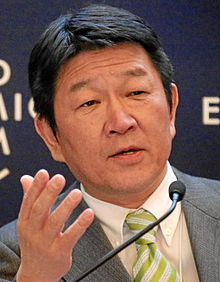
Minister of Economy, Trade and Industry Toshimitsu Motegi appeared in a program on BS Japan [BS stands for Broadcast Satellite] on April 23 night, and shared his view regarding the restart of nuclear power plant, saying "It will be (as soon as) this fall." Minister Motegi explained, as the basis for his view, "New regulatory standards by the Nuclear Regulatory Authority will have been compiled by July 18. Then the operators will apply [for restart], and if the safety is confirmed the nuclear plants will restart."

原発を抱える地元の理解が重要だが、茂木経産相は「そのための努力はしていく」と述べ、安全確認後に立地自治体との調整を進める考えを示した。現在、関西電力大飯原発3、4号機(福井県おおい町)が全国で唯一稼働している。

The understanding of the municipalities where nuclear power plants are located will be important, but Minister Motegi said, "We will make an effort [to obtain the understanding]", signaling the plan to coordinate with the municipalities after the safety is confirmed. Currently, only one nuclear power plant is in operation in Japan, which is KEPCO's Ooi Nuclear Power Plant (Ooi-cho, Fukui Prefecture).


I like the name of the TV station. BS Japan. Priceless.

I don't quite understand why it is this minister's business to even speak about nuclear power plant restart. The Nuclear Regulatory Authority is under the Ministry of the Environment. The Nuclear and Industrial Safety Agency, which was under the Ministry of Economy, Trade and Industry, has been abolished.

Jiji Tsushin seems to have all but forgotten that in the Fukushima I Nuke Plant accident, areas far wider than the municipalities where the nuclear power plant was located (Futaba-machi, Okuma-machi) have been affected when it says "The understanding of the municipalities where nuclear power plants are located will be important".

Long-term memory (more than 1 year), not to mention critical thinking, is not what "Cool Japan" is about, anyway.

Spain's Prime Minister Rajoy: EU Countries Must Accept to Give Up Sovereignty


We're all "global citizens", I guess. I'm sure he well represents his people.

EU über alles.

Germany wins, as its economy sputters.

From Zero Hedge (4/23/2013; emphasis is original):

Spain's Rajoy Yields To Merkel, Agrees That EU Countries Must Cede Sovereignty

In what seems like a bow to his overlords in Berlin, Spanish Prime Minister Mariano Rajoy has unleashed a somewhat remarkable torrent of terrible realization and truthiness:

  • *SPAIN PM SAYS EUROPE ECONOMY WORST THAN FORECAST THIS YEAR

  • *SPAIN PM SAYS ALL EU COUNTRIES ARE REVIEWING GROWTH FORECASTS

  • *SPAIN PM SAYS MUST TAKE DIFFICULT DECISIONS FOR COUNTRY'S GOOD

  • *SPAIN PM SAYS EU COUNTRIES MUST ACCEPT TO GIVE UP SOVEREIGNTY

  • *EU countries’ giving up sovereignty to the bloc is crucial for its future

In other words, handing over your liberty to Germany is for your own good. It seems the German perspective (as we noted here) is winning out.