Sunday, March 25, 2012

New York Times: As Reactors Age, the Money to Close Them Lags

US nuclear plant operators may not have enough money to decommission their aging reactors. If the reactors have to be shut down, it may be 20 to 60 years until they have enough money in the funds set up to pay for decommissioning.

The industry claims they are victims of the 2008 financial turmoil and market collapse.

From New York Times by Matthew L. Wald (3/20/2012; emphasis is mine):

WASHINGTON — The operators of 20 of the nation’s aging nuclear reactors, including some whose licenses expire soon, have not saved nearly enough money for prompt and proper dismantling. If it turns out that they must close, the owners intend to let them sit like industrial relics for 20 to 60 years or even longer while interest accrues in the reactors’ retirement accounts.

Decommissioning a reactor is a painstaking and expensive process that involves taking down huge structures and transporting the radioactive materials to the few sites around the country that can bury them. The cost is projected at $400 million to $1 billion per reactor, which in some cases is more than what it cost to build the plants in the 1960s and ’70s.

Mothballing the plants makes hundreds of acres of prime industrial land unavailable for decades and leaves open the possibility that radioactive contamination in the structures could spread. While the radioactivity levels decline over time, many communities worry about safe oversight.

Bills that once seemed far into the future may be coming due. The license for Vermont Yankee in Vernon, Vt., at 40 the nation’s oldest reactor, expires on Wednesday, for example. And while the Nuclear Regulatory Commission has granted its owner, Entergy, a new 20-year permit, the State of Vermont is trying to close the plant.

In New York, Gov. Andrew M. Cuomo has vowed to force the two operating reactors at another Entergy plant, Indian Point, 35 miles north of Midtown Manhattan, to shut down when their licenses expire in 2013 and 2015 by denying them state environmental permits.

Entergy is at least $90 million short of the projected $560 million cost of dismantling Vermont Yankee; the company is at least $500 million short of the $1.5 billion estimated cost of dismantling Indian Point 2 and 3.

The shortfall raises the possibility that Vermont could tend one sleeping reactor for decades while New York oversees three; Unit 1 , another reactor at Indian Point, shut down in 1974 and has yet to be dismantled.

Even the Nuclear Regulatory Commission’s chairman is uneasy about the prospect of a 60-year wait.

“These facilities should be cleaned up, and their footprints reduced as much as possible so that these areas can be returned to other productive uses within the community,” the chairman, Gregory B. Jaczko, said recently.

Gil C. Quiniones, the president and chief executive of the New York Power Authority, a state utility that sold Indian Point 3 to Entergy in 2000, called Entergy’s failure to plan for or finance the decommissioning of Indian Point in real time “stunningly irresponsible.”

“Delaying action for 60 years — when Entergy might no longer even exist — is offensive to the communities of Westchester County and the people of New York,” he said. James Steets, a spokesman for Entergy, said that financing would not be a problem because the company still expects to obtain new 20-year licenses for Units 2 and 3, which would allow time for savings to grow, and to prevail on the state permit issue.

Assuming that the plants remain open for two more decades, the company has promised Westchester County that it will decommission Indian Point in a “reasonable” period of time after the reactors close, probably in the 2030s.

Of the 20 reactors that lack the money for swift deconstruction, the owners hope that license renewals from the Nuclear Regulatory Commission will make the problem go away. For the plants that are fighting with their host states, Indian Point and Vermont Yankee, the federal courts may have the final say on whether and how long they keep operating. (A large demonstration in favor of closing the plant is planned for Wednesday at Vermont Yankee.)

The remaining 84 active reactors have enough savings on hand to satisfy the commission’s minimum financing requirements for eventual dismantling, some of them because they won license extensions.

The nuclear industry had been counting on steady returns on the funds and did not anticipate the 2008 market crash. Altogether the nation’s 104 power reactors have about $40 billion on hand. “A lot of decommissioning funds did take a hit at the nadir of the economic crisis,” said Scott Burnell, a spokesman for the regulatory commission.

One plant, Palisades in western Michigan, had $597.6 million saved up at the end of 2006, but the account was down to $218.8 million two years later and was only $279.2 million by the end of 2010, the most recent figures show.

Bruce Biewald, an economist who specializes in electricity economics at Synapse Energy, a Boston consulting firm, said the mothball strategy carries risks that could outweigh benefits. Proponents say “it’s like magic — compound interest on the one hand and radioactive decay on the other,” he said. (Because radioactivity levels decline over time, deconstruction workers would ultimately be exposed to less contamination.) But future investment returns could prove bleak, Mr. Biewald warns, and anticipated deconstruction costs could easily rise.

Responding to a petition from Sherwood Martinelli, an antinuclear activist who lives near Indian Point, Dr. Jaczko, the regulatory commission chairman, sought a shorter period between closing and dismantling.

But in October, Dr. Jaczko was outvoted 4 to 1 by his fellow commissioners. And the commission’s staff said that even 60 years was not a hard-and-fast outer time limit for suspending a reactor’s operations.

In the industry, this status is known as Safstor and it usually involves putting the spent nuclear fuel into storage casks on site, draining many of the plant’s fluids, making security arrangements and maintaining the reactor so it looks like a decent neighbor.

Environmental experts say the plants can be dangerous when they are not running. In a letter, the three members of Vermont’s Congressional delegation pointed out that 55,000 gallons of contaminated water spilled out of a mothballed plant in Illinois after a pipe froze. An attentive night watchman was credited with catching the spill in time to contain it.

Indian Point 1 has leaked a variety of radioactive materials into the soil on the banks of the Hudson in the 38 years since it closed, a point acknowledged by Entergy, which responded by emptying a spent fuel pool that was the source of the problem. The environmental group Riverkeeper argues that this is a harbinger of further trouble if Units 2 and 3 enter Safstor.

Compounding the worries about radioactive materials, the nation still lacks a permanent repository for spent nuclear fuel after decades of jockeying by politicians who sought to bar it from their backyards. So the fuel at the sleeping reactors will remain on site.

Twelve reactors across the country have been retired in the last three decades, all on short notice, because of a design or safety flaw that the economics did not justify fixing. The low price of natural gas, a competing fuel, makes the economic lifetime of existing reactors uncertain.

Some have been decommissioned in a few years, like Connecticut Yankee, whose owners, a group of New England utilities, footed the cost. Decommissioning started two years after its 1996 shutdown and was completed in 2005 at a cost of $871 million.

In Haddam, Conn., officials are still advertising for a new industrial tenant for its former site on the east bank of the Connecticut River.

Asked if tearing it down had been the right call, Paul J. DeStefano, the town’s first selectman and top official, said, “I’m a little hesitant, from a layman’s standpoint, of having something sitting around for 60 years. It just doesn’t sound right.”

#Fukushima I Nuke Plant: Leak from Reverse Osmosis Apparatus (Desalination), Probably High Tritium and Beta Contamination

Another leak at Fukushima I Nuclear Power Plant, and no one cares. Not even TEPCO cares, as the leak was first found at 8:30AM on March 26, but there will be no press conference (now it's once a day) until 6PM.

From TEPCO's email on March 26, 2012 sent out to reporters who have signed up for email notices (from Ryuichi Kino's tweets):

本日(3月26日)午前8時30分頃、福島第一原子力発電所の淡水化装置(逆浸透膜式)の濃縮水貯槽があるタンクエリアにおいて、淡水化装置から濃縮水を濃縮水貯槽に送る配管(耐圧ホース)より水が漏えいしていることを、協力企業作業員が発見しました

Today (March 26) at 8:30AM, an affiliate company worker discovered a leak from the pipe (pressure hose) that transports concentrated water from the reverse osmosis apparatus to the storage tank.

水の漏えいを停止するために、淡水化装置(逆浸透膜式)を停止したことで、午前9時頃、配管(耐圧ホース)からの水の漏えいはほぼ停止しております。漏れた水の一部は付近の排水溝に流れ込んでおり、現在、発電所敷地外への放出の有無について確認を行っております

To stop the leak, we stopped the operation of the reverse osmosis apparatus. The leak from the pipe has stopped almost completely. Part of the leaked water has gone into the nearby drain. We are investigating whether the water leaked outside the plant.

Kino's comments:

淡水化装置は、サリーやキュリオンといったセシウムの吸着塔から出てきた汚染水から塩分を取り除き、原子炉に戻せるようにする部分。メールを見ると、逆浸透膜で処理した濃縮塩水が漏れてるので、セシウム以外の放射性物質、とくに全ベータが濃い部分ではないかと。

The reverse osmosis apparatus is to desalinate the water from the cesium absorption towers like SARRY and Kurion so that the water could be injected back into the reactors. According to TEPCO's email, the concentrated salt water after the reverse osmosis is leaking. Probably high concentration of radioactive materials except for cesium, particularly all beta radioactivity.

漏れに気がついた時間は朝の8時半。以前なら、午前11時の会見で少しは状況が説明されていたけども、今は夕方しか会見がないので、各紙、テレビ等は広報に個別確認。う〜ん、ほんとは公式に説明したほうがいいんだけど。。。

The leak was discovered at 8:30 in the morning. When there was a TEPCO press conference at 11AM a new development like this was explained in the press conference. Now there is only one press conference in the evening, so the newspapers and TV will separately ask TEPCO's PR department. I think it would be better for TEPCO to make an official announcement...

Well, let's see from TEPCO's own information what kind of radioactive materials exist in what concentration in the water after being treated in the reverse osmosis apparatus.

From TEPCO's handout for the press on February 29, 2012, the water after being treated by the reverse osmosis (desalination) had:

  • H-3 (tritium): 2,900 becquerels/cubic centimeter (or 2,900,000 becquerels/liter)

  • All beta: 36 becquerels/cubic centimeter (or 36,000 becquerels/liter)

TEPCO at Atomic Energy Society of Japan: Reactor 2 May Have Leaked Radioactive Materials from Heat-Damaged Containment Vessel Seal

4 TEPCO researchers attending the Spring Conference of the Atomic Energy Society of Japan (AESJ) made their presentation on the first day of the Conference on March 19.

From Fukushima Minpo (3/25/2012; part):

ただ、東電が新たに示した事実もあった。事故発生から5日目の昨年3月15日に原発周辺の放射線量が急上昇したことへの見解だった。東電は「2号機の原子炉格納容器の上部にあるシール(封印箇所)が熱で損傷し、放射性物質が漏れ出した可能性が高い」との見方を示した。

However, there was a new piece of information from TEPCO, which was TEPCO's opinion [hypothesis] about the rapid rise of radiation levels around Fukushima I Nuclear Power Plant on March 15, 2011, 5 days after the start of the nuclear accident. TEPCO said, "It is highly likely that the seal[s?] on the upper part of the Reactor 2 Containment Vessel was damaged by the heat, and radioactive materials leaked from there."

 ただ、発表終了後、報道陣の質問に対して、東電の担当者は「どう漏れたか、はっきりしたことはまだ分かっていない」と最終的な結論は出ていないことを説明した。

But after the presentation, one of the researchers answered the questions from the press and said "The detailed mechanism of the leak is still not known", and that there was no final conclusion reached yet.

 事故発生から1年が経過したが、東電や政府は原子炉の格納容器や圧力容器の内部を正確に把握できていない。東電の発表には「推定される」「思われる」などの語句がたびたび使われた。事故の原因や進展経過を十分に解明するには、依然として判断材料が乏しいことをうかがわせた。

It has been one year since the start of the accident, but TEPCO and the national government still haven't figured out what's been going on inside the Containment Vessels and Pressure Vessels of the reactors. TEPCO often used the words "to be presumed" or "to be considered" in the presentation. It seems there is still not enough information to fully understand the cause of the accident and how it progressed.

PBS Interview of an American Who Was at #Fukushima I Nuke Plant When Earthquake Hit on March 11, 2011

Did you know that there were 38 Americans at Fukushima I Nuclear Power Plant when the earthquake and tsunami hit on March 11, 2011? I didn't.

PBS (Public Broadcasting Service) interviewed Carl Pillitteri, a nuclear technician who was at the plant that day. He was in the Reactor 1 turbine building when the earthquake struck, and said he thought he would perish. Strange sound coming out of nowhere, he couldn't figure out whether it was from the earth, or the buildings. One year after, he is still very much traumatized.


(H/T satomi)

Saturday, March 24, 2012

24,700 Bq/Kg Radioactive Cesium from Tea Leaves in Fukushima City, from Last Year

Move over, Shizuoka tea. Move over, Saitama tea. Here comes Fukushima tea with 24,700 becquerels/kg of radioactive cesium.

The tea leaves were picked in Fukushima City in May last year, and they were not commercial tea. A city resident grew in his/her garden and picked for his/her own use.

I hope the tea weren't consumed or given as gifts. At 24,700 becquerels/kg, you cannot even dump it in the garbage, let alone incinerate.

From Mainichi Shinbun local Fukushima version (3/23/2012):

東日本大震災:福島、茶葉から2万4700ベクレル 市民が測定所に持参 /福島

Fukushima: 24,700 becquerels/kg of radioactive cesium from tea leaves, brought by a resident to the testing laboratory

 福島市の放射能測定所に市民が持ち込んだ茶葉から、暫定規制値(1キロ当たり500ベクレル)を上回る同2万4700ベクレルの放射性セシウムが検出された。22日の市災害対策本部会議で報告された。

24,700 becquerels/kg of radioactive cesium was detected from the tea leaves brought by a city resident to the testing laboratory operated by Fukushima City. The news was reported at the meeting of the disaster response headquarters of Fukushima City on March 22.

 市によると、茶葉は市民が自宅の庭先で栽培したものを測定所で測ったところ、高い値が検出されたため、ゲルマニウム半導体検出器で再検査した。昨年5月に摘み取り、保管していたという。

According to the city, the resident grew the tea in his/her garden. When he/she brought the tea leaves to the testing laboratory, the high levels of radioactive cesium were detected. So the tea leaves were tested again using the germanium semiconductor detector. The tea leaves were picked in May last year, and kept at the resident's house.

 市は、測定器を増設し、月内に計28カ所に測定所を設ける。

The city plans to increase the number of detectors and will set up 28 testing laboratories in the city by the end of this month.

 市環境課は「家庭菜園などで採れた農産物は種類により規制値を超えるものもあり、可能な限り測定所で測ってほしい」としている。

The environment section of the Fukushima city government cautions the residents, "Produce from the home gardens, depending on the types, may exceed the safety limit [for radioactive cesium]. We would like you to bring them to the testing laboratory by all means."

Disaster Debris Is Radioactive, Ministry of the Environment's Own Data Shows

Goshi Hosono's Ministry of the Environment has set up a special website to promote and sell the wide-area disposal of the disaster debris in Iwate and Miyagi Prefectures.

In it, there is a page about radiation levels of the debris. The Ministry, which is sounding more and more like a religious ministry preaching safety of disaster debris, says the radiation coming off of the debris once it's burned and buried deep should be no more than 0.01 millisievert per year. On the right side, there is a table showing the radioactivity of the debris in becquerels, without specifying what types of debris. However, below the table, there's a link to the PDF document with far more details, which I reproduced below.

The debris from Tagajo City, Miyagi Prefecture that was used in Hosono's propaganda demonstration on the street corner of Kawasaki City the other day was wood chips, which has the least amount of radioactive cesium. If they had picked fabrics, it would have contained 540 becquerels/kg of radioactive cesium, and if they had picked small debris less than 5 millimeters in diameter, it would have been 390 becquerels/kg. (See Page 4 below.) Not that the radioactivity would have been picked up by a survey meter that they were using.

From the Ministry of the Environment, radioactivity of disaster debris in Iwate and Miyagi Prefectures (debris with more than 200 becquerels/kg is marked in red):


That video of politicians demonstrating the "safety" of disaster debris in Kawasaki is really infuriating. Goshi Hosono says "People may be thinking disaster debris from Fukushima is coming to them, hahahahaha" (I'm paraphrasing.) No they don't. They know better than him, much better.

Besides, Fukushima disaster debris may be coming out of Fukushima after all. Iwaki City will burn the disaster debris starting April, and Iwaki City had a long standing contract to ship the ashes to Saitama Prefecture where the ashes were burned again in the melting furnace into slag to be recycled as road substrates. The contract was carried out until late last year. That contract may be renewed, and disaster debris from Fukushima, in the form of ashes, may be shipped outside Fukushima.

It's also worthwhile to recall that the so-called safety standard of disposal of 8,000 becquerels/kg (for debris, ashes, sludge to be buried without any treatment to the final disposal sites) was originally meant for Fukushima Prefecture alone. Before anyone noticed it, it became the de facto national standard.

With the no-entry zone and the planned evacuation zone around Fukushima I Nuclear Power Plant to be renamed, it may not be very long before the debris from Fukushima Prefecture starts to spread (if not already - there have been "baseless rumors").

No-Entry Zone and Planned Evacuation Zone in Minami Soma to Be Abolished Soon

Minami Soma City, where the recovery and reconstruction road race and marathon is taking place on Sunday March 25 in the area that has higher radiation levels than radiation control areas in a nuclear power plant, will soon be able to welcome the residents back to the no-entry zone and planned evacuation zone.

Radiation? What radiation?

From Kyodo News (3/23/2012):

国が南相馬大半立ち入り可能案 警戒区域解除4月にも

Most of Minami Soma will be habitable again, says the national government. No-entry zone to be abolished in April

 東京電力福島第1原発事故の避難区域再編で、政府は23日、福島県南相馬市に対し、市の南部から西部にかかる警戒区域と計画的避難区域を、新たな3区域に再編し、大部分を立ち入り可能な「避難指示解除準備区域」に、一部を「帰還困難区域」と「居住制限区域」にする案を提示した。

In an effort to reorganize evacuation zones set up after the Fukushima I Nuclear Power Plant accident, the national government submitted its plan to Minami Soma City in Fukushima Prefecture on March 23 that will reorganize the no-entry zone and the planned evacuation zone in the southern and western part of the city into 3 new zones, with most of the area designated as "zone in preparation for having the evacuation order lifted" which would allow residents to return. The rest of the area will be designated as "zone where residents cannot return for a long time" and "zone with restricted entry".

 この日、市役所で開かれた国と市の協議で、国の原子力災害現地対策本部の担当者が示した。

The official in charge from the national nuclear disaster local response headquarters disclosed the plan in meeting in the City Hall between the national government and the city.

 3区域の詳細な線引きは、政府から3月末にも示される予定だが、市は遅くとも4月中に警戒区域解除するよう政府に求めた。この日の協議は非公開。

The details of the 3 zones will be given by the national government by the end of March. The city requested that the no-entry zone be abolished by the end of April at the latest. The meeting was closed to the public.

The Japanese government, in its never-ending irksome PR effort to appeal normalcy and vigorous recovery of Japan to the whole world, is going to return the residents to the no-entry zone (20-kilometer radius from Fukushima I Nuclear Power Plant) and the planned evacuation zone (mostly between 20 and 30 kilometer radius, including the very high radiation areas like Namie-machi and Iitate-mura) by simply renaming the zones.

The government is going to divide the former no-entry zone and the planned evacuation zone into 3 new zones solely by the annual cumulative radiation exposure levels. As far as I know, it's only the external radiation levels that they are concerned with. (I have no idea if there are official translations for these names):

避難指示解除準備区域 (zone in preparation for having the evacuation order lifted): annual cumulative external radiation exposure of 20 millisieverts and below

居住制限区域 (zone with restricted entry): between 20 to 50 millisieverts

帰還困難区域 (zone where residents cannot return for a long time): 50 millisieverts and above

Again for your reference, pre-Fukushima average annual radiation exposure in Japan was 1.4 millisievert, including both external and internal radiation exposure (food, radon inhalation). This is the average, and eastern Japan had lower radiation exposure than western Japan.

In case of Minami Soma City, only a couple of homes in Kodaka District will be designated as the zone where they cannot return for a long time. But everywhere else will be good for the residents to return.

Mayor Katsunobu Sakurai, who became world-famous for his Youtube plea for help in March last year insists that the lifting of the no-entry zone designation does not mean there will be no more compensation for the residents.

Good luck with that, Mr. Sakurai.

Iitate-mura village chief Norio Sugano also eagerly awaits the re-organization of his village, which is entirely within the planned evacuation zone but has managed to keep a commercial business open (Kikuchi Seisakusho that has several factories in Iitate-mura).

Sakurai and Sugano have fared relatively well over the past year, having become world-famous as symbols of the nuclear accident, and having been able to retain political power over the residents.

On the other hand, Tamotsu Baba, mayor of Namie-machi is dead set against the re-organization, saying there is no plan in place for rebuilding infrastructure.

Governor of Kyoto on Disaster Debris: "We May Not Tell Residents"

Sankei Shinbun reports (3/24/2012):

がれき非公表処分の可能性 山田知事示唆 京都

Kyoto Governor Yamada indicates disaster debris may be disposed without the public informed

山田啓二知事は23日の記者会見で、東日本大震災で発生した災害廃棄物(震災がれき)の広域処理について「(がれきを受け入れる)地元が非公表での処理を望むなら、意向を踏まえなければならない」と述べた。平成16年に府内で鳥インフルエンザの感染が発生した際の焼却処分と同様、施設などを明らかにせずにがれき処理を行う可能性を示唆したものだ。

Governor Keiji Yamada commented during the press conference on March 23 on the wide-area disposal of disaster debris from the March 11, 2011 earthquake and tsunami, and said "If the local authority (accepting the debris) want to proceed without telling the residents, we should oblige", indicating he might proceed with the debris disposal like the Kyoto government had done in 2004 during the bird flu infection when the disposal by incineration was carried out without identifying which facility would do the incineration.

 また、がれき受け入れの協力方針を示している舞鶴市については「安全性を実証する実験を行いたい」と述べ、近く同市に出向き、住民に安全性を説明する意向を明らかにした。

About Maizuru City, which has already pledged cooperation in debris disposal, the governor said "We want to carry out the test to prove safety", and said he would visit the city and explain the safety to the city's residents.

When politicians like him say "地元" (=locals), they mean the local government and heads of the neighborhood associations. It doesn't mean residents.

Maizuru City is located on the coast on the Japan Sea. A beautiful, ancient town with the first evidence of human settlement 10,000 years ago. The current mayor Ryozo Tatami is a medical doctor.

Governor of Kyoto Keiji Yamada is a Tokyo University graduate (law) and a former career bureaucrat (today's Ministry of Internal Affairs and Communications).

Not that Sankei Shinbun cares. It decidedly do not care, as it has been calling the Fukushima I Nuclear Power Plant accident as "radiation leak", and its editors and columnists routinely excoriate anyone who disagree with the national government policies of spreading contaminated vegetables and contaminated debris.

Anecdotal Evidence that Government and JA Pushed Tohoku/Kanto Vegetables to Western Japan Last Year

As the title says, it is purely anecdotal, nothing systematically gathered and statistically analyzed. It's from the readers of my Japanese blog and twitter followers in Japan who wrote to me after reading the Asahi AJW article (I translated it into Japanese) that back in 2005 IAEA had proposed the 300-kilometer radius for contaminated food regulation but the Japanese government objected.

(By the way, the Asahi article appeared in Japan on March 15, 2012 in Japanese, I was told by a reader, but only in the printed version of the paper. So unless you're an Asahi subscriber you would never know about it.)

About the vegetable lineups in supermarkets in the Kansai region (western half of Japan) about the same time last year:

赤ちゃんがいるので、関西に越したのですが、昨年はスーパーには北関東産野菜がずらり。今年の同シーズンの現在、九州四国野菜がずらり。昨年の品揃えはなんだったのでしょう。

We relocated to Kansai last year because of our small baby. Vegetables grown in northern Kanto [Tochigi, Ibaraki, Gunma] were on prominent display at a local supermarket last year. The same season this year, all I see is vegetables grown in Kyushu and Shikoku. What was that lineup last year?

関西在住ですが、昨年は今までスーパーで見たことのない関東産ばかりが並んでいました。地場産は滅多に見つからないほどでした。

I live in Kansai. Last year, it was all vegetables grown in Kanto, which I had never seen before. I could hardly find locally grown vegetables.

うちはチビだけ大阪の実家に避難させました。理解力のある母なので食材に気をつけてくれてましたが「なんで危ない向こうのが出回る!」と怒っていました。

I sent my small child to my parents' house in Osaka. My mother understood the radiation danger and she paid close attention to food. She was very angry, saying "Why are they selling these vegetables from the dangerous [contaminated] areas?"

大阪在住ですが、いままで福島の農産物なんて見たことなかったのに、去年の今頃は、伊達市のきゅうりをはじめ、線量の高い地域からの野菜ばかりでした。

I live in Osaka. Same time last year, the vegetables I saw at the supermarket were all from the high-radiation areas, like cucumbers from Date City, Fukushima. I had never seen any vegetable from Fukushima before.

About the same time last year (late March) and onward, there were people in Kansai (Osaka, Hyogo, Kyoto, etc.) reporting that the vegetables at their local supermarkets were all of Kanto origin that they had never even seen before. They were roundly ridiculed, and were accused of fear-mongering, making up stories, or worse, discriminating against Fukushima people. They were called "racists" in a country which is pretty much homogeneous.

One year later, the vegetable lineups seem to have gone back to pre-Fukushima normal, i.e. vegetables from western Japan sold in western Japan.

Remember all that beef contaminated with radioactive cesium last year? Here's one of the earliest posts on the topic from last year. The Japanese government started encouraging and facilitating the sale or transfer of cattle out of Fukushima before the planned evacuation zone was set in late April, and beef of Fukushima origin was sold in great quantities in locations which had never seen such a surge in sale of Fukushima beef.

Remember also the radioactive crushed stones from a stone pit in Namie-machi, right outside the no-entry zone (20-kilometer radius) and inside the planned evacuation zone? The stone pit operator was able to sell (literally) tons of stones far and wide (some were sold and used in Tokyo) before the planned evacuation zone was set in late April.

The Japanese government has successfully disseminated contaminated vegetables, beef, crushed stones, and a host of everything else (firewood, used cars, leaf compost, sawdust for shiitake growing, etc.) out of Fukushima and the contaminated areas in northern Kanto. Its success is partly attributable to people who attacked people like these mothers (and fathers) as "fear-mongering", "irrational", "nuclear-crazy" "racists".

Right now, a different set of people are called "racists", because they oppose accepting the disaster debris from Miyagi and Iwate and burn it in their towns. the Japanese government looks set to score yet another success. Letting the citizens squabble with each other with "racist" name-calling, while the government promising endless money to those in the local governments and waste disposal industry.

People like Ms. Cyndi Lauper and Mr. Paul Blustein provide a good old "external" (international) pressure (or "gaiatsu" in Japanese) for the government to tell the citizens, "See, international celebrities and scholars are saying what we've been telling you."

Friday, March 23, 2012

Hong Kong to Resume Import of Meat, Eggs from Fukushima and Other Affected Areas

Hong Kong will resume importing the meat and eggs from Fukushima Prefecture and 4 other prefectures in Kanto most affected by the nuclear fallout.

Why? Because there will be an official government piece of paper accompanying the meat, attesting the safety from radiation contamination. Bureaucrats will be bureaucrats, whether it's Japan or Hong Kong. Formality is all that matters.

From Yomiuri Shinbun (3/23/2012):

東京電力福島第一原子力発電所事故の影響で香港への輸出が規制されている福島県など5県産の食肉と卵の輸出が再開される見通しとなった。

Export of meat and eggs to Hong Kong from 5 prefectures including Fukushima will resume shortly. The export was halted after the Fukushima I Nuclear Power Plant accident.

 鹿野農相が23日の閣議後記者会見で明らかにした。輸出に必要な検査証明書の書式が決まったためで、今後1週間程度の手続きを経て再開される。

Minister of Agriculture Kano disclosed the news during the press conference after the cabinet meeting on March 23. The format of the inspection certificate has been agreed upon, and the export will resume in about one week.

 日本の農林水産物の香港向け輸出額は1111億円(2011年)と全体の約4分の1を占め、国・地域別で最も多い。香港への輸出再開は、同様の理由で輸入を規制している中国の判断にも影響を与えそうだ。

Hong Kong is the largest market for Japanese agricultural and marine products. In 2011, the amount was 111.1 billion yen, one-quarter of the total export. Resumption of export to Hong Kong may affect the decision by China, who has halted import from Japan for the same reason.

 香港は、福島、群馬、栃木、茨城、千葉の5県産の卵と食肉の輸入を再開する条件として、日本政府に放射性物質の検査証明書を作成するよう要求していたが、これまで、証明書に記入する内容などが決まらず、輸出が再開できなかった。

Hong Kong had demanded that the Japanese government issue inspection certificates as a condition to resume import of eggs and meat from Fukushima, Gunma, Tochigi, Ibaraki, and Chiba. Up till now, the officials couldn't agree on what to put on the certificates, which prevented the restart of the trade.

Hong Kong, Taiwan, China are big importers of Japanese produce, which (used to) fetch premium for the look, taste, and safety.

"Money" Is the National Government's Official "Policy" on Wide-Area Disposal of Disaster Debris

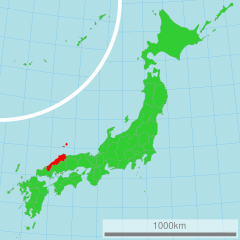
As Chugoku Shinbun reports (3/24/2012) on the meeting between the Shimane Prefecture officials and the Ministry of the Environment, as long as money from the national government is coming to them the local governments will stop worrying.

Why is the Shimane prefectural government pressuring the municipalities in Shimane to accept disaster debris? The prefectural government doesn't want to miss out on the gravy train, but it has to beg the municipalities probably because the prefectural government does not have the incineration plant of its own.

I just wish I had visited this ancient place (I always wanted to visit).

Chugoku Shinbun (3/24/2012):

島根県は23日、東日本大震災で発生したがれきの処理をめぐり、環境省の担当者を招いた市町村向けの説明会を松江市で開いた。中国地方5県では初。がれきの焼却灰1キロ当たりの放射性セシウム量が8千ベクレル以下であれば埋め立てが可能とする安全基準に加え、国が処理費用を全額負担する方針を強調した。

Shimane Prefecture held a meeting designed for the municipalities in Shimane regarding the disposal of disaster debris from the March 11, 2011 earthquake and tsunami, by inviting the official from the Ministry of the Environment. Shimane was the first prefecture to hold such a meeting in the 5 prefectures in Chugoku Region. In the meeting, the safety standard of 8,000 becquerels/kg of radioactive cesium in the ashes from burning the debris as well as the national government's policy to pay for the entire cost of disposal were emphasized to the participants.

 環境省リサイクル対策部の関谷毅史広域処理推進チーム長が、19市町村と3広域事務組合の計35人に説明。搬出対象の宮城、岩手両県の処理希望量がそれぞれ344万トン、57万トンに上るとし「処理能力が足りない」と受け入れの検討を要請した。

Tsuyoshi Sekiya, head of the wide-area disposal promotion team at the Ministry of the Environment recycling division explained to 35 officials from 19 municipalities and 3 wide-area waste management unions. The disaster debris from Miyagi and Iwate to be disposed outside the prefectures was 3.44 million tonnes from Miyagi and 570,000 tonnes from Iwate, Sekiya said, and requested that they consider accepting the debris because "there is not enough capacity" in the disaster-affected areas.

 一方、市町村の担当者は、がれきの放射性物質検査への財政措置など、野田佳彦首相が3月上旬に示した追加支援策の具体化時期を質問。関谷チーム長は「極力急ぐ」と述べるにとどまった。

Officials from the municipalities asked about the details of measures that Prime Minister Yoshihiko Noda indicated in early March to support wide-area disposal of the debris, including financial support from the national government for radiation measurement of the disaster debris. Sekiya could only say, "As soon as possible".

 県内では松江市議会が26日、受け入れを市に要請する決議案を議決する見通し。説明会に出席した市環境保全課の兒玉渉治課長は「住民の安全確保を大前提に協議する」と話した。

In Shimane Prefecture, the City Assembly in Matsue City [capital city] is expected to pass the resolution requesting the city to accept the debris. Shoji Kodama, manager of Matsue City's environmental protection section who attended the meeting said, "Securing the safety of the residents comes first, and we will discuss."

4 million tonnes of disaster debris from the two prefectures, less than 20% of the total debris.

How will Mr. Kodama of Shimane City secure the safety of the residents? Probably by doing what Hosono and his clowns did the other day on the street corner in Kawasaki City, Kanagawa. Wave a survey meter over the debris and scream "See? Did you see that? It's safe!"

One good thing about the article by Chugoku Shinbun is that the reporter named names. That seldom happens in the national newspapers, particularly online versions of their papers. It's always "an unnamed official" or "the government source".

Recovery and Recontruction Marathon in High-Radiation Minami Soma City in Fukushima on March 25, Featuring Elementary School Boys and Girls

If you thought the women's "ekiden" road race that took place in Fukushima City last year was bad, you haven't seen this thing.

Minami Soma City, where one of the "black dusts" found on the road surfaces throughout the city has 3.43 million becquerels/kg of radioactive cesium (and who knows what else), will hold a marathon and "ekiden" road race in the city to show to the world the recovery and reconstruction of Minami Soma City. Unlike the women's road race in Fukushima City where the youngest girls who could enter the race were 13-year olds, the Minami Soma marathon event will have elementary school kids running the 2-kilometer course.

The entity who has organized this event, an NPO called Furusato Fukko [homeland recovery] Kizuna [ties that bind domestic animals] Council, will let elementary school children and junior high school students participate for free. How generous. Everybody else will pay 3,000 yen (US$36) to kick up dusts that may have several million becquerels/kg of radioactive cesium.

Keep smiling.

From Fukushima Minyu (2/27/2012); clearly the newspaper is one of the sponsors:

南相馬で25日「駅伝・マラソン大会」 走りで勇気届けよう

"Ekiden" and marathon event in Minami Soma on March 25. Run and show your courage [this must be the slogan of the event.]

 南相馬ふるさと復興駅伝・マラソン大会は3月25日、南相馬市鹿島区の鹿島カントリー倶楽部を発着点に行われる。同10日まで、参加者を募集している。

The Minami Soma Furusato [homeland] Recovery Ekiden and Marathon will be held on March 25, with the starting and ending point at the Kashima Country Club in Kashima District of Minami Soma City. People can sign up up till March 10.

 NPO法人ふるさと復興・絆協議会、大会実行委員会(佐藤信義実行委員長)の主催。震災と原発事故の影響を大きく受けた同市だが、地域の人たちが力強く走る姿を発信、避難したり仮設住宅で過ごす人たちに元気と勇気を届けようと行われる。県地域づくり総合支援事業の補助対象事業。

The event is sponsored by an NPO, Furusato Fukko [homeland recovery] Kizuna Council and the event executive committee (chairman Nobuyoshi Sato). Minami Soma City has been deeply affected by the earthquake/tsunami and the nuclear accident. The event will feature the local residents run with vigor to cheer and encourage the residents who have evacuated or live in the temporary housing. The event is subsidized by the Fukushima prefectural government as a community-building and -supporting event.

 同倶楽部のクラブハウスが発着点。マラソンは小学生2キロ、中学生3キロ、高校・一般が5キロと10キロ。駅伝は4人1チームで1.5キロずつ走りタスキをつなぐ。

The marathon and ekiden road race will start and end at the club house of the Country Club. Elementary school children will run a 2-kilometer marathon, junior high school students 3-kilometer, high school students and general public 5-kilometer or 10-kilometer. An ekiden road race team will consist of 4 people, with each running 1.5 kilometer.

 問い合わせは、ふるさと復興駅伝・マラソン大会事務局(電話03・5379・3700)へ。

For more, contact Furusato Fukko Ekiden/Marathon event office at 03-5379-3700.

Now that's very interesting. That telephone number is a Tokyo number, not Minami Soma. The NPO's announcement shows it is located in Shinjuku-ku, Tokyo. The chairman of the Council is Nobuyoshi Sato. No idea who this man is, but he has successfully obtained the government money (who will then take money from the taxpayers) to plan an event where elementary school children are encouraged to run in a city with on-going "decontamination" effort right outside the 20-kilometer no-entry zone in Fukushima.

What a country.

From the event page of this NPO:

サブタイトルに“Fukushima-51”を掲げ、相双地区の鹿島カントリー倶楽部から勇気の夢をのせた次の1000年に向け元気と勇気を発信します。 Fukushima50(“フクシマ・フィフテイー“と世界が称賛)+1の “1”は勇気ある子供、地域、日本の未来を表現し、地域の人々の復興にむけて 走る姿を全世界に向けて発信することで、これまで手を差し伸べてくれた世界中の人々への御礼と共に、力強く誇りある日本の姿と重なって、地域復興への勇気 と自信としたいと考えて実施します。

The event subtitle is "Fukushima-51". It will send vigor and courage for the next millennium with courageous dream from Kashima Country Club. Fukushima-50 (whom the world praised) plus 1. "1" signifies the future of courageous children, region, and Japan, and by broadcasting the event to the entire world showing the local people running toward the recovery, we will thank people from all over the world who have helped us. It will evoke the image of powerful and proud Japan, and will inspire courage and confidence in the recovery of the region. So we will hold this event.

Oh boy. It smells like a good-intentioned dunce in his late 20s or early 30s who truly believes what he's saying which is nothing but fluff with soundbites (to get the subsidy, I think), rendering the sentences near impossible to translate into English. Probably I did a poor job because the original Japanese is very much illogical, while the English translation is somewhat readable. (Road to hell is paved with ....)

By the way, the parents of these children (under the age of 18) must sign the waiver for them that will indemnify the organizer from any injury and sickness on the day of the event and afterwards. If you see school kids running in this event, there are parents in that city who will have signed the waiver. So much for "We have to protect children" refrain you hear all over Japan.


The waiver document also says the air radiation levels at the Kajima Country Club are 0.6 to 0.7 microsievert/hour.

HCR+OPCOM, a Minami-Soma-based NGO who protested the Fukushima City's women's road race, was doing a hunger strike in front of the Kajima Country Club protesting against the event that would endanger children for no good reason other than to show that people in Minami Soma are brave.

1,640 Millisieverts/Hr Radiation in #Fukushima I Nuke Plant Reactor 2 Bldg

When Quince the robot entered the reactor building to measure the radiation levels on the 1st floor of Reactor 2 building, the radiation levels were in 2 digits.

Now, carbon-based colleagues of Quince (TEPCO and Toshiba) entered the same building, and they got to detect 1,640 millisieverts/hour (or 1.64 sievert/hour) radiation on the second floor.

TEPCO and Toshiba employees entered the Reactor 2 building to conduct the survey in preparation for installing the thermometers to replace the current ones that are failing fast. The survey was done on March 15, 16, 21 (this may be Quince only), and 22.

From TEPCO's handout for the press (3/23/2012):

(The first image says "1st floor", but it is "2nd floor".)


1.4 Million Bq/Kg of Radioactive Cesium in Swallow's Nest in Okuma-Machi, Fukushima

The Ministry of the Environment, whose mandate also includes protection of animals, says "There is no effect on humans" if one stays away far enough.

What about the birds, having grown up in a nest with 1.4 million becquerels/kg of radioactive cesium with 2.6 microsieverts/hour surface radiation?

From Kyodo News (3/23/2012):

ツバメの巣140万ベクレル 離れれば「影響なし」

1.4 million becquerels of radioactive cesium from a swallow's nest, "No effect" if you stay away

 環境省は23日、東京電力福島第1原発から約3キロ離れた福島県大熊町にある建物の壁で採取したツバメの巣から、1キログラム当たり約140万ベクレルの放射性セシウム(セシウム134と137の合計)を検出したと発表した。

The Ministry of the Environment announced on March 23 that 1.4 million becquerels/kg of radioactive cesium (Cs-134 and Cs-137) was detected from a swallow's nest taken from the wall of a building in Okuma-machi in Fukushima Prefecture, about 3 kilometer from Fukushima I Nuclear Power Plant.

 環境省によると、巣はセシウム濃度が高い付近の田んぼの泥や枯れ草を集めて作ったとみられる。千葉市の放射線医学総合研究所に運び、巣表面の放射線量を測定すると毎時2・6マイクロシーベルトだったが、約50センチ離れると同0・08マイクロシーベルトに下がったことから、同省は「近づかなければ巣による人への影響は無視できると考えられる」としている。

According to the Ministry, the nest was built from the mud from a nearby rice paddy and dead leaves with high radioactive cesium density. The nest was taken to the National Institute of Radiological Sciences (in Chiba City, Chiba), where the radiation levels were measured. It was 2.6 microsieverts/hour on the surface of the nest, but the radiation level dropped off to 0.08 microsievert/hour at 50 centimeters from the nest. The Ministry says that "if one stays away from the nest, it can be safely concluded that any health effect on humans can be ignored".

I can't find any press release on the subject at the Ministry of the Environment website, which is a disorganized mess (probably on purpose).

The Yamashina Institute for Ornithology announced last year that it would collect swallows' nests from various locations in Japan to test for radioactive materials. I wonder if they had done it. I would trust the institute much more than the Ministry of the Environment. Looking at their website, they are still collecting the nests from 2011.

Thursday, March 22, 2012

Iwaki City, #Fukushima Will Start Burning the Contaminated Disaster Debris in the City in April

Not a problem, says the city. The debris from the natural disaster (earthquake, tsunami) was doused with radioactive fallout from Fukushima I Nuclear Power Plant.

As I wrote earlier today, plutonium isotopes were found in Iwaki City on a metal plate that had been outside since March 11, 2011, and they were of Fukushima I Nuke Plant origin.

But the city will start burning in earnest in April so that the city is debris-free by the end of 2013.

The residents of the city don't seem totally on board, but just like Tokyo's governor and Shimada City's mayor, the Iwaki City's unnamed officials (in the article below) say the city will do it anyway.

Fukushima Minpo (3/22/2012):

震災がれきを本格焼却へ いわき市「線量、問題なし」と判断 

Iwaki City will burn the disaster debris in earnest, "Radiation level is not a problem"

いわき市は平成24年度、東日本大震災のがれきの本格焼却を開始する方針を固めた。2月に実施した試験焼却の結果、放射線の値に問題がないと判断した。地区住民の代表らへの説明などをした上で、早ければ4月中に市の北部、南部両清掃センターで焼却を始める。

Iwaki City has decided to start the burning of the disaster debris from the March 11, 2011 earthquake/tsunami in the fiscal 2012 [that starts on April 1]. The city conducted the test burn in February, and decided there was no problem with the radiation level. After explaining to the local residents, the city will start burning the debris in the city's two waste disposal plants in April.

 市によると、焼却処理が必要な災害がれきは約4万トンで、本格焼却が始まれば25年度内にも処理が完了するという。
 試験焼却は2月16~22日まで南部清掃センターで実施。通常の生活ごみに8・8%の割合で災害がれきを混ぜ、計約860トンを焼いた。排ガス、飛灰、主灰の放射線量、敷地内や周辺の空間線量を計測した結果、生活ごみだけを燃やした場合と比較して高い値は出なかったという。測定結果は市のホームページで公表している。

Iwaki City has about 40,000 tonnes of disaster debris that needs incineration. If the incineration starts in earnest, the debris will be disposed of completely in the fiscal 2013, according to the city. The test burn was conducted from February 16 to 22 at the Nanbu waste disposal center. Disaster debris was mixed with the regular household garbage at 8.8%, and 860 tonnes of this mixed waste was burned. Radiation levels of exhaust gas, fly ashes, and main ashes were measured, and the air radiation levels inside the compound and in the surrounding levels were measured. The levels were not significantly higher than when only the household garbage was burned. The results of the measurements are published on the city's website.

 これまでは、反対する住民の声があったことなどから、本格焼却には至っていなかった。市の担当者は「焼却しなければ市民生活に支障が出る。(住民から)100%の同意を得ることは難しいかもしれないが、最終的には行政責任で実施したい」としている。

So far, because of the opposition from the residents, the disaster debris in the city hasn't been burned in earnest. The person in charge at the city government says, "Unless we burn, daily lives of the citizens will be negatively impacted. It may be difficult to obtain the unanimous consent from the residents, but ultimately we will carry out [the burn], and the city will take responsibility."

Well if that's the case, what is your name, Mr. Anonymous at the Iwaki municipal government in charge of contaminated debris burning?

As of February 2012, 8,500 becquerels/kg of radioactive cesium was still found in the fly ashes at the incineration plants in the city, and that was just household garbage.

Scientific American: "Effective World Government Will Be Needed to Stave Off Climate Catastrophe"

An article written by Gary Stix, editor and senior writer for Scientific American (3/17/2012; emphasis is mine):

Almost six years ago, I was the editor of a single-topic issue on energy for Scientific American that included an article by Princeton University’s Robert Socolow that set out a well-reasoned plan for how to keep atmospheric carbon dioxide concentrations below a planet-livable threshold of 560 ppm. The issue came replete with technical solutions that ranged from a hydrogen economy to space-based solar.

If I had it to do over, I’d approach the issue planning differently, my fellow editors permitting. I would scale back on the nuclear fusion and clean coal, instead devoting at least half of the available space for feature articles on psychology, sociology, economics and political science. Since doing that issue, I’ve come to the conclusion that the technical details are the easy part. It’s the social engineering that’s the killer. Moon shots and Manhattan Projects are child’s play compared to needed changes in the way we behave.

A policy article authored by several dozen scientists appeared online March 15 in Science to acknowledge this point: “Human societies must now change course and steer away from critical tipping points in the Earth system that might lead to rapid and irreversible change. This requires fundamental reorientation and restructuring of national and international institutions toward more effective Earth system governance and planetary stewardship.”

The report summarized 10 years of research evaluating the capability of international institutions to deal with climate and other environmental issues, an assessment that found existing capabilities to effect change sorely lacking. The authors called for a “constitutional moment” at the upcoming 2012 U.N. Conference on Sustainable Development in Rio in June to reform world politics and government. Among the proposals: a call to replace the largely ineffective U.N. Commission on Sustainable Development with a council that reports to the U.N. General Assembly, at attempt to better handle emerging issues related to water, climate, energy and food security. The report advocates a similar revamping of other international environmental institutions.

Unfortunately, far more is needed. To be effective, a new set of institutions would have to be imbued with heavy-handed, transnational enforcement powers. There would have to be consideration of some way of embracing head-in-the-cloud answers to social problems that are usually dismissed by policymakers as academic naivete. In principle, species-wide alteration in basic human behaviors would be a sine qua non, but that kind of pronouncement also profoundly strains credibility in the chaos of the political sphere. Some of the things that would need to be contemplated: How do we overcome our hard-wired tendency to “discount” the future: valuing what we have today more than what we might receive tomorrow? Would any institution be capable of instilling a permanent crisis mentality lasting decades, if not centuries? How do we create new institutions with enforcement powers way beyond the current mandate of the U.N.? Could we ensure against a malevolent dictator who might abuse the power of such organizations?

Behavioral economics and other forward-looking disciplines in the social sciences try to grapple with weighty questions. But they have never taken on a challenge of this scale, recruiting all seven billion of us to act in unison. The ability to sustain change globally across the entire human population over periods far beyond anything ever attempted would appear to push the relevant objectives well beyond the realm of the attainable. If we are ever to cope with climate change in any fundamental way, radical solutions on the social side are where we must focus, though. The relative efficiency of the next generation of solar cells is trivial by comparison.

Brave new world. Instilling a permanent crisis mentality lasting centuries.

Video of #Fukushima I Nuke Plant Reactor 4 SFP Cask Pit

The video was taken on March 21, 2012 and released by TEPCO on the next day.

The images are much clearer, even though the ROV still has air bubbles inside.

For your own download, go to TEPCO's page: http://photo.tepco.co.jp/date/2012/201203-j/120322-01j.html


There is also a short video (20 seconds) that shows part of the SFP liner, which looks OK.

Low-Level Plutonium of #Fukushima Origin Detected in Iwaki City, 40 Kilometers South of Fukushima I Nuke Plant

It was originally reported on a blog called "Alpha rays and metal plate (α線と鉄板)" on March 18, 2012.

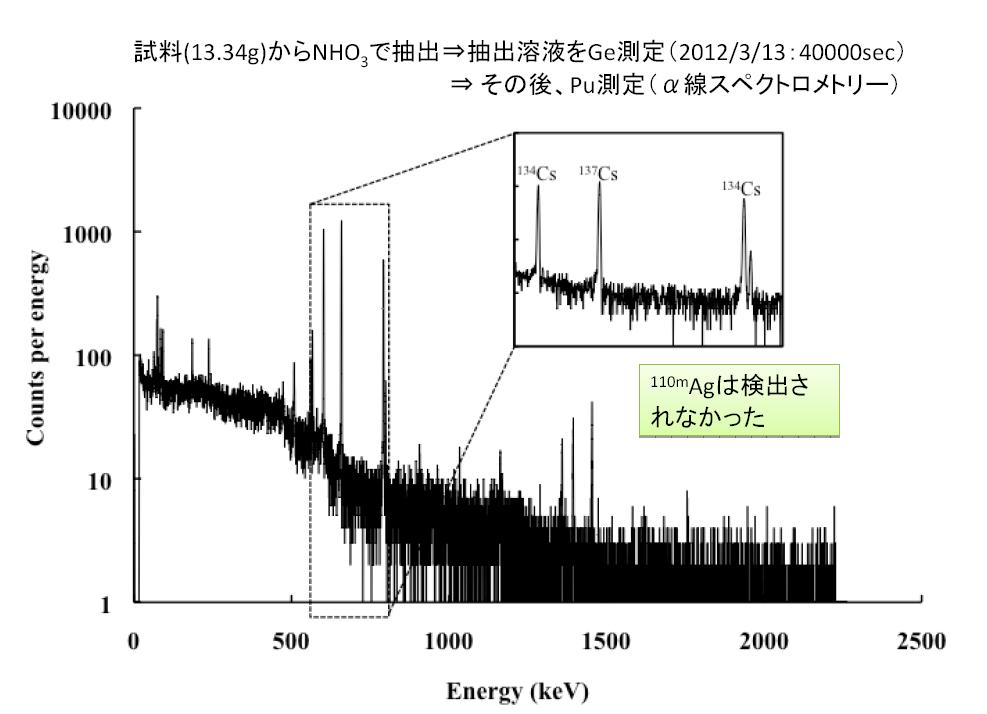
Email from Professor Masayoshi Yamamoto, Institute of Nature and Environmental Technology at Kanazawa University about the analysis of dust off the metal plate that had been left outside since the March 11, 2011 accident, as reported by the blog:

測定結果をお送りします。
Puが検出され、正直なところびっくりしました。

Here's the result of the analysis. Frankly, I am surprised that plutonium was detected.

Puは核実験ですでに広く,低レベルで分布しています。
このPuついて、Pu238/Pu239,240放射能比は0.03程度です。
今回のこの比は0.8で明らかに高く、原発由来のPuを含んでいます。

Plutonium has been spread and deposited at low densities in wide areas because of the atmospheric testing of nuclear weapons . The ratio of plutonium isotopes, Pu238/Pu239+240, of the atmospheric testing origin is about 0.03. But this time [dusts off the metal plate in Iwaki City], this ratio is higher at 0.8, indicating the dusts contain plutonium of the Fukushima I Nuke Plant origin.

政府の放出量見積もりでは3です。
野ざらしの鉄板には核実験のPuが付着していないと考えると、
何故比が低いのかと考えさせられます。
全て3ではなくて0.8の低い比を持つPuが放出された可能性もありますね。

The government estimate of the ratio of these plutonium isotopes is 3. Considering the plutonium of the atmospheric testing origin is not attached to the metal plate, I wonder why the ratio is lower than the government estimate. It is possible that not all plutonium isotopes released had the ratio of 3, and there were plutonium isotopes with the lower ratio (0.8) that were released from the plant.

さらにPu239,240/Cs-137放射能比が9.0E-5で、政府の推定値4.3E-7の200倍になり、Puが多く検出されています.たぶんフラクショネーション(挙動の違い)が存在するためだと思われます。

Further, the ratio of Pu239+240/Cs-137 is 9.0E-5, which is 200 times the government estimate of 4.3E-7, showing more plutonium being detected than the government estimate indicates. It is probably because of fractionation.

(中略)
現在ウラン、出来れば Am-241なども分析できればと考えています。

Right now, I am hoping to test for uranium, and Am-241 if possible.

The report by Professor Yamamoto, from the same blog:

Cesium detection:


Plutonium. Pu-242 is a tracer for chemical yield correction. [-- Don't ask me what it means. I translated as best I can.]


I am asking Professor Yamamoto to confirm that this is his analysis report.

Wednesday, March 21, 2012

Now They Tell Us: #Fukushima's Off-Site Center Didn't Even Have a Map That Showed Areas Outside 10-Kilometer Radius From the Plant

Tokyo Shinbun has another incredible, unbelievable report on how the Japanese government worked (or rather, didn't work) during the first 5 days of the Fukushima I Nuclear Power Plant accident that started on March 11, 2011.

You've read about Fukushima Prefecture deleting the emails that had SPEEDI simulation graphics earlier. Now you're about to learn about the Off-Site Centers.

The Off-Site Centers are located near the nuclear power plants, usually within 10 kilometers from a nuclear power plant. There are 16 of them in Japan, and in case of a nuclear emergency these Off-Site Centers act as the local headquarters for nuclear disaster response.

Fukushima I Nuclear Power Plant had one, 5 kilometers west of the plant in Okuma-machi. The officials and the staff who manned the Off-Site Center in Okuma-machi fled the Center on March 15 as the radiation levels shot up to 1 millisievert/hour, leaving the mayors of towns and cities in the affected areas to fend for themselves without any actionable information from the Off-Site Center.

Not only that. The Tokyo Shinbun article says the Okuma-machi Off-Site Center didn't even have a map that covered the areas outside the 10-kilometer radius from the plant. The Nuclear and Industrial Safety Agency doesn't have a plan to fit the Centers with maps that show outside the 10-kilometer radius, because no formal decision has been made to revise the nuclear emergency zoning.

Bureaucrats remain bureaucrats, no matter what. Particularly the Japanese variety. Not even the worst nuclear accident is likely to change them.

From Tokyo Shinbun (3/22/2012; the link won't last long, emphasis is mine)

原発オフサイトセンター 10キロ圏外、今も地図なし

Nuclear Power Plant Off-Site Center doesn't have maps outside the 10-kilometer radius, even today

原発事故の際、現地の対策拠点として全国に十六カ所あるオフサイトセンター(OFC)に、いまだに十キロ圏外の詳しい地図が用意されていない。東京電力福島第一原発の事故では、発生翌日、避難地区が一気に二十キロ圏にまで拡大し、地図がなかったため、避難すべき住民を確定させるのに手間取った。OFCをめぐっては、原発にあまりにも近い立地など抜本的に見直す必要があるが、事故から一年たっても、地図の備えすら改善されていない。

There are still no detailed maps that show the areas outside the 10-kilometers from the nuclear power plants at the nation's 16 Off-Site Center (OFC) which will act as the local headquarters in case of a nuclear accident. In the Fukushima I Nuclear Power Plant accident, the evacuation zone was expanded to the 20-kilometer radius on the 2nd day of the accident. But since there was no map, [the officials at the center] took too long to determine which residents to evacuate. Drastic changes are necessary for the Off-Site Centers including the locations of the Centers that are too close to the nuclear power plants. But one year since the accident, they still don't even have decent maps.

 「『地図がない』と騒然となった。そのうち誰かがどこからか探してきて、地図に線を引き始めた」。1号機原子炉建屋が水素爆発し、避難区域が十キロ圏から二十キロ圏に広がった昨年三月十二日に福島のOFCにいた経済産業省原子力安全・保安院の黒木慎一審議官は、当時の状況をこう語る。

Shinichi Kuroki of the Nuclear and Industrial Safety Agency under the Ministry of Economy, Trade and Industry looks back on the early days of the accident. ""There is no map!" we panicked. Someone finally found a map somewhere, and started to draw lines on the map." Kuroki was at the Off-Site Center in Fukushima on March 12 last year when a hydrogen explosion blew up the reactor building of Reactor 1 and the evacuation zone was expanded from the 10-kilometer radius to the 20-kilometer radius.

 現行制度では、原発から半径八~十キロを防災対策重点区域(EPZ)に指定し、事前に避難計画などを定めておくことになっている。

The current system designates the area inside the 8 to 10 kilometer radius from a nuclear power plant as Emergency Planning Zone (EPZ), and the evacuation plan for the area should be in place.

 しかし、現実の原発事故の影響は想定よりずっと大きかった。二十キロ圏への避難拡大を市町村に指示しようとしても、避難計画があるのも詳しい地図があるのも十キロ圏内のみ。地図がないため、正確に地区割りができずに手間取った。

However, the real nuclear accident affected much wider areas. Even when they wanted to instruct the municipalities about the expansion of the evacuation zone to the areas inside the 20-kilometer radius, the evacuation plan and the detailed map were only for the areas inside 10-kilometer radius. Since they didn't have the map [outside the 10-kilometer radius], it took too long to accurately assign the districts for evacuation.

 政府の事故調査・検証委員会の中間報告でも「住民避難の担当者は避難区域が特定できず、市町村の問い合わせにはっきり答えられなかった」と厳しく指摘している。

In its interim report, the accident investigation commission set up by the government (the cabinet office) harshly criticizes the officials at the Off-Site Center. "People in charge of evacuating the residents could not identify the areas to evacuate, and they couldn't answer the inquiries from the affected municipalities."

 教訓を踏まえ、原子力安全委員会の専門部会は、半径五キロ圏を重大事故時に住民が直ちに避難する予防防護措置区域(PAZ)に、三十キロ圏を放射線量の高まりに応じ避難する緊急防護措置区域(UPZ)に指定する案を決めた。

Based on this lesson, one expert committee in the Nuclear Safety Commission has decided to designate the areas inside the 5-kilometer radius as Precautionary Action Zone (PAZ), and the areas inside the 30-kilometer radius as Urgent Protective Action Planning Zone (UPZ) where the residents would evacuate depending on the levels of radiation.

 区域の拡大をめぐっては、六年前、保安院が安全委に圧力をかけて拡大を見送った経緯がある。

Six years ago, NISA pressured the Nuclear Safety Commission to forgo the expansion of these zones.

 ただ、地図の不備を解消しようとする動きは鈍い。本紙の取材に対し、保安院の担当者は「個別には調べていないが、EPZ外の地図はない」と話す。

But the plan to equip the Off-Site Centers with the maps [that covers wider areas] is going very slow. To our inquiry, the person in charge at NISA said, "We haven't checked individual Centers, but there are no maps outside the EPZs."

 新たな防災指針が正式決定されていないことを理由に挙げ、「議論を見極め、どの範囲の地図を用意するか決めたい」と話した。

He said it was because a new guideline for disaster prevention hadn't been formally approved yet, and that they would wait and see how the discussion would go before deciding which areas the maps should cover.

 国内で現在、稼働している原発は二基だけだが、停止中でも冷却が止まるなどすれば、福島第一の4号機のように重大事故が起きる可能性はある。

Currently, there are only two reactors operating in Japan. But even when the reactors are stopped, there is a possibility of a severe accident like Reactor 4 at Fukushima I Nuke Plant if the cooling systems fail.

If a nuclear reactor fails again in Japan, the bureaucrats in the national government will continue to split hairs, playing Sir Humphrey. No doubt about it.

Ministry of the Environment TV and Online Commercial on Disaster Debris

Goshi Hosono and his increasingly powerful (= a lot of money) ministry appeal to your emotions to take 33 kilograms of disaster debris per person. What would you say?

Ordinary citizens all over Japan who oppose bringing the debris into their midst to be burned are armed with data and logic.

They're not talking the same language.

But luckily for Hosono and the Ministry of the Environment, what counts is the unthinking majority. And some punks like the youthful-looking mayor of Osaka openly say you have to obey the government in a democracy once the government make it a rule or law with either the majority's consent or their lack of dissent.

The Ministry of the Environment commercial, captioned by Tokyo Brown Tabby: