Showing posts with label Naoki Inose. Show all posts

Thursday, January 2, 2014

Candidate for Tokyo Governor, in July 2011: "Radiation in Fukushima Is Not That Dangerous."


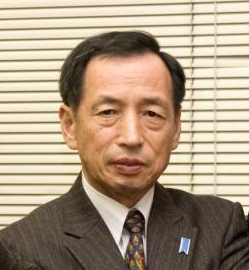
Mr. Toshio Tamogami is a military commentator who was also a career military officer and the 26th Chief of Staff, Air Self-Defense Force. He hasn't declared his candidacy officially, but hinted that he would run, on January 2 when he visited Yasukuni Shrine.

In July 2011 at a symposium held in Tokyo, Mr. Tamogami said, according to Sankei Shinbun (8/15/2011, cache):

「危ない危ないと言われるが、実際そんなに福島の放射線は危なくない。原発の上を飛ぶカラスが落ちましたか。原発近くの海で魚がどんどん浮きましたか。危なくないということがだんだん実証されてきている」

"It is said it's dangerous, but in reality, radiation in Fukushima is not that dangerous. Has a crow flying over the [Fukushima I] nuclear plant dropped from the sky? Have you seen fish floating [and dead] in the ocean near the plant? It is gradually being proven that radiation is not dangerous."


Needless to say, but Mr. Tamogami is pro-nuclear according to his wiki entry in Japanese. He is also from Koriyama City in Fukushima Prefecture.

So the major national media in cahoots with the major political parties routed out Mr. Naoki Inose, a writer, over the campaign finance from the governorship of Tokyo, only to get...

Who is running anyway?

Mr. Tamogami for one, and Mr. Kenji Utsunomiya, a liberal attorney who was the distant second in the December 2012 Tokyo gubernatorial race which was won by Mr. Inose by a landslide.

It looks LDP and DPJ are both eying to present their candidates (possibly the same candidate) at the last possible minute, just in case the luck works.

What luck, you ask?

Historically, for some unknown reason, the candidate who declared his candidacy the last almost always won the race. So they are probably holding the announcement until the last minute.

Does anyone care?

Not much, as far as I've seen or heard so far.

The Tokyo gubernatorial election is to be held on February 9, 2014.

Friday, December 20, 2013

Japan's PM Abe: "I Want Next Governor of Tokyo to Be A Young Woman"


Well, as if it would be his to decide. The gubernatorial election to be called early next year in Tokyo is a local election, albeit an important one if only because Tokyo is the most populous prefecture in Japan.

In case you haven't heard about it, Tokyo Governor Naoki Inose, who won the election in December last year with a landslide (he amassed the largest ever number of votes in the Tokyo gubernatorial election) and won the 2020 Olympic for Tokyo, suddenly found himself a target of the suddenly righteous press in Japan (who have all but stopped coverage of the State Secrecy Protection Law as soon as it passed the Upper House), and has been forced out of office.

Mr. Inose's sin? Having received a "huge", no-interest campaign loan (50 million yen, or 500,000 US dollars) from a hospital chain that provided campaign funds to a host of other national politicians, many of them in Liberal Democratic Party in the December 2012 Lower House election/local elections.

Mr. Inose did an extremely poor job of explaining away (he miserably failed), and for that small amount, as far as the politics go in Japan and which he claims he has returned, he resigned on December 19, 2013.

Is the righteous mainstream (national) media in Japan going after the national politicians in the ruling party?

Nope.

It's not that I think highly of Mr. Inose (I don't), but the way the mainstream media (particularly Asahi, who had a "scoop" - sure, sure) and LDP blew it out of proportion from a potential bribery case into a circus is highly suspicious. Now that Mr. Inose has resigned, all is well, the case closed, not just for Inose but most likely for any politician who received money from the hospital chain.

Mr. Inose's word says it all: "I was a politically naive amateur."

Prime Minister Shinzo Abe, on December 18 even before Governor Inose announced he would resign, was quoted as saying this on TV Tokyo:

自民党関係者によりますと、安倍総理は都知事候補について若い女性がいい」と周辺に話していたということです。

According to the source connected to LDP, Prime Minister Abe was telling his staff that the candidate for the Governor of Tokyo should be a young woman.


Young woman. Meaning someone (or a whole lot of them) like these, Abe's favorite, dressed in a school-uniform-like outfit (you are supposed to see them as high school girls)?


(My sincere condolence to the ASEAN ministers and their spouses who were subjected to this "entertainment" by PM Abe. If you were thinking about teaming up with Abe's Japan to counter the pressure from China, good luck.)

Oh by the way, the "candidates" (unofficial, undeclared for now) picked by a TV program (Asahi, I think) are beyond the pale for most Japanese net citizens:


Candidates with yellow background color are from the opposition, blue from LDP. They don't even look human, but four out of seven are girls. Not sure about "young".

Wednesday, May 22, 2013

Idiosyncratic Japan: Governor of Tokyo Wants to Set Japan Standard Time 2 Hours Earlier, Making Tokyo the First Financial Market to Open in the World


(I almost put the title as "Idiotic Japan" instead of "Idiosyncratic Japan"...)

He's at it again. Governor of Tokyo Naoki Inose seems to have fully recovered from his faux pas over Turkey. He now wants to have the Japan Standard Time advance by 2 hours so that the Japanese financial markets will become the first major market in the world to open.

What's the point, you may ask?

According to Asahi Shinbun who reported the news, it is to enhance the status of Tokyo as financial center in the eyes of the world. Daylight saving time (Summer time)-like effect will be economically beneficial, they say, without telling us who touted these benefits (I assume it is Governor Inose).

By advancing the clock by two hours, Tokyo can open one hour earlier than Australia.

Are they kidding, you may ask?

No, dead serious. The Abe administration will consider Inose's demand as part of the economic growth strategy to be compiled in June, in preparation for the July Upper House election.

I could already hear roaring laughs from real financial centers in Asia (Hong Kong, Singapore, Shanghai).

From Asahi Shinbun (5/22/2013):

日本の標準時「2時間早く」 都知事が提案、政府検討へ

Governor of Tokyo suggests Japan Standard Time to be "two hours earlier", and the national government will consider the suggestion

東京都の猪瀬直樹知事は、22日の政府の産業競争力会議で、日本の「標準時」を2時間早めることを提案する。東京の金融市場が始まる時間を世界で最も早くすることで、金融機関の拠点を日本に置く動きを促す狙いだ。政府は6月にまとめる成長戦略に盛り込むことを含めて検討に入る。

Governor of Tokyo Naoki Inose is going to propose at a meeting of the industrial competitiveness conference to be held on May 22 by the national government that Japan Standard Time be advanced by two hours. The aim is to encourage financial institutions to be based on Japan by making the financial markets in Tokyo first to open in the world.

日本の標準時は1886(明治19)年に定めて以来、変更していない。しかし、海外ではシンガポールが1982年に標準時を早めるなど、政府の判断により標準時を変えた例はある。

Japan Standard Time was set in 1886 and hasn't been changed since. However, there are examples overseas in which the standard times were altered by the government decisions. For example, Singapore advanced the local standard time in 1982.

東京の標準時が2時間早まれば、外国為替市場などが1日のうちで世界で最初に開くことになり、世界の金融市場で東京の存在感が高まるという。

If Japan Standard Time is advanced by two hours, financial markets such as foreign exchange markets will be the first to open in the world, and that is said to enhance the presence of Tokyo among the world financial markets.

また、いまは日本時間の夕方に欧州の金融市場が始まるが、標準時を2時間早めれば、東京、ロンドン、ニューヨークの三大市場で、市場が開いている時間を補完し合える。

Right now, the European financial markets open in the evening in Japan. But if Japan Standard Time is advanced by two hours, the market hours of the three biggest financial markets of Tokyo, London and New York can complement each other.

サマータイムと似た効果も得られ、エネルギー消費の節約にもつながるという。

Effects similar to daylight saving time (summer time) will be obtained, resulting in savings in energy consumption.


The presence of Tokyo in the world financial markets has been already enhanced, albeit in a bad way, with yields of Japanese Government Bonds (JGBs) going all over the place and crashing other financial asset classes, thanks to Bank of Japan's clumsy, amateurish interventions (none of which by the way is reported much in Japanese press).

Daylight saving time is usually one hour advance. But no, Japan will do two, and screw up everyone's internal clock badly. Why it's all for the economic growth!

Japan as Number One was the title of a best-selling book by Ezra Vogel published in 1979, before the start of the asset bubble in Japan in 1980s.

One more time, with arrogance and hubris.

Monday, April 29, 2013

Farcical Japan: More LDP Cosplay, and Governor of Tokyo Says "That's Not What I Meant" to NY Times Article


(UPDATE 4/30/2013) Now the governor wants to correct his remarks, according to Nikkei Shinbun. Nikkei quotes him saying "不適切な発言があり、おわびしないといけない。訂正したい Some of my remarks were inappropriate, and I need to apologize. I want to correct my remarks." Governor Inose his supporters spent all day yesterday criticizing New York Times.

===========================

It was not just Prime Minister Abe. Shigeru Ishiba, Secretary-General of Liberal Democratic Party, and Junko Mihara, LDP Upper House Councilor and former singer/actress, at "NicoNico Chokaigi 2" (photo uploaded by yunomi at Photozou):


Meanwhile, as the news of what he said in New York on his recent trip, Tokyo Governor Inose defends himself saying New York Times didn't report his true intention.

What was his true intention? According to Sankei Shinbun (4/29/2013),

「イスタンブールは個人的にも好きな都市。候補都市を批判する意図はなく、インタビューの文脈と異なる記事が出たことは残念。私の招致にかける熱い思いは変わらない」

"Istanbul is one of my favorite cities. I had no intention of criticizing other candidate cities, and it is regrettable that [my intention in] the interview was taken out of context. I remain enthusiastic about inviting [2020 Summer Olympics to Tokyo]."


Right. As if what he says he thinks matters. The New York Times article is totally in line with what I have read of Inose's past remarks about 2020 Olympics.

Hiroko Tabuchi, New York Times reporter who contributed to the article by (she attended the interview) by Ken Belson, tweets additional information in response to readers:

  • She joined the interview at the last moment, and the official interpreter was already there.

  • In order to avoid potential reporters' bias [they were both fully capable of translating Japanese into English] on very controversial remarks by Inose, they decided to use the official interpreter's words.

  • At no point during the interview, Governor Inose requested any part of the interview to be off-record.

  • They both heard what Governor Inose said in Japanese, and they don't think the interpreter said anything different from what Inose said.


Asahi Shinbun reports that the interview was recorded, and the interpreter was hired by Mr. Inose himself.

Saturday, April 27, 2013

Governor of Tokyo in New York Promoting 2020 Tokyo Olympic Disses Istanbul, Says "Islamic Countries Are Fighting With Each Other, and They Have Classes"


(UPDATE 4/30/2013) Now the governor wants to correct his remarks, according to Nikkei Shinbun. Nikkei quotes him saying "不適切な発言があり、おわびしないといけない。訂正したい Some of my remarks were inappropriate, and I need to apologize. I want to correct my remarks." Governor Inose and his supporters spent all day yesterday criticizing New York Times.

According to one of the NY Times reporters, the interview was requested by the Tokyo Metropolitan government, and was conducted in a hotel room arranged by the government for that purpose.

=================================

Classes?

The one and only qualification to be the governor of Tokyo must be to be foul-mouthed and classless. And incomprehensible.

From New York Times (4/26/2013; emphasis is mine), with Governor's remarks in blue:

In Promoting His City for 2020 Games, Tokyo’s Bid Chairman Tweaks Others

With less than five months to go before the International Olympic Committee chooses a city to host the 2020 Summer Games, the three remaining bidders — Istanbul, Madrid and Tokyo — are increasing their efforts to win over delegates and the public.

The Olympic committee’s rules prohibit bid committee members from directly criticizing other bids. Instead, the bidders often highlight the perceived strengths of their bids to note delicately what they believe to be their rivals’ shortcomings, something known in the communications industry as counter-positioning.

Naoki Inose, the governor of the Tokyo Metropolitan Government and chairman of the Tokyo 2020 bid, has often done that, highlighting his city’s extensive and efficient transportation system, as well as the financial and technical wherewithal to build first-class sports sites and housing for the athletes. He has also noted that, like Paris and London, Tokyo has hosted the Summer Games before, a claim that Istanbul and Madrid cannot make.

But Inose has also pushed the boundaries of rhetorical gamesmanship with occasionally blunt and candid statements about how his city compares with the competition, particularly Istanbul, which he has suggested is less developed and less equipped to host the Games.

“For the athletes, where will be the best place to be?” Inose said through an interpreter in a recent interview in New York. “Well, compare the two countries where they have yet to build infrastructure, very sophisticated facilities. So, from time to time, like Brazil, I think it’s good to have a venue for the first time. But Islamic countries, the only thing they share in common is Allah and they are fighting with each other, and they have classes.”

Asked later to elaborate on his characterization of Istanbul, a spokesman said Inose meant that simply being the first Islamic country to hold the Olympics was not a good enough reason to be chosen, just as being the first Buddhist country or the first Christian country would not be, either.

The spokesman said Inose did not mean to refer to “class.”

Istanbul is an Olympic finalist because it is an international city in one of the fastest-developing countries in the region. A member of NATO, Turkey straddles Europe and Asia and is a bridge between Christianity and Islam. With its emerging middle class, Turkey has become a political and economic powerhouse in the region.

This is Istanbul’s fifth bid to host the Olympic Games. In a statement, the city’s bid committee declined to address comments made by rival bidders.

“Istanbul 2020 completely respects the I.O.C. guidelines on bidding and therefore it is not appropriate to comment further on this matter,” the statement said.

The International Olympic Committee does not look kindly on overtly harsh attacks by bidders, and occasionally it sends letters of reprimand to those who break with protocol, former bidders said.

According to Article 14 of the Rules of Conduct for bidders: “Cities shall refrain from any act or comment likely to tarnish the image of a rival city or be prejudicial to it. Any comparison with other cities is strictly forbidden.”

Though untoward comments rarely disqualify a bid, they could raise doubts in the minds of I.O.C. delegates about the trustworthiness of a bidder.

“The reason the rule is there is that if someone deviates from it, it triggers a chain reaction,” said Mike Moran, chief spokesman for the United States Olympic Committee from 1978 to 2002 and a senior communications counselor for New York’s bid for the 2012 Summer Games. “The I.O.C. is very serious about their protocols.”

Moran added that negative comments by bidders would probably not hurt a bid, although “you never know how a comment might influence those I.O.C. members.”

At several points in the interview, Inose said that Japanese culture was unique and by implication superior, a widely held view in Japan. He noted that the political scientist Samuel P. Huntington wrote in his book “The Clash of Civilizations and the Remaking of World Order” that Japan was unlike any other culture.

Inose also pointed to polls that showed 70 percent of Tokyoites in favor of hosting the Summer Games, up from 47 percent last year. The well-received London Games, he said, have helped generate enthusiasm and confidence that Tokyo can host a similarly successful event.

Tokyo, he added, is exceptional because the Imperial Palace, which is largely off-limits to residents and visitors, forms the city’s core while bustling activity surrounds it. “The central part of Tokyo has nothingness,” he said. “This is a unique way that society achieved modernization.”

Inose brushed aside the notion that Olympic delegates may favor Istanbul’s bid because Turkey has a far younger population than Japan and thus is fertile ground for developing the next generation of Olympic enthusiasts. While population growth has stalled in Japan, the population of Tokyo has grown because of an influx of younger people, he said. He added that although Japan’s population is aging, its elderly are reasonably healthy.

“We used to say that if you are poor, you have lots of kids, but we have to build infrastructure to accommodate a growing population,” Inose said. “What’s important is that seniors need to be athletic. If you’re healthy, even if you get older, health care costs will go down. The average age is 85 for women and 80 for men, so that demonstrates how stress-free” Japan’s society is.

“I’m sure people in Turkey want to live long,”
he added. “And if they want to live long, they should create a culture like what we have in Japan. There might be a lot of young people, but if they die young, it doesn’t mean much.”

Inose has drawn distinctions between Japan and other cultures in other settings, too. When he visited London in January to promote Tokyo’s bid, he said Tokyo and London were sophisticated and implied that Istanbul was not.

“I don’t mean to flatter, but London is in a developed country whose sense of hospitality is excellent,” Inose told reporters. “Tokyo’s is also excellent. But other cities, not so much.”


Uh... Is it some kind of mortal sin not to have hosted the summer Olympics?

This governor is proud that he has an excellent command of English language (NOT, as you can see in my past post of his government's Olympic page, which reads just like Inose's remarks in the article above), but on this occasion he used an interpreter. Either he skimped on the fee for hiring the interpreter and got a very bad one, or he paid a lot and still got a very bad one, or he didn't bother to brief the interpreter on what he was about to say, or his staff didn't brief him enough, or he was too full of himself to ask for help.

It's very clear from the New York Times article that the reporters couldn't figure out what the governor or the interpreter was saying, either. So they simply transcribed what they heard from the interpreter, and that looks very bad.

This visit by Governor Inose was reported by the Japanese media as great success. Go figure.