Showing posts with label SFP. Show all posts

Monday, September 8, 2014

Video Showing #Fukushima I NPP Reactor 3 Operating Floor's Heavily Damaged Northwest Section


I happened on this 25-minute video in TEPCO's video archive (Japanese), instead of the usual Photos and Videos Library. There is no document explaining the purpose of the video or the findings from the video.

It focuses on the heavily-damaged northwest corner of the Reactor 3 operating floor, as you have seen in this aerial view (from TEPCO's photos and videos library, 2/14/2014, red circle added, click to enlarge):


The video camera dips below the shredded metal bars and concrete of the operating floor:


In the video, the section that is covered with metal sheets is where the Spent Fuel Pool is. TEPCO plans to construct a structure over the Reactor 3 building to install the crane and the fuel handling machine to remove the spent fuel assemblies. This video survey is probably related to the plan, to assess the structural integrity of the section in order to build the structure around the building.

Or so I thought at first, until I remembered a togetter I read in August.


What was beneath the operating floor in the northwest section?

One of the people who have diligently followed the news and press conference on the Fukushima I NPP accident, @mtx8mg "koajisashi", has the answer in his/her togetter from 8/10/2014: PLR-MG, or Primary Loop Recirculation System Motor Generator, which occupied almost the entire length of the west side of the Reactor 3's 4th floor:

(H/T @pluedro)


(H/T @mtx8mg)


And what happened there?

"koajisashi" reminds us in the togetter of the March 23, 2011 fire in the Reactor 3 building, with black smoke seen rising vigorously (see my post on 3/23/2011; TEPCO called it "gray smoke"). At that time, the exact location of the fire was not reported, and the time and date when the fire started was not known (or reported) either. Black smoke was seen rising from the Reactor 3 building on and off until the evening of March 23, 2011.

But in the meeting on March 24, 2011, the location of the fire was identified as PLR-MG in Reactor 3's 4th floor. It was never reported by the media, as far as I know. Reading what was reported in the meeting now, I can see why it was not reported back then. According to the meeting report on March 24, 2011 in the NISA archive (translation is mine),

・昨夜23:00過ぎ、目視及びサーモグラフィー測定により、燃焼は収まったものと判断した。

・黒煙の原因と考えられているオペフロ下の MG セットから隣接している SFP の壁まで2m程度。黒煙発生時の熱によって壁の強度の劣化が懸念されるため検討を行った。SFP 壁は厚さが185cm、RC 造で、鉄筋は壁表面にもっとも近いもので8cmの深さにある。鉄筋は300-400℃で影響を受け始めるが、学会の耐火試験データに基づき評価したところ、350℃に達するのは4時間程度の時間が必要であり、壁の強度に大きな影響はないものと評価した。

At 11PM last night [3/23/2011], conducted visual survey and thermography measurement and concluded that the burning had subsided.

The cause of the black smoke is considered to be the MG set [PLR-MG] beneath the operating floor. SFP is about 2 meters away from [part of] the MG set. As there was a worry about deterioration of the SFP wall strength due to the heat generated when the black smoke was rising, we evaluated the data. The SFP wall is 185cm (about 6 feet) in thickness, made of reinforced concrete. The reinforcing bars closest to the surface of the wall are at 8 centimeters from the surface. The reinforcing bars start to be affected by heat at 300 to 400 degrees Celsius. According to the fire-resistance data by the [relevant] scientific society [no mention of which one], it would take about 4 hours [of burning] for the temperature to reach 350 degrees Celsius, and we concluded there would be no major effect on the strength of the SFP wall.


As I wrote above, no one knows exactly how long the MG was burning. In fact, the same NISA meeting report, on March 23, 2011, says the black smoke started to gush out at 4:20PM on March 23, 2011, and as of 9:30 the black smoke was still rising. So the fire may have been burning for at least 5 hours on March 23, 2011.

The news, if the details like these had been reported by the media at that time, should have made people very nervous. And this is probably why TEPCO video-surveyed the area in detail, and also why TEPCO seems very eager to remove the spent fuel assemblies from the Reactor 3 Spent Fuel Pool, despite the mess and damage of the Reactor 3 building.

The structural integrity, not of the northwest section per se, but of the Spent Fuel Pool itself, may be the issue that concerns TEPCO.

Wednesday, January 1, 2014

#Fukushima I NPP Reactor 3: Debris Removal from Spent Fuel Pool Has Started


There were a few news outlets in late November and early December last year that reported TEPCO would start removing the debris from the Reactor 3 Spent Fuel Pool at Fukushima I Nuclear Power Plant in mid December. Hardly anyone paid attention. (No one probably thought it was possible.) Then there was no news of it actually starting.

Well, news or not, the work started on December 17, 2013. That information was shared at the meeting on December 26, 2013 on "Roadmap to Decommissioning", which was available via live feed on the net. However, unless you are one of the dwindling number of reporters and net citizens who continue to follow the accident by attending/watching such meetings, you wouldn't know.

I didn't know because I couldn't watch the whole meeting and didn't take a look at the entire document that contained the information until now.

There is no photos or videos posted at TEPCO's site (in the Photos and Videos Library).

From the 242-page document presented at the December 26, 2013 meeting of "Roadmap to Decommissioning" (pages 152-158):

The slide says:

In order to remove fuel assemblies from the Reactor 3 Spent Fuel Pool, removal of large-size debris in the Spent Fuel Pool started (December 17).

Reinforcing bars and deck plates that won't interfere with the Fuel Handling Machine [number 8 in the 3-D model] will be removed by the first half of February 2014.

The incident that caused the video camera to drop into the pool has been investigated and the countermeasures put in place.

The order of large-size debris removal:

0. Measures to prevent [additional] debris from falling into the pool (by covering with liners)
1. Remove reinforcing bars, deck plates (1->2->3) - Current work
2. Remove masts, trusses (4, 5, 6, 7)
3. Remove the Fuel Handling Machine (8)
4. Remove the end-track on the west side of the Fuel Handling Machine (4)
5. Remove debris from the cask area (10)

Enlarged images:


3-D debris map from a different angle, and the location of the video camera that dropped into the pool in November last year:


Kyodo News reminded readers on its 12/2/2013 article that there are 52 new (not irradiated) fuel assemblies and 514 spent fuel assemblies in the Reactor 3 spent fuel pool.

Kyodo also reports that two cranes will be used, and up to 11 monitoring cameras will be used. All the work will be done by remote-controlled vehicles and equipment. No information whether the human workers are to be posted near the work for further safety monitoring.

All of the MOX fuel that TEPCO had at the plant was in the reactor itself at the time of the accident.

Thursday, November 28, 2013

TEPCO Drops Video Camera into #Fukushima Reactor 3 Spent Fuel Pool by Accident, and Other Japanese Et Cetera


Feel like rolling our collective eyes and saying "Whatever...", or "WTF?" (take your pick)?

Here we go...

1. Ever-clumsy TEPCO drops a video camera into the Reactor 3 Spent Fuel Pool.

From Kyodo News (11/28/2013):

東京電力は28日、福島第1原発3号機の使用済み核燃料プールで、水中のがれき撤去に向けた準備作業中、誤って監視用のカメラをプール内に落としたと発表した。カメラは重さ約5・5キロで、落下による燃料損傷の恐れはないとしている。

TEPCO announced on November 28 that a monitoring camera was dropped into the Spent Fuel Pool of Reactor 3 at Fukushima I Nuclear Power Plant by mistake, during the preparation work for the removal of debris inside the pool. The camera weighs about 5.5 kilograms, and the company says there is no danger of fuel damage from the drop.

東電によると、28日午前11時すぎ、監視用の水中カメラを遠隔操作で引き上げたところ、ケーブルが切れ、数メートルの高さから落下した。ケーブルを巻き上げすぎたことが原因で、巻き上げを止める安全装置も作動しなかったという。

According to TEPCO, when the workers pulled the monitoring camera out of the water via the remote control, the cable snapped, and the camera dropped from the height of several meters. The cable snapped when it was wound up too tight, and the safety mechanism to prevent the tight winding failed to work.


Unlike Reactor 4's operating floor, Reactor 3's operating floor is too radioactive for humans (and for robots, probably) with one location above the shield plug exceeding 2 Sievert/hour air dose rate.

2. The 33rd Ministry of Justice human rights essay contest for junior high school students has been won by a student in Miyagi Prefecture who wrote not buying Fukushima's peaches because of radiation fear was the same as him being "discriminated" against by his classmate for being a Chinese national.

Refusing the Fukushima produce because of radiation fear is tantamount to racial discrimination, according to the student and the Ministry of Justice who selected his essay as the best of the best this year. (The essay in PDF here, for those of you who read Japanese.) Not buying Fukushima produce, as the government tells you to? You're racist (or, transliterated into Japanese as "reishisuto" with "r" pronounced like "l")!

3. Perishable food price in Japan shot up 16.6% compared to a year ago, with overall consumer price (including food and energy) up 1.1%, according to Reuters Japan. BOJ's Kuroda seems happy that his "QE from another dimension" (or I'd call it Twilight Zone QE) is working, the media paints it as evidence that "Abenomics" (or "Avenomics" ) is working. Good luck, working class citizens of Japan.

4. A citizen was forcibly removed from the balcony in the Diet where he was observing the debate of the State Secrecy Protection Law in the Lower House on November 26, 2013, as he shouted his opposition to the passage of the law. His mouth was stuffed with cloth so that he couldn't shout any more while being removed by several guards against his will.

(From Tokyo Shinbun, 11/26/2013, via this tweet)


What's even scarier to me than the man being forcibly removed by the guards is people sitting near him. They just sit there as if nothing is happening. They are not even looking; the one in the same row even looks away.

5. While the above citizen was being hauled away by security guards, the Representatives in the Lower House in the supposedly tense and heated debate over the State Secrecy Protection Law were anything but tense and heated, according to Nikkan Gendai (11/27/2013).

Nikkan Gendai claims a Representative from Democratic Party of Japan, a hawk who has more in common with LDP and Prime Minister Abe, gave a speech voicing his "opposition", sat down, and started checking emails on his cellphone. The photo shows some "Mama" praising him for the wonderful speech:

Monday, November 25, 2013

(UPDATED) TEPCO Is Removing "SPENT FUEL ASSEMBLIES" from #Fukushima I Nuke Plant Reactor 4 Spent Fuel Pool Today (11/26/2013)


(UPDATE-2) The second day of fuel assembly removal (11/27/2013). The work started at 9:30AM JST, according to TEPCO. On November 26, 2013, the workers removed six spent fuel assemblies into the cask in the cask pit inside the Reactor 4 Spent Fuel Pool. The work took about three hours - 30 minutes per one fuel assembly.

===========================

(UPDATE) From TEPCO, the first spent fuel assembly from the pool was placed in the cask, at 3:21PM.

===========================

Hardly anyone on the net in Japan is paying attention, as the bigger and more distressing (unless you are a staunch supporter of Liberal Democratic Party) news of the day is the passage of Secrecy Act in the special committee in the Lower House with overwhelming majority votes by LDP, Komei (the ruling coalition), and Your Party. Passage in the Lower House (where LDP alone holds majority) is expected in the afternoon.

Six groups of workers (6 workers each in a group) in two-hour rotations will remove 22 irradiated SPENT FUEL assemblies, according to Mainichi, unlike the first time when unused, new fuel assemblies were removed.

Just like the first time, the entire operation will be done under water. So far, no news of a sizeable earthquake, and hardly any news coverage of the event.

From TEPCO's alert for the press (11/26/2013):

The second removal of fuel assemblies from the Reactor 4 Spent Fuel Pool at Fukushima I Nuclear Power Plant is scheduled today.

Preparation started at 9AM.

At 10:56AM, the work started to move the container for the transfer of the fuel assemblies from the temporary storage location on the operating floor of Reactor 4 to the Spent Fuel Pool.

At 11:29AM, the container was placed at the bottom of the Spent Fuel Pool.


本日(11月26日)より福島第一原子力発電所4号機使用済燃料プールから2回目の燃料取り出し作業を行う予定としておりましたが、同日午前9時00分より準備作業に取りかかっております。

その後、午前10時56分、4号機オペレーティングフロア(原子炉建屋5階部分)の容器仕立ピットに仮置きしていた構内用輸送容器を、使用済燃料プールへ移動する作業を開始しました。

使用済燃料プールへ移動した構内用輸送容器については、午前11時29分に4号機使用済燃料プールの底へ着床しました。


Removal of the spent fuel assemblies may be starting just about now (3PM, JST).

Monday, November 18, 2013

Video Summary of Fuel Transfer in Reactor 4 Spent Fuel Pool at #Fukushima I NPP on 11/18/2013


In this, I don't blame TEPCO for not having posted a video of the entire work (9 to 10 hours) on November 18, 2013.

The preparation for submerging the cask started in the morning, with the cask submerged completely at 12:30PM. The removal of unused (new) fuel assemblies into the cask started at 3:18PM, and by 6:45PM 4 unused fuel assemblies were transferred into the cask.

The names of the companies and the names of the workers are blurred in the video. They could be TEPCO workers, but most likely from one of the primary contractors.

From TEPCO's photos and videos library (11/19/2013):


Compared to the still photos (see below), the water in the pool looks slightly murky. After the day's work ended at 7PM on November 18, another set of workers were scheduled to be there all night, clearing small debris and particles using a vacuum cleaner in the water.

(From TEPCO, 11/18/2013; click to enlarge. For higher resolution photos, go to the link.)


Today (November 19, 2013), the workers have removed 8 unused fuel assemblies into the cask as of 1:30PM, according to Nuclear Regulation Agency (secretariat of Nuclear Regulation Authority). The Agency thinks the workers will be able to remove additional 10 fuel assemblies to fill the cask.

There are six group of workers who take turns in removing the fuel assemblies so that each group of workers spends less than 2 hours on the operating floor.

Sunday, November 17, 2013

(UPDATED) Fuel Assemblies Are Being Transferred into the Cask in Reactor 4 Spent Fuel Pool at #Fukushima I NPP


(UPDATE-2) Jiji reports (11/19/2013) that the workers successfully removed 4 unused new fuel assemblies into the cask by 6:45PM. The air dose level near the pool was 0.04 millisievert/hour (or 40 microsieverts/hour).

=================

(UPDATE) TEPCO says the workers started lifting the very first fuel assembly at 3:25PM JST.

=================

NHK's latest (11/18/2013 at 3:55PM; part):

東京電力は福島第一原子力発電所4号機で午後3時18分から使用済み燃料プールから核燃料を取り出す作業を始めました。

At 3:18PM, TEPCO started to remove the nuclear fuels from the Spent Fuel Pool of Reactor 4 at Fukushima Nuclear Power Plant.

18日はこのうち、未使用の新しい燃料の一部を燃料プール内でキャスクと呼ばれる輸送用の容器に移します。

On November 18, part of the unused, new fuels will be transferred to the cask, a container for transporting the fuels, in the Spent Fuel Pool.

作業は燃料取り扱い機という設備を使って午後7時ごろまで行われます。

The work uses the fuel handling machine, and will continue until about 7PM.

Cask Is Now In the Reactor 4 Spent Fuel Pool at #Fukushima I Nuke Plant


(UPDATE) According to TEPCO, it took 30 minutes from the moment the bottom of the cask touched the water in the cask pit till the cask bottom is securely at the bottom of the cask pit in the SFP.

===========================

TEPCO released the high-resolution (for TEPCO, at least) photographs of the cask being submerged in the cask pit of the Spent Fuel Pool in Reactor 4 at Fukushima I Nuclear Power Plant.

According to the schedule, they should soon start removing the first fuel assembly from the pool into the cask.

From TEPCO, 11/18/2013:

(Click to enlarge. For high-resolution photos, follow the TEPCO link.)

(UPDATED) #Fukushima I Nuke Plant: Fuel Assembly Removal from Reactor 4 SFP Starts


(UPDATE 3)

The cask has been submerged in the cask pit inside the SFP, and the workers have started to transfer fuel assemblies into the cask (from 3:18PM Japan Standard Time)

======================

(UPDATE 2) From Nikkei Shinbun (11/18/2013, 11:16AM):

Removal of the fuel assemblies will continue tomorrow (November 19), the cask will be lowered to the ground on November 19. It will take about a week for the first cask to be transported to the Common Pool 100 meters away.


A week?

(UPDATE) Wrong schedule. From NHK News at 12:05PM:

  1. AM: The cask is being submerged into the cask pit.

  2. At 3PM: Start removing the 22 fuel assemblies (unused, new assemblies) using the fuel handling machine into the cask


======================

According to NHK News (11/18/2013 at 6:07AM), the schedule is:
  1. AM: Using the fuel handling machine, put fuel assemblies (unused, new, 22 of them) into the cask submerged in the cask pit

  2. At 3PM: Lower the cask using the gantry crane


It must be proceeding well so far, as the bright pink headline banner on NHK's homepage (circled in blue below) only says "We will let you know as soon as there is further news."


The fuel handling machine is operated by the workers with long experience of handling the nuclear fuel, according to the workers who regularly tweet from Fukushima I NPP.

Here's the link to the 7-page summary of the fuel removal operation, from TEPCO (11/13/2013).

Just as the independent journalist Ryuichi Kino said previously, "Fuel removal conducted in the daytime, and debris removal at night".

Perhaps as a small pushback against the LDP politicians who demand "acceleration" and "ahead of schedule" work, TEPCO says on the 2nd page in red letters:

After conducting the above actions, we will proceed with fuel removal with “first priority given to safety”, not to achievement of the schedule.


Mainichi Shinbun (11/13/2013) says the reactor building cover over the Reactor 4 operating floor was built with 4,200 tons of steel beams, the same amount of steel beams that were used to build Tokyo Tower. If I remember right, the design and construction was by Kajima. It was designed and built so that the weight of the heavy cover would not be borne by the original reactor building.

Saturday, November 16, 2013

#Fukushima I Nuke Plant: TEPCO Admits Total 80 Spent Fuel Assemblies Had Damages Before the Nuclear Accident, 70 of Them in Reactor 1 Spent Fuel Pool


Move over, three fuel assemblies with damaged/deformed fuel rods inside in the Reactor 4 Spent Fuel Pool! You're nothing.

According to Kahoku Shinpo, a Fukushima local paper, TEPCO admitted on November 15, 2013 that there are 70 fuel assemblies with damaged fuel rods in the Reactor 1 Spent Fuel Pool, located on the operating floor (top floor) of the reactor building whose air radiation levels are measured in millisievert/hour and sievert/hour (first floor).

There are also three such fuel assemblies in the Reactor 2 SFP, and four of them in the Reactor 3 SFP.

Total 80 spent fuel assemblies in the SFPs in Reactors 1 - 4 are damaged.

The damages had been there long before the March 11, 2011 accident, and TEPCO claims it properly notified the national government as they discovered the damages. But the company has come clean in public only now.

Kahoku Shinpo article below suggests that the oldest of such damaged fuels may have been there for 40 years in the Reactor 1 Spent Fuel Pool. (Reactor 1 started generating electricity in 1971.)

Reactor 1 at Fukushima I Nuke Plant is TEPCO's oldest nuclear reactor; it was entirely the project by General Electric of the US, a turnkey.

From Kahoku Shinpo (11/16/2013):

福島第1原発1号機 燃料震災前破損70体 全体の4分の1

Fukushima I Nuke Plant Reactor 1 has 70 fuel assemblies damaged before the March 11, 2011 disaster, a quarter of the total spent fuel assemblies [in the Spent Fuel Pool of Reactor 1]

福島第1原発1号機の使用済み燃料プール内にある燃料棒70体が東日本大震災前から損傷していたことが15日、分かった。

It was revealed on November 15 that 70 fuel assemblies in the Reactor 1 Spent Fuel Pool at Fukushima I Nuclear Power Plant had had damages before the March 11, 2011 earthquake/tsunami.

プール内に保管されている使用済み燃料292体の4分の1に相当する。損傷した燃料棒を取り出す技術は確立しておらず、2017年にも始まる1号機の燃料取り出し計画や廃炉作業への影響が懸念される。

The damaged assemblies are about one-quarter of the 292 spent fuel assemblies stored in the pool. Technologies to remove damaged fuel haven't been established, and there are worries that [the revelation] may negatively affect the plan to remove the fuels from Reactor 1 [SFP] starting 2017 and the decommissioning work in general.

東京電力は、15日まで事実関係を公表してこなかった。同社は「国への報告は随時してきた」と説明している。

TEPCO hadn't disclosed all the facts until November 15. The company says it had reported to the national government as required.

東電によると70体の燃料棒は、小さな穴が空いて放射性物質が漏れ出すなどトラブルが相次いだため、原子炉から取り出してプール内に別に保管していたという。

According to TEPCO, these 70 fuel assemblies had series of problems including leakage of radioactive materials from small [pinhole-size] holes [on fuel rods]. So the company removed them from the reactor and stored in a separate location inside the Spent Fuel Pool.

18日に燃料取り出しが始まる4号機プール内にも損傷した燃料棒が3体あり、東電は通常の取り出しが困難なため、対応を後回しにしている。

There are three damaged fuel assemblies inside the Reactor 4 Spent Fuel Pool, where the removal of the fuel assemblies will start on November 18. TEPCO has postponed the removal of the damaged assemblies as it is difficult to remove them in a normal manner.

損傷した燃料棒は1、4号機プールのほかにも2号機プールに3体、3号機プールに4体の計80体ある。東電は専用の輸送容器を新たに製造するなど対応策を検討する。

Other than in the Spent Fuel Pools of Reactor 1 and Reactor 4, the Reactor 2 Spent Fuel Pool has three damaged fuel assemblies, and the Reactor 3 Spent Fuel Pool has four, making the total of damaged fuel assemblies 80. TEPCO will consider the measures such as building a dedicated container for transfer for these damaged fuels.

損傷燃料が1号機に集中している理由について、東電は「1号機は当社で最も古い原発で、燃料棒の製造時、品質管理に問題があり粗悪品が多かったと聞いている。2号機以降は燃料棒の改良が進み、品質は改善した」と説明した。

As to the reason why Reactor 1 has the largest number of damaged fuels, TEPCO says, "Reactor 1 [at Fukushima I Nuke Plant] is the oldest nuclear reactor of our company, and we hear that there were quality control issues when the fuel rods were manufactured and that there were many fuel rods with inferior quality. From Reactor 2 onward, much improvement was done on the fuel rods, and quality improved."

1号機は東電初の原発で、1971年3月に商業運転を開始した。

Reactor 1 at Fukushima I Nuke Plant is the first nuclear reactor for TEPCO, and it started the commercial operation in March 1971.


No major national newspaper has covered this story so far.

Friday, November 15, 2013

Fuel Assembly Removal to Start on November 18, 2013 From #Fukushima I Nuke Plant Reactor 4 SFP


According to NHK (11/15/2013), TEPCO will start removing the fuel assemblies from the Spent Fuel Pool of Reactor 4 at Fukushima I Nuclear Power Plant on Monday, November 18.

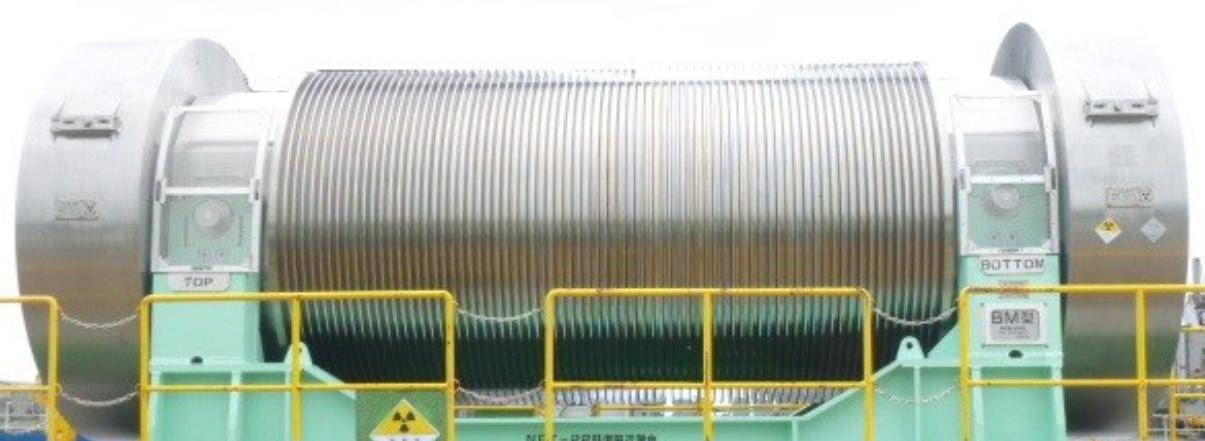
TEPCO will start with unused (therefore not irradiated) new fuel assemblies (there are 202 of them in the pool). 22 new fuel assemblies will be the first to be moved UNDER WATER into the container (called "cask") in the cask pit, using the fuel handling machine. Then the sealed cask will be lifted out of the pool by the gantry crane onto the truck waiting on the ground, which will transport the cask to the Common Pool about 100 meters away. TEPCO has two casks to be used for transport.

After removing 22 new fuel assemblies, then TEPCO will start removing the spent fuel assemblies. The removal is scheduled to continue until the end of next year, "ahead of schedule" as has been loudly demanded by the LDP politicians.

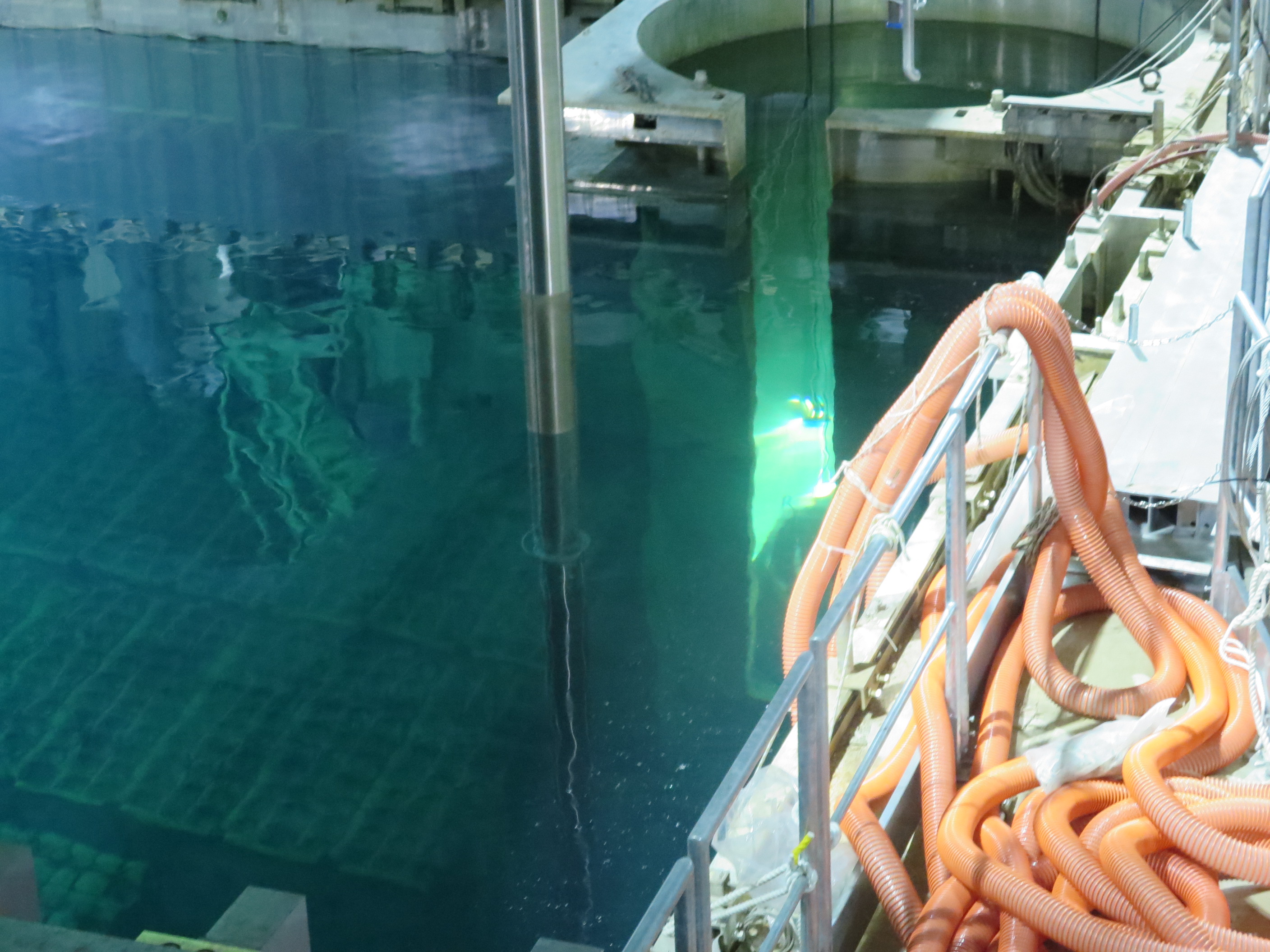
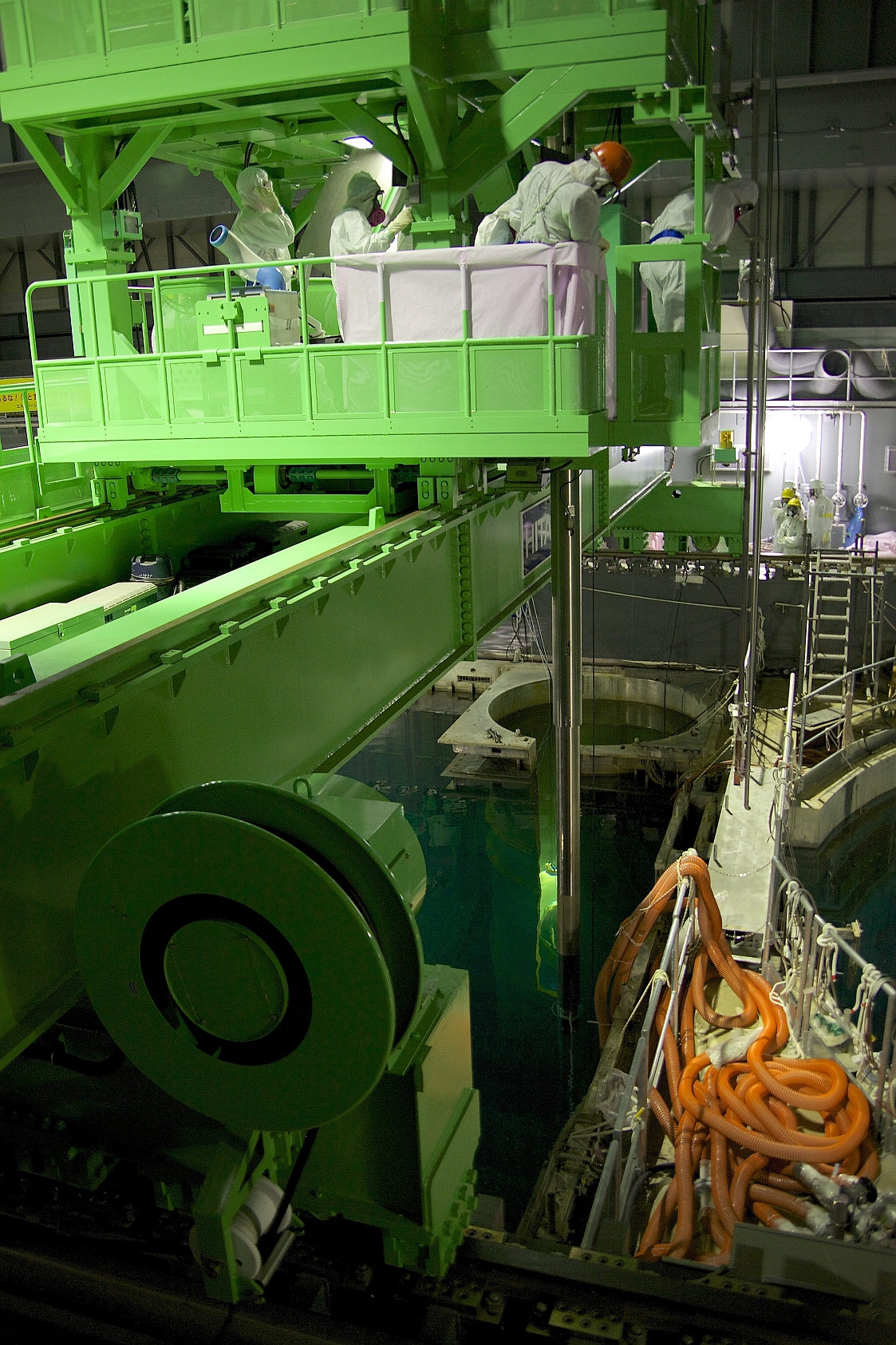
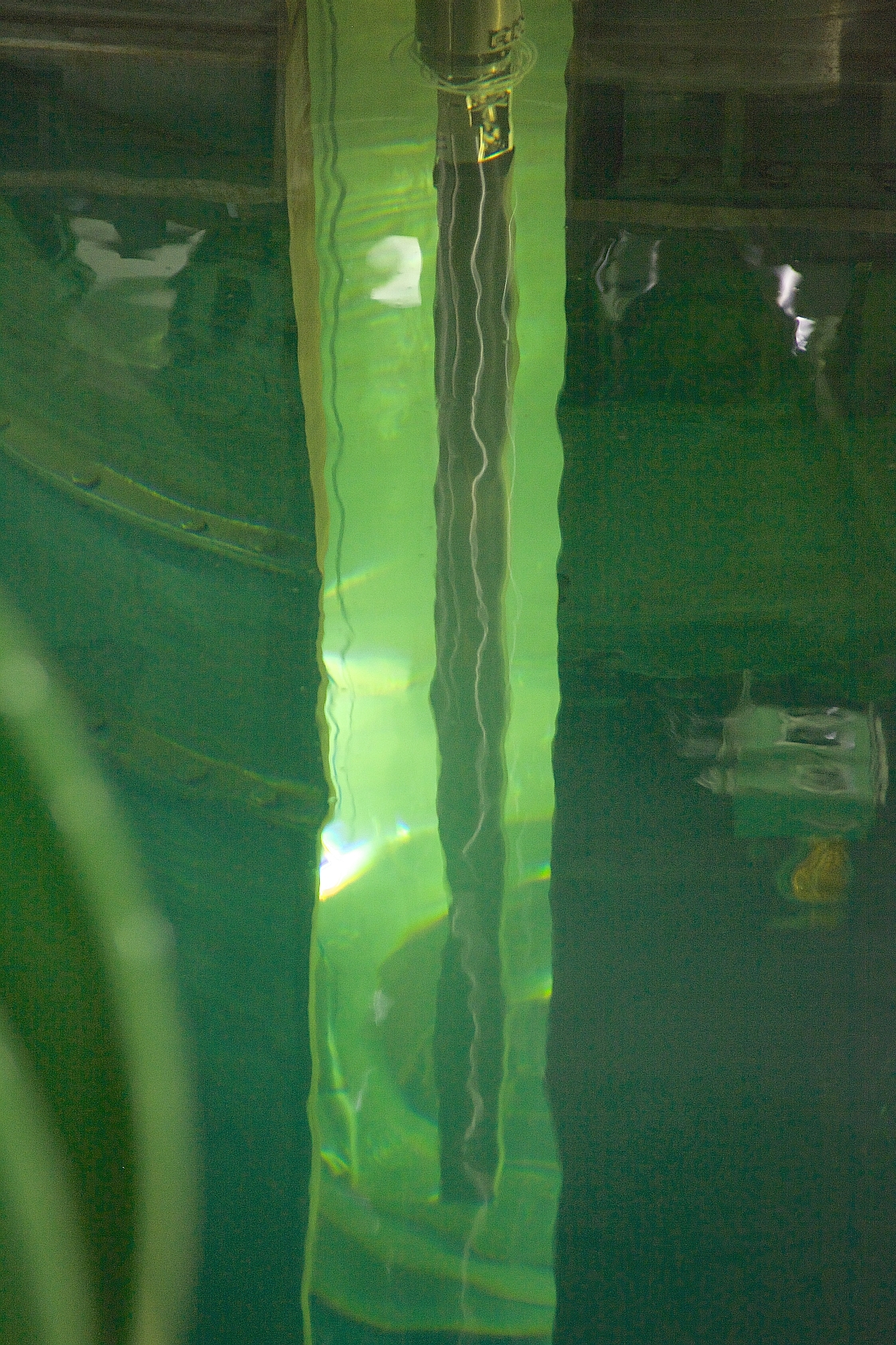
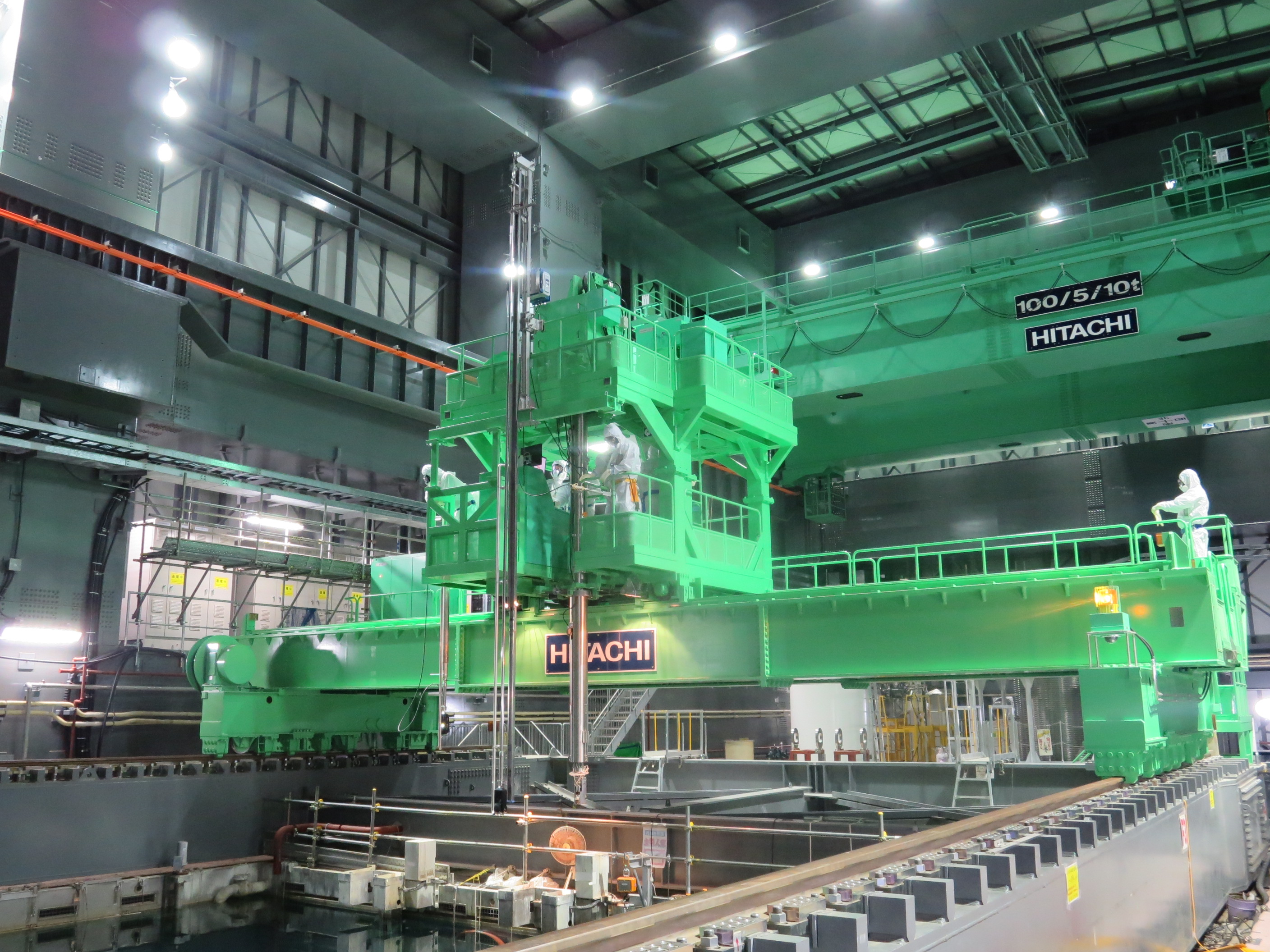
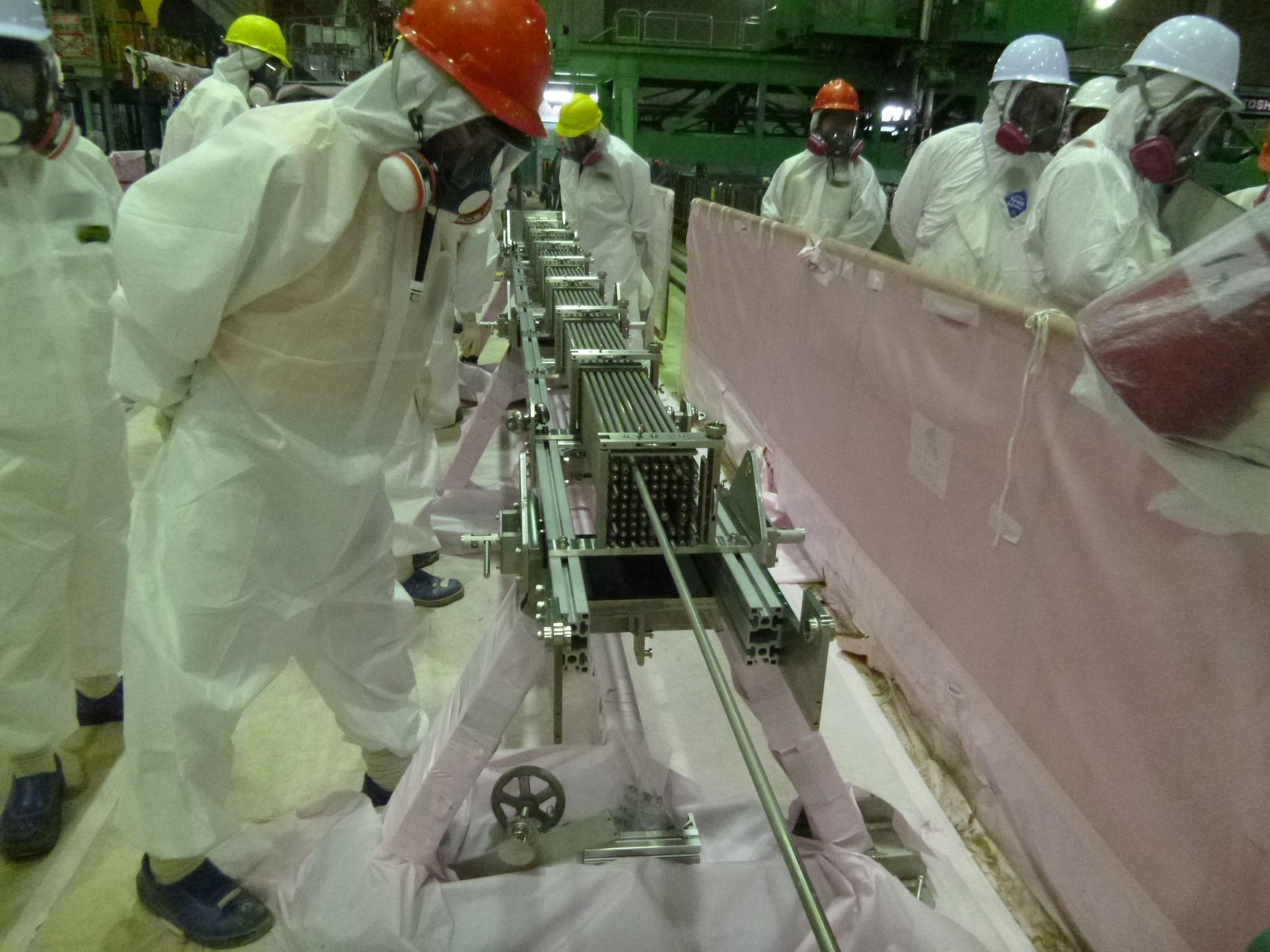
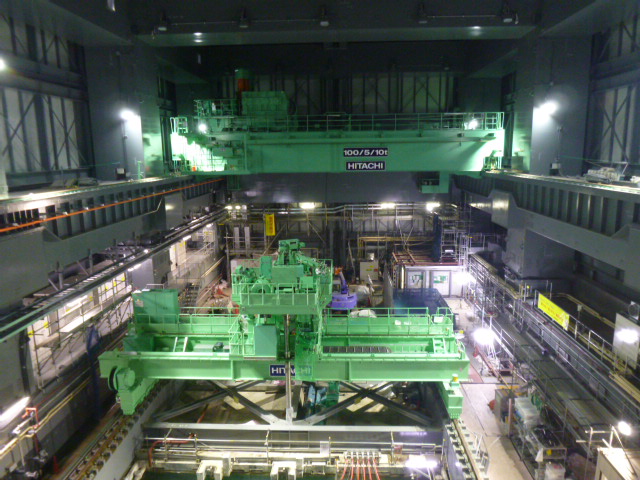
The fuel handling machine in the foreground, over the Spent Fuel Pool, and the gantry crane in the back, as workers conduct a dry-run on November 14 using mock fuel assemblies on the Reactor 4 operation floor (from TEPCO, 11/15/2013; click to enlarge; follow the link for more photos):


Workers who tweet from Fukushima I Nuke Plant say the people who will be operating the fuel handling machine and the gantry crane are the workers with long experience and expertise in fuel handling, from TEPCO's primary contractors. Not "yakuza and rank amateurs".

==========================

To disabuse some people, including scholars and experts (albeit in different fields, not related to nuclear energy or nuclear power plant technologies, or who simply have not followed the Fukushima nuclear accident much other than catching some soundbites), the following is NOT, I mean NOT, how the fuel assemblies will be removed. (I couldn't believe it at first, but there were many in Japan for example who thought the removal would be done exactly like this. Maybe they still do...)

First, we use a crane like this one (whose jib mast collapses after 1:35 into the video)...


And we will take out individual fuel "rods" (and not fuel assemblies) one by one, like this one being taken out of the fuel assembly (casing has been already removed)(from TEPCO, 8/28/2012):


And using the crane in the first photo, and pull the fuel "rods" out of the pool into open air, irradiating the workers regardless of whether the "rods" are new or used, like this (except in this case it was an unused new fuel ASSEMBLY with the casing, not an individual rod)...


Then the "rods" will then be placed in a container, and the container will be lowered to the ground...

In the process, a mishap may occur, and the fuel rods may be scattered on the ground, then they go critical.

And on and on till the end of either the northern hemisphere or the entire planet.

This dire scenario is best summarized by a Yale University sociology professor (emeritus), who says the Reactor 4 SFP is in danger of collapsing (from Huffington Post 9/20/2013; emphasis is mine):

Much more serious is the danger that the spent fuel rod pool at the top of the nuclear plant number four will collapse in a storm or an earthquake, or in a failed attempt to carefully remove each of the 1,535 rods and safely transport them to the common storage pool 50 meters away. Conditions in the unit 4 pool, 100 feet from the ground, are perilous, and if any two of the rods touch it could cause a nuclear reaction that would be uncontrollable. The radiation emitted from all these rods, if they are not continually cool and kept separate, would require the evacuation of surrounding areas including Tokyo. Because of the radiation at the site the 6,375 rods in the common storage pool could not be continuously cooled; they would fission and all of humanity will be threatened, for thousands of years.


Just like many North American experts, the professor simply declares conditions in the Reactor 4 SFP are "perilous". The common Pool is 100 meters away, not 50 meters. It's not "rods" but "assemblies". No idea what he's talking about when he says "two of the rods touch", but I have seen this phrase in other places from other experts. It must be part of the standard things to say if you are to comment on the fuel "rods" from the SFP at Fukushima I Nuke Plant. That Tokyo is part of "surrounding areas" of the plant would be news to most Japanese.

Compared to other reactors that suffered the core melt, the air radiation levels in Reactor 4 have been low enough (measured in microsievert/hour instead of millisievert/hour in other reactors) to allow human workers to work inside the reactor building and on the top floor for the past two and a half years.

For a fond memory, this was the operating floor of Reactor 4:

March 16, 2011:


April 10, 2011:


June 30, 2011:


Tuesday, November 12, 2013

#Fukushima I Nuke Plant Reactor 4 SFP: Three Fuel Assemblies Deformed or Damaged, Says TEPCO


It must be from the explosion! Or from something TEPCO has done since the accident, whatever it is!

No.

If TEPCO is to be believed, TEPCO has been hiding the damages for at least 10 years; the oldest damage was from 25 years ago.

According to Yomiuri Shinbun (11/12/2013), that's not clear, and you would be excused if you thought the damages were recent (after March 11, 2011).

From Yomiuri Shinbun (11/12/2013):

東京電力は12日、今月中に取り出し作業が始まる福島第一原子力発電所4号機の使用済み核燃料プールの1533本の燃料に、変形などのために取り出しが困難なものが3本あることを明らかにした。

On November 12, TEPCO disclosed that there were three fuel assemblies out of 1533 fuel assemblies in the Spent Fuel Pool of Reactor 4 at Fukushima I Nuclear Power Plant that were deformed and would be difficult to remove. The removal of fuel assemblies from the Reactor 4 SFP will start this month.

問題の3本には、過去の作業で生じたわずかな変形や損傷がある。放射性物質の漏れは確認されていない。東電は、ほかの燃料の移送を優先させ、3本の取り出しと移送の方法は今後検討する。原子力規制委員会は、取り出し作業の安全性を認めており、作業は月内に予定通り開始される。

The three fuel assemblies has slight deformation or damage caused by the past work [in the SFP]. No leak of radioactive materials has been observed. TEPCO will transport other fuel assemblies first, while they figure out how to remove and transport these three fuel assemblies. Nuclear Regulation Authority has already approved the fuel removal, and the work will start within this month as scheduled.


So, are these fuel assemblies new? used? How long ago was the "past work"?

I found the answer in Fukushima Minyu, one of the local newspapers in Fukushima Prefecture. It was long before the start of the March 11, 2011 nuclear accident, with the oldest "past work" 25 years ago...

From Fukushima Minyu (11/13/2013; part):

東電によると、損傷した燃料の1体は「く」の字に折れ曲がっている状態。25年ほど前に燃料を取り扱う際に失敗し曲がった。ほかの2体は10年ほど前に破損が分かり、異物などの混入で外側に小さな穴が開いた状態という。

According to TEPCO, one of the damaged fuel assemblies is bent at a 90-degree angle [literal meaning: bent in the shape of a Japanese character "く"; actual angle could be less]. It was bent 25 years ago when a mistake occurred in handling the fuel. The other two were found to be damaged 10 years ago; there are small holes on the outside from foreign objects.

燃料損傷について当時公表したかどうかは東電が調査中。

TEPCO is investigating whether the damages to the fuel assemblies were made public when they were discovered.


According to Fukushima Minyu, the occasion was a visit by the delegation of the Fukushima Prefectural Council for Decommission Safety Monitoring. The council members include officials from the Fukushima prefectural government, municipalities around Fukushima I Nuclear Power Plant, and experts.

How do you bend a fuel assembly at a 90-degree angle, handling it in the spent fuel pool?

And how could Yomiuri call a fuel assembly bent at a 90-degree angle "slight deformation"? Slight?

--------------

For your information, there are 1533 fuel assemblies (each of which contains 50 to 60 fuel rods in channels inside the casing) in the Spent Fuel Pool of Reactor 4 at Fukushima I Nuclear Power Plant.

There used to be 1535 fuel assemblies there, but two new fuel assemblies were taken out from the Reactor 4 SFP last year for examination.

Of 1533 fuel assemblies currently in the Reactor 4 SFP, 202 of them are never-used, brand-new fuel assemblies. The rest, 1331 are used fuel assemblies. Of 1331, 783 are spent fuel assemblies that have been stored in the SFP at least for several years; 548 are the fuel assemblies that had been used in the Reactor Pressure Vessel until Reactor 4 went into extended maintenance to replace the core shroud. These 548 "hot" fuel assemblies were taken out of the Reactor Pressure Vessel and placed temporarily in the Spent Fuel Pool.

Thursday, November 7, 2013

Video: This Is How Removal of Fuel Assemblies from Reactor 4 Spent Fuel Pool Is to Be Carried Out, According to TEPCO


No concrete date set yet to begin the removal, although it is expected sometime this month.

From TEPCO (10/30/2013):


Addition to the Reactor 4 operating floor that houses the crane and fuel handling machine, from TEPCO (9/25/2013), :


Container to transfer fuel assemblies to the Common Pool, from TEPCO (11/1/2013):


Reactor 4 Spent Fuel Pool, from Jiji Tsushin (11/6/2013):


Monday, November 4, 2013

#Fukushima I NPP: TEPCO to Delay Start of Fuel Assembly Removal from Reactor 4 Spent Fuel Pool by 1 to 2 Weeks


The company says it now needs time to conduct a test run.

(So......, test runs were not originally scheduled ......)

From Kyodo News (11/5/2013):

福島原発4号機、実証試験を追加 燃料取り出し延期へ

Removal of fuel to be delayed at Fukushima I Nuke Plant Reactor 4, to add a test run

東京電力が福島第1原発4号機の使用済み核燃料プールからの燃料取り出しを前に、実際の燃料輸送容器を使って作業の安全性を確認する実証試験を追加し、4号機内で近く実施することが4日、関係者への取材で分かった。実証試験には準備を含めて数日かかる見込みで、早ければ8日にも始まる予定だった燃料取り出しは1~2週間延期となる見通し。

Kyodo News found out on November 3 by talking to people involved that TEPCO will conduct a test to verify the safety of the work using the actual container to transport the fuel [assemblies] before they start removing the fuel [assemblies] from the Spent Fuel Pool of Reactor 4 at Fukushima I Nuclear Power Plant. The test will take several days including preparation, and the removal of fuel which was slated to start as early as November 8 will be delayed by one to two weeks.

燃料取り出しに向け、クレーンを備えた4号機の建屋カバーは既に完成しているが、実証試験は行われていなかった。

The building cover for Reactor 4 with the crane for removing the fuel has been completed, but no test run has been done.


I can't really blame TEPCO other than to say they should grow some backbone to say no to the meddling by the national government and LDP.

LDP politicians including Prime Minister Shinzo Abe and Minister of Economy Toshimitsu Motegi have made a lot of noise demanding TEPCO do everything "ahead of schedule" and "accelerate".

Removal of fuel assemblies, first unused (new) fuel assemblies then used fuel assemblies, was not scheduled to start until 2014. The LDP government, installed after the Lower House election in December 2012, has been eager to give the impression to the gullible portion of the populace and to the world outside Japan that it is totally in charge, that things are going so well under their leadership. One of the ways they used to give that impression was to unilaterally declare, out of the blue, that the Fukushima I Nuclear Power Plant accident would be now dealt with at an accelerated pace, with everything being done ahead of schedule, including removing the corium from the broken reactors.

Despite huge misgivings of the workers at the plant and people who have followed the accident, TEPCO headquarters dutifully obliged. Plant safety and worker safety be damned.

But it is not just test runs that were missing. Independent journalist Ryuichi Kino tweeted a horror two days ago:

がれき撤去は夕方から翌日午前中まで深夜完徹の作業。たいへんさは想像に余りある。

Removal of debris will be done through the night, from the evening till the morning of the next day. What an enormous task it will be.


That means TEPCO hasn't removed debris that fell inside the Reactor 4 Spent Fuel Pool, even though they have created a detailed SFP debris map. Compared to Reactor 3's SFP, Reactor 4's SFP looks relatively clean, and not a whole lot of huge, awkward pieces of debris are in the pool. But if what Kino says is true, TEPCO will have the workers clear the debris from the pool all night, enough to carry out the removal of fuel assemblies next morning. And repeat this day in and day out.

In other words, TEPCO continues the accident cleanup haphazardly, as it has been doing since the day 1 of the accident.

But TEPCO cannot say no to the authorities stronger than them. They could have said to the government, "No we are not going to accelerate the removal of fuel assemblies. We will first remove the debris completely from the pool, then we will carry out dry runs to make sure things will go smoothly. Only then we will start removing the fuel assemblies."

But back in March 2011, TEPCO couldn't even take much-needed car batteries from the stores, and they couldn't bring the batteries made for the plant because they didn't have a government permit to travel on the highway (see my post from October 2012). So it is too much to ask, I know.

Monday, April 22, 2013

#Fukushima I Nuke Plant Reactor 3: Spent Fuel Pool Is Now Covered


It looks like am impossible task if you see the photo from 2011.

From TEPCO's Photos and Videos Library 4/22/2013:

Reactor 3 Spent Fuel Pool, November 12, 2011:


March 20, 2013:


April 22, 2013. The smaller rectangle to the left of the SFP is where the skimmer surge tank is. The skimmer surge tank is also now covered:


Because of extremely high radiation levels on the operating floor of Reactor 3, all the debris removal has been done by remote-control equipments, with some accidents (and with human workers with tungsten vests on the floor to observe the work). Installation of the cover must have been done remotely also. I'd love to see the video if they have one.

Sunday, April 21, 2013

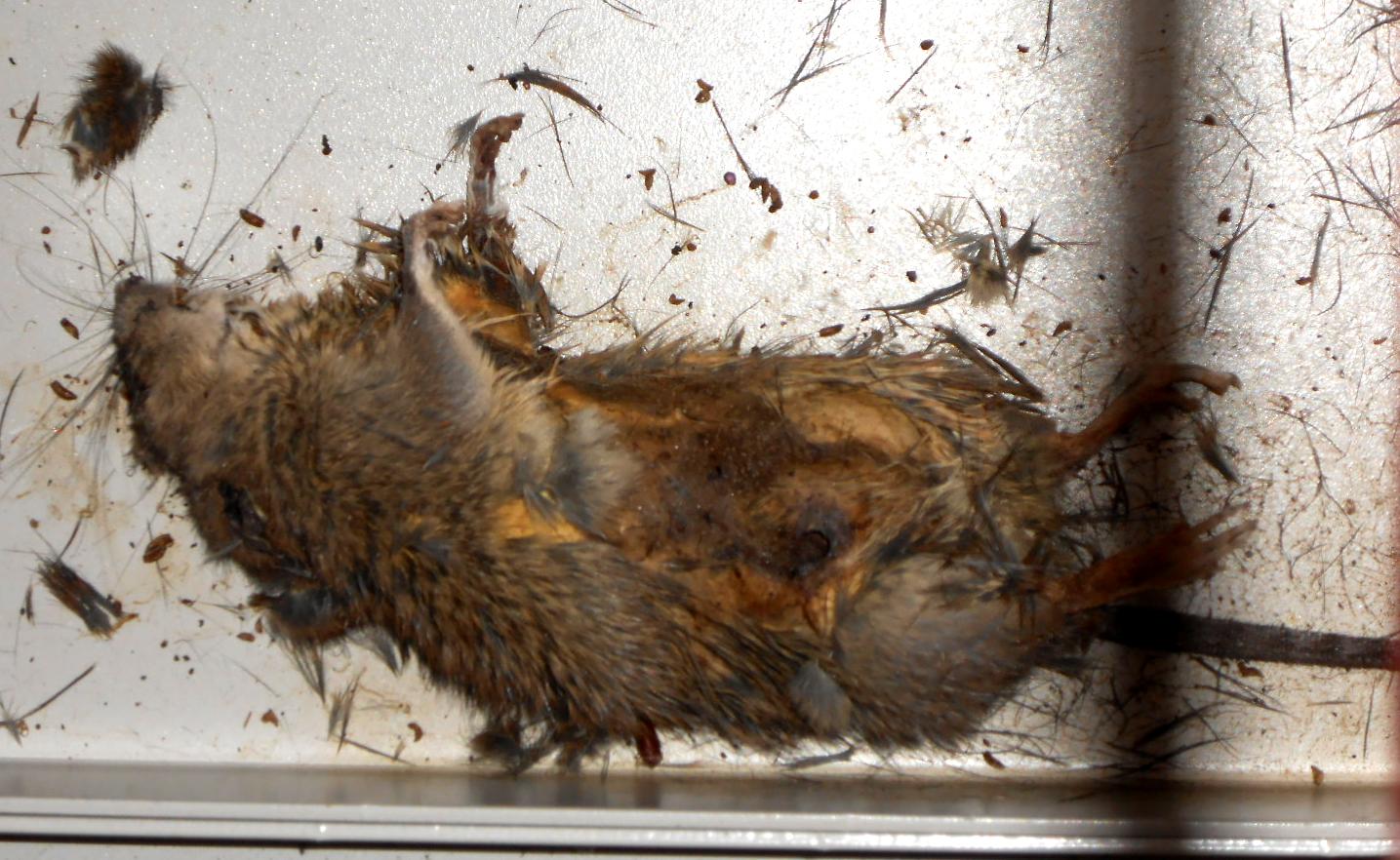
#Fukushima I Nuke Plant: Two Very Dead Rats in the Transformer Box for Reactor 2 SFP Cooling System


(UPDATE 4/22/2013) It took workers 4 hours to remove the rats and make sure the transformer was OK. Cooling of Reactor 2 SFP resumed. The water temperature rose 0.1 degrees Celsius to 14 degrees Celsius during the halt.

======================================

They were discovered by a team of workers patrolling the premise. One of the rats, the gray one in the photo below, looks like he's been there quite a while.

From TEPCO's Photos and Videos Library, 4/22/2013:


The box that these rats were found is that small box on the ground on the left-hand side of the photo below:


Cooling of Reactor 2's Spent Fuel Pool was halted as of 11:36AM to remove the rats and make sure the transformer was not damaged. The temperature of the water in the SFP was 13.9 degrees Celsius. TEPCO estimates a few hours for the work of removing the rats and ensure safety of the transformer.

Thursday, April 4, 2013

Just in: #Fukushima I Nuke Plant Reactor 3 Spent Fuel Pool Cooling System Has Stopped (Now Resumed)


(UPDATE 4) Cooling of the Reactor 3 SFP resumed at 5:20PM (TEPCO's press conference).

=====================================

(UPDATE 3) TEPCO says they were setting up a fence around the power board in question to prevent "small animals" from entering, and a ground fault may have occurred, triggering the alarm and stopping the Reactor 3 SFP cooling. So it was the fear of a mouse, not a mouse itself, that may have caused the stoppage.

======================================

(UPDATE 2) Alarm was sounded inside the Anti-seismic Building (headquarters at the plant), says Jiji, quoting Nuclear Regulatory Authority. That's rather odd.

(UPDATE) Jiji Tsushin reports TEPCO is expecting to resume cooling within today.

=======================================

Again, it seems to be from an electrical problem. Details not yet known. (Another mouse, I wonder?)

TEPCO's email to the press (4/5/2013):

福島第一原子力発電所3号機使用済燃料プール代替冷却システムの停止について

Fukushima I Nuclear Power Plant Reactor 3 Spent Fuel Pool alternative cooling system stopped

本日4月5日午後2時27分頃、電源関係の動力盤故障警報が発生し、3号機使用済燃料プール代替冷却システムが停止していることを確認しました。

At 2:27PM today, April 5, there was an alarm indicating failure of a power board, and we confirmed that the alternative cooling system for the Reactor 3 Spent Fuel Pool had stopped.

現在、現場の状況を確認しているところです。

We are investigating the situation at the location right now.

本日(4月5日)午後2時時点の3号機使用済燃料プールの水温は15.1℃です。

The temperature of the Reactor 3 SFP as of 2PM today (April 5) is 15.1 degrees Celsius.

現時点で、モニタリングポストの値に変動はございません。

There is no change in radiation at monitoring posts.

本件について新たな状況が判明次第、お知らせ致します。

As soon as we find out more, we will let you know.


Thursday, March 28, 2013

#Fukushima I Nuke Plant: Photo of an Electrocuted and Very Dead Mouse


Remember that power outage? TEPCO released the result of their investigation on March 25, 2013.

The mouse has a mark in the stomach from an electric shock.


From TEPCO's Photos and Videos Library, 3/25/2013, "Progress of Investigation of Power Supply Facilities Failure at Fukushima Daiichi Nuclear Power Station":

The regular M/C was receiving power from the temporary M/C because of the ongoing renovation work:


(Text part)

[Power supply system structure]
Since power receiving cable renovation for the regular M/C in the Process Building (as part of Tsunami countermeasures) was ongoing at the time of the incident, the regular M/C was temporarily receiving power from the
backup M/C in the Process Building.
[Analysis]
1. The ground relay in B system operated: The failure is assumed to have occurred in B system and high voltage power supply system.
2. The circuit breakers of the regular M/C (3A) and (4A) in the Process Building and the backup M/C in the Process
Building (3A) tripped due to overcurrent. : The failure is assumed to have occurred in the downstream of the regular M/C in the Process Building (4A).
3. The ground directional relays and the circuit breakers of Units 3-4 temporary M/C (4A), (5A) and (10A) did not
operate. : The failure is assumed to hav
e occurred in the upstreamof the load systems of Units 3-4 temporary M/C.
4. Fault current was found in Units 3-4 temporary M/C (A)(5B). : The failure is assumed to have occurred in the
downstream of Units 3-4 temporary M/C (A) (5B).

Conclusion page:


TEPCO will install mouse traps as countermeasure.

Tuesday, March 19, 2013

Power Restored at #Fukushima I Nuke Plant, TEPCO Still Don't Know What Went Wrong


TEPCO still doesn't know what caused the power failure and how, therefore does not have measures in place to prevent any future power failure. Pressure from the national government was clearly on the operator to just start cooling and not worry about minor details like what caused the failure.

Ad hoc has been the name of the game for the past two years. Why change now?

Asahi Shinbun (3/20/2013; part):

今回の停電は、東日本大震災での事故以降では最大規模。だが原因は特定できていない。東電によると、停電の発端とみられる不具合が起きた3、4号機につながる仮設の配電盤は、目で見て分かる異常は確認できなかったという。当初は原因を突き止め、対策を講じた上で復旧させる予定だったが、復旧を優先させることにし、仮設配電盤を通さずに、別の配電盤に冷却装置を接続することで電源を確保した。

The power outage this time was the most severe since the start of the accident. However, the cause of the outage hasn't been identified. According to TEPCO, there was no visible sign of abnormality in the temporary switchboard that is connected to Reactors 3 and 4, where a trouble that led to the power outage was thought to have started. The company had initially planned to identify the cause, install measures to prevent future problems, and then turn the power back on. However, restoring the power was given the priority, and the cooling systems were connected to a different switchboard, circumventing the temporary switchboard.


The particular temporary switchboard is "3/4 M/C (A)" (M/C stands for "metal clad"). The location (or connection) of the switchboard in the overall electrical system looks different in the two different diagrams below. Either way, I don't quite understand why Reactor 1 should be affected by the failure of this switchboard, as the Reactor 1 cooling system does not appear to be connected to this switchboard.

As TEPCO's spokesman Ono explained it (via Ryuichi Kino),

所内共通M/C」(2A)と(2B)にも波及

[The trouble at "3/4/ M/C (A)"] had the ripple effect on Plant-wide common M/C (2A)(2B)


(I don't have a clue as to how that could happen.)

3/4 M/C (A) (in blue circle that I added), in the diagram provided by TEPCO in the press conference on March 19, 2013, via Ryuichi Kino:


3/4 M/C (A), in the diagram from March 2012, from then-Nuclear and Industrial Safety Agency (NISA, also from Ryuichi Kino:

Monday, March 18, 2013

Chief Cabinet Minister's Word on #Fukushima I Nuke Plant's Power Outage: "There Is No Worry, In a Way"


Totally incomprehensible remark from Chief Cabinet Secretary Yoshihide Suga during the morning press conference on March 19, 2013.

As Jiji Tsushin reports (3/19/2013):

菅義偉官房長官は19日午前の記者会見で、同原発の停電について「冷却のための代替手段に万全の対応をする予定なので、ある意味で全く心配ない」と述べた。

Chief Cabinet Secretary Yoshihide Suga said during the press conference in the morning of March 19 about the power outage at Fukushima I Nuke Plant, "Since we are going to thoroughly prepare for the alternative methods of cooling, there is absolutely no worry, in a way."


Here I thought the redundant methods of cooling, not to mention the redundant power supplies, had long been installed at the plant. Maybe Mr. Suga meant the alternative methods of cooling by the new LDP administration under Mr. Abe.

What he means by "in a way" is totally lost on me.

Power is not back on yet, and the TEPCO spokesman says they haven't identified the location of the problem though they are narrowing down. The temperature of Reactor 4's SFP is 30 degrees Celsius, up 5 degrees since the power outage. The spokesman seems to be regurgitating what he was told to say without understanding any of it, and it is evident by the way he tries to answer questions from the reporters.

Needless to say, Chief Cabinet Secretary doesn't seem to have a clue of what he's saying, either.

And as usual, there are people on Twitter spreading wild information like "They've been doing the vent! It's dangerous!" and people retweeting anxiously.

I guess nobody has a clue.

#Fukushima I Nuke Plant Cannot Cool Spent Fuel Pools, Cause Unknown


(UPDATE-4) As of 2:20PM on March 19, 2013, cooling of Reactor 1's Spent Fuel Pool resumed. No information about other SFPs and facilities affected by the power outage.

==============================================

(UPDATE-3) The temperature of Reactor 4's SFP is 30 degrees Celsius, up 5 degrees since the power outage.

==============================================

(UPDATE-2) More than 15 hours after the power outage (Japan Time 10:30AM on March 19), there is still no power. TEPCO is having a press conference right now. The new spokesman who croaks is not very good at explaining things in a straight-forward way. (My guess is that he doesn't know well what he is talking about, unlike his predecessor Matsumoto.)

In June 2012, cooling of the Reactor 4 SFP stopped for about 30 hours when the pump of the secondary cooling system burned out.

==============================================

(UPDATE) Jiji Tsushin says the water temperature of Reactor 4's Spent Fuel Pool (the "hottest") is about 25 degrees Celsius. The safety standard for the SFP temperature is 65 degrees Celsius, and it is estimated it will take about 4 days without power to reach that temperature. In the Reactor 4 SFP, both used and new fuel assemblies are under 7 meters (23 feet) of water. Fuel assemblies are 4-meter (13 feet) long. According to the plant operator (announcement from May 2012, in Japanese only), it takes about 3 weeks for the water 5 meter deep (i.e. still leaving 2 meters of water above the fuel assemblies) to evaporate.

The common pool has old fuel assemblies whose decay heat is already very low.

=======================================

It took three hours for TEPCO to announce the power outage at Fukushima I Nuclear Power Plant. (Same old, same old...)

From Kyodo News (3/19/2013):

福島第1原発で停電 使用済み燃料プール冷却が停止

Power outage at Fukushima I Nuke Plant, cooling of spent fuel pools stopped

東京電力は18日、福島第1原発で午後7時前に停電があったと発表した。1、3、4号機の使用済み燃料プール代替冷却システムなどが停止し、19日午前0時25分時点で復旧のめどは立っていない。事故対応に当たっている免震重要棟も一時的に停電したが、すぐに復旧した。

TEPCO announced on March 18 that there was a power outage at Fukushima I Nuclear Power Plant slightly before 7PM. Cooling systems for the spent fuel pools in Reactors 1, 3, 4 has stopped, and as of 12:25AM on March 19 there is no knowing when the systems will be back. Power went out also in Anti-Seismic Building temporarily but it came back on quickly.

原子力規制庁によると、1~3号機の原子炉への注水に問題は生じていない。燃料6377体を保管する共用プールの冷却も停止した。

According to the Nuclear Regulatory Agency, there is no problem in injecting water into the reactors. Cooling of the common spent fuel pool, which contains 6,377 fuel assemblies, has also stopped.

東電は「配電盤か、接続されたケーブルが原因の可能性がある」としているが、規制庁、東電とも原因を特定できていない。東電が停電を公表したのは、発生約3時間後の午後10時すぎだった。

According to TEPCO, the problem could be either the switchboard or the cables connected to the switchboard. Both the Nuclear Regulatory Agency and TEPCO have been unable to identify the cause. TEPCO announced the power outage after 10PM, three hours after it had taken place.


The plant receives its electricity from Tohoku Electric Power Company. There is no problem receiving this external power.

(H/T reader Beppe)