

As the sudden and renewed media attention (latest I found today was from Bloomberg News, informing the readers about that "300 tons of water laced with radioactive particles") is being focused on contaminated water (highly contaminated water in the underground trenches, low-contamination water in the observation holes along the embankment which is a reclaimed land along the ocean) at Fukushima I Nuclear Power Plant, there are other curious surveys and examinations being done at the plant, without any media attention.
The probe of Reactor 2's Containment Vessel into the pedestal area is one. Here, I think, is another.
On August 12, 2013, TEPCO announced the result of the alpha-nuclide analysis of condensed water from the gas control system of Reactors 1, 2 and 3. I believe this is the first time that TEPCO has ever tested alpha nuclides in gas/condensed water coming out of any Containment Vessel.
All-alpha was not detected in the condensed water from the gas control system of Reactors 1 and 2, but there was a small amount of all-alpha, max 0.19 Bq/cm3 (cubic centimeter) detected from the condensed water from the gas control system of Reactor 3.
Reactor 3 was using MOX-fuel with extra plutonium as part of fuel when it was shut down on March 11, 2011. 32 MOX-fuel assemblies were installed in the fuel core when Reactor 3 was restarted in October 2010 after a scheduled maintenance.
From TEPCO's handout for the press in English, 8/12/2013:
Sampling Results (All α) of Condensed Water at Unit 1-3 PCV Gas Control System (the Entrance of HEPA Filter) in Fukushima Daiichi Nuclear Power Station


TEPCO had done the nuclide analysis for condensed water for gamma nuclides (including radioactive cesium) back in June, and there was no statistical difference between the reactors.
Even though TEPCO hasn't identified which alpha nuclides were found in the condensed water from the Reactor 3 gas control system, it seems the company suspects the contamination of Reactor 3 building may be different from that of other reactor buildings, which may pose problems in the future decontamination work.
TEPCO has been injecting nitrogen gas into the Primary Containment Vessels of Reactors 1, 2 and 3 to prevent the concentration of hydrogen gas. The gas control system with HEPA filter has been installed to treat the gas being pushed out of the PCV, and there are particulate filters and charcoal filters to collect radioactive materials in the gas. There are also drains to collect condensed water.
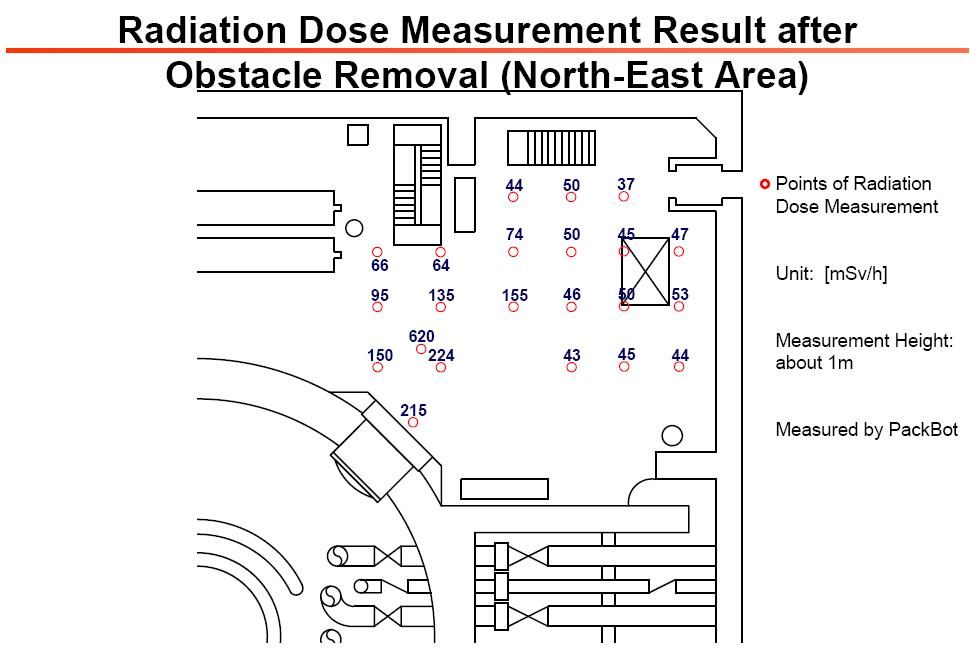
The nitrogen injection system and the gas control system of Reactor 3 were installed in July 2011, with TEPCO workers and affiliate company workers getting 5.34 millisieverts radiation for 9-minute work. The hose for the nitrogen injection had to be installed in the area with 55 millisieverts/hour radiation.
(There are several, curious loose ends about Reactor 3. I'm writing a post for my record.)



 30-Day free trial by following the link.
 Tokyo Time
![[Most Recent Quotes from www.kitco.com]](http://www.kitconet.com/charts/metals/gold/t24_au_en_usoz_2.gif)


