Showing posts with label METI. Show all posts

Sunday, September 8, 2013

For Japanese Politicians, Contaminated Water Leak at #Fukushima Is All About "Who to Blame" (Other Than Themselves, Of Course)


Now that the 2020 Summer Olympic is in the bag, Japanese politicians have resumed the blame game instead of actually trying to solve the problems of contaminated water storage and leaks at Fukushima I Nuclear Power Plant.

DPJ politicians are afraid of being criticized for their (lack of) response to the nuclear accident when they were in power. LDP politicians are afraid of being criticized for their (lack of) response to the nuclear accident now. But they can both criticize Ministry of Economy and Trade and Industry. So let's do that...

From Yomiuri Shinbun (9/8/2013; part):

東京電力福島第一原子力発電所の汚染水問題を巡る国会審議の日程が、与野党の駆け引きに翻弄されている。

Scheduling of the debate in the National Diet over the contaminated water problems at Fukushima I Nuclear Power Plant is going nowhere because of political bargaining.

民主党は政府の対応を追及しようと閉会中審査の開催を求めるが、政権担当時の汚染水対応への負い目からか、腰が定まらない。一方の自民党にも政府への不満がくすぶっており、審査日程が決まる見通しは立っていない。

Democratic Party of Japan demands an "inspection while the Diet is not in session" [a special Diet procedure] in order to press on the government's response, but the party's effort lacks determination perhaps due to its own response to contaminated water while it was in charge of the government. On the other hand, there is a smouldering discontent inside Liberal Democratic Party over the government response, and there is no prospect that the date is set any time soon.

閉会中審査は、民主党の海江田代表が8月26日の記者会見で求めた。これを受け、同30日の衆院経済産業委員会理事懇談会で、民主党側が9月中旬までの開催を要求。だが、自民党が「政府の対応を見たうえで検討したい」と回答すると、民主党もこれをすんなりと受け入れた。

Head of DPJ Kaieda requested an "inspection while the Diet is not in cession" during his August 26 press conference. On August 30 during the informal gathering of the Lower House Economy and Industry Committee members, DPJ members requested that the "inspection" be started by the middle of September. However, they readily accepted the response from LDP that they would consider it after how the government responds.

... 民主党のちぐはぐな対応の背景には、自らの政権時代の対応を逆に批判されかねないとの懸念がある。海江田氏は6日、「民主党もただ単にケチをつけるのではなく、政権与党にあった時代の事故に対して大きな責任がある」と述べており、政府を攻めあぐねる展開も予想される。

Behind DPJ's inconsistent attitude is the fear that their own handling of the problems when they were in charge of the government may be criticized. Mr. Kaieda said on September 6 that "DPJ cannot just criticize LDP, as it shares a large responsibility for the accident that happened when the party was the ruling party". They may not be able to effectively attack the government on the issue.

一方の自民党も一枚岩ではない。政府の汚染水対策を議論した4日の経済産業部会などの合同会議では、出席議員から「今回の問題は経産省にある。今度(汚染水問題が)起こったら経産相が責任を取るということでいいのか」と批判の声が上がった。

On the other hand, LDP does not have monolithic solidarity either. In the meeting on September 4 to discuss the government response to the contaminated water problems, there were members of the Diet who criticized METI (Ministry of Economy, Trade and Industry) saying "METI is the cause of the current problems. If it (contaminated water problem) happens again, are we correct in assuming Minister of Economy, Trade and Industry will take responsibility [and resign]?"


Where have I heard something similar just recently? Oh yes, about Tokay Reprocessing Plant and its highly radioactive liquid waste and plutonium. NRA Commissioner Oshima, who is from Ministry of Foreign Affairs, just wanted to know if Ministry of Education would be held responsible, instead of being interested in understanding the situation and coming up with the solution.

While I wholeheartedly agree that METI is the cause of the current and past problems regarding the nuclear plant (most recently a METI career bureaucrat with his "assumption" about 300 tonnes of "contaminated water" into the ocean every day), it is just tired old déjà vu of politicians whose only interest is to cover their behind, whether they are DPJ politicians or LDP ones.

What's amazing to me personally is that after nearly two and a half years of abysmal track record of the national government when it comes to dealing with the nuclear accident and its aftermath (contamination, decontamination, compensating the victims, monitoring, etc.), many Japanese are still looking longingly to the national government for magical solutions.

"TEPCO cannot be trusted!" they say. But somehow they can still trust their government.

Soaring Nikkei index does wonders. It is up more than 300 points today, as investors celebrate 2020 Tokyo Olympic by buying up the stocks of construction companies and real estate companies.

Tuesday, August 6, 2013

Ministry of Economy's Money Grab Using #Fukushima I Nuke Plant Groundwater Contamination


(UPDATE) And just to show it knows something about contaminated water, the Agency of Natural Resources and Energy under METI just declared that 300 tonnes of contaminated water is flowing out to the ocean every day from Fukushima I Nuke Plant, according to Kyodo News.

============================

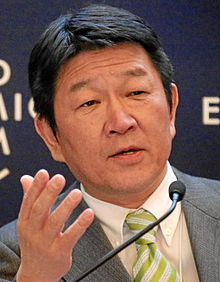
There may no line of command and they may be "blind", but that doesn't stop Ministry of Economy, Trade and Industry and its Minister Toshimitsu Motegi from using the "crisis" over the contaminated groundwater at Fukushima I Nuclear Power Plant for money grab.

As Japanese and foreign media's coverage of "highly contaminated" groundwater that may have gone over the top of the underground impermeable wall into the "ocean" (open culvert outside the water intakes inside the plant harbor) without much raising the radioactivity in the seawater there reaches a crescendo, Motegi and his Ministry of Economy, Trade and Industry which (surprisingly) still retains the main role in Fukushima I Nuke Plant decommissioning ride to the rescue.

According to the Japanese papers (Asahi, Nikkei, Jiji and others) are reporting on August 7 that:

  • Ministry of Economy, Trade and Industry will ask for at least 40 billion yen from the fiscal 2014 national budget for the construction of the frozen impermeable wall to surround the reactor buildings and turbine buildings at Fukushima I Nuke Plant to stop the groundwater from entering the buildings;

  • Prime Minister Shinzo Abe will formally instruct Minister of Economy Toshimitsu Motegi to hurry up with countermeasures to deal with the contaminated water at Fukushima I Nuke Plant during the meeting of Nuclear Emergency Response Headquarters [yes, it still exists] in the afternoon of August 7;

  • "There is no precedent in the world to build such an extensive frozen wall like this", says Chief Cabinet Secretary Yoshihide Suga, "So the national government should step forward to carry out the project".


Fiscal 2014 starts in April 2014. Some urgency. And the national government wants to take credit because it will be the first ever in the world (their favorite - "No.1! Number One!"). Or at least so in their mind.

That indicates to me that METI and Motegi are using the problem of contaminated groundwater that may be slowly saturating the space between the turbine buildings and the seawall and potentially destabilizing the underground trenches as a tool to grab money for themselves, to show the Ministry is still powerful and influential in distributing goodies to their buddies (in this case minimum 40 billion yen to Kajima to build the frozen wall).

Nikkei Shinbun makes a curious put-down on Nuclear Regulatory Authority:

昨年9月に経産省から独立して発足した原子力規制委員会は当初、廃炉作業から距離を置き、官庁の監督体制も弱まった

Nuclear Regulatory Authority, which was created separate from Ministry of Economy, Trade in Industry in September last year, distanced itself initially from the decommission work, and the regulatory oversight by ministries weakened.


As if NRA had any choice, and as if it was because of NRA that the oversight weakened.

The tenor and timbre of the Japanese papers are:

Finally! National government is doing something! and it will be Ministry of Economy in charge. Isn't it wonderful?


Nuclear Regulatory Authority's Kinjo said in the Reuters' article that TEPCO's "sense of crisis is weak". The same can be said about METI and Abe's government. For that matter, it can be said about the entire populace.

Normalcy bias has been pervasive and strong in Japan from the day one of the nuclear accident.

#Fukushima I Nuke Plant Accident: The Blind (METI) Still Leading the Blind (TEPCO)


So Nuclear Regulatory Authority finally butted in, formed its own committee and started ordering TEPCO to do something (probably wrong "something", again, but...) over the groundwater saturating the embankment at Fukushima I Nuclear Power Plant because of TEPCO's ill-conceived underground impermeable wall.

I was wondering why it took NRA until very recently to actively participate in dealing with the accident, until I read independent journalist Ryuichi Kino's tweet just now. It is because Ministry of Economy, Trade and Industry (METI) is in charge of decommissioning the plant:

福島第一の現場で何かが行われているのか、何を基準に工法や、工事の優先順位を決めているのか、この判断理由が外からはまったく見えない。事故収束作業の管理監督をしているのは資源エネルギー庁を事務局とする廃炉対策推進会議だけども、エネ庁はコストの確認をしていない。

What is going on at Fukushima I Nuke Plant? Who decides what method of construction to use on what criteria, and who decides which construction to be given the priority? From outside, the decision-making is completely opaque. The entity in charge of managing and supervising the works to control the plant is the Council on Decommissioning Measures with the Agency of Natural Resource and Energy [under Ministry of Economy, Trade and Industry] acting as the secretariat, but the Agency does not know the cost of works at the plant.


The Council was set up by the Ministry of Economy, Trade and Industry as of February 8, 2013, and so far has had 5 meetings. The members are (information from TEPCO):

  • Chairman: Minister of Economy, Trade and Industry

  • Deputy Chairman: Vice Minister of Economy, Trade and Industry

  • Council members: President of TEPCO, Director General of JAEA, President of Toshiba, President of Hitachi

  • Secretary: Advisor to Minister of Economy, Trade and Industry in charge of energy and technology

  • Observer: Nuclear Regulatory Authority/Nuclear Regulatory Agency


Nuclear Regulatory Authority/Nuclear Regulatory Agency is just an observer, which in case of Japan has a privilege to sit in the meeting and literally "observe" the meeting but not say much (or at all).

Ministry of Economy, Trade and Industry (METI) had to relinquish NISA (Nuclear and Industrial Safety Agency) in September last year when the new nuclear regulatory body (NRA) was created. Or so I thought.

Reuters' article from yesterday quoting Mr. Kinjo, who is the observer to this Council, fails to mention that it is still good old METI in charge of decommissioning work.

Kino says the Secretary to the Council is a career bureaucrat, and the current one was rotated into this position in June this year. Just a part of career stepping stone for bureaucrats at the Agency of Natural Resources and Energy.

Minister of Economy, Trade and Industry is ex-McKinsey consultant Toshimitsu Motegi, who just dispensed consulting advice to "the parties concerned" regarding Kashiwazaki-Kariwa Nuclear Power Plant.

For politicians and bureaucrats, it's "Après moi, le déluge". Literally.

Tuesday, April 23, 2013

#Radioactive Japan: Minister of Economy Declares on TV That Nuke Plants Will Restart As Soon As This Fall


The ex-McKinsey consultant minister has been very bullish on things nuclear for some reason. He has already declared that decommissioning of Fukushima I Nuclear Power Plant will be done ahead of schedule of the current roadmap plan of 30 to 40 years. Never mind IAEA (later).

From Jiji Tsushin (4/23/2013):

秋にも原発再稼働=茂木経産相

Nuclear power plants may restart in fall, says Minister of Economy Motegi

茂木敏充経済産業相は23日夜、BSジャパンの番組に出演し、原発再稼働の時期に関して「(早ければ)今年の秋になる」との見通しを示した。経産相は根拠として「原子力規制委員会の新規制基準が7月18日に出来上がる。事業者が申請して安全が確認できれば再稼働となる」と説明した。

Minister of Economy, Trade and Industry Toshimitsu Motegi appeared in a program on BS Japan [BS stands for Broadcast Satellite] on April 23 night, and shared his view regarding the restart of nuclear power plant, saying "It will be (as soon as) this fall." Minister Motegi explained, as the basis for his view, "New regulatory standards by the Nuclear Regulatory Authority will have been compiled by July 18. Then the operators will apply [for restart], and if the safety is confirmed the nuclear plants will restart."

原発を抱える地元の理解が重要だが、茂木経産相は「そのための努力はしていく」と述べ、安全確認後に立地自治体との調整を進める考えを示した。現在、関西電力大飯原発3、4号機(福井県おおい町)が全国で唯一稼働している。

The understanding of the municipalities where nuclear power plants are located will be important, but Minister Motegi said, "We will make an effort [to obtain the understanding]", signaling the plan to coordinate with the municipalities after the safety is confirmed. Currently, only one nuclear power plant is in operation in Japan, which is KEPCO's Ooi Nuclear Power Plant (Ooi-cho, Fukui Prefecture).


I like the name of the TV station. BS Japan. Priceless.

I don't quite understand why it is this minister's business to even speak about nuclear power plant restart. The Nuclear Regulatory Authority is under the Ministry of the Environment. The Nuclear and Industrial Safety Agency, which was under the Ministry of Economy, Trade and Industry, has been abolished.

Jiji Tsushin seems to have all but forgotten that in the Fukushima I Nuke Plant accident, areas far wider than the municipalities where the nuclear power plant was located (Futaba-machi, Okuma-machi) have been affected when it says "The understanding of the municipalities where nuclear power plants are located will be important".

Long-term memory (more than 1 year), not to mention critical thinking, is not what "Cool Japan" is about, anyway.

Sunday, July 8, 2012

Ooi Nuke Plant Restart: Senior Vice Minister Tells KEPCO "Lowly Jellyfish Should Never Stop a Modern Nuclear Power Plant!"


Little does he know about nuclear power plants.

As the readers of this blog have tirelessly pointed out, jellyfish and nuclear power plants go together very well. (For more info, here, and here, for a start.)

But never mind that. To Seishu Makino, Senior Vice Minister of Economy, Trade and Industry, it's all about your fighting spirit. Against jellyfish.

From Jiji Tsushin (7/9/2012):

関西電力大飯原発3号機(福井県おおい町)がフル稼働に達したのを受け、安全監視の現地責任者の牧野聖修経済産業副大臣は9日未明、同町で記者団に「行き詰まっていたエネルギー政策が一歩前進した喜びはあるが、4号機の再稼働までミッション(任務)は続く。今まで以上に気を引き締め、安全のための職務を遂行したい」と語った。大飯4号機は18日に原子炉を起動し、21日にも発電と送電を再開する予定。

On the resumption of full operation of Reactor 3 at KEPCO Ooi Nuclear Power Plant (Ooi-cho, Fukui Prefecture), Senior Vice Minister of Economy, Trade and Industry Seishu Makino, who is in charge of special surveillance on site to secure safety, spoke to the press in Ooi-cho in the early hours on July 9. "I am happy that it is a one step forward for the energy policy that has been deadlocked. But the mission [he actually said this word in English, instead of using the perfectly good Japanese word for it] continues until Reactor 4 restarts. We will gird ourselves more, and perform our duty to insure safety", he said. Reactor 4 at Ooi is scheduled to restart on July 18, with power generation and transmission to restart on July 21.

また、3号機の海水取水口周辺でクラゲが大量発生し、出力低下が懸念されたことには、「科学技術の粋を集めた原発で、クラゲごときに惑わされてはいけない」と関電に対策を指示したと述べた。

Commenting on the concern for the power decline because of jellyfish swarmed near the water intake for Reactor 3, he said he instructed KEPCO to come up with countermeasure, because "We must not be disturbed by [lowly creasures like] jellyfish, at a nuclear power plant built with the best of science and technology."


That this person can only talk in cliches is amazing, and in this case extremely funny (for Japanese speakers).

One of my Japanese Twitter followers just tweeted me that the jellyfish at Ooi Nuke Plant are recognized as "enemy" of some sorts by the Nuclear and Industrial Safety Agency under the Ministry of Economy, Trade and Science. Enemy, like a alien monster in a Godzilla movie.

NISA's email to journalists on the Ooi jellyfish that swarmed the water intake apparently describes the incident as "jellyfish attack/invasion" (クラゲ来襲). Any Japanese who sees this word 来襲 would associate it with those alien monsters from outer space to be repelled by Godzilla or Ultraman.

The follower who tweeted the NISA's characterization of the incident astutely observes that this senior vice minister sounds (and looks, too) like the fictional minister in charge of science and technology who appears in those Godzilla/Ultraman movies and makes a futile attempt after futile attempt to direct the Self Defense Force to repel the alien monster invasion, telling them "We can't be defeated by such a creature! We will commandeer the best of the best of our science and technology to repel and destroy it!"

Someone already created an image of jellyfish swarming and protesting "再稼動反対 Saikado Hantai" (against restart).

Monday, April 23, 2012

Part of #Fukushima Will Still Be Above 20 Millisieverts/Year 20 Years from Now

That's according to the Ministry of Economy, Trade and Industry (METI), which continues to be in charge of regulating the nuclear industry because the new and (supposedly) improved Nuclear Regulatory Agency under the Ministry of the Environment is still nowhere to be seen or heard (and likely not to be seen or heard for a very long time, as things are going at this time).

Looking at the radiation map that the Ministry published on April 23, 2012, part of Namie-machi, Iitate-mura, Okuma-machi, and Futaba-machi will continue to be more than 20 millisieverts per year external radiation. They are basically the same areas that are in red in the map as of March 2012 (100 millisieverts per year and higher).

Also note that the air radiation levels in most of Date City and Fukushima City will still be more than 1 millisievert per year 20 years from now.

In the information blackout (natural and intentional) right after the March 11, 2011 earthquake/tsunami/nuclear accident, people inside the 3 kilometer radius from the plant, then 5, 10, 20 kilometer radius, fled in the direction of the red area in the map along Route 114 to Namie-machi. Some then took Route 399 to Iitate-mura and then to Date City, others through Kawamata-machi on their way to Fukushima City.

As the mayor of Namie-machi said in the investigation committee set up by the Diet, people were irradiated unnecessarily because the government didn't say a thing about radiation (other than of course, "no immediate effect on health").

The METI simulation maps on air radiation levels in the areas in and around the evacuation zones in Fukushima, based on the aerial surveys done in November 2011 (labels for municipalities are mine):

Air radiation levels as of March 2012:


As of March 2013:


As of March 2022:


As of March 2032:

Thursday, April 5, 2012

Japan's Ministry of Economy Subsidizes E-Commerce for Businesses in Disaster Affected Areas

so that the small to medium size companies based in all of Tohoku including Fukushima and northern Kanto Prefectures and Chiba can sell their goods produced in these areas via eBay, J-Shoppers (for Europe, the US), Taobao, Buy-J (China), Yahoo Taiwan, PCHome Store (Taiwan).

Information from the press release from the Ministry of Economy, Trade and Industry (METI) (2/29/2012):

Program target:

  • Businesses located in the disaster-affected areas;

  • Businesses that sell goods made in the disaster-affected areas

Disaster-affected areas defined as:

  • Tohoku - Aomori, Akita, Iwate, Yamagata, Miyagi, Fukushima

  • Kanto - Gunma, Tochigi, Ibaraki, Chiba

Types of subsidies:

  • 1/2 of E-Commerse setup cost including translation

  • 1/2 of monthly running cost (for businesses located in the disaster-affected areas only)

  • PR and marketing campaigns by the two companies who have been selected to assist these businesses

Companies selected to assist these businesses [probably the recipients of fat fees from the Ministry]:

  • ECAA (E-Commerce Asia Association) to assist in selling to the US, Europe, and China;

  • Nippon Express [one of the largest logistics companies in Japan] to assist in selling to Taiwan

Number of businesses to be assisted:

  • Businesses targeting the US, Europe: 70

  • Businesses targeting China: 70

  • Businesses targeting Taiwan: 60

The press release does not say anything about what kind of goods are to be sold.

ECAA seems to have been set up in 2009 by a person named Takashi Okita, president of a credit card transaction processing company called SBI VeriTrans. ECAA is being operated from inside SBI VeriTrans.

SBI VeriTrans has a service to support client companies sell goods by setting up sites in virtual shopping malls for them and managing the operation for them. The webpage does not say how much they charge for the service.

Looking around, I found this site that has the rough cost estimate to set up a website with different features. The simplest would cost 500,000 yen (US$6,000), the most sophisticated 5 million yen (US$60,000), with E-Commerce features 2.5 million yen (US$30,000) (as of 2008). Site management fee is on top of these setup costs.

By helping 140 businesses set up E-Commerce sites and operating the sites for them, it looks like the company behind ECAA is set to make a small fortune, courtesy of the Japanese tax payers.

Regulatory capture is the way to do business in Japan even among the younger generation of businesspeople like Mr. Okita. It has become more so in post-Fukushima Japan, with new NPOs cropping up to capture the government handouts for the supposed "recovery and reconstruction of Tohoku", and somehow they are well-accepted by people because, as a non-profit, "they are not there to make money like for-profit companies".

One such NPO operating out of a business address service company in Shinjuku, Tokyo managed to get the government money to host a marathon road race featuring elementary school children in Minami Soma City the other day, in the same district where the "black dust" containing 3.43 million becquerels/kg of radioactive cesium was found (Kashima).

(H/T Enformable for METI press release)

Wednesday, January 18, 2012

#Radioactive Construction Sites: 1,000 Sites May Have Used "Contaminated" Crushed Stones in Fukushima

From Kyodo News (1/18/2012):

汚染石の使用現場は千カ所か 経産省、流通の特定難航

1,000 sites may have used the contaminated crushed stones. The Ministry of Economy having trouble identifying the buyers

福島県浪江町の砕石場で放射性物質に汚染されたとみられる石がマンションなどに使われた問題で、この砕石場の石やコンクリートが県内千カ所近くの工事現場で使われていた可能性のあることが18日、経済産業省への取材で分かった。

Concerning the crushed stones from the stone pit in Namie-machi in Fukushima suspected to have been contaminated by radioactive materials and which were used in the construction of the apartment [in Nihonmatsu City] and other buildings, it was revealed on January 18 in the interview with the Ministry of Economy, Trade and Industry officials that 1,000 construction sites in Fukushima Prefecture may have used the crushed stones or the concrete with the crush stones from this stone pit.

 経産省が流通ルートを調べているが、少量販売の場合、建設会社の間で伝票などの記録を残さずに取引していたケースもあるといい、流通範囲の特定は難航している。

The Ministry is investigating the sales channels, but having trouble identifying the buyers. If the sales were in small lots, there may not be any receipt left for the transactions between the construction companies.

 また、浪江町の砕石場から出荷された石が、同県二本松市内にある民家の庭先の敷き砂利として使われたことが新たに判明、ゴルフ場に出荷されたことも分かった。

It has been newly discovered that the crushed stones have been used as gravels in the front yard of a personal residence in Nihonmatsu City, and that they have been shipped to a golf course.

As I wrote in yesterday's post, it may not be just the crushed stones from this particular stone pit but all construction materials that were stored outside that may have turned radioactive from the fallout.

"Beyond expectation" for the elite at the Ministry, and the not-so-elite at the prefectural government, and the construction companies in Fukushima. Or so they say.

I suspect it was another "help the producers at the expense of the consumers" scheme during the period right after the March 11 nuclear accident and before the designation of the "planned evacuation zone" between the 20 and 30 kilometer radius. The national government and the Fukushima prefectural government was doing their best to encourage cattle farmers in the soon-to-be designated planned evacuation zone including Namie-machi and Iitate-mura to sell their cows and pigs to farmers outside Fukushima Prefecture. Many were sold and were processed at the meat processing centers in big cities throughout Japan, which were later found with radioactive cesium.

It may be that the government turned the blind eye, while the producers rushed to sell their inventory. And they all say, "Who could have known?"

Any and everybody but them, perhaps?

Tuesday, January 17, 2012

(Duh...) Ministry of Economy to Investigate Other Bldg Materials for Radiation

It has finally occurred to the elite bureaucrats at the Ministry of Economy, Trade and Industry that maybe, just maybe, all the building materials that were stored outdoors since the March 11 Fukushima I Nuke Plant accident may have been contaminated with radioactive fallout from the broken reactors, and not just the crushed stone from the stone pit in Namie-machi, Fukushima Prefecture.

Good, now you're thinking. The problem is that their approach is just the same as their counterparts in the Ministry of Agriculture and Ministry of Health: pick areas of what they (say they) think may have more contamination than others, and go ask the companies, and test if possible.

The similar method used radioactive beef, radioactive rice hay, radioactive rice has served the country well, having practically destroyed the credibility of the government of any form .

If beef, rice hay, leaf compost are any indication, the contaminated building materials may have spread far and wide already, outside Fukushima Prefecture. And what about the building materials stored outside in places like Tochigi, Ibaraki, and Gunma Prefectures? Or southern Miyagi where the high level of radioactive cesium was detected from the rice hay, and where radioactive cesium in raw milk has seen a spike recently?

For now, those are none of the concerns for the Ministry for now.

From Fukushima Minpo (1/18/2012):

二本松市のマンションで放射性物質に汚染された疑いがある砕石を原料にした生コンが使われた問題で、県と経済産業省は17日、東京電力福島第一原発事故当時、屋外に置かれていた砂利や製材などの建設・建築資材の調査に入る方針を固めた。計画的避難区域と特定避難勧奨地点周辺の土木、建築関連業者を対象に出荷先などを調べる。一方、砕石の流通経路調査で経産省は、浜通りと県北地方を中心とした16社を対象にすることを決め、販売先の特定を急ぐ。

Regarding the concrete used for the apartment in Nihonmatsu with the crushed stone suspected of having been contaminated with radioactive materials, the Fukushima prefectural government and the Ministry of Economy, Trade and Industry decided on January 17 to investigate the building and construction materials such as gravel and sawing lumber that were stored outside when the Fukushima I Nuclear Plant accident happened. They will target the civil engineering and construction companies in and around the planned evacuation zone and the special evacuation recommendation spots (aka hot spots) to find out where the construction materials have been sold. As for the crushed stones, the Ministry has decided to investigate 16 companies in Hamadori (coastal 1/3 of Fukushima Prefecture) and the northern Fukushima, and will try to identify the buyers.

 県と経産省は砕石と同様、屋外に置かれていた砂利や砂、製材についても放射性物質が付着した可能性があるとして調査に乗り出す。

The prefectural government and the Ministry of Economy will conduct investigation on building materials like gravel, sand, and sawing lumber that were kept outside, just like the crushed stones that may have been contaminated with radioactive materials.

 浜通り北部や県北地方などの計画的避難区域、特定避難勧奨地点の周辺を中心とした建設業者や製材、建築業者らに原発事故当時、屋根のない屋外の敷地に置いていたかどうか聞き取る。該当する資材があれば出荷先を特定し、放射線量を測定する考えだ。

They will interview the construction companies, lumber yards, etc around the planned evacuation zone and special evacuation recommendation spots in northern Hamadori (coastal Fukushima) and the northern part of Fukushima Prefecture [where Fukushima City is located]. If they find the materials that were stored outside without the roof, they will identify the buyers and measure radiation levels.

 ただ、調査対象が膨大な数に上ることから、調査には時間がかかるとみられる。データを管理していない業者もあるとみられ、正確な流通経路の把握は難しいのではとの指摘もある。

However, due to the sheer number of subjects, the investigation may take a long time. There may be companies that didn't keep records, and some point out that it may be difficult to accurately track the distribution channels.

 一方、砕石の流通経路調査は、比較的放射線量の高い地域にある業者16社を対象に実施する。出荷先を調べ、線量を測った上で、周辺環境への影響を判断する。

As to the distribution channels for the crushed stone, they will target 16 companies in the areas with relatively high radiation. They will identify the buyers, measure the radiation levels in order to assess the effect on the environment.

 県幹部は「砕石で発生した問題を水平展開し、他の建築資材についても早急に調査する必要がある」としている。

The senior officials in the prefectural government say, "We need to apply the problem of the crushed stone to the other building materials and investigate as soon as possible."

Idiocracy.

Whoever says that the Japanese people are smart should know they are smart at test-taking skills so that they can go to good schools to become a good worker in peacetime, not the real-life problem-solving skills in a crisis.

Tuesday, September 13, 2011

(Of All People,) Edano Apologizes to Fukushima Governor for His Predecessor's "Wrong" Words

According to Yomiuri Shinbun (9/13/2011), Yukio Edano, newly installed Minister of Economy, Trade and Industry, apologized to the governror of Fukushima Prefecture for the inappropriate words by the just-dismissed Yoshio Hachiro.

And to apologize to the governor who was most likely to be the one who insisted on 20 millisieverts/year radiation exposure limit for school children in Fukushima, according to the report by TBS (link is in Japanese, with audio file of the radio program which has since been taken down as "private") - a major television/radio station.

Edano, who as the Chief Cabiniet Secretary (a very powerful position in a parliamentary system) told Fukushima residents and the rest of Japan that the nuclear accident was contained and the reactor core hadn't melted, that it was safe to eat contaminated food, that his government had no plans to evacuate Iitate-mura because the level of contamination was not high, on and on..., apologized for Hachiro's comments that the area around the nuke plant looked like a ghost town.

Telling the truth is not rewarded in the Japanese politics in particular, and the mistake of Hachiro was not to have learned it in his political career. Lies are to be covered with even bigger lies, and that's universal, not just in Japan.

Let's see, what would Edano's bigger lies be? My guess is decontamination (to be mostly done by the residents) and recovery (of the powerful construction industry and waste processing industry, if I were to be so cynical), and his claim that Japan is now fully recovered from the nuclear disaster.

Monday, September 12, 2011

Nuclear Protest in Japan: 4 Young Men on Hunger Strike In Front of METI

Upon the 6-month anniversary of the March 11 triple disaster of earthquake, tsunami, and Fukushima I Nuke Plant, 4 young men in their late 10s and early 20s started a 10-day hunger strike in front of the most powerful ministry in the Japanese government, Ministry of Economy, Trade and Industry.

From Chugoku Shinbun (9/12/2011):

東日本大震災から半年を迎える11日、山口県上関町の岡本直也さん(20)たちが、中国電力による上関原発計画の白紙撤回などを求めて経済産業省前でハンガーストライキを始める。

Naoya Okamoto (age 20) and others from Kaminoseki-cho in Yamaguchi Prefecture will start a hunger strike in front of the Ministry of Economy, Trade and Industry starting September 11, 6 months from the March 11 earthquake and tsunami disaster. They are demanding the plan by Chugoku Electric to build a nuclear power plant in Kaminoseki-cho to be scrapped.

 ハンストをするのは「上関原発に抗議する10代の会」のメンバーの岡本さん、米原幹太さん(21)=千葉県館山市=たち数人。21日までの昼間に座り込みをし、水と塩を口にして過ごす。座り込みの様子は、インターネットのブログや動画投稿サイトなどで発信する。事故の被災者への被害補償の拡大、充実なども訴えるという。

They are members of "The teens group against Kaminoseki Nuke Plant". Until September 21, they will sit in front of the METI during the daytime, taking only water and salt. Their protest will be shown on Internet blogs and video posting sites. They will also demand more compensations for the victims of the nuclear accident.

There was a 2,000-person protest at the Ministry on September 11. The protesters formed a human chain link around the ministry. 10,000-strong demonstration in Shinjuku saw more than 2,000-strong police and riot police, who did their best to provoke protesters and managed to bloody several people and arrested 13. Their offense? It looks like nothing more than touching the policemen and walking on the sidewalk.

A small coverage of the human chain link around METI, hardly any coverage on the Shinjuku protest other than blaming the protesters, in the Japanese mainstream media.

(Video from http://hungerstrike.jimdo.com/)


Sunday, September 11, 2011

Yukio Edano to Become the New Minister of Economy, Trade and Industry

OK, I struck the "rumor" part. It is true, if Yomiuri Shinbun is dedicated to truth.

Yomiuri Shinbun (11:25AM JST 9/12/2011):

野田首相は12日、辞任した鉢呂吉雄・前経済産業相の後任に、前官房長官の枝野幸男氏をあてる人事を内定した。

Prime Minister Noda decided informally on September 12 that ex-Chief Cabinet Minister Yukio Edano will become the new Minister of Economy, Trade and Industry after Yoshio Hachiro who resigned.

Criminal incompetency gets rewarded. Cynicism to the extreme is my first reaction.

He will be formally appointed as the Minister of Economy, Trade and Industry after the appointment ceremony at the Imperial Residence tonight (September 12).

Let's see, of the "identical nuke triplets" (from left, Edano, Kaieda, Hosono), Goshi "Everyone should share the pain of Fukushima" Hosono remains to be the minister in charge of the nuke accident and he is now the Minister of the Environment who's about to create a "decontamination" bubble and whose ministry will regulate the nuke industry starting next year

, and now Yukio "No immediate effect on health" Edano will be the head of METI. Only one left to get promoted is Kaieda, but he was supposed to become the Prime Minister but failed in the vote. I think that was the plan: Kaieda as PM, Edano and Hosono in the key positions.


------------------------------------

That ministry is one of the most powerful, always has been.

This one is even worse than the previous "rumor" that the ex-Chief Cabinet Secretary is going to be the chief justice of the Judge Impeachment Court.

I'm looking for a confirmation.

How can Japan become more cynical? A lot, apparently.

Saturday, September 10, 2011

Japan's Trade Minister Yoshio Hachiro Resigns in 8 Days

For ostensible reasons, you can read about them here (Huffington Post).

"Tatemae" (facade) reasons are that he called the area immediately surrounding the broken nuke plant "a ghost town", and that he tried to rub radioactive materials on his protective clothes against reporters who are the members of the official press club.

And a big chorus of "Oh he hurt the feeling of people in Fukushima! Poor victims!" was orchestrated.

(What else would you call a deserted town around the nuke plant, other than "a ghost town"?)

Many in the independent and alternative media don't think they are the "hon-ne" (real) reasons. They believe his stance on nuclear power plants (he wanted to phase out) and his plan for radical restructure of the Ministry of Economy, Trade and Industry (he wanted to remove certain pro-nuke officials), and his reservation about TPP (Trans-Pacific Partnership, a pan-Asian free-trade scheme promoted by the United States).

Mainstream media reporters couldn't even agree on what exactly the minister said about contaminating the reporters with radioactive materials, which led many to believe this was one of those crafted stories to put up as a facade for taking down a person that they and their friends in the government do not want.

Thursday, September 1, 2011

Yet Another Government Survey of Fukushima Evacuation Zones

Now it's METI (Ministry of Economy, Trade and Industry)'s turn to announce its radiation survey of air radiation (at 1 meter and 1 centimeter) of Fukushima evacuation zones, showing the highest air radiation of 139 microsieverts/hour at 1 meter off the ground (in a location in Okuma-machi, 1.5 kilometer southwest of the plant), and 368 microsieverts/hour at 1 centimeter (in a location in Futaba-machi, 4 kilometers west of the plant).

The radiation level at the location in Okuma-machi with 138 microsieverts/hour radiation at 1 meter off the ground is 201 microsieverts/hour at 1 centimeter.

The radiation level at the location in Futaba-machi with 368 microsieverts/hr radiation at 1 centimeter off the ground is only 63.8 microsieverts/hour at 1 meter.

The Ministry of Education and Science and the Ministry of Agriculture, Forestry and Fisheries have already announced their own surveys of soil contamination levels in Fukushima Prefecture, just as the national government is allowing the temporary return of residents whose homes are within the 3-kilometer radius from the plant.

Now, is somebody going to combine all three and create a map that shows air radiation and soil contamination of each location? (Just saying.)

METI's survey was done in July in the no-entry evacuation zone within the 20-kilometer radius and the planned evacuation zone outside the 20-kilometer radius.

From the METI press release on 9/1/2011 (Japanese only):

1. Air radiation levels at 1 meter off the ground:

2. Air radiation level at 1 centimeter off the ground:


The press release doesn't contain all the detailed data for each municipalities.

Tuesday, July 26, 2011

Nuke Plant Politics: METI Sent Energy Agency Chief to Pursuade Governor of Fukui to Re-Start Nuke Plants

The head of the Agency for Natural Resources and Energy, under the Ministry of Economy, Trade and Industry (METI), met with the chairman of the Chamber of Commerce in Fukui Prefecture to plot the strategy to press the governor of Fukui to agree to re-starting nuclear power plants in Fukui. The Chamber of Commerce chairman is one of the biggest supporters of the governor.

From Asahi Shinbun (7/25/2011):

原発の再起動に反対を続ける福井県の西川一誠知事を説得するよう、経済産業省の幹部が川田達男・福井商工会議所会頭に協力を働きかけたことについて、資源エネルギー庁は25日、川田氏と面会したのは同庁の細野哲弘長官だったと明らかにした。一方、原発の再起動への協力依頼については「わかりかねる」としている。

The Agency for Natural Resources and Energy disclosed on July 25 that it was the Director General of the Agency, Tetsuhiro Hosono, who met with the head of the Fukui Prefecture Chamber of Commerce Tatsuo Kawada. But the Agency said it didn't know whether the director general had solicited Kawada's help in persuading the governor of Fukui, Kazumi (Issei) Nishikawa, who has refused to re-start the nuclear power plants [in his prefecture].

 川田氏は24日、福井市であった県北陸新幹線建設促進同盟会総会で、原発の再起動に向けて海江田万里経産相が「安全宣言」を出した直後の6月24日、同市内で経産省幹部と会談したと明かした。その際、「要望は積極的に協力する」と再起動への協力を求められたという。川田氏は幹部の個人名は明かさなかった。

Mr. Kawada revealed on July 24 in a general meeting in Fukui City for Hokuriku Shinkansen (bullet train) promotion for Fukui Prefecture that he met with a high-ranking METI official on June 24, right after Banri Kaieda, Minister of Economy, Trade and Industry issued the "safety declaration" for the re-start of the nuclear power plants. Kawada said he was asked during the meeting to cooperate in re-starting the nuke plants [in Fukui Prefecture], with the official saying "we will make sure your request [for the re-start] will be expedited". Mr. Kawada didn't disclose the name of the official.

 同庁原子力発電立地対策・広報室は「細野長官に対し川田氏からは北陸新幹線の要望があった」と会談の事実は認めた。

The public relations department of the Agency admits there was a meeting between the two, that "Mr. Kawada pressed Director General Hosono for the Hokuriku Shinkansen project during the meeting".

 川田氏は県経済団体連合会会長も務め、西川知事の最大の支援者。

Mr. Kawada also serves as the chairman of the Fukui Prefecture Keidanren (Japan Business Federation), and is the largest supporter of Fukui Governor Nishikawa.

Governor Nishikawa, a career bureaucrat from the Ministry of Home Affairs (now the Ministry of Internal Affairs and Communications) before becoming the governor of Fukui in 2003, may be against the re-start without concrete assurance from the national government as to the safety of the nuclear plants, but he has been pushing hard for the Hokuriku Shinkansen project (to extend the line at least to Tsuruga City in Fukui) which would greatly benefit his prefecture.

Give and take. Will the governor be persuaded by the Hokuriku Shinkansen?

In the meantime, in the meeting of the Nuclear Safety Commission on July 25, the Mayor of Tsuruga City in Fukui Prefecture was newly appointed as a commissioner in the nuclear disaster counter-measures subcommittee of the NSC. He and another bureaucrat from the Aomori prefectural government (also newly appointed on July 25; Aomori is where the Rokkasho Reprocessing Plant is located) are the only two government people appointed to the subcommittee; the rest are the researchers at government and private nuclear research institutions.

The area along the Wakasa Bay in Fukui Prefecture is called "Genpatsu Ginza (nuke plant high street)" with total of 15 nuclear reactors in 5 nuclear power plants.

4 reactors are located in Tsuruga City alone at Tsuruga Nuclear Power Plant (with 2 reactors), the Fast Breeder Reactor Monju and the Advanced Thermal Reactor (ATR) Fugen (being decommissioned).

Monday, May 23, 2011

Ministry of Economy, Trade and Industry Will Hold "Let's Help Fukushima" Food Market

Mark your calendar.

Not surprising at all from the Ministry in charge of promoting producers at the expense of consumers. (Remember they were busy promoting nuclear power plants all over the world, made by Hitachi and Toshiba and run by TEPCO.)

From METI's press release (in Japanese, exclamation marks are theirs, not mine) on 5/23/2011:

METI will set up a market for the goods from the earthquake-hit areas to support the recovery!

The first will be held on Wednesday May 25 to sell vegetables!!

At the Ministry of Economy and Trade, we will display and sell traditional crafts, daily goods, and farm produce from the areas affected by the March 11 earthquake in order to promote the recovery in those areas.

On Wednesday May 25, we will hold "'Ganbare' Fukushima! Produce Market" on the ground floor of the METI building, where the vegetables grown in Fukushima will be sold. The market is open to the general public, so please stop by.

Date and time: Wednesday May 25, 11:30AM to 1:30PM
Place: at the main entrance of the METI main building
What is sold: vegetables and other food items made in Fukushima
Open to public
Details (vegetables subject to change, depending on the availability): asparagus, tomato, cucumber, blueberry jam, curry sauce with chickens grown in Aizu [western 1/3 of Fukushima Prefecture], ramen noodles, seasoned soy sauce.

Wednesday, March 16, 2011

#Japan #Earthquake: METI Minister Warns of Unpredictable, Large-Scale Power Blackout

From Asahi Shinbun (in Japanese, emphasis added; 2:16PM JST 3/17/2011) and other papers:

Banri Kaieda, Minister of Economy, Trade and Industry, released a statement to the Japanese businesses and people that a large-scale power outage may happen, and there's no way of knowing when or how big. He asked the citizens to further conserve electricity in addition to the rolling blackout.

Electricity supply in the area served by TEPCO is 33.50 million kilowatt. However the demand this morning from 8 to 9AM was 32.92 million kilowatt. Mr. Kaieda warned that there may not be enough electricity during the demand peak hours in the evening and at night. The temperature is low on March 17, and there seems to be increased electricity demand for heating.

I read somewhere that Russians had said they could possibly provide electricity to Japan from Russian Far East. The offer would be gladly accepted by the people of Japan, even if their stupendously, almost willfully, incompetent government refuses the offer (to save their face and a-s).