TEPCO was counting on the multi-nuclide removal system ALPS (Advanced Liquid Processing System) to be operational in the summer of 2012, so that the only remaining radionuclide in the water going through the treatment cycle would be tritium.
The system, advertised as Toshiba's system but in fact developed by EnergySolutions based in Utah in the United States, was supposed to remove strontium and a host of other alpha, beta and gamma nuclides that still exist after cesium absorption (by SARRY and Kurion) and desalination (reverse osmosis, mostly).
The first hiccup came when Nuclear and Industrial Safety Agency (NISA) was abolished and replaced by Nuclear Regulation Authority (NRA) in September 2012. NRA demanded additional safety tests of the vessels that would store highly radioactive waste after the treatment by ALPS, and hot tests were delayed. Then throughout this year, the system with three lines were on again off again in hot tests that started in March this year because of the leaks from tanks and vessels from what look like poor welds. (For ALPS problems, see my posts here.)
Then around October this year, I started to hear that there would be another set of ALPS to accelerate the treatment. But then in November, I read a magazine article in which a researcher said the current ALPS was not capable of effectively removing strontium, and an entirely new system needed to be developed.
Then finally I found this document (PDF) in the website of Ministry of Economy, Trade and Industry (who continues to be in charge of promoting the nuclear energy and for reasons unknown to me in charge of dealing with contaminated water at Fukushima I Nuclear Power Plant):

The first meeting of a task force for a high performance multi-nuclide removal system
November 29, 2013
prepared by Tokyo Electric Power Company, Hitachi-GE Nuclear Energy, and Toshiba
This document (available only in Japanese) is from the first meeting of the task force on November 29, 2013 at METI. I believe it was a closed meeting, and there was no news coverage as far as I know.
The presentation is, as often the case with TEPCO's, a fine example of how not to make a presentation as each page is jammed with information some of which does not belong on the page. So I'm doing my best to piece together a cohesive story here.
First, this is the current ALPS system, in trial hot runs at Fukushima I Nuclear Power Plant:
(From TEPCO's 3/29/2013 presentation in English)

Take note of the "Pretreatment Facilities", made up of iron coprecipitation and carbonate coprecipitation systems, and producing highly contaminated slurry as waste product to be stored in the "high integrity containers (HIC)" (I believe it was these containers that NRA wanted tested for integrity by dropping from height).
Now, it turns out that this pretreatment system produces too much waste product, according to the document at METI (English translation is mine):
"Estimated total waste product from the existing system is 2,300m3 annually (800 High Integrity Containers), 95% of which is the slurry from pretreatment (iron coprecipitation and carbonate coprecipitation)."
and
"In order to reduce waste product, we need to develop a radionuclide removal process that does not use iron coprecipitation and carbonate coprecipitation but is able to remove radionuclides as well as, or better than, the existing system."
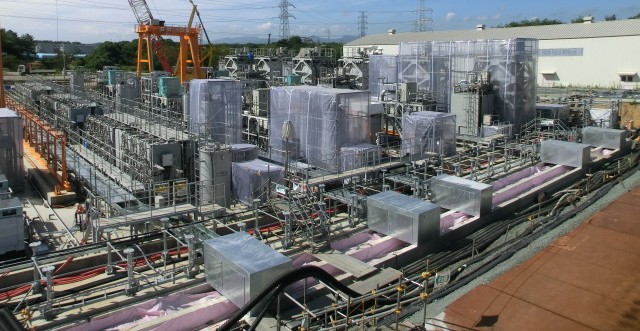
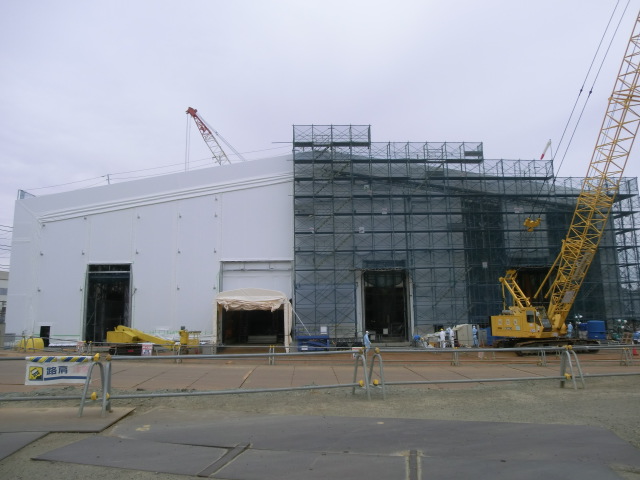
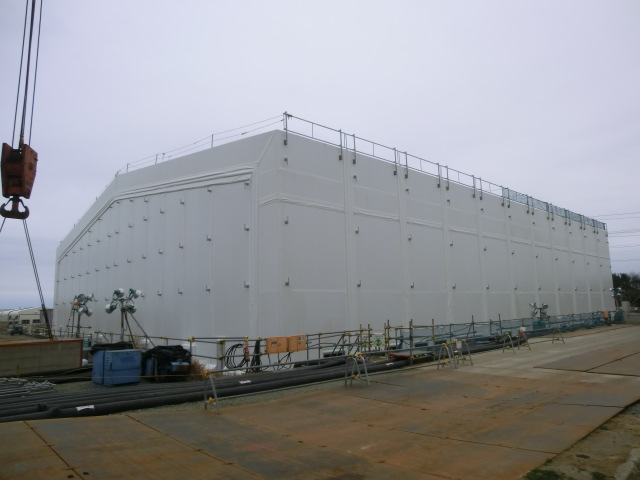
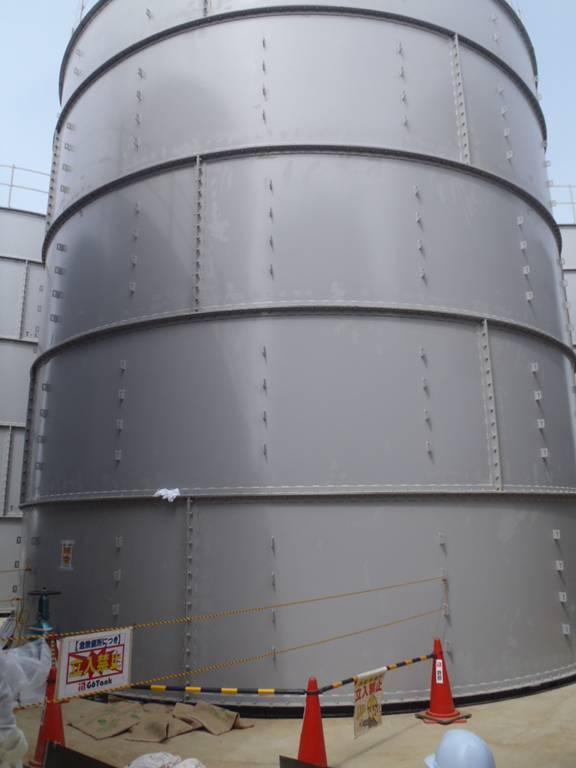
Uh oh. After paying Toshiba and Kajima (construction) a ton of money to build a huge system (see the photos below) that is not even in full operation yet, they need a new one because the current one produces too much waste.
What I don't understand is that they, particularly Toshiba who picked EnergySolution's technology, should have known from the very beginning that the current ALPS system would create a large amount of slurry from coprecipitation process, much like the decontamination system by AREVA that use coprecipitation process (AREVA's system was stopped and practically abandoned when too much, highly radioactive slurry was created as the waste, on top of numerous technical problems).
But wait, it is not just about the amount of toxic waste that the existing ALPS is not performing to expectations. It's also about how it removes radionuclides.
From the document at METI, TEPCO/Toshiba(/Hitachi-GE) thought radionuclides, particularly cesium and strontium, existed in the contaminated water as "ions" at the time when the current ALPS system was being designed. However, it turns out that the nuclides exist in the contaminated water mostly as "colloids" and "particulates", not "ions". The existing ALPS system is fitted with ion-exchange media from the Finnish company Fortum. Uh Oh.

More than 93% of cesium-137 in the post-RO (reverse osmosis for desalination) waste water exists as "colloids", less than 2% as "ions" and 5% as "particulates".
59% of all beta (strontium-89, -90, Y-90) exists as "colloids", 37% as "particulates", and 4% as "ions".
The existing absorption materials (in vessels) can only remove these nuclides in "ion" form. The nuclides in "colloids" and "particulates" are removed by the pretreatment process, thus the large amount of slurry waste.
So now, after two full years of building and testing the ALPS, it is obsolete even before it reaches full operation.
At least this was on TEPCO's own money, not the taxpayers' money, though I feel sorry for the workers made to work in a high-radiation environment.
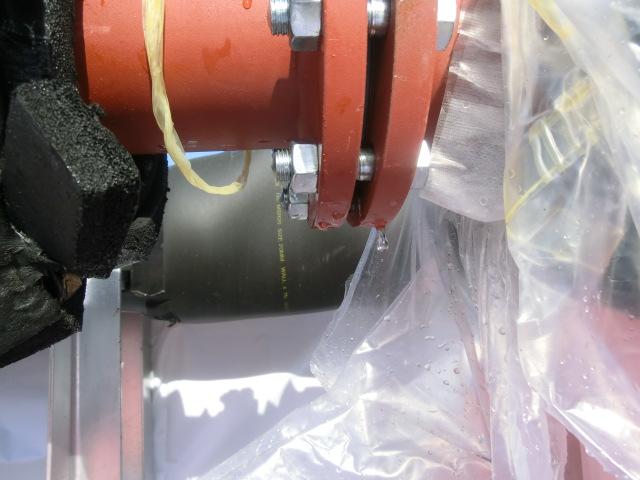
ALPS (photo taken on September 16, 2012):
housed in :









 30-Day free trial by following the link.
 Tokyo Time
![[Most Recent Quotes from www.kitco.com]](http://www.kitconet.com/charts/metals/gold/t24_au_en_usoz_2.gif)


