Sunday, March 18, 2012

Google's "Memories for the Future" Project Has Before-and-After Streetviews of Japan's Earthquake/Tsunami Affected Areas

English: http://www.miraikioku.com/streetview/en/

Japanese: http://www.miraikioku.com/streetview/after

People can also contribute the photos and videos, or ask for photos and videos of pre-earthquake/tsunami Japan. The page is only in Japanese: http://www.miraikioku.com/

Goshi Hosono Short on Facts on Debris-Peddling Commercial

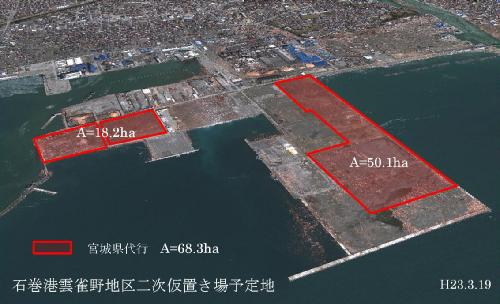
The Ministry of the Environment has a 2-minute-long commercial featuring Minister Goshi Hosono, aka disaster debris pusher, in front of the mountains of disaster debris in Ishinomaki City in Miyagi Prefecture.

Just about every single sentence he utters is short on facts and accuracy and full of misrepresentation.

From the Ministry of the Environment commercial below, translated and captioned by Tokyo Brown Tabby:

Hosono: As you can see, this is a huge mountain of debris.

Fact: Debris is actually neatly piled up, because it has been removed from the immediate coastal areas hit by the tsunami and is being stored there, as you can see at 0:26 into the video. But the disaster debris wide-area processing is being sold on the perception that the tsunami debris is still littering the streets and people's backyards after one year.

Hosono: Ishinomaki City cannot complete the disposal alone.

Fact: In fact, the city can. The debris are being stored on the landfill on the bay, not bothering anyone nearby. The city has budgeted nearly 200 billion yen (US$2.4 billion) to do the debris disposal, building 5 new incineration plants on the landfill and in the process creating 1,250 jobs. None of the sister cities of Ishinomaki City has been asked to take the debris.

Hosono: The debris is the remnants of people's lives.

Fact: Yes it is. So? Is that the reason to spread it all over Japan? Wouldn't the pieces of lives of people in Ishinomaki want to remain in Ishinomaki?

Hosono: There are people in the city who are discouraged to see the debris in front of them...

Fact: The debris is on the landfill, removed from the areas where people live and work. It is not in front of them.

Hosono: Please assist the nation-wide disposal...

Fact: Ishinomaki has 6 million tonnes of debris. Of that, 10 to 20% of the debris is what the Ministry of the Environment wants to spread to the rest of Japan because "Ishinomaki cannot do it alone". It doesn't add up. It may lengthen the time it takes to dispose of the debris by 20% at most. It may take 6 years instead of 5. Or 12 years instead of 10. It doesn't seem like such a vast difference.

Hosono: See, we measure radiation ... (using a survey meter that measures only gamma ray radiation)

Fact: You cannot measure the contamination on the debris by a survey meter unless the contamination is in the order of tens of thousands of becquerels per kilogram.

Hosono: I ask your cooperation of nation-wide disposal of safe debris...

Fact: No one trusts the "safety" standards of the national government, particularly those set by the Ministry of the Environment.

And the ultimate fact is that this wide-area disposal of the disaster debris was decided in May when the radiation contamination was thought (by the government) to be occurring in Fukushima Prefecture alone. Everything was set to go, with the heavy support from the big businesses, when radioactive materials started to be detected outside Fukushima. So what do you do when the situation changes? As far as the Japanese government goes (as with most governments in the world), keep pushing no matter what. Big money is at stake.

Kyodo News: 32% of School Children in Fukushima Worry About Radiation, 61% Don't

From Kyodo News (3/18/2012):

東京電力福島第1原発事故で避難し、福島県内にとどまる小学5年と中学2年への共同通信アンケートで、回答した225人のうち72人(32%)が「事故後初めて放射線を気にしながら生活している」ことが18日、分かった。

Kyodo News conducted the poll of 5th graders in elementary schools and 2nd graders in junior high schools who evacuated their homes after the Fukushima I Nuclear Power Plant accident but remained inside Fukushima Prefecture. Of 225 students who responded, 72 students (32%) were "worried about radiation for the first time [in their lives], after the nuclear accident happened), it was revealed on March 18.

 「事故前から気になっていた」のは3人(1%)。一方で、今でも放射線を「気にしていない」のは138人(61%)に上り、大人の世代によってつくられた「安全神話」の中で、原発が身近な子どもの複雑な心中が浮き彫りになった。

3 students (1%) had worried about radiation even before the accident. On the other hand, 138 students (61%) "were not worried about radiation" even after the accident. It shows the mixed feeling that children have [toward radiation] in the "safety myth" created by their parents' and grandparents' generations, even as they lived near the nuclear power plant.

 県外避難への思いとして「仕方がない」(34%)、「戻ってきてほしい」(31%)がほぼ同じ。

[I'm not sure what Kyodo means with the last sentence, as it doesn't sense. So the following is my interpretation of what Kyodo may have meant.]

As to their fellow students who evacuated to outside Fukushima Prefecture, 34% say they "understand", and 31% say they "want them back".

Kyodo News calls it "mixed feeling", but looking at the numbers it doesn't seem mixed. Nearly twice as many students say they don't care. There is no poll to compare that was taken prior to the accident, so there is no knowing what percentage of students had feared radiation prior to the accident.

From what I hear, people who have remained inside Fukushima are doubling down, so to speak, more than ever determined to live a normal (i.e. pre-nuke accident) life.

Dr. Shunichi Yamashita seems to have succeeded in securing his research subjects.

If you haven't seen the BBC documentary on children in Fukushima, please do so. The title of the documentary is "Japan's Children of the Tsunami". There may be a copy still somewhere on Youtube or Dailymotion.

It's not the matter of whether they worry about radiation or not. It is about whether it is right for any adults to keep these children, looking healthy and well-adjusted for the most part in the BBC documentary, trapped in Fukushima.

Saturday, March 17, 2012

Australia Is "Ideal" for Contaminated Soil and Debris from #Fukushima

Dr. Haruki Madarame, who is resigning as the head of the Nuclear Safety Commission, is remembered by me as having spoke the universal truth when he said "It's all about money, isn't it?" when it comes to nuclear waste.

Here's an ex-minister in Australia, which has been spared with any contamination from Fukushima I Nuke Plant accident, wanting to bring in the contaminated soil and debris from Fukushima to Australia and stored it for the Japanese, in return for the future sales of uranium to Japan and more funding from Japan for the construction projects in western Australia.

The former sports minister now works for a law firm in Tokyo. He also happens to be the chairman of a junior miner. Talk about conflict of interest. And he is proposing to put the contaminated soil and debris on western and southern Australian deserts.

(On second thoughts... It may be better than having the debris burned all over Japan...)

From The Australian (3/15/2012):

Australia 'ideal' for Fukushima soil

Rick Wallace

A HOWARD government minister has entered the nuclear-waste debate by arguing that Australia should accept radioactive debris from the Fukushima nuclear disaster.

Former sports minister Andrew Thomson said the move would help break a deadlock in Japan that is jeopardising recovery efforts from last year's March 11 tsunami and nuclear meltdown.

His comments come after the Senate's approval of the Muckaty Station site in Northern Territory as a nuclear waste dump -- and new Foreign Minister Bob Carr's remarks backing atomic energy in Australia -- reignited debate on the issue.

Because of a last-minute Greens amendment, the Muckaty site cannot accept waste from abroad, but Mr Thomson said the vast deserts of Western Australia and South Australia were perfect spots for the Fukushima waste.

In Japan, no prefecture has agreed to house the hundreds of thousands of tonnes of waste from the world's second-worst nuclear tragedy and it is piling up in temporary storage sites obstructing reconstruction efforts.

Most of the waste consists of contaminated soil and debris removed during clean-up efforts from areas just outside the 20km exclusion zone around the plant and is only mildly radioactive.

Mr Thomson, who now works for law firm Minter Ellison in Tokyo, said Australia could offer "ideal places to dispose of this debris and store it safely".

"This stuff is only mildly radioactive, it's not going to harm anyone, but the last place you want to store it is Japan -- it's just too crowded," he said.

"Western Australia has benefited greatly from Japanese demand for iron ore and base metals and South Australia is launching a major uranium export industry. It's only fair and reasonable if we propose to sell more uranium to Japan in future that we should offer such help now when Japan really needs it."

Mr Thomson told The Australian his proposal related only to the debris, not the spent fuel or other nuclear waste from Fukushima or any other plant.

The former minister said that, in return for storing the Fukushima waste, Australia should receive more funding from Japan to ensure the construction of the troubled Oakajee port and rail project in WA, thereby unlocking the mid-west iron region.

The former minister and chairman of junior miner Athena Resources acknowledged he had a vested interest as Athena may one day use the port, which has hit problems with cost overruns but may be rescued by Mitsubishi.

"Most of the waste consists of contaminated soil and debris removed during clean-up efforts from areas just outside the 20km exclusion zone around the plant and is only mildly radioactive", writes Mr. Rick Wallace.

Well, since when has the soil with over 3 million becquerels/kg of radioactive cesium ("black dust" of Minami Soma), or even the soil in Watari District in Fukushima City with more than 200,000 becquerels/kg of radioactive cesium become "only mildly radioactive"?


(H/T anon reader who's fleeing Japan to Australia)

Ministry of the Environment Ad on the Train Featuring Mountains of Disaster Debris

This is what the train commuters in Japan have to look at, paid for by the taxpayers whether they like it or not. Its aim is to appeal to the guilty conscience of the Japanese who dare refuse to help out.

What the Ministry and Goshi Hosono don't tell you is that there aren't many people living right next to these mountains of debris in the disaster affected areas in Miyagi and Iwate. There are a few temporary storage locations where there are schools right next to them (I don't know what they were thinking), but they seem to be the exceptions. They don't tell you either that many local municipalities want the debris to remain there.

But the Ministry of the Environment won't bother to tell you that.


Someone on Twitter made a good observation. In Japanese, the Ministry of the Environment is "環境省". The first two characters mean "environment", and the last character means "ministry". However, the last character also mean "to eliminate". So, the Ministry of the Environment is to eliminate the environment. Kind of fitting.

Friday, March 16, 2012

Moment of Truth from Goshi Hosono: "There Will Be No Baseless Rumor When Disaster Debris Spreads All Over Japan"

Minister of the Environment Goshi Hosono, aka radioactive tsunami/earthquake debris pusher, divulged his plan to eradicate "baseless rumors" aka radiation contamination. It's not appealing to WTO as his boss did, but as many have speculated already, his plan is to spread the debris and burning and burying all over Japan so that no one particular location is "rumored" to have radiation contamination.

I am fearful of a person like him, but I am equally fearful of the governor of Kyoto who was quite satisfied with Hosono's answer, as you can read in the NHK News article below.

From the NHK News already disappeared from the NHK website after less than a week but archived by this blog (3/9/2011):

がれきによる風評被害“国が対応”

Baseless rumors from the disaster debris will be dealt with "by the national government"

東日本大震災で発生したがれきを被災地以外で受け入れる広域処理が進まないなか、細野環境大臣は、全国知事会の会長を務める京都府の山田知事と会談し、がれきを受け入れた結果、仮に農作物の売れ行きが落ちるなど風評被害が出た場合には、国が責任を持って対応する考えを示しました。

As the wide-area disposal of disaster debris from March 11, 2011 earthquake/tsunami is facing strong resistance outside the disaster affected areas, Minister of the Environment Hosono met with Governor Yamada of Kyoto, who is the head of the National Governors' Association. Hosono told the governor that the national government would be responsible for dealing with the "baseless rumors" as the result of accepting the debris, such as dropping sales of farm produce.

9日の会談は、がれきの受け入れを検討する自治体が増えている一方で、放射性物質への不安などで、実際の受け入れには慎重な自治体が多いことから、全国知事会の要望で開かれました。

The March 9 meeting was held at the request of the National Council of Governors because there are many municipalities still hesitant to actually accept the debris due to the fear of radioactive materials, even though an increasing number of municipalities are considering accepting.

この中で、知事会の会長を務める京都府の山田知事は、がれきを処理する過程で継続的に放射性物質の濃度を測ることや、農作物の売れ行きが落ちるなど風評被害が出た場合は、補償も含め国が責任を持って対応するよう求めました。

Governor Yamada of Kyoto, who is the head of the National Governors' Association, demanded that the national government be responsible for constantly monitoring the radioactive materials during the processing of the debris and for compensating for the loss in sales of farm produce because of the baseless rumors.

これに対し、細野環境大臣は「不安を除くには放射性物質の測定や情報公開は前提だし、住民に直接確認してもらうことが近道だと思っている」と答えました。

Minister Hosono replied, "To remove the fear, measurement of radioactive materials and information disclosure have to be done so that the residents can see for themselves."

また、風評被害については「全国で受け入れが広がれば乗り越えられると思っている。万が一、損害が出た場合は、国が責任を持って対応する」と述べ、具体的な対応を検討する考えを示しました。

As to the damage from the baseless rumors, Hosono said, "I believe if the debris is widely accepted all over Japan, we can overcome the baseless rumors. If there is a damage, the national government will be responsible for dealing with it", indicating the government will have a detailed response to counter the damage [or baseless rumors].

山田知事は、会談のあと「風評被害への対応などについて前向きなことばをもらった。懇談の内容を各知事に知らせ、積極的に行動するよう要請したい」と話していました。

After the meeting, Governor Yamada said, "I got a forward-looking, positive response to the baseless rumors [from Minister Hosono]. I will tell the governors about what we talked about, and request them to take aggressive action [toward accepting the debris]."

As the readers of this blog have known from very early on, a baseless rumor since March 11, 2011 means anything that actually has radioactive materials of Fukushima I Nuke Plant origin. After one year of using the word, many producers in Japan, particularly those in Fukushima, don't seem to even know what it means any more. They use the word whenever the consumers don't choose products from certain regions (Fukushima, Miyagi, Iwate, Ibaraki, Tochigi, Gunma, Chiba, among others), and call it a "discrimination" (like Ms. Lauper).

If the debris is spread all over Japan and burned and buried all over Japan, there will be no ground for "baseless rumors" (aka radioactive materials) because everywhere will then be contaminated. This is exactly what people who are against the wide-area disposal of disaster debris have been saying, and now it is confirmed by Hosono. Some parts will be far less contaminated than others, but become contaminated nonetheless which could be totally avoided by not bringing in the debris and disposing it.

The nuclear power power plants were peddled in the similar way by the Japanese government all over Japan. Don't worry, the government will take care of it if an accident should happen. But don't worry the accident will never happen because a nuke plant is safe. Here, take some subsidy, just for considering a nuke plant in your town. And don't worry, we will build so many reactors all over Japan so that the risk is equally shared by everyone in Japan. After all, we don't call this a national policy for nothing.

We know how that has turned out.

Only this time, instead of 54 nuclear reactors, there will be 1600 incinerators. Instead of risk sharing (that an accident may or may not happen), there will be radioactive materials introduced in the areas that have been largely spared of radiation contamination.

But PM Noda has already said, "There will be no individual responsible for the accident." It will be the same for the aftermath of the accident.

Professor Yukio Hayakawa Takes a Walk in Fukushima City, 3/16/2012

armed with 4 different radiation survey meters. One of the reasons he went to Fukushima was apparently to test the survey meters and compare the readings. The entire walk took 7 hours yesterday, says Hayakawa in his tweet, nothing compared to mountain climbing. (He's a volcanologist.)

4.164 microsieverts/hour on the "black dust" - roadside sediment of soil and organic materials. (It is not just in Minami Soma City, where the highest radioactive cesium density in the "black dust" so far is 3.43 million becquerels/kg.)

Over 10 microsieverts/hour (all his survey meters went overscale) at the rain gutter.

2.3 microsieverts/hour on the lawn in front of the City Hall, 1.5 microsievert/hour 1 meter off the lawn.

For detailed locations and measurements, see his blog post (in Japanese).

Fukushima City at EveryTrail

Video of #Fukushima I Nuke Plant Reactor 4 SFP

More debris than the previous video one month ago using the camera showed, and water is murkier.

TEPCO tried the camera on March 15, but the visibility was too low (that's what they said anyway). So they used the ROV on March 16 and tried again.

I wonder what those floating white particles are. They were certainly not there as much in February.


Jiji Tsushin reports (3/16/2012) that TEPCO plans to vacuum clean the small debris on top of the fuel bundle so that they can proceed with removing the fuel bundles from the SFP.

One Municipality After Another Says YES to Disaster Debris Contaminated with Radioactive Materials

The likes of Mr. Blustein must be so happy to see the "kizuna" (it's actually the rope that ties down the cattle or domestic animals) restored at least among petty politicians and bureaucrats in cities, towns, and villages as far away as Okinawa and Hokkaido, even as the "selfish" and "irrational" residents who will have to pay taxes to have the debris burn in their midst are against it.

In anywhere else in the world, these debris would be considered "low-level radioactive waste" and would be strictly controlled.

The municipalities that suddenly "capitulated" this week, particularly on March 16 when Prime Minister Noda formally issued the request to accept the debris to municipalities who haven't said yes to the debris, are too numerous to list. Even the last true "opposition" since the March 11, 2011 disaster, Japanese Communist Party, sided with the majority demanding the municipal governments of Niigata City in Niigata Prefecture and Kiryu City in Gunma Prefecture to accept the disaster debris from Miyagi and Iwate.

Money really does speak. Hop on the bandwagon. Local politicians have the local waste management industry lobby to please.

Here are some of the latest "yes" to radioactive tsunami/earthquake debris:

Hokkaido:
Okushiri-cho (island off the coast of southwestern Hokkaido, in Japan Sea)

Okinawa:
Onna-son (in the middle of Okinawa Island, one of the most popular tourist destinations in Okinawa)

Niigata:
Niigata City (whose vice mayor is a career bureaucrat from the Ministry of Internal Affairs and Communications)
(Niigata already has 4 other cities eagerly waiting for the debris, even though the governor of Niigata Prefecture is dead set against receiving the debris in Niigata.)

Gunma:
Kiryu City

Chiba:
Ichikawa City (right outside Tokyo)

Hiroshima:
Kure City (famous for really good oysters and lemon)
Hiroshima City

Mie:
Taki-cho (green tea, Matsuzaka beef)

Now what? I wonder what the residents of Japan are going to do now, if anything at all. They have protested, packed the "explanation" meetings which were nothing but a sham to keep up the appearance of "democracy", collected signatures to oppose acceptance and tried educating the fellow citizens and a few politicians who would listen. The politicians and bureaucrats and industry will just do it anyway.

Japan's PM Noda Demands WTO Do Something About "Baseless Rumors"

What would WTO do? Force countries to buy Japanese produce to "share the pain"?

From Jiji Tsushin (3/15/2012):

WTOに風評被害阻止を要請=首相

Prime Minister requests WTO to block "baseless rumors"

 野田佳彦首相は15日、首相官邸で世界貿易機関(WTO)のラミー事務局長と会談した。首相は、東京電力福島第1原発事故に伴い、日本食品の厳しい輸入制限を行う国が依然多いと指摘。WTOに対し、ルールにのっとった公正な取り扱いを呼び掛けるよう要請した。

Prime Minister Yoshihiko Noda met with Mr. Pascal Lamy, Director-General of the World Trade Organization (WTO) at the Prime Minister's Official Residence. The prime minister pointed out that there were still many countries with import restriction on food items from Japan after the Fukushima I Nuclear Power Plant accident, and requested that WTO call for a fair treatment based on the rules.

 これに対し、ラミー事務局長は「WTOを積極的に活用してほしい。プロセスなどに問題があれば、事務局長としても役割を果たしたい」と応じた。

Mr. Lamy said to the prime minister, "Please feel free to use WTO. If there are problems in the process I will intervene as Director-General. "

WTO is all but dead, with the contentious Doha Round going nowhere for 10 years.

And Expedition to #Fukushima Reactor 3 Torus Room, 3/14/2012

Expedition to #Fukushima Reactor 2 Torus Room, 3/14/2012

Blurry, dark video taken on March 14 and released by TEPCO on March 15, 2012.

Thursday, March 15, 2012

Virtual Nuke Plant Tour of AKW Zwentendorf - the atomic power plant that never went into operation" in Austria

From the blog reader Atomfritz:

Look inside a Mark-I torus:

1. Go to http://zwentendorf.com
2. Click "Rundgang" in the upper bar on the page
3. Flash window pops up, click link "Zum virtuellen 360 Rundgang" in middle of window
4. Click at "Kondensationskammer" (=suppression chamber) in the right menu
5. Drag mouse to change view

This is an authentic S/C of the Fukushima type like in Reactor 2-4.

Images taken in the safest NPP of the world.
Zwentendorf NPP in Austria, never got critical due to a referendum.

Other panoramic views available via right menu.


Japan, the "Land of the Setting Sun"

Why? Because of the demographics.

From the article on March 13, 2012 by Patrick J. Buchanan:

Land of the setting sun

Sunday was the first anniversary of the 9.0 earthquake off the east coast of Japan that produced the 45-foot-high tidal wave that hit Fukushima Prefecture.

Twenty thousand perished. Hundreds of thousands were driven from their homes when a nuclear plant swept by the tsunami exploded, spewing radiation for miles.

Only two of Japan's 54 nuclear plants are now operating. The rest have shut down for inspections. Many may never start up again.

In loss of life, that earthquake-tsunami was seven times as lethal as 9/11. But recovery from that greatest disaster in decades is not the gravest problem facing Japan.

The gravest problem facing the Land of the Rising Sun is that it is dying. The sun that set on the Japanese Empire in 1945 has begun to set on the Japanese nation.

A week before the anniversary of 3/11, buried in a story about Prime Minister Yoshihiko Noda's effort to rally support for a doubling of the 5 percent consumption tax, to preserve Japan's social security system, was this startling statement:

"We're faced with an aging society and a declining birth rate unprecedented in the history of mankind."

What makes this admission remarkable is that the Japanese are not given to hyperbole, and the prime minister's statement is rooted in numbers that may fairly be called a demography of death.

Deep inside the story on the Noda tax proposal was this item: "By 2055, according to government data, 40 percent of the country's population will be 65 or older. Just 8 percent will be younger than 15."

If accurate, these numbers reveal a deepening of the crisis of demography facing Japan since the population projections of the United Nations came out in 2008.

According to those U.N. figures, where Japan's population would reach 127 million in 2010, the number of Japanese will shrink to just above 101 million by 2050. Every year between now and 2050, the number of deaths over births in Japan will average two-thirds of a million, with the population shrinkage accelerating each decade.

The median age of a Japanese, 22 years old in 1950, reached 45 in 2010 and will exceed 55 by midcentury. The oldest people on the planet are getting older.

What kind of future can there be for a nation, even one with the high quality human capital of Japan, when there are two Japanese 65 years old or older for every Japanese 24 years of age or younger?

When Japan became the world's No. 2 economy in 1960, seizing the crown from Germany to hold for 40 years, Japanese 24 years old and younger outnumbered the population 65 or older eight to one.

Japan's fertility rate, the number of births per woman, has been below zero population growth for 40 years and has plunged to where Japanese woman are having only two-thirds of the children needed to replace the present population.

Not only has the birth rate per woman fallen, the percentage of Japanese women aged 15-49 -- 56 percent in the 1960s -- is expected to plunge to 31 by midcentury.

Every new Japanese generation is one-third to one-half smaller than the one that came before. Japan's high school graduation class has fallen by more than one-third in just 30 years.

Nippon seems to be collectively committing national hara-kiri.

How did this come about? The means are not in dispute.

When millions of Japanese soldiers returned from their dead empire to start families, there was a population explosion. Under the U.S. occupation, Tokyo swiftly legalized abortion, and the nation embraced birth control. Japan did so before Europe, but Europe followed. Now all face demographic death, with Japan leading the way.

This has already begun to affect her national economy.

Japan's growth rate in the 1960s was 10 percent a year. In the 1970s, it was 5 percent a year. In the 1980s, it was 4 percent -- still a healthy growth rate for a mature economy.

But in the 1990s, the "lost decade," Japan's growth fell to 1.8 percent a year, and that anemic rate has continued into this century.

Japan's expenditures during the lost decade to reignite the fire sent the national debt soaring above 200 percent of gross domestic product, eclipsing the debt-to-GDP ratios of Greece and Italy today.

In 2011, for the first time in 30 years, Japan ran a trade deficit. January's figure, $19 billion for the month, was a record.

The abandonment of nuclear power has forced Japan to substitute imported coal and liquified natural gas to produce her energy.

During the decade of "Japan, Inc.," in 1988, Nippon boasted of being home to eight of the world's top 20 corporations in terms of capital investment. Now she is home to none, and only six of the top 100.

Yet when Prime Minister Noda said what was happening in Japan was "unprecedented in the history of mankind," he was mistaken.

This also happened to the greatest empire of them all long ago.

NHK reports that the average size of a household in Tokyo has dipped below 2. A "household" doesn't even consist of two people any more in Tokyo.

#Radioactive Wild Rabbit in Yamagata Prefecture

A wild rabbit caught in Yonezawa City in Yamagata Prefecture was found with 560 becquerels/kg of radioactive cesium, exceeding the national provisional limit of 500 becquerels/kg (until April 1).

City officials think the rabbit migrated from Fukushima Prefecture.

From Yomiuri Shinbun medical section (3/15/2012):

野ウサギ 規制超すセシウム…山形 野生動物からは県内初

A wild rabbit found with cesium exceeding the safety limit in Yamagata, the first in the prefecture in wild animals

 山形県は14日、米沢市で捕獲された野ウサギから、国の暫定規制値(1キロ・グラム当たり500ベクレル)を超える1キロ・グラム当たり560ベクレルの放射性セシウムが検出されたと発表した。県内の野性動物から基準を超える放射性物質が検出されたのは初めて。県は、県内各地の猟友会などに対し、当分の間、野ウサギを食べることを自粛するよう通知した。

Yamagata Prefecture announced on March 14 that 560 becquerels/kg of radioactive cesium was found in a wild rabbit caught in Yonezawa City. This is the first time that radioactive materials exceeding the safety limit (500 becquerels/kg) were found in wild animals in the prefecture. The prefectural government has notified the hunters' associations in the prefecture to voluntarily refrain from eating the meat of wild rabbits until further notice.

 県みどり自然課によると、野ウサギは11日、同市内の福島県境付近で捕獲され、県が放射性物質検査を実施した。同課では、「ウサギが福島県側から移動してきた可能性がある」と説明している。

According to the prefectural government, the wild rabbit was caught near the border of Fukushima Prefecture on March 11, and the government conducted the test for radioactive materials. The officials explains that it is possible that the rabbit migrated from Fukushima Prefecture.

 県は昨年秋以降、キジやツキノワグマなど計25体の野性動物について放射性物質検査を実施してきたが、いずれも放射性セシウムの濃度は、国の暫定規制値以下だった。

The prefectural government has conducted the tests for radioactive materials since last fall on 25 wild animals including pheasants and Japanese bears, but the density of radioactive cesium has been below the national provisional limit.

2 Other Reasons Why Municipalities in Japan Want Disaster Debris

The first and foremost is a fat subsidy they will get from the national government (which is beyond broke, so it will tax the citizens today and for the foreseeable future) for saying yes to having the disaster debris contaminated with radioactive materials and toxic chemicals shipped to their cities and towns to burn and bury the resulting ashes.

But it is slowly emerging that there are equally short-term, other reasons these local politicians and bureaucrats want the contaminated debris.

  1. The incinerators, if they are state-of-the-art, need more garbage even to operate, so the disaster debris is god-sent;

  2. The incinerators, if not state-of-the-art, badly need upgrading or even building new ones (or so they say), and by saying yes to the debris the municipalities will get the subsidy from the national government for the upgrade or building new ones.

1. State-of-the-art incinerators cannot operate without enough garbage

This has been known among people who has been following the disaster debris processing, but now even the major tabloid magazine picked up.

Here's from Shukan Post Seven (3/14/2012):

...政府は瓦礫を全国の自治体に運んで焼却する「広域処理」を掲げているが、各地で「放射能を持ってくるな」と住民の反対運動が広がり、野田首相はついに「引き受け自治体にカネを出す」とまで言い出した。

The government wants to do the "wide-area disposal" by bringing the disaster debris to municipalities all over Japan and burn it, but the opposition by the local residents has spread who tell their governments "Don't bring the radiation." Desperate, Prime Minister Noda is saying "We'll give you money if you take the debris" to the municipal governments.

 新聞やテレビはその状況を、「瓦礫の押し付け合い」「住民エゴ」と報じているが、実態はまるで違う。水面下では、瓦礫は「カネの成る木」となり、「奪い合い」が起きているのだ。

Newspapers and TV report it as "forcing the debris" or "egotism of the residents", but the reality is totally different. Below the surface, disaster debris is money, and the parties involved are competing with each other to get the debris.

 意外に思えるかもしれないが、日本は「ゴミ不足」の状態にある。全国のゴミ焼却施設は約1600か所。全世界の7割の焼却場が集中している。ある自治体の清掃局担当者が語る。

You may be surprised to hear, but Japan "lacks garbage". There are 1,600 garbage incineration facilities in Japan, which is home to 70% of incineration facilities in the world. A person in charge of municipal waste management says:

「焼却場の多くは1基数百億円で建設された最新鋭施設で、有害なダイオキシンや煙を外部に出さないようにできている。だが、そうした焼却場には“弱点”がある。稼働させるには、24時間、一定の温度で燃やし続けなければならないのです。そのため、燃料のゴミが足りなくなっている」

"Most of these incineration plants are state-of-the-art facilities that cost tens of billions of yen [hundreds of millions of US dollars] per plant. They do not let out toxic substances like dioxin and smoke. But there is a week point in these plants. In order to operate, the incinerators needs to burn at a certain temperature for 24 hours. So there is a lack of fuel, that is, garbage."

 そこに東日本大震災で大量の瓦礫が生まれた。大半は倒壊した家屋の木クズなど可燃ゴミだ。

Then the March 11, 2011 generated a large amount of debris. Most of the debris is flammable, such as wood debris from the houses that collapsed.

「各自治体の清掃部門は瓦礫が喉から手が出るほど欲しい。震災瓦礫の輸送費は国が丸抱えで補助金もつく。これほど都合のいい燃料はありません」(同前)

"Waste management divisions of municipalities want disaster debris very badly. The cost to transport the debris will all be paid by the national government, and it will come with a subsidy. There is no better fuel than the disaster debris."

環境省は震災直後の昨年5月、第1次補正予算で3500億円の瓦礫処理予算を組み、広域処理で全国に輸送する方針を決めて受け入れ先を募集した。すると500か所の自治体や企業が名乗りをあげ、なんと沖縄県も受け入れを表明した。

Last May, right after the disaster, the Ministry of the Environment set the budget for disaster debris disposal for 350 billion yen [US$4.16 billion] in the 1st supplementary budget, and decided on the wide-area disposal by shipping the debris all over Japan. 500 municipalities and businesses have said yes to the debris, including Okinawa Prefecture.

 東北から沖縄まで瓦礫を海上輸送するとなるととんでもない運搬費用がかかる。瓦礫の広域処理で全国にゴミ輸送ネットワーク利権を張りめぐらそうというのが環境省の狙いで、産廃業界は特需に沸いている。

To transport the debris from Tohoku to Okinawa by sea would cost a fortune. The Ministry of the Environment's true aim is to build a network of concessions on garbage transportation by wide-area disposal of disaster debris. The industrial waste processing industry is booming with this special procurement.

For example, the state-of-the art incinerator (melting furnace) in Shimada City in Shizuoka Prefecture (where the mayor single-handedly decided he would just burn the debris against the strong opposition from the residents) cannot operate unless it is at least 60% filled with garbage and debris.

Why are there so many state-of-the-art incinerators in a country with fast-declining population? My guess is "the Lost Decade or Two" in Japan (going into the 3rd decade...) - economic stagnation after the real estate bubble made much, much worse by the government's incessant Keynesian intervention of creating useless public work projects. That money went to roads, bridges, river embankment, breakwater, big construction projects like half-empty Minato Mirai in Yokohama or small construction projects like municipal incineration plants.

2. Aging incinerators need upgrade or rebuild, and now is the chance to have it funded by the national government by accepting the debris

The case in point is Takeo City in Saga Prefecture on the island of Kyushu, as far away you can get (with the exception of Okinawa) from radioactive materials from Fukushima I Nuke Plant.

42-year-old Keisuke Hiwatashi, the mayor of the city and a former bureaucrat at the Ministry of Internal Affairs and Communications, was all for accepting the debris last November, but the reaction from the residents when they knew about it (mostly via the Internet) was fast and furious, and the mayor had to table the idea.

But now, the City Assembly just passed the resolution demanding the city to accept the debris, with only the Communist Party assemblymen dissented. The ostensible reason is of course "to help the recovery of Tohoku", the "kizuna" spirit that Mr. Blustein laments sorely lacking in the selfish Japanese in the post-disaster Japan.

But I think I've found the more likely reason. I looked up what kind of facility the city has for incineration. After some digging, I found that the disaster debris would be burned at "Kito Clean Center". So I googled "Kito Clean Center", and up popped the newsletter from 2007 by the Kito Wide Area Municipalities Union in Takeo City. In it, the general manager of the union says:

現在の杵藤クリーンセンターは焼却施設、粗大ごみ処理施設および埋立処分場を備え平成元年4月から稼動し、途中平成13年度にダイオキシン等の削減を図るための排ガス高度処理施設整備工事で施設の改良を行い今日まで運転をおこなっておりますが、施設は設置後19年を迎え、いたる個所で老朽化による改修修繕費に莫大な経費が必要になっております。そのため新たな施設の建設が必要になり...

The current Kito Clean Center started operation in April of 1988 with the incineration facility, oversize garbage processing facility, and a landfill. In 2001, the facility was upgraded with the installation of exhaust gas treatment facility in order to reduce the emission of dioxin. It's been 19 years since the center started operation, and the aging facilities needs constant repairs that cost a large amount of money. So we will need to build a new facility...

On checking the semi-annual newsletters, there is no mention of a new facility being build.

On March 4, Prime Minister Noda said his government would pay the municipalities for expanding or building the disposal sites. On March 5, Minister of the Environment Goshi Hosono promised that the national government will compensate for the "shortened" life of the incinerators and disposal sites because of processing the disaster debris starting the new fiscal 2012 (in April); compensation amount will be determined by the weight of the disaster debris that the municipalities take.

So here's the chance for Takeo City to do the much needed (or so they say) upgrade of their aging incinerator with the national government's money as long as they accept disaster debris contaminated with toxic substances and radioactive materials. Clearly, the bigger the amount of disaster debris they take in the better.

What a country.

Wednesday, March 14, 2012

First Photos of the Torus of Reactor 2 at #Fukushima I Nuke Plant after the Accident, No Discernible Damage

from little they saw.

6 TEPCO workers entered the basements (mezzanine floor) of Reactors 2 and 3 buildings on March 14 to try to survey the damage in the Suppression Chambers. Max radiation exposure for the workers was 2.87 millisieverts. Expected dose was 10 millisieverts, but they seem to have gotten out of Reactor 3 rather quickly, spending only 8 minutes there as opposed to 20 minutes in Reactor 2.

From what Yomiuri reported (3/14/2012), about Reactor 2's basement:

  • No apparent damage as far as the workers could see;

  • Photos of the Suppression Chamber taken from a small adjacent room (window);

  • Radiation levels in the adjacent rooms were 20 to 35 millisieverts/hour;

  • Radiation levels near the Suppression Chamber were 130 to 160 millisieverts/hour;

  • Water in the 1st floor of the basement;

  • TEPCO will use robots for further survey, as the radiation levels [in the Suppression Chamber] were too high for humans.

Well wasn't that rather obvious that the radiation levels would be rather high? Why didn't TEPCO use Quince or Packbot? (TEPCO needs those swarming flying robots.)

Looking at the photos released by TEPCO, Reactor 2 Suppression Chamber looks more or less undamaged. The workers were supposed to take temperature and humidity measurements as well as radiation levels, but no information released regarding temperature and humidity.

Looking at the photos of Reactor 3 basement, they look highly humid. The workers apparently didn't, or couldn't measure the radiation levels at the door of the Suppression Chamber, like they did in Reactor 2.

From TEPCO's handout for the press in English (3/14/2012):

(Note: Date is wrong. It was March 14. The timeline is wrong. They entered Reactor 3 at 12:40 and exited from Reactor 3 at 12:48.)


The photos of Reactor 2 torus (red colored) taken from the adjacent rooms:

If the Suppression Chamber of Reactor 2 is not broken, where did all the radioactive materials from Reactor 2 come from?

Tuesday, March 13, 2012

Faces of Workers at Fukushima I Nuclear Power Plant

Kazuma Obara is a 26-year-old photo-jouralist who went inside Fukushima I Nuclear Power Plant in August last year. His work has been featured in foreign media including UK's Guardian.

He's holding an exhibition in Osaka right now, on the one-year anniversary of the nuclear accident.

In the video clip below from "Super News Anchor" on March 12, 2012 by Kansai TV, Obara goes to Kawauchi-mura (past 4:50) to speaks with people at a small construction company whose employees are currently working at the plant, laying pipes for the contaminated water. The construction company is located in Kawauchi-mura, within the 30-kilometer radius from the plant. Part of the village is within the 20 kilometer no-entry zone, but that designation will be lifted as early as April.

They say they are doing it for money to feed their families, as all public works have dried up. It doesn't matter. As Obara says, without these people working at Fuku I, whether they do it for money or whether they have to do it to repay the debt, even the semblance of normal life in much of Japan wouldn't be possible.

There are teen-age workers at the plant.

The video is in Japanese, but I post here so that you can look at the faces of Fuku-I workers.

The title of the video says, "Somebody has to do it... True faces of Fukushima I Nuke Plant workers".


Obara's website is here.

Screen shots from the video:


"Why didn't I come here sooner?" he regrets.

#Fukushima I Nuke Plant: Leak from the Pipe at SARRY Looks Like It Was Caused By a Bad Weld

Remember the leak from SARRY in February? TEPCO released the analysis of the pipe that leaked highly radioactive water from the Toshiba's cesium absorption system, and it sure looks like a bad weld, from the photos of inside the pipe.

It is particularly bad on the left side of the rust. The leak occurred BELOW the weld, but the bad weld may have contributed to the rust and corrosion of the pipe.

From TEPCO's Photos for Press, 3/12/2012 (click for bigger image):


Strangely, TEPCO does not blame the weld. The company blames sodium hypochlorite (bleach) which is injected in the water to "prevent the microbially caused clog" (from their document, page 3) to have caused corrosion.

If you're wondering "microbe??", it's because TEPCO mixes the treated water with the filtered river water and inject the water back into the reactor.

TEPCO Is Sending Its Own Employees to Survey the Basements of Reactors 2 and 3 at #Fukushima

Expected radiation exposure for the 30-minute work: 10 millisieverts per person.

The 4 workers (2 each for each reactor, I assume) will measure radiation levels, temperatures and humidity, water level, and take pictures.

The torus (Suppression Chamber) of Reactor 2 is considered to have sustained a damage on March 15, though TEPCO says it was not an explosion. TEPCO and NISA both agree that Reactor 2 has released the most radioactive materials, some of which though may have come from the dry vent.

From TEPCO's handout for the press in English, 3/13/2012:

Field Survey on the semi-basement floor of the reactor building
of Unit 2 and 3 at Fukushima Daiichi Nuclear Power Station

◎Survey Purpose

In order to grasp the leakage route (damaged part) of the reactor cooling water in the torus room*, the inflow part of the groundwater into the torus room and working circumstances in the torus room, we are planning to conduct survey in the torus room in the future. This time we are planning to conduct field survey of the semi-basement floor of Unit 2 and 3 which connects to the torus room as the preliminary survey. (The reactor building of Unit 1 is exempt from this survey because the water level of the accumulated water is higher than semi-basement floor.)
*Torus room: The room that holds large torus-shape suppression chamber which store water for Emergency Core Cooling System. It is located at the bottom of the Primary Containment Vessel and around it.

◎Survey contents (Plan)

・Measurement of air dose, dust density, temperature and humidity and taking pictures on the semi-basement floor of the reactor building
・Confirmation of opening and closing condition of gate of the torus room and measurement of door surface dose
・Confirmation of water level at stairway which connect to the basement floor of the reactor building and any obstacles

◎Working Organization (Plan)

・Survey date: March 14, 2012 12:00~12:30
・Worker: Four TEPCO staffs
・Expected dose: 10 mSv/person
・Place: Northeastern and northwestern corner on the semi-underground floor of the reactor building of Unit 2, northeastern corner on the semi-underground floor of the reactor building of Unit 3


The expected dose of 10 millisieverts is high. TEPCO is using own employees for works at high radiation locations. Probably many of the employees of the affiliate companies have already maxed out on the annual dosage limit and waiting for a reset on April 1.

The worker who tweets from Fuku I said in his tweet from yesterday that there are workers wearing tungsten vests on the operation floor of Reactor 3 building, removing the debris.

Carbon-based workers acting as robots.