Friday, September 7, 2012

#Fukushima I Nuke Plant: Video Inside the Buffer Tank Shows White Particles Floating in the Treated Water, Rust on the Bottom


TEPCO still hasn't identified the cause for the decreased water flow into the reactors (1, 2, and 3), but the company suspects some rust or foreign particles clogging the system somewhere. On September 5, a video camera was submerged into one of the buffer tanks that store the treated water before the water is fed back into the reactors.

White particles floating around, like near the bottom of the ocean. I wonder what they are. TEPCO explains the bubbling seen in the video as "nitrogen".


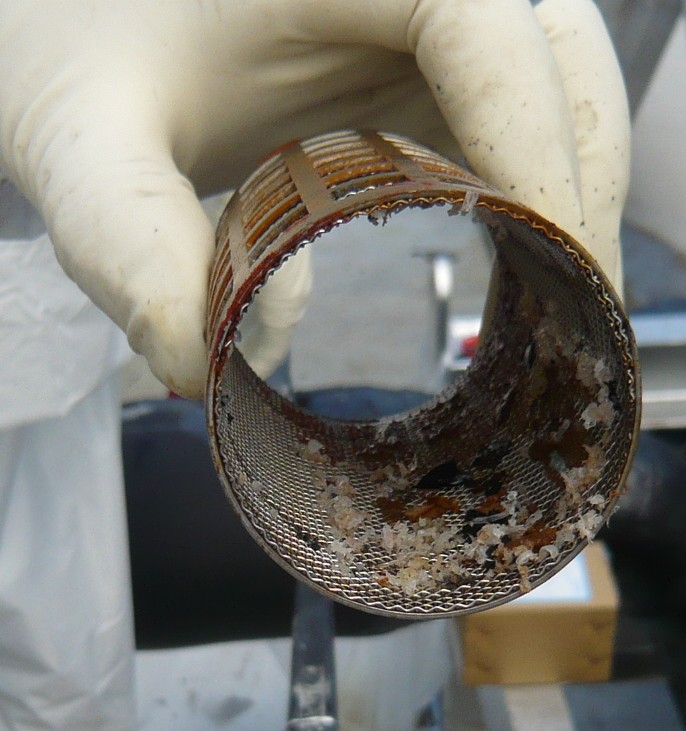
Here's a photo of the strainer of one of the 5 "chiller" machines (to cool water), from TEPCO's 9/5/2012 Photos and Videos page. Rust flakes and curled-up white bits. (It looks like bits of jellyfish...) Click to enlarge.


Thursday, September 6, 2012

Tokyo Governor Shintaro Ishihara: "Decommission Monju? Not a Chance!"


as if he has any say in it. Or maybe he thinks he will shortly. He must be counting on the Liberal Democratic Party becoming the ruling party again, with one of his sons at the helm. (That son was the one who diagnosed people against nuclear power as suffering from hysteria, in July last year.)

As Jiji Tsushin reports, he spoke like the de facto leader of LDP anyway.

From Jiji Tsushin (9/6/2012):

福井でもんじゅ視察=「廃炉はとんでもない」-石原都知事

Tokyo Governor Ishihara visits Monju in Fukui: "Decommissioning? Not a chance."

東京都の石原慎太郎知事は6日、日本原子力研究開発機構の高速増殖炉「もんじゅ」(福井県敦賀市)を視察した。石原知事は視察後、「もんじゅは世界に先駆けた画期的な技術。廃炉なんてとんでもない」と感想を語った。

Governor of Tokyo Shintaro Ishihara visited Monju fast-breeder reactor of Japan Atomic Energy Agency (JAEA) (in Tsuruga City, Fukui Prefecture) on September 6. Governor Ishihara said after the visit, "Monju is the first-in-the-world, epoch-making technology. Not a chance of decommissioning."

 もんじゅは2010年に運転を再開したが、試運転の第1段階終了後、停止したままになっている。石原知事は高速増殖炉研究の必要性を主張している。

Monju restarted operation in 2010, but has stopped ever since the first step of the test run was completed. Governor Ishihara has been a strong proponent of the fast-breeder reactor research. 

一方、政府が尖閣諸島(沖縄県石垣市)の購入で地権者と合意したことについて、石原知事は「所有者が決めて売ればいい。どうせ(今の)内閣はもたず、次の選挙で変わるんだから。自民党には買う意思はある。総裁選の争点にしてもらいたい」と話した。

In the meantime, when asked about the national government having come to an agreement with the owner of the Senkaku Islands over the purchase of the island, Governor Ishihara said, "It's up to the owner to decide and sell [if he wants to]. The current administration won't last long anyway, and will be replaced in the next election. LDP has the will to purchase the islands. I want the issue [of the Senkaku Islands] as a focal point in the LDP leadership election."


Never mind that Monju is not the first fast-breeder reactor; it may be epoch-making, but not in the way Ishihara seem to think. Where else has an operator of a fast-breeder reactor that uses liquid sodium as coolant dropped a fuel transfer machine in the reactor? Only in Japan. Or maybe he meant the make-shift technology that JAEA had to devise (or I should say Toshiba and Hitachi had to devise) to fish out the fuel transfer machine without exposing the coolant to the atmosphere.

US Department of Defense Sets Up "Operation Tomodachi" Radiation Exposure Registry


The whole-body radiation dose estimate for adults (older than 17) in Sendai, Miyagi during the 60 days from March 11 to May 11, 2011 may be as high as 1.2 millisievert, assuming being outside at all times with constant high physical activity levels.

From the US Department of Defense press release (9/5/2012; emphasis is mine):

Registry to Provide Japan Response Radiation Info

By Jim Garamone
American Forces Press Service

WASHINGTON, Sept. 5, 2012 – Though no Defense Department personnel or their families were exposed to radiation causing adverse health conditions following the nuclear accident in Japan last year, the department has established a registry to provide information to those who served in the stricken country.

The March 11, 2011, earthquake and subsequent tsunami off the coast of Japan caused extensive damage to the Fukushima nuclear power plant, and radiation leaked from the facility.

The Defense Department has established an Operation Tomodachi registry for the 70,000 U.S. service members, family members, DOD civilians and DOD contractors who were in Japan from March 12 to May 11, 2011, said Dr. Craig Postlewaite, DOD’s director for force readiness and health assurance.

“The concept of a registry evolved very soon after the crisis in Japan,” the doctor said in an interview with the Pentagon Channel and American Forces Press Service. “Initially, there was great emphasis placed on environmental monitoring, because we needed to monitor those levels to ensure that people weren’t adversely affected during the crisis.”

Commanders used the monitoring information to assess whether to evacuate personnel. The monitoring data, plus a policy that required the services to report daily precisely where every service member was, enabled the department to establish the registry, he said. “We then had the capability to provide information on estimated doses of radiation” for each person, Postlewaite said.

The Operation Tomodachi registry is being built in a secure database in which all personal information is protected. The dosage estimates cover 13 different shore-based locations, U.S. Navy ships located off the mainland of Japan and aircrews. It also incorporates about 4,000 U.S. responders who were issued radiation dosimeters. “The registry will be finished this calendar year,” Postlewaite said.

In addition to the registry, DOD is building a companion website to the registry. Individuals cannot be identified on the website, but people can click on a map to determine the exposures in a specific prefecture, base or area for those who spent most of their time on mainland Japan in the timeframe the registry covers. The website also has information on radiation doses from a medical standpoint.

The doses and other information in the registry and on the website have been peer-reviewed and agree with information provided by national and international groups – including the World health organization and the International Atomic Energy Agency, said Dr. Paul Blake, a senior health physicist at the Defense Threat Reduction Agency at Fort Belvoir, Va. Blake also serves as the Operation Tomodachi co-chair for the dose assessment and recording working group.

The radiation release from the nuclear plant came in two types, the doctor said. “One was the shorter-lived radioactive iodines,” Blake said. “If you inhale it or ingest it, it has the tendency to collect in your thyroid in your neck. We needed to look at the health risk associated with that.”

The other health risk is radioactive cesium. “Cesium can have a half-life of 30 years, so it is still over there in Japan,” he said.

So from a health risk viewpoint, DOD officials looked at a dose to the thyroid and a dose to the whole body, and “that’s how we prepared the dose assessment for our shore facilities,” he said.

“Both the thyroid and whole body doses are significantly lower than the occupational limits that the Nuclear Regulatory Commission provides for this country,” he added.

What people were doing was as important as where they were, Blake said. “The Marines, for instance, did a lot of humanitarian efforts. When you are out there pushing hard and sweating, you are drinking a lot more water, [and] you are breathing a lot harder,” he explained. “We needed to take into account radionuclides would enter the body at a faster rate than someone doing a more sedentary [job].”

Sex and age made a difference in the assessments also. Absorption of radionuclides changes depending on a person’s gender and age.

Officials also are concerned about children. “They can be more sensitive, because they are still growing,” Blake said. “Fortunately, our children were fairly far back from the actual source. The doses they received were safe.”


At the companion site "Operation Tomodachi Registry", users can view the dose estimate in locations where the US has military bases and where the US military did the disaster relief work after March 11, 2011. (In rem, of course...)

For example, if you were an adult (older than 17) in Yokosuka Base from March 11 to May 11, 2011,

(1 rem = 10 millisieverts)

Whole-Body Radiation Dose Estimate: 0.033 rem (or 0.33 millisieverts)
Thyroid Radiation Dose Estimate: 0.40 rem (or 4 millisieverts)


On the other hand, if you were a Marine clearing up the Sendai Airport and continued to carry out the mission in the nearby areas in Miyagi, you may have gotten

Whole-Body Radiation Dose Estimate: 0.12 rem (or 1.2 millisieverts)
Thyroid Radiation Dose Estimate: 1.20 rem (12 millisieverts)


These numbers are probably higher than the actual exposures, because:

"These estimates were calculated based on you spending 24 hours outdoors, having a constantly high physical activity level (and associated reathing rates), and being exposed to the radiation measured in the air, water and soil over the entire 60-day period." (from "Operation Tomodachi Registry Location-Based Radiation Dose Estimate Report")


Well, the US Marines may have done that. I remember watching them at the Sendai Airport on a TV news program, and how they hustled to get the airport open in no time. I didn't connect at that time that radioactive plumes from Fukushima I Nuclear Power Plant were passing over them. The cleanup operation (prep) started on March 16, 2011.

And yet, many cynical Japanese who want to consider themselves as "sophisticated" still say, "Oh they did it as a military training exercise, nothing to do with helping the Japanese."

While the Japanese government had the government buildings and public schools cleaned after the earthquake/tsunami, the US military was clearing the ports and roads so that people in the disaster affected areas could have access to outside help. If that was nothing but their military training exercise, that was much better than what the Japanese government was doing.

Wednesday, September 5, 2012

Goshi Hosono To Run Against Noda in DPJ Leadership Election, "There's No Stopping Now"


(UPDATE 9/7/2012) It looks like Hosono flip-flopped. Now he says he is not running. What a surprise. His reason, according to Yomiuri, is just incredible: 2 weeks of campaigning for the DPJ leadership election will distract him from important tasks for the recovery of Fukushima. That recovery hasn't really happened after one year and 6 months, and he wants us to believe this particular 2-week period in September is too critical. (As I said, incredible.)

(H/T anon reader)

===============================

Oh what a surprise. (Not.)

These DPJ politicians are indeed from outer space, if they think propping up this man will win them the election. But then, more than half the country's population still rely on newspapers and TV who have started touting him as "Prime Minister-in-waiting".

Goshi Hosono is the one who, as the personal assistant to then-Prime Minister Naoto Kan, admitted in April last year they knew it was a core melt but just didn't feel like telling that to people.

He's also the one who whipped out a craft piece made of disaster debris in front of an angry crowd at the Kyoto JR Station in March this year and said, "Do you think this is contaminated? Do you?"

From Yomiuri Shinbun (9/6/2012):

細野氏、民主党代表選に出馬の意向

Mr. Hosono will enter the leadership election of the Democratic Party of Japan

野田首相(55)の党代表任期満了に伴う民主党代表選(10日告示、21日投開票)をめぐり、これまで出馬に慎重な姿勢を取ってきた細野豪志環境・原発相(41)が、出馬する方向となった。

Goshi Hosono (age 41), Minister of the Environment and minister in charge of the nuclear accident, has been treading cautiously so far on whether he will enter the race to elect the president of DPJ to be held (notification on September 10, voting on September 21) on the expiration of term of office of Prime Minister Noda (age 55).

複数の細野氏周辺が5日、明らかにした。党内には、次期衆院選の顔として若い細野氏の出馬を期待する声が広がっている。出馬すれば、再選を目指す首相への有力な対抗馬となるのは確実で、事実上の一騎打ちとなる。

Multiple sources close to Mr. Hosono revealed on September 5. An increasing number of people within the party are hoping for the young Hosono to enter the race, as the "face" of the DPJ in the coming Lower House election. If he enters the race, he is likely to be the single major contender against the prime minster who is seeking reelection.

これまで細野氏は、記者会見などで「代表選は考えていない」と繰り返してきた。しかし、5日夜には「民主党が生まれ変わった姿を見せるべきだ」と語り、最終的に出馬要請に応じざるを得ないとの意向を固めた模様だ。

Mr. Hosono has repeatedly said that he is not considering entering the leadership election. However, he said on the evening of September 5, "We should show that the Democratic Party of Japan has been reborn", indicating he would have no choice but eventually agree to running for the position.

細野氏は6日未明、出馬を求める若手議員らの働きかけについて「重く受け止めなければいけない。民主党を何とかしなければいけないという思いもある」と周辺に語った。細野氏周辺は「出馬の方向で止まらないだろう」と述べた。

In the early hours of September 6, Mr. Hosono told his people that the approach from the younger politicians [urging him to run] should be "considered gravely. I do think I have to do something to [save] the Democratic Party of Japan." His people said, "There's no stopping now."


It's quite remarkable to read the Japanese mainstream media reporting on this news, whether it is Yomiuri or Mainichi or someone else. They completely ignore what he has done (or rather, not done) in the past year and a half, and there's not a single mention of his handling of the wide-area disaster debris, decontamination effort, or disaster relief.

An earlier Yomiuri article (9/5/2012) captures the thinking of some of the supporters of Goshi Hosono. The anonymous politician in the article quite openly says,

「細野氏が首相になれば支持率は50%まで上がるかもしれない。国会答弁などでボロが出ないうちに、臨時国会冒頭で解散だ」

"If Mr. Hosono becomes the prime minister, the approval rate may shoot up to 50%. Before he makes a fool of himself in the Q&A sessions in the National Diet, we will dissolve the Diet at the beginning of an extraordinary session of the Diet [and call for an election]."

Well that's about right.

Mr. Hosono has a book recently published by the way, titled "Testimony - 500 Days of Nuclear Crisis". It's not that he wrote it himself, but he was interviewed by a journalist who compiled the interview into a book. Get it while you can, the book from the Prime Minister-in-waiting.

Steam Leak at France's Fessenheim Nuclear Power Plant, 2 Workers Got Burns


(UPDATE) According to Washington Post, workers were preparing a chemical solution to treat waste water when the accident happened. (H/T reader Atomfritz)

=====================================

The cause of the accident is, according to the AFP article below, "oxygenated steam [which] had escaped after hydrogen peroxide reacted with water in a reservoir" during a maintenance operation.

(Now why are they pouring hydrogen peroxide in the reservoir? Killing the algae, perhaps?)

From AFP (9/5/2012):

Two slightly injured in accident at French nuclear plant

FESSENHEIM, France — A steam leak due to an accidental chemical reaction on Wednesday at France's oldest nuclear plant led to two people being slightly burnt and renewed calls to reduce the country's heavy reliance on atomic energy.

The accident occurred at the Fessenheim nuclear power plant in northeastern France within 1.5 kilometres (one mile) of the border with Germany and about 40 kilometres (25 miles) from Switzerland.

"It was not a fire," the local prefecture said, adding that oxygenated steam had escaped after hydrogen peroxide reacted with water in a reservoir.

About 50 firefighters were deployed, an official from the service said.

French power supplier EDF said "two people were slightly burnt through their gloves."

"It was a problem that cropped up during a maintenance operation," in an "auxiliary building in the nuclear complex but not in the building housing the reactor," the electricity giant said.

France is the world's most nuclear-dependent country, operates 58 reactors and has been a leading international proponent of atomic energy.

But in a deal with the Greens before this year's parliamentary and presidential elections, President Francois Hollande's Socialist party promised to reduce reliance on nuclear energy from more than 75 percent to 50 percent by shutting 24 reactors by 2025.

France's reliance on nuclear power has been increasingly called into question since the Fukushima disaster in Japan, which prompted Germany to announce plans to shut all of its reactors by the end of 2022.

Jean-Luc Cardoso, an official with the CGT union at the Fessenheim plant, said: "There was no fire, no death and two colleagues were slightly injured."

France's ecology ministry said there was no safety threat. Ecology Minister Delphine Batho termed it a "workplace accident" and promised that "a complete report on this incident will be made public."

On stream since 1977, Fessenheim has two water reactors. It is built along a huge canal and draws water for cooling from the Rhine river.

Due to its location, it is considered vulnerable to seismic activity and flooding and is provisionally scheduled to close in 2017.

After Wednesday's scare, former Green presidential candidate Noel Mamere said: "This incident proves that we must close Fessenheim as soon as possible," adding that it would be better to spend "billions of euros" on developing renewable energy.

Greenpeace and French environmental group Sortir du Nucleaire (Phase out the Nuclear Age) also mirrored the call.


Fessenheim is France's oldest nuclear power plant, which came on line on January 1, 1978 according to Wiki.

President Francois Hollande of France was expected to announce the closure of the plant once he was elected. (Has he done that yet?)

#Fukushima Officials and Principals of Tokyo Metropolitan High Schools Want to Send Students to Fukushima on School Trips


To help Fukushima recover, of course. Wirtschaft über alles. Above well-being of children.

(That's part of what 20-plus years of economic "malaise" does to a country.)

From NHK Tokyo Metropolitan Edition (link won't last, emphasis is mine; 9/4/2012):

福島県への修学旅行など誘致

[Fukushima officials] luring school trips to Fukushima Prefecture

震災や原発事故の影響によって、修学旅行などの目的で福島県を訪れる生徒が大幅に減っているため、福島県の担当者が4日、都立高校の校長などが集まる会議に参加して誘致活動を行いました。

On September 4, officials from the Fukushima prefectural government dropped by at the conference of the principals of metropolitan (public) high schools (in Tokyo) to promote Fukushima as the destination for the school trips. The number of students who visit Fukushima Prefecture on school trips has dropped off significantly due to the March 11, 2011 earthquake and the nuclear accident.

福島県には全国から毎年、およそ70万人の子どもたちが修学旅行や合宿のために訪れていましたが、震災があった去年は9割がキャンセルとなり、ことしも震災前の水準に戻っていません。

About 700,000 children used to visit Fukushima Prefecture every year for school trips and training camps. However, last year after the disaster, 90% of these trips were canceled. It hasn't recovered to pre-disaster level yet this year.

このため福島県は関東地方の学校を中心に子どもたちの旅行を誘致する取り組みを始めていて、4日は、担当者が東京・文京区で開かれた都立高校の校長などが集まる校長会に参加しました。

So, the Fukushima prefectural government has started an initiative to attract school trips mainly by schools in Kanto Region. On September 4, the officials in charge participated in the conference of principals from metropolitan high schools, which was held in Bunkyo-ku, Tokyo.

この中で、福島県観光交流局の星春男局長は「津波や原発事故で被害を受けた被災地以外は平常に戻りつつあり、福島は安心だということを保護者の方々にも伝えてほしい」と話しました。

Mr. Haruo Hoshi, head of the Tourism and Exchange Bureau of Fukushima Prefecture, told the principals, "Except for the areas damaged by the tsunami and the nuclear accident, things are getting back to normal. I would like you to tell the parents [of your students] that Fukushima is safe."

続いて福島県の担当者が、東京から訪れる人も大学などの部活動の合宿を除いては大幅に減り、厳しい状況が続いていることや、県内の放射線量は原発に近い一部の地域を除いては健康に影響のないレベルであることを説明しました。

Then, other officials explained that visitors from Tokyo had dropped off dramatically except for training camps by college students, and the prospect was dire, but radiation levels were such that they wouldn't affect health except for part of Fukushima close to [Fukushima I] Nuclear Power Plant.

福島県観光交流局の星春男局長は「福島県には文化や歴史など魅力が多くあり、旅行のためのプログラムも充実しています。誘致活動に力をいれてなんとか震災前の数にまで戻していきたい」と話していました。

Mr. Hoshi said, "Fukushima has a lot of cultural and historical attractions, and we offer rich programs for school trips. We will do our best in attracting [the schools] and bring the number of visitors to the pre-disaster level."


Radiation levels are such that they won't affect health, meaning they are low except in the immediate neighborhood of Fukushima I Nuke Plant. Only in the minds of government officials in Fukushima.

To these officials from Fukushima City (that's where the prefectural government office is located), radiation levels in Fukushima City and in Nakadori (middle third) of Fukushima are not high. 1 microsievert/hour at 1 meter off the ground? Not a problem. Why? Because these officials live there and they say so.

What is this obsession of sending or bringing young people and children to Fukushima (of all places)? Remember the misguided attempt to send elementary school children to Date City to give cheer to the people there? The LDP city assemblyman in a city in Osaka who was going to co-sponsor the event was extremely indignant that he was roundly criticized for proposing the trip, which he eventually canceled. He clearly did not understand why people were upset with his project of good intention.

The school principals, being more of administrators than educators, will duly follow official recommendations.

Tuesday, September 4, 2012

Japan's Reconstruction Agency Says Infra Will Be Ready in 2 Years in Former Evacuation Zone in Fukushima So That People Can Return, Now That the Agency Has "Grand Design"


The country is either in denial, or in delusion, or in both. Or in the same mental state when many truly believed that bamboo spears wielded by young girls could down the B29 bombers. It may have taken 26 years for the Ukrainian government to contemplate redeveloping part of the evacuation zone around Chernobyl Nuclear Power Plant, but the Japanese will do better than that and do it in three years since the start of the accident.

The Reconstruction Agency, modeled after the one that was set up right after the devastation of Great Kanto Earthquake of 1923, says it now has a "Grand Design" (or Gurando Dezain in English that has a meaning only in Japan) for the recovery and reconstruction of the areas around Fukushima I Nuclear Power Plant.

Well, the problem is that people have already started returning, whether the infra is ready or not, or whether the national government has a "Grand Design" or not.

From Tokyo Shinbun Evening Edition (part, link won't last long; 9/4/2012):

復興庁 2年後には帰還可能に

Reconstruction Agency says evacuees can return in 2 years

復興庁は四日、東京電力福島第一原発事故に伴い避難区域などが設定された福島県十二市町村の復興の在り方を示した「グランドデザイン(取り組み方針)」を決定した。避難指示を解除した区域では二年後には帰還可能な環境を整備すると明記した。そのためのインフラ整備や長期避難者への生活支援、地域経済再生に向け、国は「長期にわたって十分な財源を確保する」とした。

On September 4, the Reconstruction Agency finalized its "Grand Design" that lays out the reconstruction of 12 municipalities in Fukushima Prefecture which have been designated as "evacuation areas" of one kind or another after the Fukushima I Nuclear Power Plant accident. The plan explicitly says the environment that will allow the residents to return will be in place in 2 years in the areas where evacuation orders have been lifted. To do so, infrastructure improvement, support for long-term evacuees and recovery of local economy will be necessary, and the report further says the national government "will secure ample, long-term funding to achieve them".

...

目標として二年後を目安とした短期は、避難指示解除準備区域の上下水道、道路を含むインフラ復旧を進める。五年後の中期は産業振興や営農支援により復興を加速。十年後以降の長期は雇用規模の回復に取り組む。

The 2-year short-term targets will include the rebuilding of the infrastructure such as water and sewer services and roads in the areas where the evacuation orders have been lifted. In the 5-year medium term, the reconstruction is to accelerate by industrial development and support for the farmers. After the 10th year, the plan will address the long-term goal of employment recovery.

除染の長期目標も示し、十二市町村のうち住民の帰還を先行して進める地域を優先し、自然放射線を除いた追加被ばく線量を年一ミリシーベルト以下に抑える。

The long-term goal of decontamination is also stated [in the Grand Design]. In the 12 municipalities, decontamination will be done in the areas where the evacuees will return, so that the additional radiation exposure above the natural background is limited to 1 millisievert per year or lower.

また、長期避難を強いられる自治体の住民が帰還まで他地域に集まって暮らす「仮の町」構想でも、国が受け入れ側の自治体に対し協力依頼や財政支援を行う。

As to the "temporary town" plan where the residents of the municipalities will live together until their return home, the national government will ask the host municipalities for cooperation and provide them with financial support.


It will be incredibly costly. What's worse, it probably will not work the way they plan.

What's even worse, in the areas where the evacuation order has been lifted, the residents are already returning to their homes without any electricity and running water. Their homes and lands haven't been decontaminated at all. When the national government started to "decontaminate" the evacuation zone last year, all they did was to send general contractors (who sent their subcons) and Self Defense Force soldiers to the towns and villages inside the evacuation zone and decontaminate the municipal government offices. What good is that for the returning residents?

The worker who has been tweeting since March last year from Fukushima I Nuke Plant was clearly distressed (I think it was either July or August this year) when he saw people who had just returned to their home in Naraha-machi (that's where J-Village, the staging area for Fukushima I Nuke Plant work, is located). He tweeted that these people were washing things in the nearby river. He told the husband and wife that they shouldn't be doing it (to which they answered they didn't have running water so they had no choice), and that they should wait till he came back with clean water.

He tweeted, "Their home is not even decontaminated! Why do the government return these people?"

So that the government/TEPCO (now one and the same, financially) does not have to pay compensation, I guess. I can't come up with any other good reason.

(Speaking of the Great Kanto Earthquake, the massacre of Korean residents after the quake was triggered by the rumor which was intentionally spread by Matsutaro Shoriki when he worked for the Tokyo Metropolitan Police. Shoriki became the owner of Yomiuri Shinbun immediately after he resigned from the Police the next year. He was also a known CIA asset after the war. It fits, doesn't it?)

Monday, September 3, 2012

Japan's LDP Elders Wants to Prop Up Shintaro Ishihara's Son as the New Party Leader


If you think the Democratic Party of Japan's senior members wanting Goshi Hosono to become the next party leader (and thus prime minister of Japan) are from outer space, they now have a company. Senior members of the opposition Liberal Democratic Party, which wants to wrestle the power from the DPJ in the upcoming Lower House election, want to have as the new party leader one of the sons of Tokyo Governor Shintaro Ishihara. They think the son will win them the election. Why? Because they think so.

Ishihara junior is the one who suggested last year that ordinary citizens should not be allowed to measure radiation levels themselves using personal survey meters, because these survey meters might be inaccurate.

Meanwhile, Goshi Hosono's latest is his grand plan to map out the "genomes" of Fukushima residents. You can bet he doesn't know what "genome" is.

Bright, shining future for Japan, Hosono or Ishihara.

From Nikkei Shinbun (9/3/2012; part):

自民重鎮、石原氏支持へ 総裁選で「谷垣おろし」

LDP's heavyweights to support Mr. Ishihara, "Tanigaki oust" in the Party President election

自民党総裁選(14日告示、26日投開票)で、森喜朗元首相と青木幹雄元参院議員会長(非議員)が石原伸晃幹事長を支持する方針を固めたことが3日、分かった。両氏に近い複数の議員が明らかにした。一方、森、青木両氏と古賀誠元幹事長は谷垣禎一総裁の不支持で一致。影響力のあるベテランの包囲網で谷垣氏が厳しくなったのに対し、石原氏が有力候補になる可能性が出てきた。

It was revealed on September 3 that ex-Prime Minister Yoshiro Mori and ex-Chairman of the members of the House of Councilors Mikio Aoki had decided to support Nobuteru Ishihara, LDP's Secretary-General, in the upcoming leadership election of the Liberal Democratic Party (announcement on September 14, voting on September 26). This was revealed by multiple LDP members close to Messrs. Mori and Aoki. Meanwhile. Messrs. Mori and Aoki agreed with Makoto Koga, ex-Secretary-General of LDP, to not support the current President Sadakazu Tanigaki. Mr. Tanigaki now faces an uphill battle in the election as the influential veteran politicians turn away from him, while Mr. Ishihara may now become the leading candidate.

 「若い人を支持したい」。谷垣氏の出身派閥会長の古賀氏は3日、谷垣氏に通告した。

"I want to support a young person." Mr. Koga notified Mr. Tanigaki on September 3. Mr. Koga is the leader of the faction that Mr. Tanigaki belongs to.


So, how young is the young Ishihara? 55. That makes him 14 year older than Goshi Hosono (41). But the LDP seniors are in their mid 70s, so Ishihara is indeed young on the relative terms.

#Fukushima I Nuke Plant: Plankton and Rust May Be Clogging Up the Valves in Water Injection System, Says TEPCO


While TEPCO still doesn't know exactly what is causing the decrease in the amount of water being injected into the reactors to (supposedly) cool the reactors (see my previous post), the company has come up with the possible culprits: rust and plankton.

Yes, plankton. Why? Because the water being injected into the Reactor Pressure Vessels of Reactors 1, 2 and 3 at Fukushima I Nuclear Power Plant is not just the treated water after decontamination and desalination. The treated water is mixed with the filtered river water. Clearly, plankton escapes the filter.

From Jiji Tsushin (9/3/2012):

原子炉注水用の水に不純物=流量減少の原因か-福島第1原発

Fukushima I Nuke Plant - Foreign matters in the water for the reactor may be causing the decrease in the water flow

 東京電力福島第1原発事故で、原子炉冷却用の注水量がたびたび減少している問題について、東電は3日、注水用のポンプに入る前の水をタンクから採取してフィルターでろ過したところ、焦げ茶色の不純物が採取されたと発表した。水中のさびやプランクトンが配管を詰まらせている可能性もあるとみており、同社は不純物の分析やタンク内の清掃を進める。

Concerning the frequent problem of decreasing amount of water injected into the reactors for cooling at Fukushima I Nuclear Power Plant, TEPCO announced on September 3 that foreign matters in dark brown color were collected after they took the water from one of the storage tanks that feed the [treated] water to the pumps for water injection and filtered it. The company thinks it is possible that rust and plankton in the water are clogging the pipes, and will conduct the analysis of the foreign matters and clean out the tanks.


I remember reading the tweets from last year by one of the workers who tweet from the plant that the water treatment system (Kurion, AREVA at that time) was being clogged up with jello-like substance because the water being treated was in part filtered river water.

By the way, TEPCO, after consulting the regulatory agency no doubt, has lowered the minimum amount of water necessary for each reactor, so that the continued operation of the plant does not constitute a deviation from the safety regulations set by NISA.

From TEPCO's handout for the press (Japanese) on September 3, 2012:

The minimum amount of water per hour to be injected into the RPV:

  • Reactor 1: from 4.3 tonnes/hour to 3.8 tonnes/hour

  • Reactor 2: from 6.1 tonnes/hour to 5.4 tonnes/hour

  • Reactor 3: from 6.1 tonnes/hour to 5.4 tonnes/hour


There has been hardly any change in temperature at the bottom of the RPV in each reactor anyway. I'm curious to know what would happen if they completely stopped water injection.

There are two lines in the water injection system: CS (core spray) line and FDW (feedwater) line. The one with the greater fluctuation seems to be the FDW line, looking at TEPCO's data on September 3, 2012.

Sunday, September 2, 2012

Osaka City Police Forcibly Removing Citizens from Townhall Meeting on Disaster Debris Burning in Osaka City


You don't see this in any of the mainstream media.

The occasion was when the boy-wonder of Osaka City Toru Hashimoto held the one and only townhall meeting to explain things about disaster debris acceptance in Osaka City on August 30 (see my previous post).

This happened after the meeting, after the boy-wonder hastily departed, guarded by plain-clothes policemen. Many citizens remained in the hall, wanting to have the answers to their questions from the officials at the city's bureau of environment. Instead of engaging the citizens, they started to remove them out of the hall, according to this blog who had the link to the IWJ video below.


Video streaming by Ustream

People in Osaka City are trapped in Hashimoto's psychosis.

Saturday, September 1, 2012

New (2012) Crop of #Fukushima Rice that "Passed" the Test Is On Sale in Tokyo


Sure it passed. The detection limit was 25 becquerels/kg, testing done in 5 to 10 seconds at most using brand-new detectors built specifically for the task of rapidly "measuring" the radioactive cesium in rice grown in Fukushima Prefecture.

Never mind the details like that. Shoppers in Edogawa-ku, Tokyo (itself in the more contaminated section of Tokyo) are happy to snap up this year's fresh crop.

From Nikkei Shinbun quoting Kyodo News (9/1/2012; emphasis is mine):

福島産の新米、東京で販売開始 全袋検査に合格

New crop of Fukushima rice sale started in Tokyo, all bags passed the inspection [for radioactive materials]

福島県でことし収穫された新米の販売が1日、東京都江戸川区のアンテナショップ「ふくしま市場」で始まった。同県では8月から放射性物質の全袋検査を実施しており、合格したコメの県外販売は初めて。

New crop of rice harvested in Fukushima Prefecture this year started on September 1 at "Fukushima Market", a shop to test selling the Fukushima produce in Edogawa-ku, Tokyo. Fukushima Prefecture has started testing all bags of rice for radioactive materials since August, and this was the first sale of the rice that passed the test outside Fukushima.

 店頭には、検査で検出限界値(1キロ当たり25ベクレル)を下回った本宮市産「五百川」と会津坂下町産「瑞穂黄金」の早場米2品種が並べられた。設置された試食コーナーで買い物客が味を確かめ、名産の桃などと一緒に買っていた。

Bags of rice from Motomiya City and from Aizubange-machi, both of which tested below the detection limit (25 becquerels/kg) were put on sale. Shoppers were sampling at a sampling corner of the store, and seen purchasing [the rice] together with the peaches from Fukushima.

 家族4人で訪れていた江戸川区の会社員岡本孝雄さん(45)は震災前からの福島米ファン。「ことしもおいしかった。検査もしているし、何も心配せずに買いました」と話していた。

Mr. Takao Okamoto (age 45), an office worker who lives in Edogawa-ku, was visiting the shop with his family of four. He [said] he had been a fan of Fukushima rice even before the March 11, 2011 disaster. He said, "[The rice] tastes great this year, too. They test the rice, so I bought without any worries at all."


(Poor kids.)

Japan's Future Reliance on Nuclear Power: Noda Administration Chooses "15%" Anyway, Despite 90% of 90K Public Comments Wanted "0%"


Farce, charade, tatemae, facade, or you could call it "democracy" as practiced in most of the western world. The foregone conclusion presented as a choice for people, so that people can delude themselves that they have some say in the state affairs. (See my previous post on nearly 90,000 people sending in their opinions, exercising their democratic right, tatemae or not, and how the statisticians dissed the result.)

(By the way, the statisticians (university professors) were probably hired by the private think-tank Mitsubishi Research Institute to whom the government outsourced the analysis of the public comments.)

Jiji Tsushin article makes it very clear what some people have suspected all along - that the government wants to set "15%" as the policy all along. If I remember right, these people were criticized as "cynical" by the fellow Japanese. What can I say.

The Noda administration has the usual lip service to the (naive) citizens: "Zero nukes in the future". What future?

From Jiji Tsushin (9/1/2012):

「将来的に原発ゼロ」=中間目標30年に15%以下-国民に協力要請へ・政府検討

"Zero nuke plants in the future" with intermediate target in 2030 at 15% or less - the government is considering requesting cooperation from Japanese citizens

政府は1日、新たなエネルギー政策について「将来的に原発ゼロを目指す」ことを打ち出す方向で検討に入った。関係閣僚でつくる「エネルギー・環境会議」で9月上旬にも決定し、野田佳彦首相が発表する方針だ。2030年の原発比率は15%以下とし、原発をゼロにするまでの中間目標と位置付けることも検討している。政府関係者が明らかにした。

The national government started the discussion on September 1 over the new national energy policy, which will likely state "[Japan] will aim for zero nuclear power in the future". The "Energy and Environment Conference", made up of the administration's ministers in the related fields, will decide [on the policy] in the early September, and Prime Minister Yoshihiko Noda will announce the new policy. The reliance on nuclear energy in the year 2030 will be 15% or lower, and the government is also considering positioning it as interim target to zero nuclear power. An unnamed government official disclosed [to Jiji Tsushin].

 政府は新エネルギー施策について、30年の原発比率を15%とすることを念頭に置いてきた。しかし、7月以降に行った意見聴取会や討論型世論調査で、原発ゼロを求める意見が多かったことから、政府としてゼロを目指す姿勢を示す必要があると判断した。新政策は、エネルギー・環境会議で決める「革新的エネルギー・環境戦略」に盛り込む。これにより、原発依存を高めてきた日本のエネルギー政策は転換点を迎えることになる。

The government has considered all along to set the reliance on the nuclear power in the year 2030 at 15% as the new energy policy. However, as the opinion surveys and focus group surveys in July and August revealed that many people wanted zero nuke plants, the government felt the need to show the attitude of aiming for zero nuke plants. The new policy will be part of the "Innovative Energy and Environmental Stragegy" that will be decided by the "Energy and Environment Conference". It will mark a turning point for the Japan's energy policy which has increased reliance on nuclear energy.

 30年に原発15%以下の目標を達成するため、15年から5年ごとに達成の度合いを検証する方針だ。

In order to achieve 15% reliance or less on nuclear power in 2030, the government will check the progress every 5 years starting 2015.

 新政策では、使用済み核燃料の最終処分や、風力・太陽光など再生可能エネルギーの普及など、原発ゼロに向けたさまざまな課題があることも指摘する。首相が記者会見などで「全国民に協力をお願いする」と呼び掛ける方向だ。

The new policy will also discuss various issues to achieve zero nuclear power, including the final disposal of spent fuel and spread of renewable energy like wind and solar power. The prime minister will use a press conference and other venues to ask for cooperation from every Japanese citizen.


"Innovative Energy and Environmental Stragegy" that will be decided by the "Energy and Environment Conference". Doesn't that sound wonderful, like in former Soviet Union planning?

Renewable energy? There is hardly any renewable energy source to meaningfully contribute to the power grid, but no shortage of energy anywhere in Japan. As to nuclear energy, only two reactors are currently in use (despite jellyfish), and Kansai hasn't had a single blackout. So? What kind of "cooperation" does Mr. Noda want?

More tax, I suppose, so that he has money to pay the bills come October.

Or to give big corporations big "wind" and/or "solar" projects, whether there are needs for them or not, and make citizens/residents foot the bill through subsidies and taxes.

Friday, August 31, 2012

DPJ Leaders Urge Goshi Hosono to Run for DPJ Leadership Election (=Automatically, the Next Prime Minister of Japan)


Here you go, international fans of Goshi Hosono, Prime Minister-in-waiting ...

From Mainichi Shinbun via Yahoo Japan News (8/31/2012):

<民主代表選>細野環境相に出馬を打診 輿石氏ら

Democratic Party of Japan Leadership Election: Koshiishi et al urges Minister of the Environment Hosono to run

民主党の輿石東幹事長や樽床伸二幹事長代行、細野豪志環境相、松本剛明前外相ら衆参の国会議員7人が31日夜、東京都内の飲食店で会談した。民主党代表選(9月21日投票)を巡って意見交換し、細野、樽床、松本の3氏の中から野田佳彦首相(党代表)への対抗馬を擁立することが必要との認識で一致した。「選挙の顔」として党内に待望論がある細野氏に出馬を促したとみられる。出席者によると、輿石氏は明確な意見を言わなかった。

Seven DPJ politicians of both Upper and Lower Houses, including Azuma Koshiishi (Secretary-General of the DPJ), Shinji Tarutoko (Acting Secretary-General of the DPJ), Goshi Hosono (Minister of the Environment), and Takeaki Matsumoto (former Foreign Minister) met at a restaurant in Tokyo in the evening of August 31. They exchanged views over the DPJ leadership election (on September 21), and agreed that it was necessary to support one of the three - Hosono, Tarutoko, Matsumoto - as a rival candidate against Prime Minister Yoshihiko Noda. It is thought that they urged Mr. Hosono to run, as he is being touted within the party as the "[Party's] Face in the [General] Election" and as Prime Minister-in-waiting. According to those who attended, Mr. Koshiishi didn't make his opinion clear.

代表選をめぐっては首相への対立候補擁立を模索する動きが活発化しているが、細野氏は原発災害の被災地対策に全力を挙げる考えを示している。

Over the leadership election, there have been active movements recently to support rival candidates against the prime minister. Mr. Hosono has said that he will give his best in helping the areas affected by the nuclear disaster.


If these people think Mr. Hosono as the prime minister will win them the general election, they must be from one of the dark, distant, outer planets or asteroids of the solar system.

I still remember the DPJ leadership election from last year, after Prime Minister Naoto Kan finally agreed to actually step down. Banri Kaieda (backed by Ichiro Ozawa) and Yoshihiko Noda went to the 2nd round. In between the first and the second rounds, NHK casually informed the viewers (NHK was live broadcasting from the election) that one of the candidates eliminated in the 1st round would throw his support behind Noda. That was a total fabrication, but it may have tipped enough undecided DPJ politicians to vote with the winner (a la NHK). Mr. Noda became the surprise winner. He continues to surprise (in a bad way) to this day.

#Fukushima I Nuke Plant: TEPCO Still Doesn't Know Why the Amount of Water into RPVs Dropped Suddenly


but TEPCO's Matsumoto says they flushed the pipes and will see what happens.

For the initial report on the subject, go to my previous post.

Update from Kyodo News (8/31/2012):

福島第1原発の配管に異物混入か 注水量低下問題

Amount of water into the reactors at Fukushima I Nuke Plant dropping - foreign objects clogging up the pipes?

 東京電力は31日、福島第1原発1~3号機の原子炉への注水量が保安規定に定められた量を一時的に下回った問題で、配管内部に異物が混入して詰まった可能性があるとして、水の量を一時的に増やして洗い流す作業を実施したと発表した。注水量が回復するか見極めた上で、もう一度実施するか決める。

After the amount of water being injected into Reactors 1, 2, and 3's Reactor Pressure Vessels at Fukushima I Nuclear Power Plant had temporarily dropped below the level specified in the safety regulations, TEPCO announced on August 31 that the company flushed the pipes by temporarily increasing the amount of water as it was possible that foreign objects had clogged up the pipes. TEPCO will wait and see if the amount of water injected into the RPVs recovers before deciding whether the second flushing is necessary.

 配管からの漏えいや、水を送るポンプに異常が見られないことから、東電は配管内部で流量を調整する弁にごみなどが付着し、水の流れを妨げている可能性があるとみている。

Since there is no leak from the pipe and the pumps are working normally, TEPCO thinks that the valves that control and adjust the flow of water inside the pipes are clogged up, preventing the flow.

 東電の松本純一原子力・立地本部長代理は「何が原因か絞り込む決め手はなく、流量が回復するかは未知数だ」としている。

According to TEPCO's Junichi Matsumoto, "There is no conclusive evidence to narrow down the possible causes, and it is unknown whether the flow will recover."


TEPCO is an incurious bunch, but then, it is an utility company who only knew how to run a functioning nuclear power plant. People who hastily rigged up the water treatment/injection system at Fukushima I Nuke Plant are from the 1st-tier contractors (Toshiba, Hitachi, Mitsubishi, Kajima, Kandenko, etc.), but they are not talking.

The national government has effectively taken over the company, but so far has done nothing when it comes to dealing with the plant.

Friday Protests at 90+ Locations in 44 Prefectures Throughout Japan Today (August 31, 2012)


This tweet says "92 protests in 44 prefectures throughout Japan", with the link to a site that lists them all. Most will likely be small, but who cares.

I took a look at IWJ's Aomori1 channel. A middle-aged man is making a speech on a street corner. People keep passing by. There are a few others who are with him. So? I'm watching. So are 34 others somewhere in the world.

Yasumi Iwakami's IWJ staff/volunteers will be at many of these locations to netcast live. If they are not there, someone else will use his/her smartphone and do it, I'm sure.

From IWJ's website (original is in Japanese):

▲▽▲▽ Protest at PM Official Residence, Friday August 31, 2012 ▽▲▽▲
6PM〜 8.31 Urgent! Stop Ooi Nuke Plant! Protest at PM Official Residence
CH5 1st Stage CH6 2nd Stage CH7 in front of the DPJ HQ

▼CH8 6PM Protest at US Embassy ▼CH8 7PM Protest at the backside of PM Official Residence  ▼CH8 8PM Protest in front of LDP HQ  ▼CH9 5PM Save Children from nuclear war! Protest over Fukushima children evacuation lawsuit in front of Ministry of Education and Ministry of Finance ▼CH9 6:30PM No! to "Nuclear Village" appointment! Minister Hosono should abandon the appointment!  ▼CH5+CH6 8:15PM 8・31No! to "Nuclear Village" appointment! Human chain in front of the soon-to-be Nuclear Regulatory Commission  ▼Aomori1 5PM Friday action in front of Aomori Station  ▼Iwate1 6:15PM Beyond Nuclear Friday Demonstration in Morioka  ▼Fukushima1 6PM Follow the Friday Protest in Tokyo! No Nuclear Friday in Koriyama  ▼Ibaraki1 6PM 5th Protest in front of Japan Atomic Power Co. Ibaraki Office  ▼Gunma1 6:30PM Friday Protest against nuke plant restart at Takasaki Station West Exit ▼Saitama1 6PM Citizens' parade for zero nuke  ▼Chiba1 5:30PM 2nd demonstration in Sodegaura City for decommissioning all nuke plants ▼Ishikawa1 6:30PM No Nuke Protest No.9  ▼Gifu1 6PM Beyond nuclear Gifu citizens  ▼Aichi1 6PM Stop Ooi Nuke Plant immediately! Protest in front of KEPCO Tokai Branch  ▼Osaka1 6:30PM August 31 anti-nuke protest @KEPCO HQ  ▼Hyogo1 6PM Occypy in the Blue Moon 8.31 @KEPCO Kobe Branch

Oh yes, Friday's full moon is a blue moon.

Thursday, August 30, 2012

Boy-Wonder Mayor of Osaka City Tells Citizens: "I Don't Need to Listen to You!" on Disaster Debris Burning in the City


He (the right one in the photo) will make an excellent successor to Prime Minister Noda, I can tell right now.

(The man on the left is the boy-wonder's sidekick, governor of Osaka.)

The same boy-wonder said he would like to have the younger generation to experience rolling blackout, right before he flipped (yet again) to pro-nuclear and pro-restart of Ooi Nuclear Power Plant.

Now that Ooi has restarted, he is flipped (again) to "anti-nuclear" because that's what will get him and his party the votes in the coming national election.

The dictatorial boy-wonder mayor of Osaka held the first and the last (or so he intends) meeting to explain things to unruly residents of Osaka City that they will have to accept potential radiation contamination from the disaster debris burning because... because... he says so. I don't think Osaka residents take this meekly.

From Mainichi Shinbun (8/31/2012):

大阪市は30日、東日本大震災で発生した災害廃棄物(がれき)の受け入れに関して、市中央公会堂(同市北区)で市民向けの説明会を開いた。反対する市民らの怒号で会場が騒然とする中、橋下徹市長が安全性を強調し、受け入れへの理解を求めた。

Osaka City held a townhall meeting for the city's residents on August 30 at the central city hall (in Kita-ku, Osaka) to explain about the acceptance of disaster debris from the March 11, 2011 disaster. In the contentious meeting with angry residents opposing the plan shouting, Mayor Toru Hashimoto emphasized the safety and asked for understanding.

市は6〜7月、がれきを埋め立てる此花区で区民限定の説明会を3回開いたが、全市民対象は初めて。約420人が出席した。

The city held three meetings in June and July only for residents in Konohana-ku, where the disaster debris will be [burned and] buried. But the August 30 meeting was the first for all residents in the city. About 420 residents attended the meeting.

市の担当者らが「日常で浴びる放射線量より低い」と強調したが、会場の内外で反対派の市民らが「放射能はいらない」「橋下やめろ」などと叫び、緊迫した雰囲気に包まれた。橋下市長はいらだちを隠せない様子で「皆さんの意見で市の方針を決めるのではない」「あなたたちの何倍もの市民が賛成している」などと述べた。数人の男性が壇上に詰め寄り、警察官らに制止される場面もあった。

In the meeting, city officials emphasized that the radiation exposure [from burning disaster debris] would be lower than that of background radiation exposure, but people opposing the acceptance of the debris inside and outside the hall shouted "We don't want radiation", "Hashimoto, resign", in a tense exchange. Mayor Hashimoto, unable to hide his irritation, said, "The city policy is not decided by your opinions", "Citizens several times more than you here are in favor". At one point, several men rushed toward the mayor on the podium, and were stopped by the policemen.

同市中央区の主婦(59)は「納得できる説明はなかった。結論ありきで、なぜ説明会を開いたか分からない」と興奮気味に話した。

A housewife (age 59) from Chuo-ku in Osaka City said excitedly, "They didn't explain to my satisfaction. It's a foregone conclusion, and I don't know why they bothered to hold a meeting."

市は11月に試験焼却し、来年2月に岩手県から受け入れを始める計画。今年度は約6100トン、来年度は約3万トンを処理する予定。

The city plans to conduct the test burn in November, and start accepting the debris from Iwate Prefecture in February next year. In the current fiscal year [that ends in March 31, 2013], about 6,100 tonnes will be disposed [burned and buried], and 30,000 tonnes will be disposed in the fiscal 2013.


I hear from Osaka City residents that umbrellas and bottled water were banned from the meeting.

Mayor Hashimoto scurried off from the stage after the incident, according to the media reports. Osaka residents on Twitter say they are not surprised at the mayor's behavior.

The prefectural government in Iwate freely admits that they can totally take care of the debris within Iwate, but since Osaka City insists, they cannot say no. I don't quite understand why not.

Konohana-ku has a landfill that features a huge incineration plant designed by a famous Austrian anti-nuclear architect Friedensreich Hundertwasser. If he were alive, I wonder what he would think; whether he'd be happy with the prospect of disaster debris that has been contaminated with radioactive materials out of Fukushima I Nuclear Power Plant being burned at the plant he designed.

I still remember the angry residents of Kyoto City in front of the JR Kyoto Station, shouting down Goshi Hosono, "Go back! Go Back to where you belong!", when Mr. Hosono and his entourage tried to convince what a wonderful thing it would be to help Tohoku people if only Kyoto residents allowed the burning of the debris in their midst.

I hope Osaka people will outdo the Kyoto residents.

#Fukushima I Nuke Plant: New Fuel Assembly Taken From SFP in Reactor 4 Had Pebbles in It


They look like aggregates in concrete. How did they get inside the channel box?

Inspection was carried out in the Spent Fuel Common Pool building.

From TEPCO's Photos and Videos Library, August 28, 2012 "Soundness Investigation of the Unused (Unirradiated) Fuel Removed from Unit 4 Spent Fuel Pool at Fukushima Daiichi Nuclear Power Station":

(Click to enlarge.)


#Fukushima I Nuke Plant: Amount of Water Being Injected into RPVs Temporarily Dropped Below Necessary Amount, Cause Unknown


The amount of treated water being constantly injected into the Reactor Pressure Vessels of Reactors 1, 2 and 3 has fluctuated often for no reason that TEPCO cares to identify, but on August 30 that amount temporarily dropped below the levels specified by the NISA's safety regulations.

Cause is still unknown, but unlike in the past, TEPCO's Matsumoto says the company will conduct investigation to identify the cause.

If you want to check the temperature readings of the RPVs, here's TEPCO's page (English).

From Kyodo News (8/31/2012):

福島1~3号機注水量が一時低下 第1原発

Amount of water injected into Reactors 1 through 3 at Fukushima I Nuke Plant dropped temporarily

東京電力は30日、福島第1原発1~3号機の原子炉への注水が、保安規定に定められた冷却に必要な量より一時低下したと発表した。同日午後に注水量が下がり、バルブ操作で一度回復したが、夜になって再び下がった。同日午後10時半時点では必要量は確保できている。

TEPCO announced on August 30 that the amount of water injected into the Reactors 1, 2 and 3 at Fukushima I Nuclear Power Plant temporarily dropped below the amount specified in the safety regulation as the amount necessary for cooling the reactors. The amount dropped in the afternoon of August 30, and though it recovered after adjusting the valves [that control the flow] it dropped again in the evening. As of 10:30PM on August 30, the amount necessary for cooling is maintained.

 原子炉圧力容器の温度に変化はない。2台ある注水用ポンプの異常の可能性もあることから、予備ポンプを起動して、原因を調べる。

There are no changes in temperature of the Reactor Pressure Vessels. It is possible that the water injection pumps (there are two) have some problems, and TEPCO will start the backup pump[s] to investigate the cause.

 東電によると、同日午後3時に注水量を監視していた社員が低下に気付いた。1号機には毎時4・9トン、2、3号機には7・0トンを注水していたが、1号機は4・0トン、2号機は5・5トン、3号機は5・6トンに低下していた。原子炉の冷却に最低限必要な量を0・3~0・6トン下回った。バルブの調整で水量を増加させ、間もなく回復した。

According to TEPCO, an employee who was watching the amount of water injected noticed the drop at 3PM on August 30. Normally, 4.9 tonnes/hour of water is injected into Reactor 1, and 7.0 tonnes/hour of water into Reactors 2 and 3. However, [at 3PM on August 30], the amount for Reactor 1 dropped to 4.0 tonnes/hour, for Reactor 2 to 5.5 tonnes/hour, and for Reactor 3 to 5.6 tonnes, which were below the minimum necessary amount [as specified in the safety regulations] to cool the reactors by 0.3 to 0.6 tonnes[/hour]. TEPCO adjusted the valves to bring the amount back up to the normal levels.

 その後、注水量は不安定な状態で、午後8時に再び必要注水量を下回った。バルブ操作で午後10時半ごろまでに回復した。

However, the amount of water being injected continued to fluctuate, and at 8PM it dropped below the required amount again. It recovered by 10:30PM after valve adjustment.

 1~3号機の注水はこれまでも低下したことがあり、その都度、バルブを微調整して流量を確保していたが、必要量を下回ったのは初めて。漏えいなどは確認されていないという。

The amount of water into Reactors 1, 2 and 3 has dropped in the past. In each occasion, TEPCO adjusted the valves to maintain the flow. But it was the first time on August 30 that the amount dropped below the required amount. TEPCO says no leaks have been found.

 東電の松本純一原子力・立地本部長代理は「冷却に一番大事なシステムで、注水量が極端に下がった原因を慎重に調べたい」と話している。

TEPCO's Junichi Matsumoto says, "It is the most important system for cooling the reactors, and we would like to carefully investigate the cause of sudden drop in the amount of water."

Wednesday, August 29, 2012

#Radioactive Japan: Head of The Ecosystem Conservation Society of Japan Says "People in Fukushima, Part of Kanto Including Tokyo, Should Not Marry" Because of Radiation Exposure


At a gathering of politicians from prefectural and municipal governments in Japan, the veterinarian head of a non-profit organization called "Ecosystem Conservation Society of Japan" told the audience, quite off-handedly,

People in Fukushima, Tochigi, Saitama, Tokyo, Kanagawa where the radioactive plume went by, should not marry because the deformity rate of their offspring will skyrocket.


To the outraged delegation from Fukushima City, he says,

Tough. They misquoted me on purpose, I was just talking generalities.


Generalities. So these days in Japan, citing specific locales and predicting specific events like deformity of babies is talking generalities.

So far, only the delegation from Fukushima City is outraged. The reactions from the rest of Japan are two types:

  1. Oh someone finally spoke the truth, and he is the head of some non-profit organization (that must mean his intentions are good), so we should take it seriously; or

  2. (Silence)


From Asahi Shinbun (8/29/2012; part):

福島市議会の佐藤一好議員らは29日、記者会見し、公益財団法人・日本生態系協会の池谷奉文会長が東京電力福島第一原発事故の影響について話した7月の講演で「不適切な差別発言をし、容認できない」として、訂正を要求することを明らかにした。

Fukushima City Assemblymen including Mr. Kazuyoshi Sato held a press conference on August 29, and announced that they would demand the correction of the remark by Mr. Hobun Ikeya, head of a public interest incorporated foundation called "Ecosystem Conservation Society of Japan" during the lecture in July on the effect of the Fukushima I Nuclear Power Plant accident as "inappropriate and discriminatory, and cannot be tolerated".

佐藤市議らによると、池谷会長は講演で「福島の人とは結婚しない方がいい」「福島では発がん率が上がり、奇形児が生まれる懸念がある」と述べたという。

According to Assemblyman Sato and others, Mr. Ikeha said in the lecture, "You'd better not marry anyone from Fukushima", and "Cancer rate may rise in Fukushima, and deformed babies may be born".

協会側の説明や記者が確認した録音によると、池谷会長は、福島のほか原発事故で一定の放射能汚染を受けた関東地方の県名をあげ、地域の地図を示しながら「放射能雲の通った地域にいた方々は極力結婚しない方がいいだろう」と発言。「結婚して子どもを産むと、奇形発生率がドーンと上がる」などと話した。

According to the explanation by the Society and the recording that our reporter listened to, Mr. Ikeya also mentioned several prefectures in Kanto region that have had certain levels of radiation contamination because of the nuclear accident. He pointed out to the map of the region, and said, "People who live in the areas where the radioactive plume went by should avoid marrying at all costs." He further said "If they marry and have children, the rate of deformity in babies will skyrocket."

池谷会長は朝日新聞の取材に、「被曝(ひばく)で遺伝子損傷と奇形児出産のリスクが高まることを訴えた」と説明。「一般論として私の見解を話した。差別する意図はなかった」と話した。

Mr. Ikeya responded to Asahi Shinbun and explained, "I wanted to emphasize the heightened risk of DNA damage and deformed babies due to radiation exposure. I discussed generalities, and had no intention of discrimination."

講演は同協会が主催し、7月9日に東京で開催。全国の自治体議員らが参加し、福島市議会からは佐藤氏ら4市議が参加した。

The lecture was sponsored by the Ecosystem Conservation Society of Japan and held in Tokyo on July 9. Assemblypersons from municipalities throughout Japan participated, and four assemblymen including Mr. Sato from the Fukushima City Assembly participated.


More from Fukushima Minpo (8/30/2012; part):

日本生態系協会の池谷奉文会長(70)が東京で開かれた講演会で、東京電力福島第一原発事故を受け「福島の人とは結婚しない方がいい」などと不適切な発言をしたとされる問題で、池谷会長は29日、報道機関に対して講演記録の一部を公表した。

Regarding the remarks that have been condemned as inappropriate by Mr. Hobun Ikeya (age 70) of the Ecosystem Conservation Society of Japan in a lecture in Tokyo, Mr. Ikeya released part of the transcript of the lecture to the press on August 29.

文書には「福島ばかりじゃございませんで栃木だとか、埼玉、東京、神奈川あたり、あそこにいた方々はこれから極力、結婚をしない方がいいだろう」「結婚をして子どもを産むとですね、奇形発生率がどーんと上がることになる」とある。

According to the transcript, he said, "It's not just Fukushima, you know, people in Tochigi, Saitama, Tokyo, Kanagawa, people who were there should not marry at all costs", and "If they get married and have children, the rate of deformity in babies will skyrocket."

協会によると、録音を書き起こした内容で、県内の各報道機関に送った。

According to the Society, the document is a transcript from the recording, and it has been sent to news organizations in Fukushima Prefecture.

福島民報社の取材に対し、池谷会長は発言内容を認めた上で「福島の人を差別するようなことは思っていない」と反論。これまでの取材に一貫して「発言していない」としていたことについては「差別発言ではないという意味だ」と答えた。

To Fukushima Minpo, Mr. Ikeya admitted that he had made these remarks, and argued, "I don't think it's discriminatory against people in Fukushima." As to his insistence in the past that he hadn't said anything like that, he answered, "I meant I hadn't said anything discriminatory."

池谷会長は現職の獣医師。「政策塾」は平成15年から年一回ほどのペースで開き、今回が12回目。毎回80人から100人程度の地方議員や議員を目指す市民らが参加しているという。昨年は東日本大震災の影響で中止となり、今回が震災後初の講演だった。

Mr. Ikeya is a practicing veterinarian. The "Policy" lecture has been given once a year or so since 2003, and it was the 12th this year. 80 to 100 politicians from municipalities and citizens who aspire to become politicians participate. Last year's lecture was canceled due to the March 11 disaster, and this year's lecture was the first since the disaster.


Accusation that Mr. Ikeya is discriminating against Fukushima is not really true, as Mr. Ikeya is saying the same for four other prefectures in Kanto.

Well at least Mr. Ikeya is a veterinarian, remotely qualified (I suppose) to comment on something medical. The only (human) medical experts who expressed outrage are so-called "government experts" (including Professor Noboru Takamura of Nagasaki University and Fukushima Prefecture Radiation Health Risk Management Advisor who spoke soothing words to Iitate-mura villagers right after the accident, and Professor Masahiro Fukushi of Tokyo Metropolitan University who measured radiation levels in meals with faulty germanium semiconductor detector for NHK program), which is taken by many net citizens on Twitter to mean Mr. Ikeya must be telling the truth.

Never mind that Mr. Ikeya's expertise is with sick animals.

The Japanese government and government institutions and its experts have only themselves to blame for the deep distrust of anything that has to do with the government for an off-hand remark by a veterinarian to be taken seriously as the truth.

FOX News: Bolivian Police Seize 2 Tons of Uranium


From FOX News Latino (8/29/2012):

Bolivian police on Tuesday confiscated two tons of uranium that was being stored at a building in central La Paz located near the U.S. and Spanish embassies.

Four people, all of them Bolivian nationals, were arrested while they were transferring the uranium from one vehicle to another, Deputy Interior Minister Jorge Perez said.

The radioactive material was in sacks of jute and nylon, he said.

Since Bolivia does not produce uranium, Perez said, authorities assume the consignment originated in either of two neighboring countries that do: Brazil or Chile.

The commander of the elite police unit that carried out the operation, Col. Eddy Torrez, said the seizure was the fruit of a six-week investigation.

Police pounced when they learned the people in possession of the uranium planned to meet Tuesday with a potential buyer, the colonel said.

Perez said one of the people arrested is an engineer who told police he was holding the uranium for other people, but provided no information on the owners of the cache.