A report released by the US Congress says visits by Japanese Cabinet minister to war-related Yasukuni Shrine could increase tensions in East Asia.
The US Congressional Research Service on Friday published a new report on Japan-US relations. It indicates the deep concerns US officials have about Japan's relations with neighboring countries.
The report notes that relations between Japan and China are in stalemate about which nation has sovereignty over the Senkaku Islands in the East China Sea.
It also says US authorities are concerned about the differences in historical perceptions between Japan and South Korea.
The report warns that regional tensions will increase if Japanese Prime Minister Shinzo Abe and his cabinet members visit Yasukuni Shrine on August 15th to mark the end of World War Two.
Tokyo's Yasukuni Shrine honors Japan's war dead, as well as leading figures convicted of war crimes.
The report welcomes the recent Upper House election results. The ruling coalition led by Prime Minister Abe won the majority.
The document says that for US policymakers, the continuation of Japan's administration is a welcome change after several years of political paralysis.
It expresses expectations for Japan's participation in the Trans-Pacific Partnership free trade negotiations and its defense buildup.
While the amount of tritium released from Fukushima I Nuclear Power Plant since May 2011, 20 to 40 trillion becquerels which TEPCO finally told Nuclear Regulatory Authority on August 2, 2013, could be an order of magnitude lower than the amount if April 2011 were included, it would pale in comparison to what Rokkasho Reprocessing Plant in Aomori Prefecture would be releasing if (big IF) it ever becomes operational (the October 2013 target has been moved yet again).
Amount of tritium to be released to the Pacific Ocean in liquid:
18,000 trillion becquerels (terabequerels) per year
Amount of tritium to be released into the atmosphere:
1,900 trillion becquerels (terabequerels) per year
Bioconcentration of tritium is supposed to be non-existent. But my search found this paper titled "Bioaccumulation of tritiated water in phytoplankton and trophic transfer of organically bound tritium to the blue mussel, Mytilus edulis." Jaeschke BC, Bradshaw C (Department of Systems Ecology, Stockholm University, SE-106 91 Stockholm, Sweden), Journal of Environmental Radioactivity, January 2013.
18,000 trillion becquerels per year into the ocean which has 829,000 trillion becquerels of tritium (according to UNSCEAR 2000 report quoted by TEPCO). Rokkasho would be adding over 2% of the existing amount to the ocean every single year. That's rather big for comfort.
But even that would still be within the annual regulatory target (22 trillion becquerels of tritium) for Fukushima I Nuclear Power plant.
The information about the amount of tritium released since the accident came from TEPCO during the August 2 meeting of the NRA working group to deal with contaminated water at Fukushima I Nuclear Power Plant.
So far, reports of radioactive materials in water have been focused mostly on I-131 (no longer detected) and radioactive cesium. TEPCO does measure other nuclides including tritium and strontium in seawater and fish, but the total estimates haven't been presented, until yesterday for tritium (August 2, 2013).
Regarding the problem of contaminated water leaking into the ocean from Fukushima I Nuclear Power Plant, TEPCO disclosed the estimate on August 2 showing the amount of tritium in the contaminated water that leaked since May 2011 to be between 20 to 40 trillion becquerels. The estimate was reported during the meeting of the working group set up within Nuclear Regulatory Authority to deal with the contaminated water [at Fukushima I Nuclear Power Plant].
TEPCO will also estimate the total amount of radioactive strontium that has leaked from the plant, as strontium is easily accumulated in body and may affect health. The company will start the survey of fish and shellfish in the ocean near the plant.
The very last sentence in Kyodo News is not true. The survey has been ongoing. TEPCO has admitted so far only to the leak into the open culvert in front of the water intake canals, and not into the water in the plant harbor.
Before we collectively freak out on the huge number like 40 trillion becquerels, let's take a look at what it was before the accident for Fukushima I Nuke Plant and what it probably continues to be at all the other nuclear power plants in Japan when it comes to releasing tritium.
Here's a page (page 38) from the 2011 report by Nuclear and Industrial Safety Agency (NISA) under the Ministry of Economy, Trade and Industry regarding the nuclear waste management at Japan's nuclear power plants, showing the amount of tritium released yearly by nuclear power plants (English labels added by me; click to enlarge):
Before the accident, Fukushima I Nuclear Power Plant was releasing tritium in the order of trillion becquerels per year. In 2009, the amount was 2.0E+12 becquerels, or 2 trillion becquerels of tritium.
Nuclear power plants with pressured-water reactors release more tritium (the numbers in 2011 circled in blue in the table). Hokkaido's Tomari Nuclear Power Plant, for example, released 3.8E+13 becquerels, or 38 trillion becquerels of tritium in 2011.
The total amount of tritium released from Japan's commercial nuclear power plants in 2011 was, according to the table, 3.1E+14 becquerels, or 310 trillion becquerels. The order of magnitude is the same in all years in the table, at 100s of trillions becquerels per year.
The pre-accident target set for Fukushima I Nuke Plant for tritium release per year was 2.2E+13, or 22 trillion becquerels, according to TEPCO's document on tritium released on February 28, 2013. (Here's the results of 2006, showing ND for all nuclides tested except for tritium.)
So, according to TEPCO's estimate, release of tritium after the accident in 40 trillion becquerels, or 20 trillion becquerels per year, would be still within the company's pre-accident annual target, and about the same as amounts released by nuclear power plants with pressured-water reactors.
The density of tritium in waste water that can be released is 60,000 Bq/Liter, according to the law and regulations governing the operating nuclear power plants.
What's more worrisome is strontium, which many suspect has exceeded the target.
(H/T Kontan-Bigcat for NISA/METI document, TEPCO's document)
Taiwanese lawmakers exchanged punches and threw water at each other Friday ahead of an expected vote that would authorize a referendum on whether to finish a fourth nuclear power plant on this densely populated island of 23 million people.
Nuclear power has long been a contentious issue in Taiwan and became more so following the Fukushima nuclear disaster in Japan in 2011. While many Taiwanese consider nuclear power generation an unacceptable safety risk for the earthquake-prone island, economic analyses suggest disruptive power shortages are inevitable if the fourth plant is not completed.
Friday's fracas pitted the pro-referendum forces of President Ma Ying-jeou's ruling Nationalist Party against strongly anti-nuclear forces affiliated with the main opposition Democratic Progressive Party. DPP lawmakers occupied the legislative podium late Thursday night amid vows to disrupt the vote. It had not taken place by midday Friday, but with a large Nationalist majority in the 113-seat legislature, the referendum bill is expected to pass easily.
Taiwan Nuclear.JPEG
Construction of Taiwan's fourth nuclear power plant began in 1997 but was halted while the DPP was in power between 2000 and 2008. If the referendum is passed it could become operational by 2016.
Physical confrontations broke out early in Friday's session. Associated Press television footage shows some eight people pushing and shoving in one scrum. Two people scuffled on the floor, while others tried to separate them. More than a dozen activists in bright yellow shirts chanted and waved signs on a nearby balcony, and several of them splashed water onto lawmakers below. A few water bottles were thrown into the fray.
Some DPP lawmakers object to the idea of any nuclear referendum at all, while others say that the language in the bill needs to be changed because it is prejudicial. According to the bill under discussion, referendum voters would be asked to vote on whether they agree with the proposition that "the construction of the fourth nuclear power plant should be halted and that it not become operational."
Taiwan began transitioning away from a one-party martial law regime in 1987 and is regarded today as one of Asia's most vibrant democracies. But its political process has been undermined by occasional outbursts of violence in the legislature, much of which appears to be deliberately designed to score points among hardline supporters on either side of the island's longstanding political divide.
It is not very clear in the article, but Taiwan's ruling party is pro-nuclear, pushing for this referendum.
For more on growing anti-nuclear movement in Taiwan, here's from Energy Tribune (3/13/2013; emphasis is mine):
Anti-Nuclear Storm Brewing in Taiwan
By Tim Daiss
There is a storm brewing in Taiwan. But this time it’s not a killer typhoon blowing in from the South China Sea or even an earthquake, which often plagues this island country. It’s the fight over the future of nuclear power.
In one corner are environmentalists, academics, an alarmed populace and even Taiwanese celebrities. In the other corner are politicians, government planners and Taipower, the country’s state-owned power utility.
In fact, public outcry against the county’s proposed fourth nuclear plant has reached a fever pitch, prompting a referendum to be held later this year. At stake is a new nuclear plant already about 90 percent completed in New Taipei City. The plant is scheduled to come online by 2015.
...Taiwan’s geographical location, which sits on the boundary between two converging tectonic plates, is indeed cause for concern. Additionally, the country is in the proximity of a volcano group. Opponents also cite the fact that Taiwan’s three existing plants are all located in one area, New Taipei City, which makes it even more vulnerable to natural disaster that could lead to a series of chain reactions.
The country’s anti-nuclear faction also points to nuclear waste as another problem, since nuclear waste has to be buried between 610m and 1,200m underground in a geologically stable area for a period of 10,000 years and up, they claim, citing a Taiwanese government paper. Critics claim that an adequate burial site cannot be found in Taiwan.
...However, the pro-nuclear camp has friends in high places, including current Taiwanese President Ma Ying-jeou. Ma repeatedly defends his government’s nuclear stance and promises, even guarantees nuclear safety before allowing commercial operation of the new plant.
Though pro-nuclear, Ma seems to be taking a pragmatic approach to the problem. “We can reduce nuclear power gradually, but it will be hard to achieve this goal in a single step,” he said at a March 2 meeting with Chinese Nationalist Party (KMT) members that call for a halt to construction of the fourth plant.
Ma added that the government would respect any decision made by the public on this issue in the upcoming national referendum, which itself has become a political bloodbath as both sides try to work referendum details to suit their own agendas.
But the level of contamination is less than water in Shaft C that connects to Reactor 2 turbine building.
TEPCO announced the results of nuclide analysis of the water sample taken from the Shaft B (see the diagram below, from TEPCO's 7/26/2013 document, with added English labels) at different water levels in the shaft. Shaft B and the seawater intake pipe trench that connects to the shaft go to Reactor 3's turbine building.
In an effort perhaps to make the data more accessible to mere mortals, in addition to announcing the results in liter TEPCO also spelled out the numbers instead of using "x.xE+x" format. (I wish they just used Bq/cm3. Too many zeroes, and I couldn't grasp the numbers right away.)
Comparing Shaft B for Reactor 3 and Shaft C for Reactor 2, you will note:
Chloride content is one order of magnitude bigger in Shaft B than in Shaft C.
Cesium content is one order of magnitude smaller in Shaft B than in Shaft C.
All-beta content is one order of magnitude smaller in Shaft B than in Shaft
C.
Therefore, unlike the water in Shaft C and seawater pipe trench for Reactor 2, the water in Shaft B for Reactor 3 is not likely to be the highly contaminated water that leaked to the ocean in April 2011. Rather, the density is in the same order of magnitude as in the water that is currently in the Reactor 3 turbine building basement.
According to the most recent analyses of the contaminated water inside the turbine buildings,
Water in the Reactor 3 turbine building basement (as of 6/13/2013) has:
Cs-134: 1.5E+04 Bq/cm3, or 15,000 Bq/cm3
Cs-137: 3.1E+04 Bq/cm3, or 31,000 Bq/cm3
For reference, water in the Reactor 2 turbine building basement (as of 7/22/2013) has:
Cs-134: 1.1E+04 Bq/cm3, or 11,000 Bq/cm3
Cs-137: 2.5E+04 Bq/cm3, or 25,000 Bq/cm3
The numbers are comparable to water in the Reactor 3 turbine building basement but one order of magnitude smaller than the water sitting in the Shaft C and trenches connected to it.
Put the information yet another way for easier comparison, the numbers in Bq/cm3 instead of Bq/liter, except for chloride (click to enlarge):
I've never heard of a nuclear operator volunteering bad information to a regulatory agency without being asked. Neither has NRA Chairman Tanaka, apparently.
It is almost unprecedented, says Chairman Tanaka, that a nuclear operator (in this case JAEA) has volunteered the information and alerted the regulatory authority (in this case NRA) of existence of hazard and risk at a nuclear facility (in this case Tokai Reprocessing Plant).
On July 31, Nuclear Regulatory Authority held its regular weekly meeting, which was netcast live (now archived at NRA's Youtube channel). Toward the end of the long meeting, Chairman Shunichi Tanaka asked the commissioners if they had any last thoughts and suggestions. Commissioner Fuketa raised his hand, and proceeded to tell the other commissioners and officials from the Nuclear Regulatory Agency (secretariat of NRA) about a piece of information voluntarily submitted by Japan Atomic Energy Agency (JAEA).
JAEA told NRA that there are large quantities of high-level liquid waste and plutonium in liquid form at its Tokai Reprocessing Plant in Ibaraki Prefecture and that they wanted to solidify them to make the facility safer. JAEA wanted to know how to proceed under the new standards, if applied.
A nuclear operator proactively (to save its skin maybe, but) addressing the safety issue and asking for direction - a small, first step toward the right direction?
This is what Commissioner Fuketa told the group (my summary, from the video of the meeting, after 1 hour and 45 minutes):
JAEA operates Tokai Reprocessing Plant in Ibaraki Prefecture, about 1/4 of the size of Rokkasho Reprocessing Plant in Aomori Prefecture. It became operational in 1981, and stopped operation to enter into a prolonged inspection/maintenance in 2007.
NRA is currently soliciting public comments on the new regulatory standards for nuclear fuel reprocessing facilities, and as part of the process NRA conducted hearings from the nuclear operators for their opinions on the new regulatory standards. Instead, JAEA submitted the information that in addition to spent fuel assemblies there are large quantities of high-level radioactive liquid waste and liquid plutonium (plutonium nitrate) stored at Tokai Reprocessing Plant, and that they pose a hazard and JAEA wants to do something about it.
JAEA seems to have decided to volunteer the information before the new standards are enforced [later this year, I think]. JAEA says it wants to vitrify high-level radioactive liquid waste and solidify plutonium nitrate to make them safer, and the new regulatory standards should address this problem.
It is extremely rare that a nuclear operator readily disclose a hazard or risk at its facility. Nuclear Regulatory Authority/Agency should assess the situation and figure out what to do.
Existence of liquid waste and plutonium itself does not constitute a regulatory problem per se. But since the operator has volunteered the information of this risk, we should investigate, understand the situation and quantify the risk.
Then, to vitrify the liquid waste and solidify plutonium nitrate, we have to somehow bring Tokai Reprocessing Plant operational. Do we do that under the new regulatory standards? In order to figure out how we could do so and come up with the plan, Nuclear Regulatory Agency should investigate and find out the details of the situation.
There are 400m3 (cubic meter) of highly contaminated liquid waste, and 670 kilograms of plutonium nitrate (in liquid form) at the site. (699 kilogram to be exact, according to JAEA's website).
Chairman Tanaka expressed his concern that he had had about the liquid waste and liquid plutonium at Tokai, and said it was unprecedented that an operator volunteered such information. He reminded the group about the leak of high-level liquid waste in the US, and asked Nuclear Regulatory Agency to investigate. But he asked the Agency to do the operator hearing in public, as it concerned safety of the facility. The Agency chief agreed.
Then, Commissioner Kenzo Oshima, the only commissioner who is not scientist but a career bureaucrat at Ministry of Foreign Affairs, asked to comment. He went on to try to vilify JAEA for disclosing the information now that the new regulatory standards on nuclear reprocessing facilities are coming their way, and repeatedly raised the issue (it was the issue to him, apparently) of "abandoning high-level liquid waste at the site" and who should be held responsible (Ministry of Education, he mentioned).
The scientists of NRA looked puzzled. Finally, Commissioner Fuketa told Commissioner Oshima rather forcefully that it was not the matter of "abandoning" the waste, but since the processing was halted, the waste and plutonium were "work in progress", so to speak, and it was not the matter of who was responsible or who was to be punished. What would be needed was to understand the situation, and come up with the solution to the problem. Commissioner Fuketa was effectively saying it was not about punishing JAEA for volunteering the information.
Commissioner Oshima is the one who declared in early July that they would restart some reactors in one year's time.
As a non-scientist, Commissioner Oshima cannot participate in the examination of the applications from nuclear power plant operators, and in the meeting he sounded frustrated, being among no-nonsense scientists who so far do not play much politics.
It made me wonder what kind of dialog TEPCO (or any nuclear power plant operators) and NISA, previous regulatory body now abolished, used to have. I have a feeling that TEPCO never volunteered a bad piece of information about their nuke plants, and NISA didn't want to hear either.
What's more worrisome than SARRY being stopped (TEPCO does have backups - Kurion's cesium absorption towers and AREVA's decontamination system if they really need treatment) is how little capacity left in storing the highly contaminated water (7 days worth).
The booster pump that stopped is on Line B. On checking the alarm board on site, we confirmed that there was an alarm indicating there was something wrong with the cesium absorption tower.
We will conduct a detailed investigation this morning (July 31) to understand how the system stopped and prepare to start the backup booster pump on Line A.
Even if processing [of contaminated water] by SARRY is stopped, we have about 7 days worth of capacity to store contaminated water in Solid Waste Processing Facilities buildings. We have confirmed that about 12 days worth of reactor cooling water is secured in the condensate storage tank and the desalination apparatus.
In the desalination apparatus?? I suppose TEPCO means tanks that store water treated by the desalination apparatus.
I knew TEPCO had long stopped using Kurion's cesium absorption system and AREVA's co-precipitation system, but I don't think I read or heard anywhere why they stopped using them.
Hirohiko Izumida, Governor of Niigata Prefecture, is a thorn in the side of TEPCO and the LDP government who want to restart Kashiwazaki-Kariwa Nuclear Power Plant in Niigata as soon as possible.
TEPCO's president Naomi Hirose went to meet with him on July 5 in an effort to convince the governor of the need to submit the application for inspection under the new regulatory standard (which used to be called "safety standard") set by Nuclear Regulatory Authority, and was rebuffed by the governor who wanted ...
Actually I did not understand what he wanted. Mr. Izumida kept asking Mr. Hirose, "What is more important to you, money or safety?" It is an impossible question for a president of (nominally) for-profit organization. Mr. Hirose tried to tell Mr. Izumida that submitting the application and having NRA inspect Kashiwazaki-Kariwa would be the best way to ensure safety. As far as I watched the video of the meeting and read about it (here and here) there was no dialog between the two. They simply talked past each other.
So now, it's the national government's turn to weigh in, and Mr. Akira Amari, former Minister of Economy, Trade and Industry (which is where Mr. Izumida came from) and current Minister of State for Economic and Fiscal Policy, had words with Mr. Izumida on July 30.
Akira Amari, Minister of State for Economic and Fiscal Policy, met with Hirohiko Izumida, Governor of Niigata, in Tokyo on July 30 over the safety evaluation for Reactors 6 and 7 at TEPCO's Kashiwazaki-Kariwa Nuclear Power Plant (in Niigata Prefecture). Amari urged for Izumida to agree to TEPCO submitting the application for the inspection by Nuclear Regulatory Authority.
After the meeting, Mr. Amari said to the press, "I explained to Governor Izumida that 'It's not a bad thing to have the plant examined', but I failed to obtain the understanding from the governor. We talked past each other." The meeting was closed to the press.
TEPCO is aiming at submitting the application for inspection as soon as possible, so that they can restart Reactors 6 and 7 at Kashiwazaki-Kariwa. However, the company has been unable to do so because of delay in coordinating with officials in Niigata.
Kyodo News has a video of Governor Izumida speaking to the press after the meeting. I still don't quite understand what the governor is trying to achieve, but he seems to be saying:
Responsibility of Fukushima's recovery and compensation should be shared by the national government so that TEPCO doesn't feel the need to restart Kashiwazaki-Kariwa in haste (to generate revenue).
Talk with TEPCO's president has already started. All TEPCO needs to do is answer my questions.
TEPCO needs to talk to him with sincerity.
Problem is that there is no central government command (in nuclear policies) - Ministry of Education is involved, Ministry of Economy is involved, Ministry of the Environment is also involved.
So what does the governor want? What does he want to achieve? I still can't tell. If TEPCO's management speaks to him in a nice, sincere way, then he will be satisfied and let the plant restart?
As I wrote before, governors of prefectures where nuclear power plants are located DO NOT have legal say or power in allowing or stopping the operators' applications for NRA inspection. They do not have legal power to interfere with the decision of municipalities when it comes to allowing the operators to restart the nuclear power plants in their cities and towns.
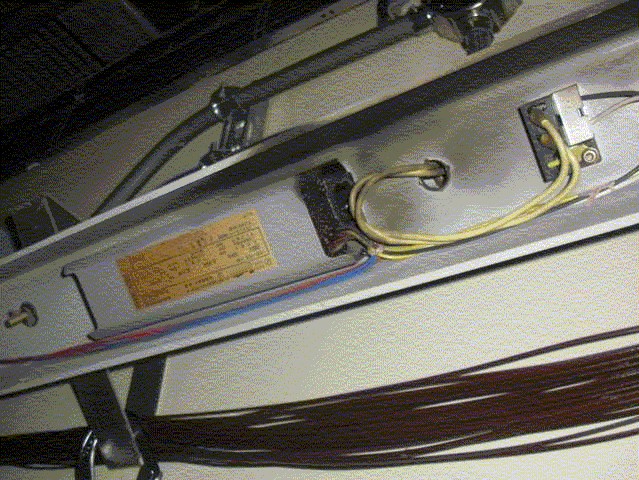
Meanwhile at Kashiwazaki-Kariwa Nuclear Power Plant, TEPCO says a fluorescent light caught on fire in Reactor 6 turbine building. The fire died on its own. Just so you know.
From TEPCO's Photos and Videos page, 7/30/2013:
There is some negative campaign going on to discredit or smear Governor Izumida. Weekly magazines have been writing up articles telling the readers how Izumida was universally disliked while he was at Ministry of Economy, Trade and Industry, and many thought he was strange.
========================
(UPDATE 7/30/2013) From the reader "Beppe", Izumida's appearance in Hodo Station program:
"Izumida just showed up at Hodo Station and I had no problem understanding what he wants.
"Basically he does not want another Fukushima to happen; the new "regulatory" standard, which replaced the safety standard, does not offer enough guarantees and is based on the premise that accidents happen.
"He also wants to be able to evacuate the people in the 5km radius from KK: they tried evacuating 400 people and obtained a traffic jam; in case of an accident they would have to evacuate 20,000 people; he does not know how to do that.
"Moreover, in case of another accident, he wants it to be decided in advance who is expected to go and operate the power plant even at the cost of his life. Apparently in the US this is the army job; in Japan this is not decided.
"He also wants the KK npp to be reinforced taking into account *at least* the lessons from the 2007 earthquake: at that time the ground sunk up to 1.5m and, as a result, some electrical connections were severed and a relatively large fire broke out. Izumida is asking what if the same happens with the pipes that will connect the reactor to the filtered vent? if pipes are severed the reactor will discharge directly in the atmosphere, possibly at a few meters height. This is not being addressed by Tepco.
"Obviously he sees a lot of issues with nuclear power and he is getting no satisfactory answer. He met Amari but Amari has no decisive power; he would like to meet NRA's Tanaka but the latter refused to meet him.
"During the interview he came across as being very passionate about the issue and I do not see what personal benefit he could get from asking nuclear power to be safe. I wish we had many more Izumida."
Taro Aso, Vice Prime Minister and Finance Minister, gave a lecture in Tokyo in the evening of July 29. Regarding the revision of the Japanese Constitution, Mr. Aso referred to the Nazis Germany before the World War II and said, "The constitution of Germany's Weimar Republic [the Weimar Constitution] was changed unnoticed. It was changed before anyone was aware. We could learn from that technique." He also said, "[Change of the Japanese Constitution] shouldn't be decided in turmoil", and his remark [about Nazi Germany and Weimar Republic Constitution] was in the context that the changing the Constitution should be discussed in a calm environment.
According to wiki, the Weimar Constitution "technically remained in effect throughout the existence of the Third Reich from 1933 to 1945":
The Enabling Act was effectively a constitutional amendment because of the foregoing alterations to the normal legislative process. The act met the constitutional requirements (two-thirds of the Reichstag's members were present, and two-thirds of the members present voted in favor of the measure). The Act did not explicitly amend the Weimar Constitution, but there was explicit mention to the fact that the procedure sufficient for constitutional reform was followed. The constitution of 1919 was never formally repealed, but the Enabling Act meant that all its other provisions were a dead letter.
Two, and possibly three, of the penultimate acts Hitler took to consolidate his power in 1934 actually violated the Enabling Act. Article 2 of the act stated that
'Laws enacted by the government of the Reich may deviate from the constitution as long as they do not affect the institutions of the Reichstag and the Reichsrat. The rights of the President remain undisturbed.'
However, on 14 February, the Reichsrat was abolished even though Article 2 explicitly protected the existence of that body. It can be argued that the Enabling Act had been breached two weeks earlier on 30 January, when the Law for the Reconstruction of the Reich transferred the states' powers to the Reich and rendered the Reichstat obsolete. Hindenburg died on 2 August, and Hitler appropriated the president's powers for himself in accordance with a law passed the previous day. However, in 1932 the constitution had been amended to make the president of the High Court of Justice, not the chancellor, acting president pending new elections. Nonetheless, the Enabling Act did not specify any recourse that could be taken if the chancellor violated Article 2, and no judicial challenge was ever mounted.
Instead of referring to Weimar Republic, Aso could have referred to Japan's ally the United States. The surveillance state under NSA is not exactly what the country fought the war of independence against England for, but here it is, before anyone is fully aware, the Constitution has been subverted, or for pro-NSA surveillance people, "updated" to meet the needs of modern times.
I may also add that Mr. Aso wants to become Prime Minister again, just like Mr. Abe has done. He thinks Abe's health problems will get him again sooner or later.
First, Nuke for Detroit scheme. A little-known company called American Atomics has made an offer to Detroit:
American Atomics would like to extend an offer to the City of Detroit, one that will not only “save Detroit," but that will result in Detroit becoming the fastest growing city on earth in five years.
We are going to build the world’s largest factory and begin mass producing our HOPE 40 power plant on August 1, 2018. This 8 million square foot, 720 million cubic foot highly integrated manufacturing facility will create between 100,000 and 200,000 jobs within 10 years, most of which will be accessible to semi-skilled workers based on company provided job training.
Our headquarters operations will require a separate 600,000 square foot office and laboratory campus where about 2,000 of the world’s most talented nuclear science and engineering, marketing and management, and administrative and finance individuals will work each day. The factory complex will be on a 2,000 to 2,400 acre site. Our HQ campus will be on a 60 to 90 acre site.
Our plan includes developing a companion industrial park complex where our key suppliers will build dedicated facilities for servicing our operations, with this site being another 1,200 to 1,600 acres and expected to generate another 100,000 to 200,000 manufacturing and industrial services jobs.
...We will, of course, implement HOPE 40 provided power generation for our own usage and the use of the community where we reside. This means that local businesses will enjoy 2¢ per kilowatt-hour flat rate electricity pricing, with no limitation on capacity — given that we will scale the local generating capacity with as many HOPE 40 power plants as needed to service the demand.
...We would like to choose Detroit, as we can think of no finer demonstration of the power of cheap, clean electricity to fuel economic growth than to show what happens in a location so desperately needing an economic boost. ...
What is "HOPE 40 power plant"? It sounds like a small-scale nuclear power generating unit using liquid metal as coolant, i.e. fast breeder.
On August 1st, 2018 the world will fundamentally, radically change for the better. That's when we'll begin shipping our first mass production run of 1,000 HOPE 40 power plants — a self-contained, truck-shippable power generator system that can be quickly set up anywhere on earth and allow its owner-operator to begin profitably selling electricity for three cents per kWH or less.
...We're rebooting the Atoms For Peace initiative by choosing the other reactor science — the fast spectrum reactor — and pouring the collective resources of the world's largest commercial venture into its completion.
The company looks like a venture-funded start-up, based in Tennessee. There is no information of officers of the company, except that "We are a group of the leading nuclear scientists, engineers, technologists, and manufacturing experts on earth, utterly dedicated to our mission of solving humanity's energy problems." (from the company's website)
I have no idea whether this is some kind of joke or hoax, or the real thing. The blog where I got the link to the company notes:
"...the technology that the company plans to develop into mass produced small nuclear power plants uses liquid metal cooling, something that has not been used in commercial nuclear plants in the United States since Fermi 1"
Fermi 1 was the 94 MWe prototype fast breeder reactor that had a partial core melt in 1966.
As Detroit enters the federal bankruptcy process, the city is proposing a controversial plan for paring some of the $5.7 billion it owes in retiree health costs: pushing many of those too young to qualify for Medicare out of city-run coverage and into the new insurance markets that will soon be operating under the Obama health care law.
Officials say the plan would be part of a broader effort to save Detroit tens of millions of dollars in health costs each year, a major element in a restructuring package that must be approved by a bankruptcy judge. It is being watched closely by municipal leaders around the nation, many of whom complain of mounting, unsustainable prices for the health care promised to retired city workers.
Similar proposals that could shift public sector retirees into the new insurance markets, called exchanges, are already being planned or contemplated in places like Chicago; Sheboygan County, Wis.; and Stockton, Calif. While large employers that eliminate health benefits for full-time workers can be penalized under the health care law, retirees are a different matter.
“There’s fear and panic about what this means,” said Michael Underwood, 62, who retired from the Chicago Police Department after 30 years and has diabetes and Parkinson’s disease. ...
...retirees say they worry about what the costs would actually amount to and whether the coverage would be as generous as some have received through city plans.
A 60-year-old single man with an income of $45,000 might have to pay $4,275 a year, or about 52 percent of his total annual premium, for a midpriced plan bought through an exchange, with the balance covered by the federal subsidies, according to an estimate by the Kaiser Family Foundation, a nonpartisan research group. A couple who are both 55 with a combined income of $60,000 might have to pay $5,700 a year, or 42 percent of their total premium. In both examples, additional out-of-pocket costs of up to $6,350 per person could apply, depending on how much medical care they needed.
(Full article at the link)
So the city retirees would be forced to spend nearly 10% of the income on so-called Obamacare plans, just like non-city workers elsewhere.
I have no idea who this person is, but his tweet on Friday set up a weekend of praising and adoring foreign media (again) among many Twitter users when it comes to reporting on the Fukushima I Nuclear Power Plant accident.
His tweet says the most (literally) incredible thing:
フクイチ3号機の格納容器頂部分が折れてると世界中で報道。日本だけ隠蔽中
"It is reported all over the world that the top of Reactor 3 Containment Vessel has broken off. Only Japan hides it"
I looked and looked, but I couldn't find anything remotely referring to what he says. The word "containment vessel" is not even mentioned in the article.
But I think I've finally figure it out. It's the third sentence in the article which is nothing but the short summary of what TEPCO announced in the recent press conferences and what was being reported in Japan (emphasis is mine):
"The steam has raised concerns about the damaged reactor, but TEPCO said no significant changes occurred, including in the levels of potentially cancer-causing radioactivity the broken reactor is releasing."
This person who tweeted decided to translate the word "broken" from the original verb "break": "Separate or cause to separate into pieces as a result of a blow, shock, or strain". In his mind, it must mean something has been broken off (like a tree branch, or a bone). Further, he decided what has been broken off must be the Containment Vessel top (whatever that means).
And people are retweeting this tweet, clearly without bothering to read (or unable to read) the original English article, and exclaiming "How the Japanese media lies!" "We can rely on only foreign media to tell us the truth!"
All I can say is that it may be actually a good idea to make TOEFL English proficiency test as a requirement not just for career bureaucrat candidates but for graduation from colleges, or better yet, from high schools.
"Broken" reactors are the ones at Fukushima I Nuclear Power Plant (Reactors 1-4), damaged by the March 11, 2011 earthquake and tsunami, suffered core melt with part of the corium dropped down to the floor of the Containment Vessels, reactor buildings half-wrecked, water injected into the reactors leaking to the building basements.
So far, the original tweet has 929 retweets and 276 favorites. Not too bad, but enough to make me despair. I had to write a tweet to tell people they are lied to, but it only has 113 retweets.
Then, along came the July 23 BBC News video, which is being tweeted furiously as well. After TEPCO finally acknowledged on July 22, 2013 that the contaminated groundwater may have been leaking into the open culvert inside the silt fence in the plant harbor, foreign media, including BBC, started to report on this leak.
However, to many, many Japanese, BBC was the first one to break the news (not true), and if only Japanese media reported it before the July 21 election (they did) things might have been different!
What's more, they look at the BBC News clip that someone put the Japanese caption on, and are horrified. "Look! The steam rising from the reactors is so vigorous! I didn't know things are this bad!"
Vigorous steam or smoke rising, yes, from Reactors 1, 2, 3, 4 right after the explosion on March 14, 2011. BBC uses the old footage of the accident extensively as it narrates the news about the most recent steam rising from Reactor 3, without telling the viewers that these images are from 2011.
BBC may have thought that by now everyone knows these images of reactors are from 2011, right after the accident. Well clearly not so in Japan. They think that's how it is right now at the plant because that's how BBC reports it, and accuse Japanese media for not telling them the truth.
However, in the video, when the announcer says (14 seconds into the video),
"And yet today, for the second time in a week, steam is seen rising from the Reactor No.3..."
what do they show? The video of vigorous steam escaping from the blowout panel hole of Reactor 2, in March 2011.
For the narration
"and TEPCO can only guess where the steam is coming from"
they show huge steam coming out of half-wrecked Reactor 4 while water is being injected from the boom of a Putzmeister crane. That's also March 2011.
Does BBC ever show the steam rising NOW, in July 2013, from the top floor of Reactor 3? Yes, for two seconds, from 1:11 to 1:13, but the BBC announcer says:
"And at the same time that it finally acknowledged the water leaking problem..."
Water leaking problem? Over the 2-second video clip of Reactor 3 steam?
The news ends with reference to the workers at Fukushima I Nuke Plant:
"The numbers of the workers at the plant exposed to levels of radiation that could cause cancer was not 175 as previously reported but more than one thousand nine hundred, or 10% of total work force"
It not only parrots erroneous Asahi Shinbun's article that doesn't bother to say it is about "equivalent dose" on thyroid, but goes further by eliminating the reference to the thyroid altogether, making it sound like it is about effective dose for the overall body. The equivalent dose of 100 millisieverts on thyroid would be 4 to 5 millisieverts in overall effective dose.
This BBC reporting is being praised as "truth telling" by the Japanese. Go figure.
Whenever I can, I still watch the live press conference given by TEPCO. Journalists who attend the press conference, whether they are independent journalists like Ryuichi Kino or mainstream-media journalists from Asahi, Yomiuri, or even NHK, ask tough questions these days, as they are much more knowledgeable than they were in the beginning of the nuclear accident two years ago. Many of their tough questions have led TEPCO to finally acknowledge the dire situations at the plant, and this groundwater leak is one of them. As to the foreign media, I've seen Japanese reporters from AP, Reuters asking uncomfortable questions to TEPCO.
But many Japanese firmly believe only foreign media like BBC will tell them the truth about radiation and about the nuclear accident. Some of these people worship foreign "experts" who visit Japan from time to time to warn them with their dire warnings on nuclear contamination, simply because their warnings are very dire.
Tokyo Shinbun has a pictorial showing the locations of the known trenches along the seawall. I think it is more helpful than TEPCO's pictorial, which does not show the embankment which is clearly created artificially. It also nicely summarizes the entire article.
It shows the possibility of seawater and groundwater mixing beneath the sea level. If the highly contaminated water in the trenches from the turbine buildings to the water intake along the embankment bordering the open culvert are leaking somewhere, they will go to the layers of crushed stones underneath the trenches (standard construction method) and leak to the surrounding soil
From Tokyo Shinbun (7/26/2013, English labels are by me):
Tokyo Shinbun's article itself has some misunderstanding:
The biggest problem is that highly contaminated water is flowing into the trenches from the [turbine building] basements which hold 75,000 tonnes of such water.
No it isn't. Tokyo Shinbun doesn't know or forgot to check the density of radioactive materials found this time from the seawater pipe trench for Reactor 2. The density is one order of magnitude GREATER than the density of contaminated water inside the Reactor 2 turbine building, indicating the water in the trench is the same water that leaked into the ocean in April 2011.
I see two big problems, one of which is shared by Tokyo Shinbun.
「トレンチが地下数メートルから三十メートル近い深さまで各所をめぐり、どんな状態なのか東電も把握できていない」
"Crisscrossing trenches run several meters from the ground surface all the way down to 30 meters deep, and TEPCO doesn't exactly know what their conditions are."
I don't think TEPCO knows what trenches are there, where, or how many. The original blueprint wouldn't help, and all the blueprints of site and facility upgrades are, I believe, still in the condemned building at the plant.
And second, solidifying the artificial soil using the chemicals are possible only up to 20 meters deep.
Some trenches are 30 meters deep? Uh oh.
Since April 2011, TEPCO knows the highly contaminated water from the turbine buildings filled the trenches that goes out to the water intake, but didn't do anything about it until now. Even now, I don't know how they even attempt to empty the trenches, as the water is just too radioactive.
TEPCO's 7/26/2013 handout shows the air dose level as high as 100 millisieverts/hour, and that's when measured from the top of the pit at the turbine building where the trench starts, not near the water surface.
(UPDATE 7/27/2013) TEPCO just released (7/28/2013) the data on tritium from this observation hole (B1-1): 8,700,000 Bq/L.
The observation hole No.1-2 has been consistently found with high levels of tritium, with most recent measurement at 350,000 Bq/L from the sample taken on July 22, 2013.
=============================
5,000 cubic meters, or 5,000 tonnes of this water is in the trench.
After sheepishly admitting the groundwater that got somehow contaminated along the way to the seawall may have been seeping into the sea after all (but only into the open culvert outside water intake canals enclosed by the silt screen, not even inside the plant harbor), TEPCO took samples from the trench for electrical wires and seawater pipe that connects Reactor 2 turbine building and the water intake for Reactor 2 in an effort to identify the source of contamination of the groundwater sampled along the seawall.
The trench for electrical cables is where the extremely contaminated water was flowing freely from the Reactor 2 turbine building into the open culvert back in April 2011.
The surface radiation level of that water in April 2011 was over 1 Sievert/hour (the survey meter went overscale).
The Reactor 2 turbine building basement is filled with contaminated water that comes from the reactor building every day as water is being injected to cool the corium, though the density of radioactive materials is being diluted daily with groundwater that seeps into the reactor/turbine building.
TEPCO just announced the result of the analysis of the sample taken on July 26, 2013 from the trench, and to be expected, the result was comparable to the highly contaminated water back in April 2011.
Today (July 27), we would like to announce the result of the analysis of the sample taken on July 26 from a new observation hole in the Reactor 2 water intake electric cable trench (B1-1: at the foundation of seawater pipe trench) as follows.
Contaminated water that leaked from near the Reactor 2 water intake screen in April 2011
Cesium-134: 1.8 billion Bq/L (1.8 million Bq/cm3)
Cesium-137: 1.8 billion Bq/L (1.8 million Bq/cm3)
It does look like the same water that leaked in April 2011, and it looks like the water has been sitting inside the trench after TEPCO managed to stop the leak. The density of radioactive materials in the water in the duct is higher than the water in the turbine building. The question is whether the water is leaking outside the duct, and how to find that out.
Location of the trench, from TEPCO (7/26/2013; page 5, English labels are mine):
When the highly contaminated water was found leaking (the red circle in the picture above), all TEPCO and everyone else cared about was the electrical cable duct - the one in yellow. I do not think TEPCO looked into the duct for seawater pipe - the one in green - at all.
According to the same TEPCO information dated 7/26/2013, the amount of contaminated water in the trench for seawater intake pipe for Reactor 2 is about 5,000 m3, or 5,000 tonnes. The similar trench for Reactor 3 has about 6,000 m3, or 6,000 tonnes:
The density of radioactive materials for Reactor 2 seawater duct in the table above is the data from July 17, 2013 above. With the data from July 26, 2013, the density is in the same order of magnitude as that for Reactor 3 seawater duct.
In addition to rainwater seeped in from a gap in the shield plug and warmed by the Containment Vessel head, there is an observable difference(3 m3/hr) between the amount of nitrogen gas being injected into the Reactor Pressure Vessel and Containment Vessel (16 m3/hr) and the amount of nitrogen gas being extracted (about 13 m3/hr), and it is possible that this gaseous body (3 m3/hr) containing enough water vapor is leaking through the Containment Vessel head. We presume that when the vapor leaks through the gap in the shield plug onto the 5th floor of the reactor building, it is chilled by the air which is relatively colder than the vapor, and is visualized as steam.
Nitrogen injection into the Containment Vessel of Reactor 3 has been on-going since July 14, 2011. Start of nitrogen injection into Reactor 3 on July 14, 2011, only four months after the explosion, marked the completion of "step 1" of the famous "roadmap" to decommissioning.
I wonder whether the difference in the amount of nitrogen going in and coming out has always existed. As per TEPCO's open admission (that no one apparently noticed or cared) during the press conference that the steam rising from Reactor 3 in March 2011 was from inside the Containment Vessel, it looks safe to assume that the difference, if any, has been leaking from inside the Containment Vessel all along.
Now that TEPCO has figured out why the steam is rising, the company will resume the work to clear the debris from the Reactor 3 operating floor to "test the validity of the evaluation", according to the notice.
By the way, the infrared thermography taken on October 14, 2011 seems to show the same location where the steam is rising now. The images use different temperature scales, but in both images the location temperature is between 30 and 35 degrees Celsius. It is just as hot today as it was in October 2011.
Infrared thermography of the location of the steam on July 24, 2013, from TEPCO (labels are mine):
Infrared thermography of the same location (or very close to it), on October 14, 2011, from TEPCO (labels are mine, and the white circle indicating the location):
(UPDATE) TEPCO now says it may be part rainwater, part leak from CV. See my latest post.
=====================
and 30.7 degrees Celsius from 40 meters above.
Infrared thermography seems to show an odd-shaped heat source, possibly partially covered by something else.
TEPCO, who had finally taken infrared thermography on July 20 at the order of Nuclear Regulatory Authority but had done so on a wrong (sunny) day, re-did it in the early morning of July 24 with the similar condition as the day when the steam was first observed on July 18.
- Measurement date: 4:40 AM - 6:04 AM on July 24, 2013
- Weather condition as of 5:30 AM: Air temperature 18.6°C, humidity 91.1%, wind speed 1.3m/s, wind direction west-southwest
- Measurement height: 5 - 40m above the operating floor of the Reactor Building
- Measurement method:
An infrared camera, which was in continuous automatic shooting mode, was suspended by a
crane at the upper part of the Reactor Building, and it photographed at varying height.
Data was checked after the infrared camera was collected
(UPDATE 7/25/2013) Just as back then, TEPCO now says the current steam may be from the Containment Vessel after all, at least in part. See my latest post.
======================
So that steam back then was actually coming from inside the Containment Vessel???
In the regular press conference on July 24, 2013, TEPCO's spokesman said the steam coming out of Reactor 3 in March 2011 after the explosion was from inside the Containment Vessel, and that is known to everybody.
11 minutes 39 seconds into his briefing (video is at TEPCO's site but only for one week), TEPCO's PR manager Ono says,
As you all know, speaking about the area near the shield plug of Reactor 3, it was around this area where the steam was coming from inside the reactor's Containment Vessel right after the accident [explosion of Reactor 3 on March 14, 2011]. We think the current high radiation levels observed around, near the shield plug, are probably due to the effect of that steam.
"As you all know"??? Since when?
As far as I remember, the explosion of the Reactor 3 building is explained by TEPCO as hydrogen explosion (initially some TEPCO workers, including Plant Manager Masao Yoshida, thought it was a steam explosion), but the company never explained where the steam seen rising from the wreckage of the Reactor 3 operating floor after the explosion was coming from.
Now, according to TEPCO, everyone is supposed to know, as a matter of fact after two years and four months later, that the steam in March 2011 was coming from inside the Containment Vessel.
I watched the Q&A section of the press conference, but no one seemed to be bothered by Ono's remark. Was it just me who didn't know about it as the established fact? I had suspected as much from the beginning, but didn't know that's now an accepted fact.
How and what did I miss? I searched my own blog for Reactor 3's posts from the beginning, and the closest reference I found was that the steam looked to be rising from near the Containment Vessel.
We are having experts analyze the situation, but at this point, the highest possibility, not confirmed yet, but the highest possibility seems to be that the steam is being released from some part of the Containment Vessel, just like it happened in Reactor 2. Since it is radioactive steam that was inside the Containment Vessel, high levels of radiation were observed temporarily. Let me repeat that it is not yet confirmed, but that is the most likely scenario at this point.
(Wait a minute. Just like it happened in Reactor 2???)
In the afternoon press conference at 6PM on March 16, 2011 (link is in Japanese, Asahi Shinbun), Edano somewhat backed off and said he had heard the steam might be from the suppression chamber (it is still part of the Containment Vessel, I suppose, but below the 1st floor). NISA thought the rise in radiation levels at the plant in the morning of March 16, 2011 was because of Reactor 2, not Reactor 3.
Mr. Edano talked about it as the hypothesis, that the steam rising from Reactor 3 after the March 14, 2011 explosion was from the Containment Vessel, and that was 2 years and 4 months ago. I do not think (I may be wrong) anyone paid attention to this particular remark or followed up on it.
But now, according to TEPCO, that's what everyone should know, that the steam seen rising from the Reactor 3 wreckage in March 2011 was from the Containment Vessel.
Moments ago, an unlikely grouping between a 33-year old Republican, Rep-Justin Amash, and an 84-year old Democrat, Rep-John Conyers, resulted in a House vote, that if passed, would have suspended the NSA's "indiscriminate collection of phone records" and effectively ended the program's statutory authority. Yet despite significant lobbying by the White House, security experts and representative on both sides of the aisle, the vote came within a startlingly close 12 votes of passage. A majority of Democrats, 111, voted for Amash's amendment despite the full court press while 83 Democrats voted no. The GOP vote was 94-134. That the vote did not pass is not surprising. However, that it came to just 12 votes of passage is the stunning development and shows a sea change of how Congress approaches both personal privacy and the broader implications of the Patriot Act. All of it thanks to the action of one man who at last check was still stuck in the transit terminal in Moscow.
Representative Justin Amash is an 33-year-old libertarian Republican of Palestinian and Syrian descent. Hayek and Bastiat are his favorite economists, according to his wiki entry. Representative John Conyers is the second-longest serving incumbent in the US Congress. He is a liberal in the traditional sense, and the Founding Member and Dean of the Congressional Black Caucus.
Mr. Conyers on why he is working with Mr. Amash on the issue, from Washington Post (7/24/2013):
I think the whole Congress reacted much the way I did. First of all, we didn’t know it was going on, and we didn’t think it was fair. We thought it ought to be changed, and that’s what we hope to do ...
And who are the people who were dead set against the bill?
Dem, GOP leadership and their minions (like Michelle Bachmann)
Obama White House
Despite their threats and pressure, 57% of Democrats voted for the bill, and 41% of Republicans voted for the bill.
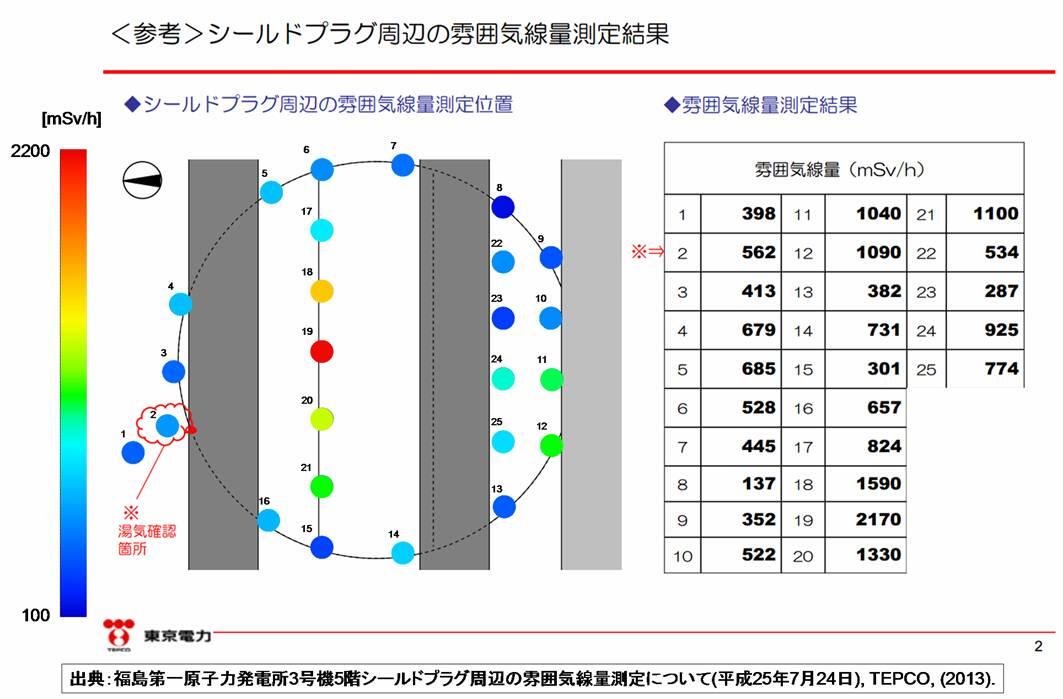
Locations exceeding 1,000 millisieverts/hour, or 1 Sievert/hour, are marked in red circles. (They do not include measurements inside Containment Vessels.)
From TEPCO, data compiled on March 22, 2013 from the data taken between April 2011 and February 2013 (from TEPCO's webpage for plant survey maps):
Reactor 1, 1st floor: 4,700 millisieverts/hour (or 4.7 Sieverts/hour)where steam was gushing from the floor, locations over 1,000 millisieverts/hour nearby.
Reactor 1, 2nd floor: over 1,000 millisieverts/hour (or 1 Sievert/hour). Precise measurement was not done. The survey meter went overscale.
Reactor 2, 1st floor: (surface radiation level) 3,000 to 4,400 millisieverts/hour (or 3 to 4.4 Sieverts/hour) on the upper penetration hole on the Containment Vessel.
Reactor 2, 2nd floor: (probably surface) 330 to 1,640 millisieverts/hour (or 0.33 to 1.64 Sievert/hour) on X29B/C penetration hole.
Reactor 2 Turbine Building Basement: over 1,000 millisieverts/hour (or 1 sievert/hour).
Reactor 3, 1st floor: 2,290 millisieverts/hour (or 2.29 Sieverts/hour) along the rails for the equipment hatch. 4,780 millisieverts/hour (or 4.78 Sieverts/hour)on the floor surface.
Radiation measured on the 5th (top) floor of Reactor 3 (2,170 millisieverts/hour max) is in line with the levels measured on the 1st floor along the equipment hatch rails. As a reminder, that hatch was found open, and high radiation along the rails was from the steam or water leaking out from inside the Containment Vessel. Packbot did the cleanup of the hatch rails twice, and the towels that the robot used were soaking wet in the video from November 2011.
Packbot went in to clean the rails in November 2011, and TEPCO finally admitted that the hatch was open in April 2012. As usual.
If the steam seen on the top floor of Reactor 3 is from inside the Containment Vessel, I would think the radiation level should be in 1,000s, instead of 100s.
This does not necessarily mean that the steam is radioactive, as the top floor (or what's left of it) of Reactor 3 after the March 14, 2011 explosion remain highly radioactive.
There has been only one measurement of radiation (page 30 of the link), probably from the boom of the crane, above the top floor of Reactor 3, and that is 500 millisieverts/hour (at 8 meters above the floor, if I remember right, but not 100% sure).
(UPDATE 7/23/2013) TEPCO measured the radiation levels around the area. See my latest post.
=========================
It rained in the morning at the plant. So, just like the previous incident on July 18, this one is explained as rainwater hitting the warm (about 40 degrees Celsius) Containment Vessel Head.
At Fukushima I Nuclear Power Plant, what looks like steam is seen rising from the top floor of Reactor 3 building on July 23, following the same incident on July 18. As there is no change in radiation level above the building, TEPCO thinks it is the rain in the morning that seeped inside the building and warmed up. The company continues to monitor the situation.
According to TEPCO, the image captured by a video camera installed [on the top floor of Reactor 3] showed what looked like steam rising from the floor of the Reactor 3 building on 9AM on July 23.
There is no change in radiation level above the building, and the cooling of the reactor and the Spent Fuel Pool is stable. There is no data that indicate abnormality, according to TEPCO.
Since the steam was first observed on July 18, TEPCO has stopped the work to clear the debris on the operating floor of Reactor 3.
Nuclear Regulatory Authority told TEPCO to take infrared thermography of the location under the condition similar to the fist incident (raining), but TEPCO only heard the first half of the order - take infrared thermography. And take they did, on a sunny day on July 20.
I wonder if they had wits about them to take thermograph today (July 23), when it was raining. It looks like TEPCO will have another chance on July 24 and 25 (weather forecast in Fukushima is rain).
Making your Amazon purchases through this Search Box helps support exskf.com at no cost to you. (If you don't see the box, please disable ad-block software first.)
I am Japanese, and I not only read Japanese news sources for information on earthquake and the Fukushima Nuke Plant but also watch press conferences via the Internet when I can and summarize my findings, adding my observations.
"Magno Arms" What Does It Indicate? Nothing Good
-
*UPDATE *
As an affiliate of Elliott Wave International I'll be promoting the
following all week:
EWI has given me the OK to share Bob Prechter's April ...
SO WHAT'S NEXT
-
Just a list. Not too complicated, but time to think about the next few
months. We're in the "Quickening"......"the Fourth Turning"..... basically
we'r...
DOWN we go.......
-
corona virus could be a black swan Hehehe
Information here is not meant as trading advice. Please do your own DD
before any decisions.
Well, this was, until March 11, 2011. Now it is taken over by the events in Japan, first earthquake and tsunami but quickly by the nuke reactor accident. It continues to be a one-person (me) blog, and I haven't even managed to update the sidebars after 5 months... Thanks for coming, spread the word. ------------------ This is an aggregator site of blogs coming out of SKF (double-short financials ETF) message board at Yahoo.
Along with commentary on day's financial news, it also provides links to the sites with financial and economic news, market data, stock technical analysis, and other relevant information that could potentially affect the financial markets and beyond.
Disclaimer: None of the posts or links is meant to be a recommendation, advice or endorsement of any kind. The site is for information and entertainment purposes only.






 30-Day free trial by following the link.
 Tokyo Time