Saturday, December 21, 2013

#Fukushima I NPP: Radioactive Cesium, All-Beta Detected from Groundwater Sample 25 Meters from the Ground Surface


The groundwater sample from the observation hole dug 25 meters from the ground surface in between the turbine buildings for Reactor 3 and Reactor 4 (No. H25J7) was found with:

  • Cesium-134: 1.6 Bq/Liter

  • Cesium-137: 2.8 Bq/L

  • All-beta: 67 Bq/L


after dirt particles were filtered out.

So far, radioactive materials (cesium, all-beta, tritium) have been detected from groundwater samples from the shallower, upper permeable layer. This is the first detection of radioactive materials from the groundwater below the level of the in-the-ground impermeable wall made of waterglass that is still being built closer to the plant harbor.

TEPCO says (handout for the press, 12/20/2013) they don't know whether that means:

  1. The lower permeable layer (25 meters from the ground surface) is contaminated; or

  2. Radioactive materials entered the groundwater when the observation hole was dug; or

  3. The water from the upper permeable layer somehow entered the lower permeable layer; or

  4. The water got contaminated when it was being sampled.


The handout shows the particular location (observation hole No. H25J7) to be close to the turbine buildings of Reactor 3 and Reactor 4:


As far as I'm aware, it is only TV Asahi who covered this news on December 20:


Japanese net citizens on Twitter and message boards who heard about the news (it doesn't look to be many) are all doom and gloom, having already come to the conclusion that the lower permeable layer is contaminated (TEPCO's hypothesis No.1).

Friday, December 20, 2013

Japan's PM Abe: "I Want Next Governor of Tokyo to Be A Young Woman"


Well, as if it would be his to decide. The gubernatorial election to be called early next year in Tokyo is a local election, albeit an important one if only because Tokyo is the most populous prefecture in Japan.

In case you haven't heard about it, Tokyo Governor Naoki Inose, who won the election in December last year with a landslide (he amassed the largest ever number of votes in the Tokyo gubernatorial election) and won the 2020 Olympic for Tokyo, suddenly found himself a target of the suddenly righteous press in Japan (who have all but stopped coverage of the State Secrecy Protection Law as soon as it passed the Upper House), and has been forced out of office.

Mr. Inose's sin? Having received a "huge", no-interest campaign loan (50 million yen, or 500,000 US dollars) from a hospital chain that provided campaign funds to a host of other national politicians, many of them in Liberal Democratic Party in the December 2012 Lower House election/local elections.

Mr. Inose did an extremely poor job of explaining away (he miserably failed), and for that small amount, as far as the politics go in Japan and which he claims he has returned, he resigned on December 19, 2013.

Is the righteous mainstream (national) media in Japan going after the national politicians in the ruling party?

Nope.

It's not that I think highly of Mr. Inose (I don't), but the way the mainstream media (particularly Asahi, who had a "scoop" - sure, sure) and LDP blew it out of proportion from a potential bribery case into a circus is highly suspicious. Now that Mr. Inose has resigned, all is well, the case closed, not just for Inose but most likely for any politician who received money from the hospital chain.

Mr. Inose's word says it all: "I was a politically naive amateur."

Prime Minister Shinzo Abe, on December 18 even before Governor Inose announced he would resign, was quoted as saying this on TV Tokyo:

自民党関係者によりますと、安倍総理は都知事候補について若い女性がいい」と周辺に話していたということです。

According to the source connected to LDP, Prime Minister Abe was telling his staff that the candidate for the Governor of Tokyo should be a young woman.


Young woman. Meaning someone (or a whole lot of them) like these, Abe's favorite, dressed in a school-uniform-like outfit (you are supposed to see them as high school girls)?


(My sincere condolence to the ASEAN ministers and their spouses who were subjected to this "entertainment" by PM Abe. If you were thinking about teaming up with Abe's Japan to counter the pressure from China, good luck.)

Oh by the way, the "candidates" (unofficial, undeclared for now) picked by a TV program (Asahi, I think) are beyond the pale for most Japanese net citizens:


Candidates with yellow background color are from the opposition, blue from LDP. They don't even look human, but four out of seven are girls. Not sure about "young".

Thursday, December 19, 2013

TEPCO to Set Up "Decommission Company" as a Separate Division Within TEPCO, National Government to Support TEPCO with 10 Trillion Yen


Details are to be announced By TEPCO's president Naomi Hirose at a press conference starting at 5PM, December 20, 2013, according to TEPCO's tweet.

"Decommission Company" is not going to be a separate company with separate capital but a company within TEPCO, more like a division. The idea was first floated in October this year at an LDP work group on recovery and reconstruction.

Now, why would they do that, instead of setting up a separate company? I have some ideas but they are not firm yet. I'll wait till I hear Mr. Hirose.

This "Decommission Company" will be in charge of decommissioning Fukushima I Nuclear Power Plant and dealing with contaminated water at the plant. Two disparate objectives it seems to me, but clearly not to LDP or TEPCO.

Reuters Japan reports (12/20/2013) that the national government will increase the amount of loan to TEPCO for decontamination and compensation from 5 trillion yen to 9 trillion yen. In addition, the government will pay 1.1 trillion yen to cover the cost to build the intermediate storage facilities for the contaminated soil removed as the result of decontamination. The cost of building the intermediate storage facilities was to be paid by TEPCO.

Total support of over 10 trillion yen, with the national government paying, not just TEPCO. Now it's getting halfway to the amount that some people say will cost to decommission and decontaminate.

If Japan had been to print money in great quantity and spend it, it would have been after March 2011. It didn't. The government of Democratic Party of Japan, whether under Naoto Kan or Yoshihiko Noda, was too busy putting the blame of the accident on TEPCO and looking for cheap solutions. They sure found the cheapest solution: talk.

Current Air Dose Levels in Different Areas Within #Fukushima I NPP Show Radiation Hazard for Workers


The PDF document that TEPCO released on December 11, 2013 (in Japanese only, so far) also contained information on air dose rates in different areas inside the plant compound, and how TEPCO hopes to reduce the rates for workers who have to work in the cluttered, high-radiation environment.

Areas:


Air dose levels in the above areas (in microsievert/hour), and the radiation mitigation plan:


Area I is the ocean-side (east) of the reactor buildings and turbine buildings (1 - 4). Between the turbine buildings and the open channel of the plant harbor, workers are still injecting waterglass to create in-the-ground impermeable wall to stop the groundwater from leaking into the harbor. Debris in this area is highly contaminated with fallout, and the effect of direct radiation is also significant. It is a high-radiation area (over 100 microsieverts/hour), and unless the debris are removed, the air dose levels there are not going to come down.

Area II-1 is the mountain-side (west) of the reactor buildings (1 - 4), and radiation levels are high. In the far right column "Further mitigation plan", TEPCO writes, "block direct radiation that comes from reactor buildings".

Area III may not be that high in gamma radiation but it is the area where the waste water after reverse osmosis (desalination) leaked, and it has high beta radiation contamination.

Area IV-1 and Area IV-2 are the only two areas with relatively low air dose rates. The anti-seismic building is located in Area IV-2. Area V is where the removed debris is stored.

Clear the debris first, bury them somewhere so that we can work, Mr. Michio Ishikawa of Japan Nuclear Technology Institute said in April 2011. Two years and eight months later, TEPCO's radiation mitigation plan in December 2013 is to clear the debris and sweep the roads.

(OT) Comment Section Is Open Again


At least spam attacks stopped. I'll have to keep an eye on the comment section for a while, as certain references and links seem to have triggered the event that forced me to shut down the comment section.

Wednesday, December 18, 2013

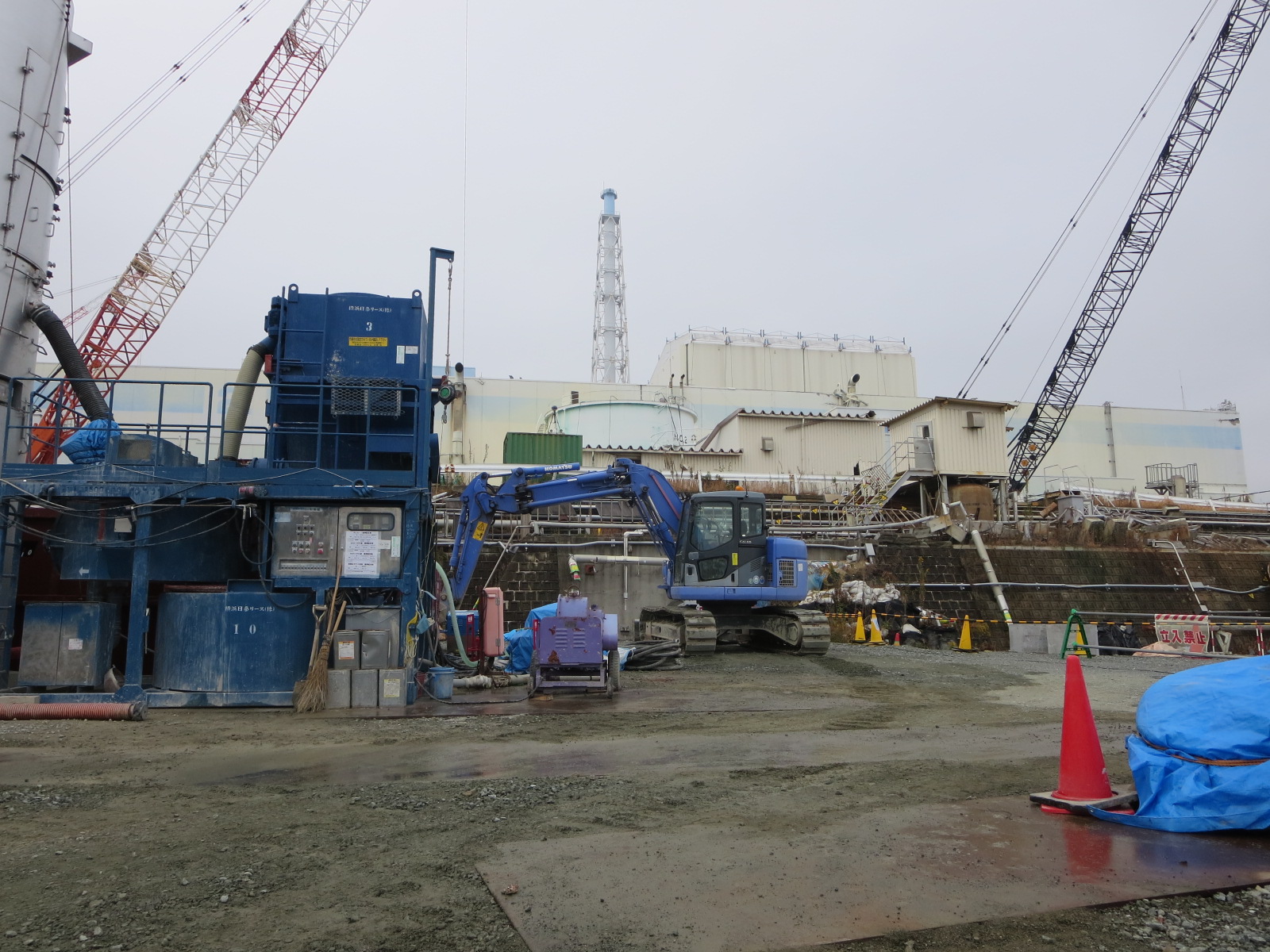
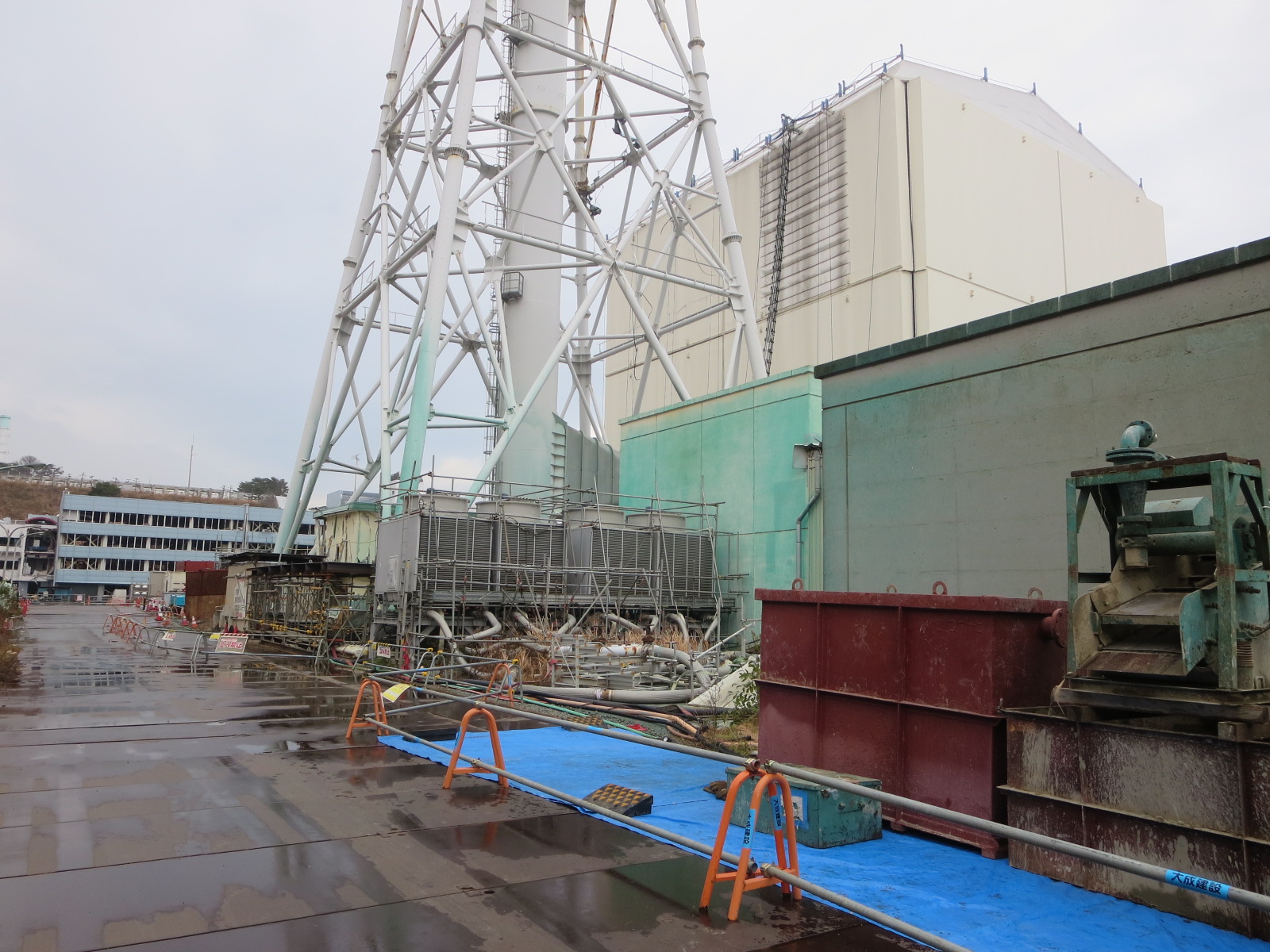
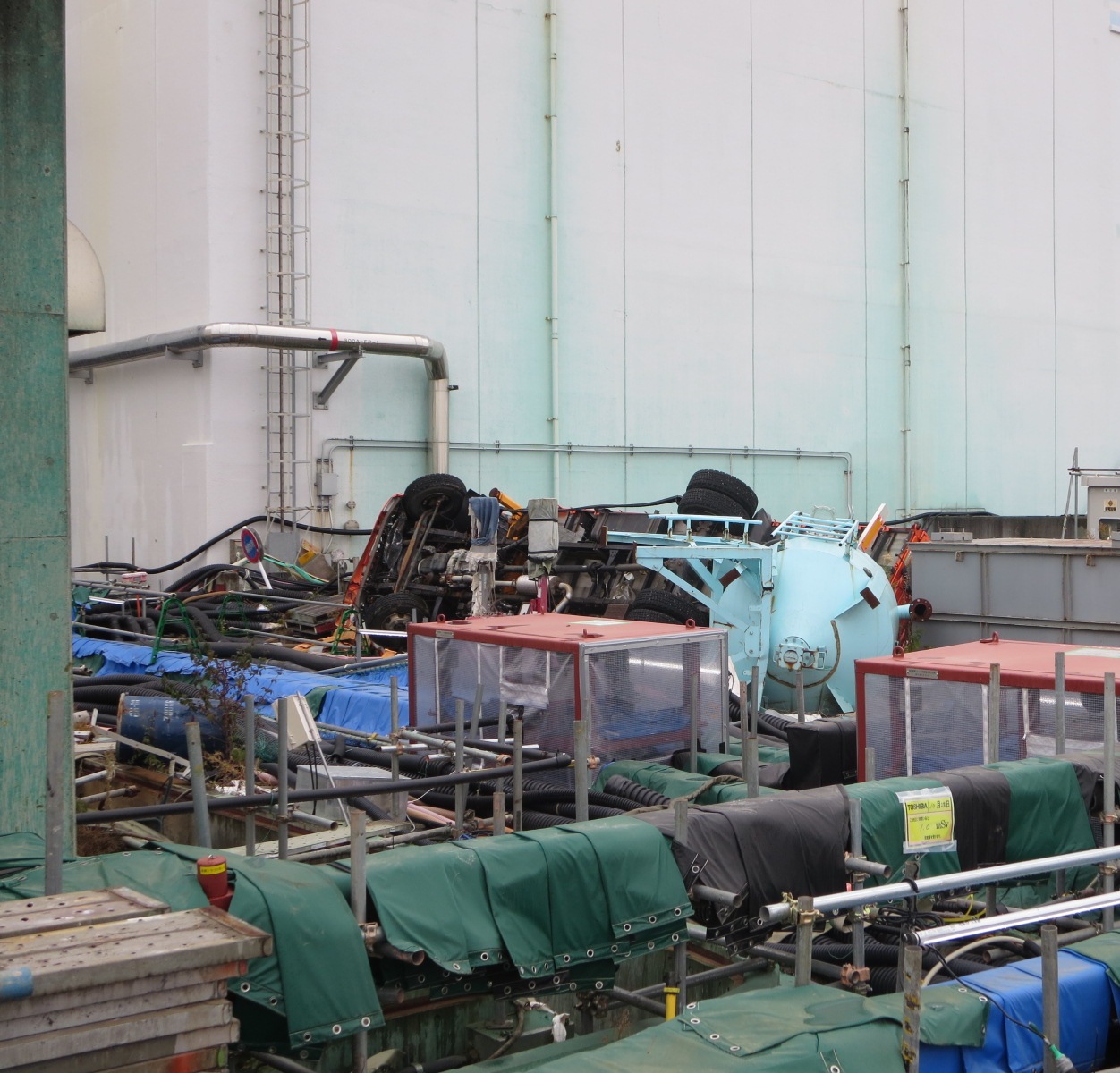
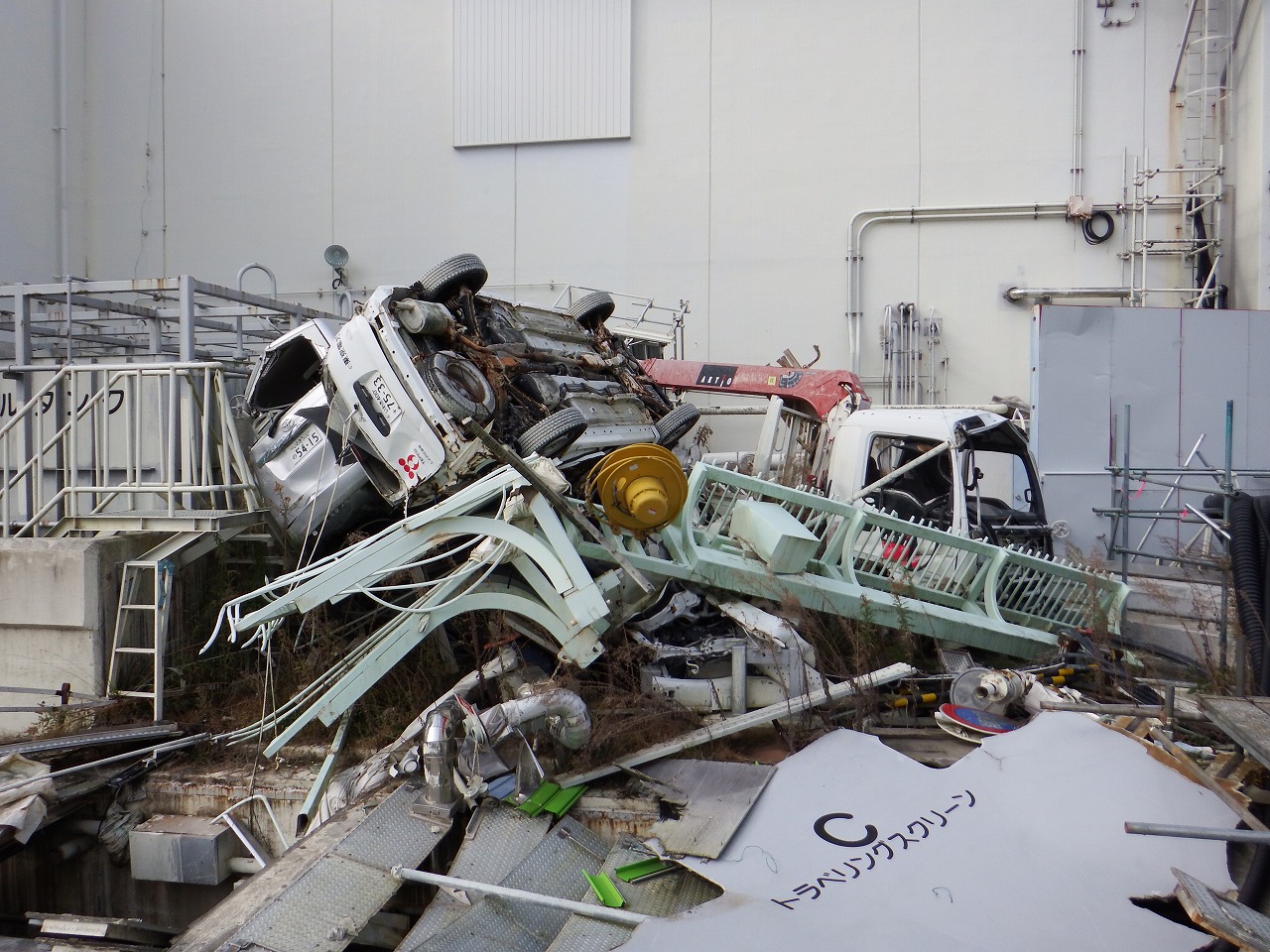
Photos of #Fukushima I NPP in Late 2013: Still Very Much Cluttered and Contaminated


While I'm at it, I might as well show the most recent photos that TEPCO released which, I think, show what lack of money and planning (and lack of decision-making itself) has done (or hasn't done, in this case) at Fukushima I Nuclear Power Plant in the past two years and nine months.

Some areas inside the plant compound today look exactly the same as in March 2011.

From TEPCO's photos and videos library, 12/11/2013 (text is my translation of the explanation in the accompanying PDF document):

4 meters above the sea level (Onahama Peil - average sea level used for the plant), ocean-side (east) of Reactors 1 - 4:

While a temporary storage area for equipment and materials has been secured,

other areas are still littered with debris; it is difficult to decontaminate:


10 meters above the sea level, around Reactor buildings:

While a temporary storage area for equipment and materials, pathway for vehicles and heavy equipment have been secured,


other areas have pipes for transferring (contaminated) water and electric cables running and are still littered with debris; it is difficult to decontaminate:


Some vehicles turned upside down by the tsunami,


have been removed.


Debris removal will continue systematically, says TEPCO [meaning "extremely slowly, piece by piece").

I still vividly remember Mr. Michio Ishikawa of Japan Nuclear Technology Institute on April 29, 2011 on an all-night TV program. To the astonished fellow guests (or guests who were feigning astonishment), Mr. Ishikawa, a strong proponent of nuclear energy, said as a matter of fact that all nuclear fuel inside the reactors had been melted down, the government was lying about it, and some of it would be already outside the Pressure Vessels.

He also said, "This is a war."

"Take the debris clean-up job for example. They are picking up the debris and putting them in containers, as if this is the peacetime normal operation. This is a war. They should dig a hole somewhere and bury the radioactive debris and clean up later. What's important is to clear the site, using the emergency measures. Build a bridgehead to the reactor.

"The line of command is not clear, whether it is the government, TEPCO, or Nuclear and Industrial Safety Agency.

"Look squarely at the reactors and find out the true situation. [Trying to do something with] the turbine buildings is nothing but a caricature [a joke, a manga, a diversion]."


No one took his word seriously, and we are where we are today as the result. Mr. Ishikawa's remark on core melt was not even in the news the next day. Hardly anyone talked about it even on Twitter. "Why should we listen to a pro-nuke shill?" was part of the attitude of net citizens in Japan who turned against nuclear energy after the Fukushima accident.

So today, radioactive debris continues to litter the site, hindering workers' efforts. We have been doing something with the turbine buildings (all the contaminated water from the reactor buildings goes to the turbine building basements, from which the water goes either to another building for storage or to the cesium absorption system (SARRY, or on rare occasions, Kurion).

(OT) US Fed to "Taper" QE by $10 Billion, Stock Market Soars


The quantitative easing (QE) that was started in September 2012 will continue at $75 billion a month, instead of $85 billion.

Much like the federal budget forged by GOP's Paul Ryan and Dem Senator Patty Murray, which does nothing of actually reducing deficit but only reducing the rate of deficit increase.

After the initial plunge on the FOMC announcement, the US stock market swung the other direction and ended the day at all-time high (Dow, S&P500):


As yet another sign of great "recovery", the mortgage application plunged to the 13-year low (from Zero Hedge):


Bullish for the stock market!

The Bernanke Fed said:

Reflecting cumulative progress and an improved outlook for the job market...


Cumulative progress of 0.1% taking from 99.9%, and an improved outlook for the job market expressed by the lower unemployment rate, because they stop counting people whose unemployment benefit has run out even though they are still looking for jobs.

The unemployment rate is set to dramatically fall next year, as the Ryan-Murray budget deal is making sure of it by cutting the extended unemployment benefit beyond 26 weeks.

Bullish for the stock market! Just keep buying the risk assets, as almost all bearish investors have thrown in the towel. Even people like Hugh Hendry, who is effectively saying, "Nothing matters but trends."

Japanese yen has turned even lower against US dollar, at 104 yen per dollar. Hello more carry trade.


Nikkei futures (in yen) to 15,895, more than 300 points higher than Wednesday's (Japan time) cash close (15,587):


Economically ignorant Prime Minister Abe (just like his US counterpart) will exclaim, "See, my Abenomics is working!"

Tuesday, December 17, 2013

#Fukushima I NPP: 63,000 Bq/L of All-Beta One Day, ND the Next Day, All Thanks to TEPCO's Mix-Up (Literally)


The news yesterday (12/16/2013) was that 63,000 Bq/Liter of all-beta that includes strontium-90 was detected in the groundwater sample from an observation hole right on the embankment near the open channel in the plant harbor. The fear was that the groundwater high in all-beta, well exceeding the TEPCO's in-house limit of 10 Bq/L for strontium, was leaking unchecked into the harbor, because the in-the-ground impermeable waterglass wall is not in place at this particular observation hole.

This sudden spike made no sense, as this observation hole, No. 0-3-2, had never had such a high number for all-beta - for that matter, not even for gamma nuclides (cesium).

Then the next day it all made sense. At some point between the collection of the samples and the measurement, TEPCO managed to mix up the sample from the hole No. 0-3-2 with the sample from the hole No. 1-16, which was found with 1,700,000 Bq/L of all-beta on the same December 16, 2013.

Another example of the deteriorating quality of the workers at the plant, AND of the managers who are supposed to train and oversee the workers.

From TEPCO's handout for the press, 12/17/2013 (English labels are by me):


Now, an interesting question is: Where is the groundwater that is sampled at the hole No. 1-16 coming from?

Note that the amount of radioactive cesium is below detection levels (2.8 Bq/L for cesium-134, 1.5 Bq/L for cesium-137), but all-beta (at least half of it is strontium-90) is 1.7 million Bq/L.

At first, I thought this water may be coming either from the leaky tanks that store waste water after cesium absorption and desalination (reverse osmosis), or the tanks that store treated waters, as that would explain the lack of cesium and abundance of all-beta.

Then, on close examination of the numbers for all-beta (see the table; click to enlarge),

  • Water sample from the hole No. 1-16: 1,700,000 Bq/L

  • Treated water (after cesium absorption and desalination): 19,000 Bq/L (8/9/2013)

  • Waste water (after cesium absorption and desalination): 75,000,000 Bq/L (8/9/2013)


The water from the hole No.1-16 contains too much all-beta if it comes from treated water tanks, and contains too little all-beta if it comes from waste water tanks that are leaky. Besides, both treated water and waste water do contain radioactive cesium above the detection limit.

So my brilliant idea is not so brilliant after all, but there is one another, more likely possibility (h/t Kontan_Bigcat).

The water that is finding its way to the hole No. 1-16 may have come from the trenches, either from Reactor 2 or Reactor 3, and filled with the highly contaminated water from April/May of 2011 when the water leaked from the reactor buildings into the turbine buildings after it cooled the broken reactors then into the ocean via the trenches that connect the turbine buildings and water intakes at the embankment.

The reason for the non-detectable levels of radioactive cesium may be that radioactive cesium has been absorbed by the dirt/soil after two years and 9 months.

Whether or not this trench water has been leaking has been discussed at the meetings of Nuclear Regulation Authority, which usually end with one or more commissioners and/or experts scratching their heads at TEPCO's non-explanation. But as this blog wrote in July this year, detection of significant amounts of radioactive materials along the embankment started right after TEPCO started driving the sheet piles into the embankment and into the sea floor of the open culvert in the plant harbor in April in its effort to "stop" the groundwater from flowing into the harbor.

Looking at the cesium content of the trench water (7/31/2013 post) as of 7/31/2013, it is not likely that this water is currently leaking from the trench into the surrounding soil (cesium content is too low in the sample water from the observation holes).

Sunday, December 15, 2013

Evans-Pritchard: China-Japan Rearmament is Keynesian Stimulus, If It Doesn't Go Horribly Wrong


An "IF" in capital letters, but even if it does go wrong and things come to a head between China and Japan, it will still be a great Keynesian stimulus for the US and Europe, whose economies have been suffering "long malaise".

Ambrose Evans-Pritchard, on-again-off-again Keynesian (I think it's "on" now, since the Great Recession induced by the Lehman collapse), says Japan is ready for a fight if necessary; at the same time he seems to think that mishap is not necessarily by China or Japan but by the United States, and fear the cascading effect outside the parties directly involved, as he cites the Agadir crisis in 1911.

With the flip-flopping president who are surrounded by advisors whose expertise (if that) is only in the US domestic politics, the probability of the mishap is rather significant, I'm afraid, no matter how much Japan's PM Shinzo Abe tries to flatter the US president.

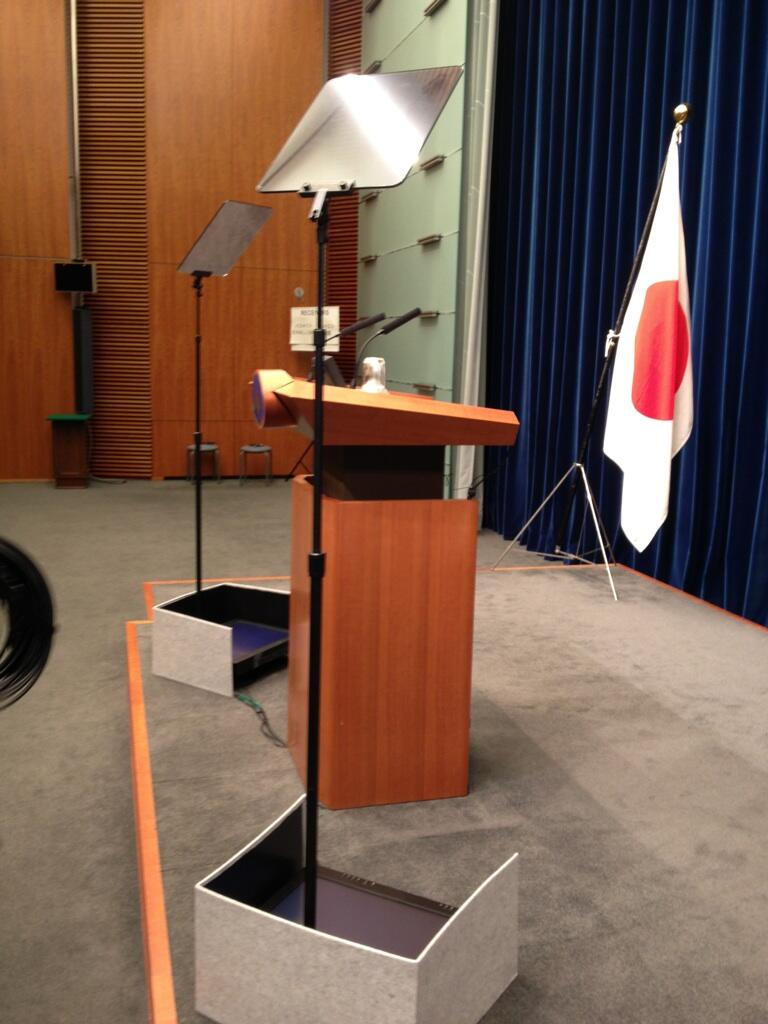
(The latest example of flattery is Abe's mimicking President Obama in using teleprompters for the first time to deliver his speech at a hastily scheduled press conference on December 14, 2013, probably just to show off his brand-new toy...image from Yasumi Iwakami)

From The Telegraph (11/26/2013; emphasis is mine), by Ambrose Evans-Pritchard:

China-Japan rearmament is Keynesian stimulus, if it doesn't go horribly wrong

Asia is on the cusp of a full-blown arms race. The escalating clash between China and almost all its neighbours in the Pacific has reached a threshold. All other economic issues at this point are becoming secondary.

Beijing's implicit threat to shoot down any aircraft that fails to adhere to its new air control zone in the East China Sea is a watershed moment for the world. The issue cannot easily be finessed. Other countries either comply, or they don't comply. Somebody has to back down.

The gravity of the latest dispute should by now be obvious even to those who don't pay attention the Pacific Rim, the most dangerous geostrategic fault line in the world.

Japan’s foreign minister, Fumio Kishida, accused China of “profoundly dangerous acts that unilaterally change the status quo”.

The US defence secretary Chuck Hagel called it “a destabilising attempt to alter the status quo in the region” and warned that the US would defy the order. The Pentagon has since stated that US pilots will not switch on their transponders to comply, and will defend themselves if attacked. Think about this for a moment.

Mr Hagel asserted categorically that Washington will stand behind its alliance with Japan, the anchor of American security in Asia. “The United States reaffirms its long-standing policy that Article V of the US Japan Mutual Defense Treaty applies to the Senkaku Islands,” he said.

Whether China fully believes this another matter, of course. The Senkaku islands offer a perfect opportunity for Beijing to test the resolve of the Obama Administration since it is far from clear to the war-weary American people why they should risk conflict in Asia over these uninhabited rocks near Taiwan, and since it also far from clear whether President Obama's Asian Pivot is much more than a rhetorical flourish.

Besides, Beijing has just watched the US throw its long-time ally Saudi Arabia under a bus over Iran. It has watched Moscow score an alleged victory over Washington in Syria. You and I may think it is an error to infer too much US weakness from these incidents, but that is irrelevant. Beijing seems to be drawing its own conclusions.

Even if the immediate crisis can be defused, we are clearly sliding into a new Cold War. While it is dangerous, it could have paradoxical and powerful side effects. Rearmament lifted the world economy out of slump in the late 1930s, working as a form of concerted Keynesian fiscal stimulus. It could do so again.

The parallels are not exact. They never are. But an Asian arms race would almost certainly tackle some of the underlying causes of the long malaise in the Western economies. It would soak up much of the Asian "savings glut" and the excess industrial capacity in China, and would help to narrow the perennial East-West trade gap.

This would be an answer of sorts to the West's "secular stagnation" – to use the term of former US treasury secretary Larry Summers – or the liquidity trap as others call it. But be careful what you wish for.

I don't wish to become entangled in debate over whether other states impose such ADIZ identification zones beyond their territorial waters, as asserted by Beijing. It is political infantilism to see and judge such disputes through a moral prism, as if our Hobbesian world conforms to codes of right and wrong. What we are dealing with is a great power collision of epochal proportions.

The Asian arms race is young, but clearly under way already. China has launched its first stealth drone, known as Sharp Sword. It developing indigenous aircraft carriers. Its “Two-Ocean-Strategy” implies a fleet of five or six carrier battle groups.

Japan is already rearming. It is building a de facto marine force. It has launched its largest warship since WW2, an 800-foot long DDH-class helicopter carrier, an aircraft carrier in all but name. Tokyo is developing its own version of the Pentagon's Advanced Research Projects Agency. Spending on warships and aircraft will jump by 23pc this year.

When I visited the spanking new buildings of the Japanese defence ministry in Tokyo in March, it already seemed like another world from the run-down digs of the old Self-Defence Force that I had visited six years earlier.

You could feel the emergence of a new military power, pacifist still in name only. The message that came through loud and clear from talking to officials is that Japan is ready for a fight if necessary, and is convinced that it can sink or shoot down any force sent by China into Japan's waters and airspace – whether to close in on the Senkaku/Diaoyu islands, or to ratchet up pressure against Okinawa.

I was shown detailed maps tracing movements of Chinese DDG warships and Yuan-class submarines that left me deeply alarmed over where this is going. Japanese officials said Chinese naval officers on patrol were not responding to normal signals.

"What we don't know is whether Chinese officers follow any international code of conduct? Do they understand what is banned and not banned? Does the Communist Party control their own military?" said one defence planner.

"Two thousand years ago under the Han Dynasty, the emperor put his right hand on the wheel of his chariot and told his general that everything inside the borders was the domain of the emperor, and everything outside was left to the commander. That has plagued China throughout its history, and it is the delicate issue we now face," he said.

There is no red telephone between Tokyo and Beijing to defuse a crisis if it erupts, nothing comparable to the Washington-Moscow "hotline" during the Cold War.

While the US and China were able to calm the waters after an American military jet collided with a Chinese fighter in 2002 – killing the Chinese pilot – it is unlikely that any such mishap between China and Japan could be contained at this stage.

Today's escalating spat has echoes of the Agadir crisis in 1911, the stand-off between Wilhelmine Germany and the Franco-British Entente in the final years before the First World War.

In case you have forgotten, Kaiser Wilhelm sent the warship Panther to Morocco in 1911 to prevent French annexation. The Kaiser picked his moment well. The French were violating earlier accords.

Yet his real purpose was to probe and weaken Britain's entente with France (not a formal alliance) by picking on an issue where London had little natural sympathy for French actions.

The Agadir Crisis backfired against the Kaiser. The Entente did not break. But that is hardly a reassuring episode. The chain of events that followed were catastrophic.

France felt emboldened by British backing, with ripple effects through the Franco-Russian alliance. Russia then felt more able to push its luck when the Serbian crisis hit in 1914. Agadir fed an overwhelming sense of fury in Germany, a feeling that Britain had become an enemy.

America is now having to walk the same sort of tightrope that Britain had to walk – and walked badly – from Agadir to Sarajevo. One misjudgement by either side in the East China Sea could change our world entirely. If you are not concerned, perhaps you should be.


"Mr Hagel asserted categorically that Washington will stand behind its alliance with Japan, the anchor of American security in Asia."


Well, ever since Evans-Pritchard wrote this article (11/26/2013), the US has been busy pleasing Beijing while throwing Japan under the bus (here and here). The US State Department's deputy spokesperson even said the US was happy to see changes in South Korea, which announced it would now allow airlines to file flight plans with Chinese authorities over the disputed territories.

Meanwhile Prime Minister Abe is busy meeting and speaking with the heads of the ASEAN nations in an effort to form a united front against China, whom they perceive as encroaching on the neutral or international (and disputed) space.

Saturday, December 14, 2013

(OT) Shutting Down Comment Section Temporarily


Probably due to the uncontrolled comment section of this blog and most likely due to the comment section of the particular posts (here and here, comments hidden) which is full of totally irrelevant comments, I've started to receive strange emails on strange topics from people I don't know and who should not have my personal email address.

The two events may not be related, though I suspect they are, judging by the content of the emails. I am shutting down the comment section temporarily (comments are restricted to members of this blog, which means me and myself). I am reporting these suspicious emails to the email provider, and doing whatever necessary (though I don't know what) to protect my privacy.

I am not for restricting the freedom of speech, but my right to privacy comes first, and this is my personal blog. I hope the shut down will be temporary.

Friday, December 13, 2013

(OT) Friday Humor: Sing Along! "The NSA Is Coming to Town..."


You better watch out, you better not Skype, you better Log Out, you better not type, The NSA is coming to town.

courtesy of ACLU...

Thursday, December 12, 2013

(OT) Year-End Recital Music


Just because I'm playing these pieces of music tomorrow, you get to hear them...

Frank Bridge: Sally in Our Ally (1916)


Wolfgang Amadeus Mozart: Devertimento D-Dur, Presto (K-136) (1772, when he was 16), Mito Chamber Orchestra conducted by Seiji Ozawa (1990, when Ozawa was 55)


Astor Piazzola: Jean y Paul (we're playing the strings arrangement of this piece)

#Fukushima I NPP: Workers Cleaning Out and Water-Proofing the Drainage Channel in Effort to Prevent Contaminated Water from Flowing into Ocean


Images of what it feels like to not have money to spend to do anything substantial.

There was a discussion on Twitter last night between two level-headed people I follow on the cost of decommissioning Fukushima I Nuclear Power Plant, decontaminating areas in Fukushima Prefecture, and paying compensations to the people who have been displaced by the nuclear accident - namely the residents in the former evacuation zones around the plant.

While the Japanese national government puts the cost of decommissioning of the plant, decontamination and compensations at only a few trillion yen (tens of billions of US dollar), the two's tentative conclusion was that it would be at least 20 trillion yen, probably more because the government didn't spend enough on the get-go in 2011, and therefore it would cost more in the future.

In other words, penny wise pound foolish.

What's more, the national government under the DPJ administration (Messrs. Naoto Kan and Yoshihiko Noda) didn't pay anything to deal with the problems at Fukushima I Nuke Plant, saying it was TEPCO's problem not theirs. (They didn't even offer emergency food for the workers who remained at the plant after March 11, 2011.)

Despite the promise by the LDP administration under Shinzo Abe that the government will be at the "forefront" in dealing with the accident, no money has gone to help TEPCO and workers trying to maintain the plant and contain the contaminated water. 21.5 billion yen has been pledged by the government to come up with a solution to the contaminated water, but it is just a pledge at this point.

So, when I saw this tweet and photographs from TEPCO, I was puzzled at first (I couldn't figure out what the workers were doing), and saddened when I realized what they were doing.


"Countermeasures for rainwater at Fukushima I NPP: The drainage channel that goes through the plant compound to the ocean. In order to prevent contaminated water from flowing into this drainage channel, we are waterproofing the channel and covering it. You can see the details here (link to Facebook page)."


The workers are manually cleaning out the open drainage channel that goes directly into the ocean where rainwater and contaminated water (high in beta-nuclides) have flown since the accident.

These photos are posted only on TEPCO's Facebook page (or else I couldn't find it at TEPCO's website). According to the Facebook entry by TEPCO:

...こちらは、排水路を暗渠(あんきょ)化する対策です。
排水路は海までつながっています。この排水路に、汚染水が流れ込むことがないように、排水路の表面に防水を行い、上部に蓋がけを行っていく対策です。

This measure is to turn the drainage channel into a culvert. The drainage channel leads to the ocean. To prevent the contaminated water flowing into this channel, we are waterproofing the surface of the channel and putting the cover over the channel.

写真右下は、排水路に残っている水をバケツに汲み上げている様子です。
通常、ポンプで汲み上げるのですが、水位が低くなるとポンプでは汲み上げることができないため、最後は作業員の方一人一人のこうした地道な手作業です。

The lower-right photo shows the workers scooping the remaining water in the channel with buckets. Normally, we use a pump, but as the water level goes low, the pump does not work. So, in the end, it is the patient manual work by each worker that does the job.

水をすっかり汲み上げたあと、排水路内をきれいに清掃し、その後エポキシ系樹脂を塗っていきます。(写真下)

After the water is completely drained, we clean the channel, and apply epoxy resin on the surface (Photos at the bottom)

排水路の総延長は1,300mに及びます。
徐々に上流側のほうの排水路の作業を行い、年内の暗渠化を目指してまいります。

The drainage channel is 1,300 meters long in total. We will gradually work upstream, and aim at turning the channel into a culvert within this year.


When the earthquake, tsunami, and the Fukushima nuclear accident hit Japan in March 2011, I remember having read several financial analysts outside Japan who said, "This may be Japan's end game, as it has no other choice but to print money in enormous quantities to pay for the disaster recovery and reconstruction." I thought so too. I thought, "The government should properly panic and commandeer all available resources and spend literally tons of Bank of Japan notes to contain the disaster."

It was a make-or-break moment.

Well the DPJ government panicked the wrong way and put their collective head in the sand, like the mascot of Fukushima I Nuclear Power Plant (ostrich); it resorted to the cheapest option of "talking" - everything is fine, there is no (short-term) health effect, only the baseless rumor of radiation harming the farmers in Fukushima, it's TEPCO's problem, etc., etc..

Sometime in middle of 2011, I think, I saw Mr. Taro Yamamoto, now an Upper House Councilman, in one of those mind-numbing Japanese TV talk-shows. The other guests were all saying that Japan has to spend money on economic growth, as if there had been no earthquake/tsunami/nuclear accident. Yamamoto said, "We should spend whatever it takes to end the nuclear accident, decontaminate, test foods, whatever it takes. Even we go broke as a nation as the result, as long as people are here and are healthy, we will be able to recover some day."

Yamamoto was roundly ridiculed by the guests and the viewers.

I totally agreed with him. Now it's rather late. All the money that Abe is making Kuroda to print goes to financial institutions and accumulates at the central bank as "excess reserve" for the financial institutions to bet on risky assets.

Just like it's been happening in the US ever since Blackhawk Ben and Hank (Paulson) threatened the Congress with one sheet of paper and got $700 billion (70 trillion yen) in the fall of 2008 to save banks.

Wednesday, December 11, 2013

(OT) Sign Language Interpreter at Mandela's Funeral Made It All Up


(UPDATE) Mr. Thamsanqa Jantjie says he was hallucinating, seeing angels, according to AP. He insists his sign language is proper, which is vehemently contested by sign language experts and people who use sign language. They say it was gibberish.

Meanwhile, New York Post (only one of so many) is rather upset with the president of the United States taking a selfie with a leggy blonde who happens to be the prime minister of Denmark.

===============================

You can't make things like this up, but this unnamed man apparently did.

From AP via My Way News (12/11/2013):

Mandela ceremony interpreter called a 'fake'

JOHANNESBURG (AP) - A man who provided sign language interpretation on stage for Nelson Mandela's memorial service, attended by scores of heads of state, was a "fake," the national director of the Deaf Federation of South Africa said on Tuesday.

Asked about the claim by The Associated Press, South Africa's government said it was preparing a statement.

Three sign language experts said the man was not signing in South African or American sign languages. South African sign language covers all of the country's 11 official languages, according to the federation. It wasn't immediately clear if the unidentified man was using a different method to communicate.

The unidentified man seen around the world on television next to leaders like U.S. President Barack Obama "was moving his hands around but there was no meaning in what he used his hands for," said Bruno Druchen, the federation's national director.

Nicole Du Toit, an official sign language interpreter who also watched the broadcast, said in a telephone interview that the man on stage purporting to sign was an embarrassment.

"It was horrible, an absolute circus, really really bad," she said. "Only he can understand those gestures."

South African parliament member Wilma Newhoudt, a member of the ruling party who is deaf, also said the man communicated nothing with his hand and arm movements. AP interviewed both Druchen, who also is deaf, and Newhoudt by telephone using an interpreter.


The man's identity hasn't been disclosed.

Video from UK's Telegraph:

Tuesday, December 10, 2013

#Fukushima I Nuke Plant: Saving Money Comes First Before the Need to Monitor Groundwater Leak Inside the Harbor in a Hilarious NRA Meeting


What's more pressing at Fukushima I Nuclear Power Plant is not measuring radiation levels around the SGTS pipe where 25 sieverts/hour radiation source may be inside (to be sure, again, this 25 sieverts/hour was NOT measured but derived by calculation), nor removing the fuel assemblies from the Spent Fuel Pool on the top floor of Reactor 4 (again, not individual "fuel rods" that are inside a fuel assembly), which has the lowest radiation levels of all reactors (except for Reactors 5 and 6, which are in cold shutdown in the true sense of the word).

It is, as late-Masao Yoshida, Fukushima I NPP Plant Manager at the time of the accident, said, what to do with the contaminated water that keeps increasing. Of particular concern (supposedly) of the national government and TEPCO is whether the contaminated groundwater (albeit low contamination of gamma nuclides) is leaking into the plant harbor.

In the embankment between the plant harbor and the turbine buildings for Reactors 1 through 4, workers have been injecting waterglass into the artificial soil there to create impermeable walls in the soil to stop the flow of groundwater into the harbor. Never mind that their very work causes the groundwater to rise and go over the top of the underground impermeable wall, or go somewhere else and find its way to the ocean anyway.

From TEPCO, 12/8/2013 (red lines: silt fences, green lines: soil amendment by waterglass, yellow dots: groundwater monitoring locations):


TEPCO has been frequently monitoring radioactive materials (gamma nuclides such as cesium, all-beta including strontium, and tritium) in the water samples taken from these numerous observation holes in the embankment. However, samples from the seawater in the harbor are taken far less frequently. Nuclear Regulation Authority has been calling for continuous monitoring of seawater for some time, and the topic came up in the third meeting of NRA's ocean monitoring group on December 9, 2013.

But the word that came out of NRA Commissioner Kayoko Nakamura was, "Continuous monitoring system is an expensive purchase..."

From independent journalist Ryuichi Kino, and a togetter on the December 9 NRA meeting on ocean monitoring:

(Kino summarizes the relevant part of the meeting in a dignified way...)

汚染水の漏洩を検知する連続モニタリング装置の設置について、東電は南側放出口と北の放出口に3か所を検討していて、海が荒れているので設置方法に時間かかっているなどと説明。委員から、なぜ開渠内(防潮堤内側の護岸付近)につけないのか理解できないと疑問の声

TEPCO is considering three locations near the south discharge and the north discharge to install continuous monitoring system to detect the leak of contaminated water, and explains it is taking time to install because of the rough ocean. People questioning, why not install inside the open channel (inside the harbor near the embankment)?

この疑問は今に始まったことではない。今年1月に東電が護岸に観測用井戸を掘って地下水を分析したという時に会見で聞くと、港湾内で何点か測っている、海でも測っているので変化はわかる、問題ないという主旨の回答があった。同じ回答を今でもしてる

The question is nothing new. When I asked TEPCO in January this year when they started digging the observation holes along the embankment and analyzed the groundwater samples, TEPCO answered that they were measuring in several locations inside the harbor, and they were measuring in the ocean, too. They could detect the change that way, no problem. That was the answer then, and that is the answer now.

今問題になっているのは護岸からトレンチ由来、あるいは建屋由来の高濃度のものが出ているかどうか。連続監視は高濃度のものが出たらすぐにわかるようにするのが目的なので、近いほうが変化はわかる。けれども東電は港湾の外で測ることに固執。理由がわからない。

What's at issue now is whether the highly radioactive water from the trench [where extremely radioactive water from March/April 2011 from the reactors sits] or from the reactor buildings is leaking from the embankment or not. The purpose of continuous monitoring is to know immediately if highly radioactive water is leaking. To monitor the change, it's better to monitor closer [to the embankment where the leak may be occurring]. But TEPCO insists on monitoring outside the harbor. I don't understand the reason.

規制委の中村佳代子座長「連続モニタリングは高い買い物」。だから選定に時間かかると。はて、どういう意味なのか。高い安いの問題ではなく、委員から出ていた意見は「早く」やること。のんびり半年、1年かけてやるようなものではない

NRA's Kayoko Nakamura says, "Continuous monitoring is an expensive purchase." So it takes time to select [the equipment], she says. Well, what does that mean? It's not the matter of how expensive or how cheap; the opinion of the members is to do it "soon". It is not the thing to be done leisurely over six months or a year.

中村座長は精度が重要ともいう。すでにこれまでの精度にも疑義が出ているのでこれは重要だけど、東電がいったいどこのメーカーや専門家となにを検討しているのか、中身の公表がないので、やっぱり設置が遅れている理由はわからない

Ms. Nakamura also says accuracy [of measurement] is important. It is important, as the accuracy has been questioned before. But no information has been disclosed as to which manufacturer and/or experts TEPCO is consulting with and on what. We still don't know the reason why the installation hasn't been done.

(The same discussion, from the togetter; it reads almost like a farce, a comedy routine, where research experts are at a loss what to do with TEPCO...)

TEPCO says it wants to install continuous monitoring instruments OUTSIDE the plant harbor. From NRA's reference document for the meeting (English labels and comment are mine):


森田:前回も同じこと言ったが。港湾の外につける意味が分からない。5・6放水口は、港湾の中の水を吸い上げているので、外につける意味が(ないんじゃ?)
Morita [from the Fisheries Agency]: As I said before, I don't understand why you want to install [the continuous monitoring system] outside the harbor. The discharge for Reactors 5/6 pumps out the water from inside the harbor, so there is no point in installing it outside.

森田:漏れているのが海渠だと言われているので、そちらにつけるほうが。港湾の外、日々のデータが取れるのか?
Morita: The water is leaking into the open channel, or so it is said. Doesn't it make more sense to install the instrument there? Can you collect daily data outside the harbor?

[To this, TEPCO answers in non-answer by talking about detection limit...]

東電:検出限界値、0.1Bq/L。全βを排除するかというのが問題だが、20Bq/Lを目安に。
TEPCO: Detection limit is 0.1Bq/L. The problem is whether to exclude all-beta, but we are aiming at 20Bq/L.

青山委員:全βの連続モニタリングなんて、技術的・機械的に可能なの?(頭を抱える青山委員)
Aoyama [chief researcher from Meteorological Research Institute]: Is it even technically and mechanically possible to continuously monitor all beta? (and Mr. Aoyama buries his head in his hands.)

青山:γ線は、セシウム137?
Aoyama: gamma rays, you mean cesium-137?

東電:監視は、セシウム134・137
TEPCO: Cesium-134 and -137 will be monitored.

青山:いまの東電さんの説明は理解できません、誰が理解できたひとがいたら説明してください
Aoyama: I don't understand TEPCO's explanation. If anyone understands, please explain.

堀口委員:森田委員からもありましたが、私も港湾内に設置しないというのは理解できません。港湾内にないのは奇異に感じる。おそれがあるところをモニターしないと。本末転倒。一番重要なところが抜けている
Horiguchi [National Science Laboratories Environmental Risk Research Center]: Like Mr. Morita, I don't understand either why the monitoring instruments are not going to be installed inside the harbor. Monitoring should be done at the locations where the leak is suspected. We're getting our priorities wrong. The most important thing is not being done.


中村座長:装置を導入購入するには、必ず放射線の専門家の意見を参考にして、高い買い物ですし、と
Commissioner Nakamura: When you purchase the instrument, make sure you consult radiation specialists. It's an expensive purchase, you know...

Well the priority seems to be the cost.

After the Fukushima I Nuke Plant accident, they still think of cost as outlay of money to purchase goods and services. They don't consider the social cost of not starting monitoring the water inside the harbor as soon as possible, particularly inside the open channel right outside the embankment.

As it stands, TEPCO plans to start continuous monitoring OUTSIDE the harbor hopefully next spring, maybe fall.

For TEPCO and the national government, time is indeed money - i.e. money saving.

Reference documents (in Japanese) for the meeting: http://www.nsr.go.jp/committee/yuushikisya/kaiyou_monitoring/20131209.html

Cheerful Commissioner Kayoko Makamura:

Saturday, December 7, 2013

(OT) Obama Administration Welcomes the Passage of Japan's State Secret Protection Law, and Japanese Press Goalseeks


In the minds of the Japanese press and their readers, the United States government under the Obama administration dislikes - if it doesn't, it should and it must - the Japanese "right-wing" administration of Shinzo Abe, and it condemns - if it doesn't, it should and it must - the State Secrecy Protection Law that just passed the Upper house in Japan.

So when the Japanese reporters write about the US reaction (if any) to the law, they try their best to elicit the response they want to hear; failing that, they still hear what they want to hear and write about what they believe they hear. In other words, they goalseek.

First it was Mainichi Shinbun (12/7/2013) who reported on the US reaction to the passage of the State Secret Protection Law:

ハーフ副報道官は「情報の保全は同盟国間の協力に決定的な役割を果たす」と述べ、日米両政府が共有する情報の保全が必要であるとの認識を示した。ただ、ハーフ氏は「表現の自由、報道の自由などの普遍的価値の共有が我々の同盟関係の基盤である」とも述べ、同法を根拠に言論の自由を制限することがないよう日本政府に求めた。

Deputy Spokesperson Harf said "Information security plays a critical role in alliance cooperation," indicating security of information shared by both the Japanese government and the US government is necessary. However, [Ms.] Harf also said, "A foundation of our alliance is a shared commitment to universal values such as freedom of expression and freedom of the press," by which remark she requested the Japanese government not to limit the freedom of speech based on the [State Secrecy Protection] Law.


Thus, according to Mainichi, the US Obama administration has expressed concern that the Japanese government may restrict freedom of speech under the law.

That's odd, I thought, coming from this US administration.

Then, the Asahi Shinbun reporter whom I follow on Twitter tweeted about part of the US State Department Press Briefing on December 6, 2013, which concerned the State Secrecy Protection Law that passed the Opper House on December 6 (Japan Standard Time) and became the law of the land . He said:

秘密保護法の制定は米政府が日本に長年求めていたとの指摘については、米国務省の報道官はコメントしなかった

There was no comment from the [deputy] spokesperson to the reporter when he pointed out that the State Secrecy Protection Law had long been requested from the United States for Japan to prepare it.


That piqued my interest further. So I followed the link in the tweet to the State Department Daily Press Briefing (transcript) page (12/6/2013) to find out exactly what was said and who it was who asked the questions.

Here's the transcript of the section about Japan (emphasis in the transcript is mine):

QUESTION: On Japan?
MS. HARF: Mm-hmm.
QUESTION: National secret protection law has finally passed the parliament in Japan today. Can we have any comment on that?
MS. HARF: I do. Just give me one second. As you know, information security plays a critical role in alliance cooperation, and we welcome progress on strengthening policies, practices, and procedures related to the protection of classified information. A foundation of our alliance is also a shared commitment to universal values, freedom of expression, freedom of the press, so those are – that’s our response to that. Obviously, we’ll continue talking to them about it if --
QUESTION: Is the freedom --
MS. HARF: -- it’s a topic that comes up.
QUESTION: The last part is regarding this huge national debate in Japan that law might – press – the freedom of press practice in Japan. Is that the reaction you are making?
MS. HARF: Well, as I said, a key part of our alliance is also the – our shared commitment to freedom of the press, and we believe it’s also important to protect classified information. So obviously – I know there’s been some debate about this there, but this is the extent of our response to that.
QUESTION: Did you know that – I mean, can you comment on this law’s character? It has been long requested from the United States for Japan to prepare it.
MS. HARF: I just don’t have any further comment on this new Japanese law.


Well, it may be possible to interpret her remark "A foundation of our alliance is also a shared commitment to universal values, freedom of expression, freedom of the press" as a caution, a warning to the Japanese government as Mainichi reported, but it is also possible to interpret it as simply delivering the statement that the US-Japan alliance is based in part ("a foundation") on freedom of speech and freedom of the press, therefore there is not much to be concerned about.

But it still doesn't satisfy my curiosity as to who asked the questions. The reporter seemed to want to elicit the particular response from the spokesperson when he asked if the US State Department thought the law might suppress the freedom of speech and freedom of press in Japan.

So I watched the video of the press briefing. The video was much more instructive than the transcript.

It was a Japanese reporter, probably from a major Japanese newspaper (my guess is Asahi) who asked the questions about Japan's newly-passed State Secrecy Protection Law.

Ms. Harf, in response to the request for comment on the passage of the law, flipped through the loosely bound papers in front of her and delivered the sentences (as opposed to speaking to the reporters) from the paper she located:

As you know, information security plays a critical role in alliance cooperation, and we welcome progress on strengthening policies, practices, and procedures related to the protection of classified information. A foundation of our alliance is also a shared commitment to universal values, freedom of expression, freedom of the press


Watching the manner by which the sentences were delivered (reading off the words rapidly and business-like), I do not get the impression at all that these sentences form a criticism, or at least a caution, from the US to the Abe administration as reported by both Mainichi and Asahi.

Rather, my take after watching the video is still that she is saying that "foundation" of "shared commitment to universal values, freedom of expression, freedom of the press" has already been in place, and the US government is not too worried about that aspect of the alliance.

The reporter asked, But, but, what about the press freedom? Is the last part of your comment a criticism of the law?

Well clearly not. Ms. Harf's answer (or rather, the sentences that she was told to deliver) is instructive if you read carefully.

First, "our shared commitment to freedom of the press". Note that it is just a "commitment", little more than a promise. It is not obligation for the government to guarantee under the Constitution (which is what it is).

Then, her last remark of "this new Japanese law". It is "Japanese" problem, whatever the problem may be, not the US.

The reporter could have framed the question in a way relating more to the United States interest - i.e. defense alliance against China in the Far East. The US government could care less, probably, about what's happening in Japan. A protest against the law for the concern of freedom of speech? That's Japan's problem.

Sadly for the Asahi reporter that I follow, her remark is about emphasizing the supreme importance of freedom of the press, and about the US government's continuing the effort to talk with the Japanese counterpart on the importance.

Friday, December 6, 2013

#Fukushima I Nuke Plant: TEPCO Estimates 25 Sieverts/Hour Radiation at the Bottom of Exhaust Stack for Reactors 1 and 2


Let's get back to Fukushima I Nuclear Power Plant, which feels to be working much better than the National Diet in Tokyo if you don't look very carefully.

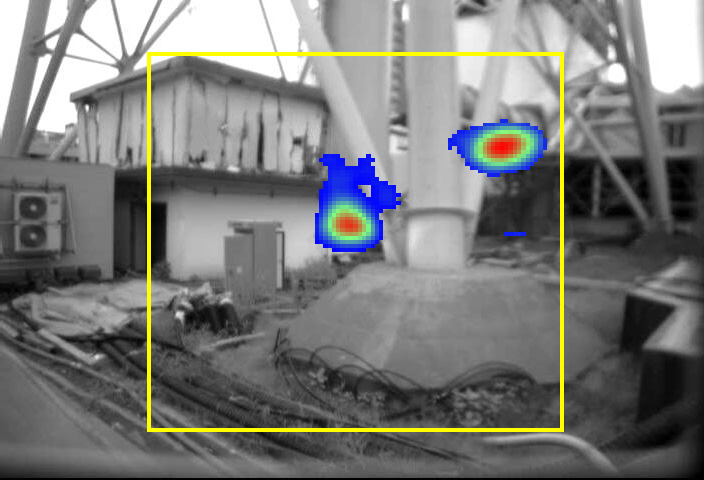
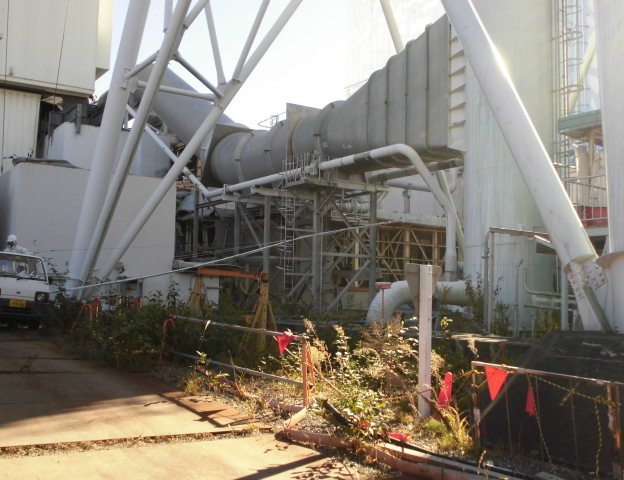
Remember the exhaust stack between Reactor 1 and Reactor 2, the bottom of which was found in August 2011 to be emitting extremely high radiation? In fact, it was so high that the dosimeter went overscale at 10 SIEVERTS/Hour on the surface of the pipe (see my post from August 2, 2011).


TEPCO finally did the measurement on November 22, 2013 to find out how high.

The conclusion is that it may be as high as 25 sieverts/hour on the surface of the radiation sources, which TEPCO thinks two (see the above gamma camera photo).

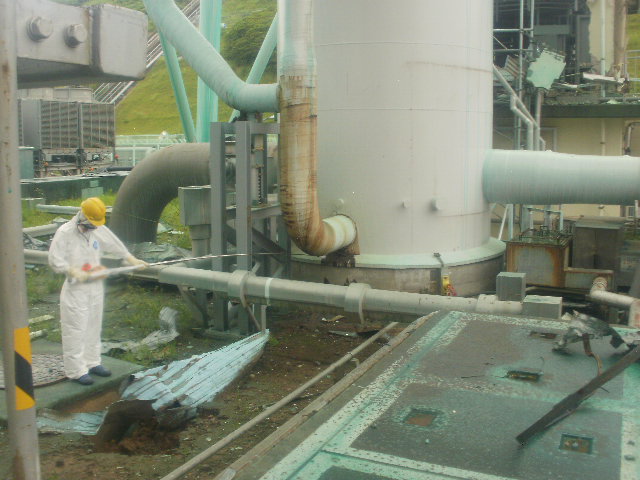
The ambient air dose rates near the location were so high that the measurement was done with what looks like a 20-foot pole.

From TEPCO's Photos and Videos Library, 12/6/2013 (Japanese):


There are reports by the media and blogs that this 25 sieverts/hour radiation was actually measured. It wasn't. TEPCO measured the ambient air dose rates around the two locations where TEPCO thinks the radiation sources exist, and calculated the possible radiation level right at the radiation source.

The highest ambient air dose rate measured was 95 millisieverts/hour, at 1.5 meter from where the STGS (standby gas treatment) pipe is connected to the exhaust stack:

(From TEPCO)

(UPDATED) (OT) Japan's State Secrecy Protection Law Passes Upper House Anyway


(UPDATE) Do you want to know what else was passed along with the State Secrecy Protection Law? Two laws to limit the welfare payment for the poor. Unlike the US, Japan's public welfare system pays monthly lump-sum money directly to the recipients. Citing "fraud" (if I remember right, 0.2% of the total payment), the lawmakers in the Upper House voted to practically force family members to take care of the welfare recipients in their families. They increased the fine for fraud from 300,000 yen (US$3,000) or less to 1 million yen (US$10,000) or less. All these to reduce the welfare cost that the national government pays out, to save money.

These are on top of the intimidation and scolding that are dished out to the applicants by the municipal officials in charge of welfare.

Who voted for these two laws? Everyone except for members of Communist Party (11), Social Democrats (3) and two independents (including Taro Yamamoto).

Japan's "right-wing" administration curtails personal freedom and privacy citing the national security, benefits large corporations at the expense of the weakest in the society by cutting their benefits. In other words, they are doing exactly the same as the US's "left-wing" administration.

But that point is completely lost on net citizens of Japan on Twitter. It is also almost completely lost on them (and the media that expresses outrage over the law) that the passage of the State Secrecy Protection Law is the logical result from the two preceding laws that were voted in with overwhelming approval both from the ruling coalition and the opposition (except Communist Party and Social Democrats) - national ID number law and the law to create the national security council copied from the United States.

==========================

The opposition was in disarray, with Democratic Party of Japan walking out at one time, only to come back 10 minutes later to cast votes.

LDP's Minister in charge of consumer affairs and women and children issues, Ms. Masako Mori, has been for some reason in charge of answering questions on the law, to the great frustration of both the opposition and Japanese citizens because of her very flimsy grasp of what the law is about (it is probably because she doesn't have a clue either).

Her statement on the passage, according to Jiji Tsushin (12/7/2013; part):

「政府としてあらゆる手段を使って国民に法律の必要性と、懸念に対する説明を丁寧にしていきたい」と述べた。「緊張する国際情勢の中、国民の命と国家の存立を守るため、喫緊に成立させる必要があった」

[Mori said] "The national government will carefully explain to the citizens using all means available the necessity of this law, and address citizens' concerns." "We needed to pass this law urgently in order to protect the lives of the citizens and the existence of the nation in the tense international situation."


That's "women's power" for you, as touted by the Abe administration (with Ms. Mori as an great example) and by, most recently, the US Vice President Biden on his brief visit in Tokyo on the way to the more important visit to Beijing (where he practically approved China's newly declared Air Defense Identification Zone).

The "tense international situation" Ms. Mori is referring to must be the one that exists with China, which is more manufactured by all parties involved (Japan, China, and the US) than actual.

As an aside, the incompleteness of this headline over at Zero Hedge struck me:

"Japan Secures Final Passage Of Secrecy Bill - Designed by Kafka & Inspired By Hitler?!!"

The most direct design inspiration (or lack of design so that more can be added later - hmmm that sounds quite familiar in the US...) is the US's Patriot Act and what the US NSA and NSC have been doing under the two administrations. Just like the Japanese politicians and industrialists who badly wanted to have their own atomic power after they saw the destruction that the atomic bombs caused in their own country, LDP politicians (for that matter, DPJ politicians too) wanted to have a sweeping power over citizens in the name of national security. It probably makes them feel like they are actually doing something important.


Democratic Party of Japan Just Submitted the Parliamentary Motion of Non-Confidence Against the Cabinet in the Lower House


DPJ submitted the motion to the chairman of the Lower House (House of Representatives) in the Japanese Diet at 5:27PM on December 6 (according to a tweet by Taro Yamamoto, who is a member of the Upper House).

There are 57 DPJ members in the Lower House, more than enough to submit this motion (which needs 51). It's not known whether Communist Party or Social Democratic Party joins DPJ in submitting the motion. The head of Social Democratic Party, Mizuho Fukushima, tweeted the DPJ's decision.

DPJ is doing it to stall the vote on the State Secrecy Protection Law in the Upper House. There is not even the remotest chance that the motion will pass the Lower House where the ruling coalition holds 325 seats out of 480 (see wiki on Japanese National Diet for numbers).

Because of the motion of non-confidence in the Lower House, the Upper House session, which was scheduled at about right now, will be delayed by 3 to 4 hours.

LDP and Komei have already decided to extend the Diet session for two more days.

Citizens are gathering in central Tokyo around the Diet building and protesting. This picture is from earlier today, at the
the Diet Members' Office Building for the Upper House (from this tweet):


There's some protest event, organized probably by labor unions, about to start in the Hibiya outdoor music amphitheater:


Members of Democratic Party of Japan in the Upper House had all voted for the creation of the Japanese version of NSC (National Security Council) and the national number ID ("My Number") law, both of which will give more power to the executive branch.

Thursday, December 5, 2013

US Nuclear Regulatory Commission Chairman: IAEA's Recommendation to Release Water from #Fukushima I NPP Appropriate


US NRC Chairman Allison MacFarlene is in Japan right now, and she spoke with the reporters on December 6 at the US Embassy in Tokyo.

From Jiji Tsushin (12/6/2013):

汚染水の海洋放出検討は妥当=IAEAの勧告支持-米原子力規制委員長

It is appropriate to consider releasing the contaminated water, as IAEA recommended, says US NRC Chairman

来日中のマクファーレン米原子力規制委員会(NRC)委員長は6日、国際原子力機関(IAEA)調査団が東京電力福島第1原発事故の影響で蓄積する放射能汚染水について、海洋に放出する可能性を含めて検討すべきだと勧告したことは「妥当だ」と述べ、支持する考えを示した。東京都内の米国大使館で記者団に答えた。

US Nuclear Regulatory Commission (NRC) chairman MacFarlane indicated her support for the IAEA recommendation to consider releasing the contaminated water accumulating at Fukushima I Nuclear Power Plant as the result of the nuclear accident into the ocean. She said the recommendation was appropriate. She spoke with the press at the United States Embassy in Tokyo.

IAEA調査団は4日に、基準値以下の汚染水であれば「放出することを含めた選択肢を検討すべきだ」との報告をまとめていた。

The IAEA delegation issued a report on December 4 that recommended considering alternatives including releasing into the ocean if radioactive materials in the water are below the legal limit.

また同委員長は、福島第1原発事故を原因とする汚染物質が米西海岸地域に与える影響に関する報道が米国内で出ていることについて問われ、「人々が放射線の影響を心配するのは当然だ」と指摘。一方で、「米国(の海)に到達する放射線の量は最大でも飲料水基準の100分の1未満」との予測に言及し、冷静な対応を呼び掛けた。

Chairman MacFarlane was asked about reporting in the US on the effect of radioactive contaminants from the Fukushima I NPP accident on the west coast of the US. She pointed out that it was natural for people to worry about the effect of radiation, but she referred to the estimate that "the density of radioactive materials that will reach the US (coastal water) will be less than 1/100th of the standard set for drinking water" and called for calm response.


Other than certain blogs and websites that continue to grossly exaggerate the Fukushima nuclear accident (almost to the point of falsifying, by withholding or ignoring data and by declaring "they lie") after nearly two years and 9 months, I don't see much reporting on the Fukushima accident in the US.

There is no mention of the press conference at the US Embassy website yet.

In order to release the treated water from Fukushima I Nuclear Power Plant, ALPS has to be in full operation (to remove gamma nuclides other than cesium, and alpha and beta nuclides (including strontium)), but it isn't. The system continues to have minor problems that prevent the system from operating fully. Then, currently there is no large-scale system that could remove tritium (whatever the US Energy Secretary says about Kurion), thus dilution as recommended by IAEA.

=====================

By the way, the US NRC has been ordered to resume the licensing review of Yucca Mountain Waste Repository, after the "US Court of Appeals for the District of Columbia Circuit said in a 2-1 decision August 13 that NRC had violated the law when it suspended the congressionally mandated review of the Yucca Mountain repository license application in 2011 and ordered the agency to restart that process".

From Platts.com (11/18/2013; emphasis is mine):

US NRC to resume Yucca Mountain waste repository licensing review

The commissioners of the US Nuclear Regulatory Commission ordered agency staff Monday to complete and publish a safety evaluation report on the proposed Yucca Mountain, Nevada, nuclear spent fuel and waste repository.

"The Commission has also requested [Department of Energy] to prepare a supplemental environmental impact statement requested by the staff in order to complete [NRC's] environmental review of the application," NRC said in a statement Monday.

The multi-volume safety evaluation report, or SER, reflects NRC staff's assessment of the repository proposed for the site roughly 95 miles (about 153 km) outside Las Vegas and is considered in NRC's determination of whether the facility would meet regulatory requirements. Volume 3 on the post-closure safety of a repository at Yucca Mountain is central to making that determination.

The Nuclear Energy Institute, which represents the US nuclear power industry, was among those who have recommended that completion of the SER be a top NRC priority. NEI did not respond immediately Monday to a request for comment on the commission's order.

YUCCA DECISION NOT IMMINENT

NRC spokesman David McIntyre said in a post Monday on the agency's blog that the commission's order does not "signal that a licensing decision is imminent. Before a final licensing decision can be made, the adjudicatory hearing must be completed, and the Commission must perform its own review."

Calls for completion of the SER were included in comments NRC staff and licensing participants filed with the commission September 30.

The US Court of Appeals for the District of Columbia Circuit said in a 2-1 decision August 13 that NRC had violated the law when it suspended the congressionally mandated review of the Yucca Mountain repository license application in 2011 and ordered the agency to restart that process.

Gregory Jaczko, the NRC chairman in 2011, attributed the suspension to NRC's lack of funds to complete the work. The agency began what it called an "orderly closure" of its Yucca licensing activities in 2010, the same year DOE dismantled the Yucca Mountain program and left the repository license application at NRC under review.

NRC staff estimated in comments to the commission in September that it is possible SER Volumes 2-5 could be completed in about 12 months at a total cost of less than $11.1 million, the amount of carryover funds NRC has available to complete the review.

DOE told the commission in its comments that the department "is committed to complying as expeditiously as possible with any NRC order, subject to the availability of funds." DOE said it has about $15.4 million in unobligated Yucca carryover funds that could be used to support participation in an NRC licensing proceeding. The department added that it also has $29.5 million in Nuclear Waste Fund money that is obligated on existing contracts and that about $18.1 million of that obligated money could be used for DOE work needed to support an NRC licensing proceeding.

NRC's McIntyre said Monday that the commission's order does not direct staff to resume an NRC licensing board's adjudicatory hearing on the application, nor does it reactivate the Licensing Support Network, or LSN, a system created by NRC as a web-based document storage and retrieval system that could be used as tool during legal discovery in a Yucca licensing proceeding.

"The Commission said it would consider the future of the LSN and the adjudicatory hearing once the tasks it directed today are completed and it can determine what tasks it can perform with whatever available funds remain," McIntyre said.